
There is a strange injustice sitting on pharmacy shelves. Some of the drugs there, already approved, already cheap, may hold real power against cancer. Not after another decade of trials. Now. The evidence often already exists. What doesn’t exist is anyone with a financial reason to bring it forward.
My guest built her organization to close that gap. Dr. Laura Kleiman ran a data science center at Dana-Farber when her own mother was diagnosed with cancer there, and kept finding promising research on existing drugs that no company had any incentive to pursue.
Here is how she frames the problem:
“Medical innovation doesn’t always mean inventing something new. Sometimes it means finding new value in something we already have.”
It’s Dr. Laura Kleiman, Founder and CEO of Reboot Rx, on The Business of Giving.
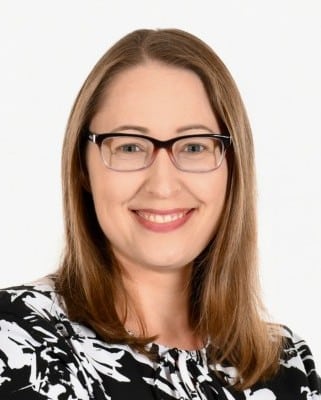
Dr. Laura Kleiman, Founder and CEO of Reboot Rx
Denver: Welcome to the Business of Giving, Laura!
Laura: Thank you.
Denver: Tell us what Reboot Rx does and what problem you’re trying to solve in cancer treatment.
“..medical innovation doesn’t always mean inventing something new. Sometimes it means finding new value in something we already have.”
Laura: Sure. Reboot Rx is a nonprofit that’s focused on advancing affordable cancer treatments by repurposing generic drugs. We’re solving a market failure.
The problem is that there are many drugs sitting on pharmacy shelves that hold untapped potential for treating cancer. And in our perspective… and I’m sure we’re going to talk about this much more… what we’re facing is that medical innovation doesn’t always mean inventing something new. Sometimes it means finding new value in something we already have. We’re talking about generic drugs. We’re talking about finding new uses for existing drugs and bringing them into routine patient care so that patients can benefit from them.
Denver: Laura, you were running a data science research center at Dana-Farber when your mother developed cancer. And your family found promising research on existing drugs that no one was advancing. What did you discover about the system that led you to build Reboot Rx?
Laura: I really began to appreciate the opportunity to get treatments to patients faster and treatments that are affordable and accessible through my mom’s experience with cancer. She was a patient at Dana-Farber when I was working there. And like you said, I would come across evidence on generic drugs that had been tested for potential new uses in cancer treatment, including cancers like my mother’s, but nobody was bringing them forward because nobody’s responsible for moving these types of opportunities forward.
The problem is that the value of a treatment to patients is not necessarily the same thing as commercial value of potential treatments. And in the case of repurposing generic drugs, the economics just don’t work because when manufacturers can sell the same inexpensive generic drug, there’s no one company that has a reason to spend millions of dollars to prove a new use and bring that treatment into care when all of the competitors, the other generic drug manufacturers, could also benefit from them.
So that was my introduction through my mom’s experience of this broader problem. And I eventually left Dana-Farber to start Reboot Rx 2:30) as a nonprofit, specifically designed to address this market failure.
Denver: So, you discovered we have something here valuable to society, but valueless to the marketplace. So, what happens when nobody owns the economic upside?
Laura: What happens is that these treatments are left unpursued, which means in some cases, we never run the definitive clinical studies that are needed to prove whether or not these treatments are safe and effective for treating cancer. And even in cases where those studies are completed, clinicians may not know about them because the traditional pharmaceutical companies that typically take on this role will not in these cases.
Denver: This is a problem. It really is.
Laura: Yes, it is. And not just in cancer, right?
Denver: Absolutely. Yes.
Laura: This applies to any disease.
“We use AI for one of the first steps in our process, but it just helps us find the signal. It doesn’t replace the scientific and clinical judgment that’s required to decide whether that signal is meaningful and worth pursuing.”
Denver: It is such an interesting market failure problem. It’s like a Rubik’s cube, trying to figure it out. Now, in terms of trying to get this match, let’s say, between a generic drug that might be applicable to another disease, what does your technology find or connect that researchers working conventionally might not be able to make that match quite as readily?
Laura: Especially in oncology, there’s an enormous amount of research that has already been done. So, when we started in this space, we would look at one publication about a specific clinical trial that evaluated a specific drug for a certain type of cancer, and we would get really excited about the promise of that treatment. Then we would look at another paper, and it would be another promising opportunity in a different space. And then we realized, again, this is somewhat unique in oncology, where there’s been a lot of research into new uses of existing drugs, but there’s so much information that needs to be sifted through to be able to pick out those opportunities that are truly worth pursuing, especially when you have very limited resources.
So that’s why we started using AI to help us with that process. By now, we’ve synthesized information on more than half a million published studies across cancer types. And using this more systematic approach, we’re able to evaluate thousands of drug cancer pairs and different opportunities much more efficiently than a team would be able to do manually. It would be basically impossible to manually assess all of these opportunities and be able to rank them and compare them to one another.
So, we use AI for one of the first steps in our process, but it just helps us find the signal. It doesn’t replace the scientific and clinical judgment that’s required to decide whether that signal is meaningful and worth pursuing. And that’s where our biomedical scientists, along with clinical experts, come in to evaluate a much smaller number by that point, by the time that our AI has helped us sift through the most promising signals. But then we can look at the underlying evidence in much greater detail, and then decide for each specific opportunity what’s needed as the next step, whether it’s… as we were discussing, more evidence or in some cases, the opportunity is ready for implementation and education work. Or maybe there’s regulatory or policy work that’s needed to bring that opportunity forward. So, the systematic approach helps us get there much faster.
Denver: Yes, prioritizing.
So, as I understand it, finding a promising signal is very different from proving that the drug works. So let me put myself in the position of an oncologist who has treated cancer for thirty years, and you come and you tell me an inexpensive generic might improve my patient’s treatment. What evidence would I need before taking that seriously?
Laura: Most oncologists will want to see data from randomized controlled clinical trials, especially for common cancers. Rare diseases are a bit different. So, the context matters. We focused on common cancers.
So, typically, they want to see at least one randomized controlled clinical trial in a relevant setting. So, for example, where the control arm is analogous to the current day standard of care. And there are many other aspects to what they would want to see, but the most critical part is the evidence: Is there a reason to believe that this is safe and effective? And then they look to other sources, trusted intermediaries that help guide what becomes the standard of care in oncology.
Denver: So generating that evidence, including RCTs– that is enormously expensive. But if nobody stands to make much money from the drug, who should pay to prove that it works? I guess that’s what you live with every day.
Laura: Yes, that’s what I live with every day.
Our goal is to get many stakeholders, as many as possible, involved in enabling these clinical trials. Examples would be philanthropists, government funding, even impact investors potentially, with a different type of model combined with it. So absolutely it’ll be non-commercial funding models.
Denver: Got it.
Laura: And in our experience, philanthropic capital can have a disproportionate impact and is the most likely way to have early successes that could then provide examples, success stories, that could be used to create more scalable and sustainable approaches to funding trials, for example, through government funding.
And we’re actually preparing our first large clinical trial of an inexpensive generic cancer treatment right now, and the model behind it is pretty exciting. We’re bringing together nonprofit leadership, philanthropy, and government-supported research infrastructure to enable something that doesn’t fit the traditional drug development model. I’m excited to share more once we publicly announce this.
Denver: Okay. Well, I’ll stay tuned. Maybe you’ll come back and let us know.
Laura: Would love to.
Denver: I would really be curious about some of these philanthropists because this is getting out ahead of the curve a little bit. And often philanthropy does not identify really great ideas that can have inordinate impact all that early. They wait until there’s more validation, and then they jump on board. I’d be curious as to what common thread has existed in some of your early funders, in Arnold and Pershing and DRK and all those. What is it about those organizations that give them an ability or a lens to see the great possibility that you have as an organization before many others do?
Laura: A few factors, but one thread is that they really understand the problem and the opportunity, which is unusual. I think the common thought from a traditional philanthropist–you can tell me if I’m wrong–is that it’s pharma’s job to run large clinical trials. They’re not going to put their money into a large clinical trial. That’s just not what philanthropy funds.
But those who deeply understand why these trials will never happen without philanthropic capital and inspiring other types of capital as well, and understand the magnitude of the impact it could have for patients with cancer and other diseases, are more excited and open to these types of ideas. They’re also typically innovative thinkers, outside-of-the-box thinkers, who oftentimes are funding entrepreneurial ideas. Those are some of the trends that we’ve seen.
Denver: Did you find through trial and error that you changed the way you described what you were doing to help them along in terms of better understanding both the impact and the reach?
Laura: I may still be trying to figure that out. The challenge is that the space we work in is quite complex. And especially when you get into discussing the regulatory side of what we do, what is the role of the FDA in this – it takes time to explain the complexities. So I don’t know whether I’ve got it right yet. And you haven’t asked me about the regulatory side yet.
Denver: That’s coming.
Laura: The philanthropists and the foundations that have supported us often come to us because they have different types of interests, whether it’s in supporting entrepreneurship, or supporting lowering the cost of health care, or supporting use of AI for public good. So, I think it’s been important to think about what’s important to them, what their goals are, and what change they want to see in the world, and see if there’s a match between the type of work that we’re doing and that.
“I’ve learned along the way that just having evidence that a treatment could be effective doesn’t mean that it will be used in practice.”
Denver: Well, you’re taking us along a very interesting journey, and now I’m happy to say that you have proved that an inexpensive generic improves outcomes. We have evidence. Congratulations. But there’s still no sales force promoting it. How does that evidence actually reach those who need to get it and ultimately reach the patient?
Laura: Yes, that is the challenge. I would say something that I’ve learned along the way is that just having evidence that a treatment could be effective doesn’t mean that it will be used in practice. That was a difficult lesson to learn and also something that we think about a lot when communicating with funders who don’t have a lot of experience in drug development. The assumption sometimes is, “Oh, the paper was published with the results so, of course, doctors will just start prescribing that treatment.” But that’s not the reality, and pharma spends a lot of effort and resources to help raise awareness of each treatment that they bring forward.
So, we have been thinking a lot about this problem of how to go from evidence to practice with, specifically, repurposed generic drugs, and it’s going to be multifaceted. But what’s important is to try to learn what are the trusted clinical channels that clinicians are already using to get information about new treatments, and how can we tap into those channels so that they’re not just hearing about the newest pharma drugs, but they’re also hearing about repurposed generic drugs that they could easily integrate into their practice.
So that includes thinking about things like: guidelines and clinical pathways that they often refer to when making treatment decisions; continuing medical education; programming, and other means of educating clinicians about new treatment options. We’re even starting to move into AI clinical decision support tools that are becoming increasingly important in the day-to-day decision making that clinicians are using, and other approaches like those.
So, what we’re trying to figure out now is by testing, getting information across through different means, trying to figure out which are the most effective and scalable approaches so that we can use these approaches, not just to communicate information about one treatment for one cancer type, but to build a framework that can be applied across any disease.
Denver: That makes sense. You can’t create something and expect people to come to you. You have to plug into established lines of communication where they’re going to be going anyway, and hopefully they’ll capture it, and you’ll find out which ones where they’re really capturing it.
And another way you’re doing it is that you’re working with the Veterans Health Administration and NCI and other institutions like that. What can those institutions provide that Reboot Rx could really never accomplish alone?
Laura: When we’ve thought about who are the right partners for this work, what’s most naturally aligned for generic drug repurposing are often those whose primary incentive is public or patient benefit. That has led us to build partnerships with organizations like the Veterans Health Administration and some of the NCI-funded clinical trial cooperative groups, where they often have very strong data, clinical scale, and research capabilities that have enabled us to analyze data sets and run clinical trials using innovative models.
What we’ve realized, which is probably obvious, is that we shouldn’t try to recreate capabilities that already exist, or aggregate data in a way that’s very challenging if it’s already aggregated in a very large health system. So, our role has often been identifying these neglected opportunities and then bringing together the pieces needed to advance them, like these types of partnerships.
“One of the reasons why I started this organization as an independent nonprofit organization is because a nonprofit can own the problem across institutional boundaries, and government can provide one of the powerful pieces of that solution.”
Denver: You know, from my perspective, which is not a particularly well-informed one, but this seems tailor-made for the public sector. You got better outcomes. You got lower costs. You have little commercial incentive. Why isn’t government already systematically solving this problem?
Laura: There’s only so much that specific organizations, institutions, agencies can do. One of the reasons why I started this organization as an independent nonprofit organization is because a nonprofit can own the problem across institutional boundaries, and government can provide one of the powerful pieces of that solution.
So, as an example, academia is great at generating knowledge but isn’t structured to own implementation across an entire system. Pharma’s extraordinary at drug development but needs an economic rationale. And government has unique capabilities but owns a specific piece of the problem.
So, for example, the National Cancer Institute, which would be a natural funder of some of the research, can help generate evidence. The FDA– Food and Drug Administration can address regulatory pathways and how do we seek FDA approval of these new indications when there’s no manufacturer that’s going to drive that process. And then CMS and other government actors can have roles in coverage questions and evidence dissemination, but there isn’t one entity that can make the whole process work end to end.
Denver: Right. And there’s no one in government who is going to connect all those pieces. That’s you.
Laura: Right. Although I will say, as of the last few weeks, last week in particular, there is growing interest and commitment from our government in repurposing, and specifically generic drug repurposing.
I was just at a workshop last week that brought together government entities to discuss this exact topic. So, I am actually very optimistic about the role of government moving forward in this space.
Denver: Well, that is really encouraging.
Let’s talk a little bit about the regulatory gap that you just mentioned there. You know, an organization that doesn’t manufacture a drug has difficulty getting a new use formally recognized. What would have to change at FDA for that to happen?
Laura: We need to think about drug sponsors a little bit differently. Right now, our current regulatory pathway to seek approval of a treatment depends on a sponsor being a manufacturer of the drug or having at least a participation of a manufacturer. For example, to be able to submit information to seek regulatory approval, you need to provide manufacturing information about a drug. But as an entity–ours– that doesn’t manufacture or sell drugs, we don’t have any information to provide on that.
Denver: There you go.
Laura: So, we would depend on a current manufacturer providing us with information to support that type of initiative and their reasons why they may not.
So, there are a few different opportunities for how to create new pathways to enable a nonprofit-driven approach, or you could even say an FDA- driven approach to enabling evidence on repurposed generic drugs to be evaluated for regulatory decision making, and then have the FDA’s stamp of approval on that treatment.
And this was, again, a major topic of the workshop last week with the FDA. So, I’m very excited that they are actively thinking about these questions. And I will say this is a very unusual time where creative ideas, different ideas are actually being explored and acted on.
Denver: Well, that sounds like one worthwhile workshop.
Laura: Absolutely.
Denver: I’ve been to many that are not. This would not be one of those.
Laura, just taking a step back and looking at it from a broader perspective, what has building Reboot Rx taught you about how institutions decide which innovations deserve attention and deserve capital?
Laura: Well, clearly, we’re working on something that hasn’t traditionally received the capital. We’ve learned a few lessons in terms of moving innovative ideas forward. So, for example, understanding the incentives. You could have a great solution, but if you can’t align incentives, it gets stalled.
So, for example, bringing healthcare payers like CMS into the discussion about repurposing where they actually have a financial incentive to advance treatments that can lower cost has been a fruitful direction. Another lesson is, like we discussed, not recreating infrastructure that already exists. Collaborate and leverage existing expertise and infrastructure so that you don’t need to build it on your own. The third lesson is to follow the problem, but not necessarily the original solution.
So when I started Reboot Rx, I thought a lot about identifying promising opportunities. We would identify those promising opportunities, and then learn that there are the barriers that we already discussed in terms of bringing them forward for patient benefit. And that’s pushed us further into implementation and policy that I didn’t necessarily think would be the way we’d go about solving the overall problem when we started. So, I encourage flexibility in thinking about the problem and what solution might make the most sense.
Denver: What has this growth journey been like for you, Laura? You’re a computational biologist, and then the next day you’re a founder, a fundraiser, a coalition builder, an advocate. There must have been an incredible learning curve. Anything that you take away from that that you probably would have never gotten if you had just stayed in the scientific realm?
Laura: I would say I never intended to start a company–a not-for-profit company or any company. But sometimes when you see a problem that’s too important not to try to solve, you kind of decide there’s nothing else you can do with your life. That’s got to be it. But I was not trained in business or fundraising or anything else that I’ve needed in this role. So, it’s been a lot of learning along the way. And there’s still a lot of scientist in me, probably too much, and I’m learning about the other aspects still.
And it’s been absolutely essential to have the right team involved, both the right members on our board of directors as well as the leadership team at Reboot Rx that can fill in those gaps for me personally and bring those other areas of expertise. And together, we can help achieve our goals.
“We’re looking for a future where there’s a system that routinely captures the full value of medicines we already have. We’re working towards a new framework where drug repurposing is no longer a series of lucky accidents. AI can help us get much further in finding the strongest opportunities, and then having that repeatable system for evaluating the opportunities, generating new evidence if needed, and then getting the strongest evidence into those trusted channels that shape clinical care.”
Denver: And I think also though, a scientist sometimes can bring a welcome and fresh perspective to fundraising and coalition building and advocacy. Because pretty much you do the same thing, particularly in fundraising, let’s say. And having somebody come in with a different lens, no experience, they sometimes really see things that people who have been in the field as long as I have miss.
Finally, Laura, if Reboot Rx succeeds beyond your expectations, what will be different 10 years from now for someone who has just been told they have cancer?
Laura: Generally, we’re looking for a future where there’s a system that routinely captures the full value of medicines we already have. We’re working towards a new framework where drug repurposing is no longer a series of lucky accidents. AI can help us get much further in finding the strongest opportunities, and then having that repeatable system for evaluating the opportunities, generating new evidence if needed, and then getting the strongest evidence into those trusted channels that shape clinical care.
So, if we can build that, then we’re no longer going to be pursuing one drug at a time. We can be pursuing many treatments in parallel to address many unmet needs.
Denver: And this is every bit as exciting, if not more, than the new, shiny button of something coming down.
Laura: I would say we need both because that new, shiny thing will eventually become a low-cost generic drug that we can find more uses for.
Denver: There you go. You bring everything home, always looking; got to feed that pipeline for 18 years from now or whatever it is.
Laura: Exactly.
Denver: Laura, if anyone listening today would like to learn more about Reboot Rx, support this work or become involved, tell us about your website and the kind of information they’ll find on it.
Laura: Sure. We actually recently launched a refreshed website, so you will find a lot more information there and a lot of context for why we do the work we do, and the type of work that we do, and some success stories.
Our website is rebootrx.org. Pretty simple. I’m sure if you Googled us, you would also find us. And I would love to explore any new partnerships that might come out of anybody listening to this podcast, and you never know where things will go. I will try keeping that open mind. So, excited to follow up.
Denver: Well, Dr. Laura Kleiman, founder and CEO of Reboot Rx, it has been delightful having you on the program. Thank you so much for being here today.
Laura: Thank you. It was wonderful speaking with you.
Every weekday morning at 7:00 a.m. Eastern, I publish a short Leadership Note from the Field. These reflections draw on fifty years in the nonprofit sector and nearly 1,000 conversations with nonprofit leaders.They are designed to help leaders step back from the noise, see the deeper pattern, and lead with greater clarity.A recent note explores a distinction I believe matters enormously right now.In philanthropy, don’t confuse headlines with forces.Headlines dominate the moment. But deeper forces such as the $124 trillion wealth transfer, the rise of women as philanthropic decision makers, and the growth of giving across the Global South will shape the next twenty-five years.You can read the full note, along with a new one posted every weekday morning, on my blog at denver-frederick.com or on LinkedIn.