
We spend almost our entire lives indoors, and we rarely ask what all that time is doing to us. My guest has spent the past year building the case that the rooms we live and work in quietly shape our stress, our focus, even our brain activity, and that philanthropy has a rare chance to act on it.
Ishita Das, a molecular biologist, is part of the Milken Institute’s science-philanthropy team, where she helps funders decide where their money can move science fastest. Her year-long investigation gave a scattered field a name: neurospatial design.
Here is the claim at the heart of it: “Specific design and architecture features can actually shape and influence our physical health, our brain health, our cognition, and overall well-being.”
We talk about the evidence that a room can change your body, why the field stayed invisible so long, and how a donor turns scattered work into something that lasts.
It’s Ishita Das on The Business of Giving.
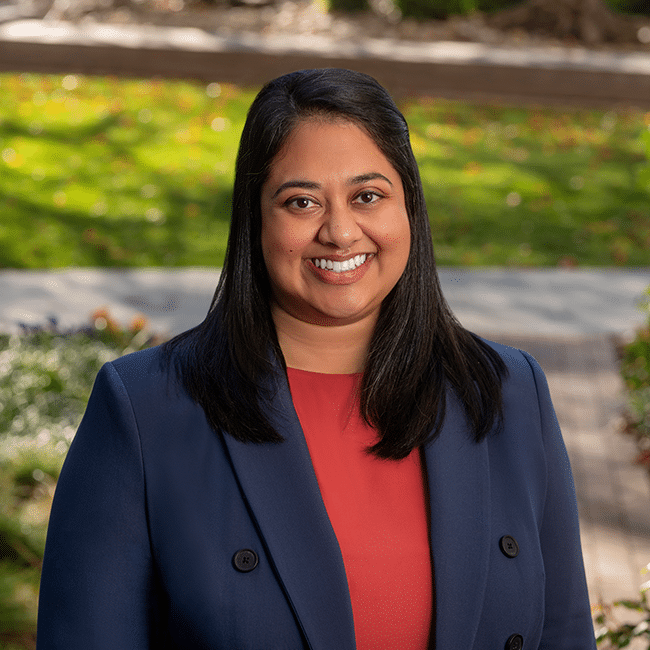
Ishita Das, Milken Institute’s Science-Philanthropy
Denver: Welcome to the Business of Giving, Ishita!
Ishita: Hi, Denver! How are you doing? It’s great to meet you and a pleasure to be here.
“And when we think about buildings, we spend 90% of our lives in buildings… There are buildings everywhere, and they touch and affect every facet of our lives. And so, I think most people are intuitively aware that the built environment can impact how we feel and think and behave.”
Denver: Well, it’s nice to have you. You know, a lot of design talk about making spaces feel nicer with plants and natural light — I hear that all the time. But how does this report differ? And why does it insist on measuring what actually happens in the body and the brain?
Ishita: That’s a great question. I actually think it’d be helpful for me to ground the conversation by starting a little bit more broadly about how we think about science funding and strategic philanthropy at the Milken Institute, and really thinking about how philanthropy can play a role in the question you asked.
And so, within our Milken Institute think tank – we’re a nonprofit, nonpartisan think tank – we have our strategic philanthropy team, and we really guide and advise individual philanthropists and foundations to develop different strategies and giving programs to create a better, more equitable world. And within strategic philanthropy, I’m part of our Science Philanthropy Accelerator for Research and Collaboration, and we know that philanthropy is a key player in advancing biomedical research.
And so, the SPARC team, we work hand-in-hand with philanthropic organizations to help determine where their capital and resources can really accelerate the development of tools and treatments to bring better health to communities everywhere. We work to drive different funding and resources across a breadth of topics, so brain health and mental health and neuroscience is one of them. We also work across cancer and rare disease and health equity. And we really think about things at that systems-level change for the larger biomedical ecosystem.
So, because we are at this intersection of research and health and finance and philanthropy, we are always thinking about these cross-sector collaborations and solutions to improve human health. And so last year, we were really excited when the Peterson Foundation came to us, and they wanted to partner with us to really help them identify how philanthropy can catalyze more of this cross-sector investment in this area that you were just talking about – of how can we make buildings and spaces and the built environment healthier for people and society.
Our normal process is really rooted in rigorous science and due diligence, and so we spent the last year doing that due diligence. We do that anytime a funder comes to us. And we landscaped this topic. We interviewed almost a hundred experts. We brought together a group of them for an in-person meeting, and we analyzed a lot of the different organizations that are working in this space.
What we found is this ecosystem that has tremendous energy and passion, but there’s so much to do to make progress. And when we think about buildings, we spend 90% of our lives in buildings – inside our homes or where we work, at our schools, hospitals, community centers, airports. There are buildings everywhere, and they touch and affect every facet of our lives. You’ve probably been in a building or space that made you feel calm and focused, or alternatively, anxious or tired. And so, I think most people are intuitively aware that the built environment can impact how we feel and think and behave.
What we found and what’s really interesting is that there’s this growing body of evidence that’s beginning to show that specific design and architecture features can actually shape and influence our physical health, our brain health, our cognition, and overall well-being. And so, when you’re thinking about how this is different than maybe some more wellness-focused perspective, what we really focus on is making sure everything that we do is science-based and evidence-based.
And so, when we did that landscaping, we found that there are so many different interdisciplinary folks working at this intersection of buildings and spaces and how they impact our health. And so, we thought that the best way to think about this in a holistic way was to develop this new term of “neurospatial design.” And so that’s how we’re thinking about neurospatial design. It’s a larger ecosystem that includes all these different disciplines. One of the key features of that ecosystem is that it’s really focused on physiological data, so looking at how a space impacts a person’s heart rate and levels of their stress hormones, brain activity, to understand how a space can actually affect our brains and physiology.
Denver: Let’s talk a little bit about that due diligence. You said a hundred experts. You said 580 groups working on pieces of the problem, but most of them did not see themselves as part of one field, Ishita. What did it take to turn that scattered activity into something that a funder could clearly see and support?
Ishita: That’s a great question. And I think that was one of the reasons why we termed this new ecosystem neurospatial design.
As you can imagine, there’s so many people that need to be involved in actually getting from the neuroscience research or other health research, to a building that will impact us. And so, you have neuroscientists, interior designers, architects, policy makers. You have real estate developers, and then the general public. And bringing all of those folks together in a unified way has been one of the key challenges that we saw. And so that’s where our focus really turned to: How can philanthropy catalyze more of that cross-sector interdisciplinary collaboration?
And so, in the report that we put out – this Giving Smarter Guide – that is really what we focused on. We focused on these four key areas that we think philanthropy is really poised to help bridge– all of those different sectors that are really integral to making this type of work actually move forward.
Denver: So let’s run through those four pillars that you lay out in the report. You have: Generating Actionable Evidence, Building a Diverse Talent Pipeline, Driving Real-World Adoption, and Expanding Awareness.
So why don’t we run through each one, starting with actionable evidence and connecting pieces. I have found funders almost always pay for a concrete project, but actionable science requires shared research infrastructure. How do real-world tests and actual buildings and shared tools, and data systems that connect these disciplines move the work from interesting lab findings into practical tools?
Ishita: That’s one of the key challenges. And to start at a little bit at a higher level, when we’re thinking about this field, because it’s encompassing different subfields, it gets a little bit more complicated. And so, I think some aspects of the evidence that are there, there’s enough data and enough evidence where implementation is now the next step. But that’s limited, and then at the same time, we need to put more funding into research to figure out: What are features in design that actually either benefit or don’t benefit us?
And so neurospatial design ecosystem falls into both of those camps where there are some things that are really set and primed, ready for implementation, and then there’s another space where there’s a lot more research that needs to be done.
And so the generating evidence for implementation priority really is one of the key opportunities where funders can invest in that interdisciplinary research and really thinking about how these different features impact our brains and brain activity and our physiology, but at the same time where there’s enough evidence to show that natural light clearly impacts our stress hormones. For example, how do we actually get that data to implement it? And that’s where that real world data that you were talking about comes into play.
And so, there are different types of programs. You can do pilot programs. If you’re renovating a specific space from the beginning, having research set up so that you’re actually monitoring the occupants’ heart rates, and stress hormones, and maybe even getting their brain activity, to see how that real space is impacting them throughout the day. Another place where philanthropy can uniquely fund this type of interdisciplinary work is through those “living labs.” And so, it’s a lab where people are living. There’s a lot of different ways to do that that I think researchers and experts can talk about. However, the main point of that is to really understand how in an uncontrolled setting: What does the space make us feel, and how does it impact our brains and bodies?
“For any field, the workforce and the talent pipeline is critical.”
Denver: A second priority would be the people doing the work. How can philanthropy help build the interdisciplinary workforce and talent pipeline, which also includes, I guess, early career researchers that this report calls for?
Ishita: Absolutely. So, I think for any field, the workforce and the talent pipeline is critical. And I think for this specific ecosystem, like I mentioned, there’s neuroscientists and architects and designers and real estate developers, and they’re all coming to this topic from different standpoints. And there are pockets of folks who have studied in different realms and actually are doing that interdisciplinary work. But for the most part, if you are studying neuroscience and you’re getting a neuroscience PhD, you’re never really exposed to this idea that what you are studying can actually maybe be implemented into a space and vice versa. Like in architecture school, you’re not necessarily getting basic biology.
And so just from that baseline, there’s so much opportunity for developing degree programs and educational programs at that training level. And the goal is to then: build a workforce of people who are at that intersection from the beginning. That’s kind of their focus, versus what’s naturally happened is people later on in their careers have kind of found themselves at this intersection. And so, I think philanthropy is really poised to be that connective tissue.
And generally, philanthropy is great at funding the biomedical workforce. There’s a lot of history of philanthropic organizations putting their capital into funding for early career researchers, so folks who are at their prime, interested in figuring out what they want to focus on, but also at the college level, at the undergraduate level, really focusing on talent. And you can frankly do that with a reasonable amount of investment. The ROI on the cost and impact is actually really great when you’re thinking about the workforce.
And then the other thing related to the workforce is that there’s all these folks who have been working in this neurospatial design ecosystem; they’re professionals right now, and making sure that their passion continues to build the field. And so, if you have an architect who happens to also go back and understand how neuroscience works and they are really driven, you want to be able to support them. So, they need the time and the right training to implement all of the learnings that we’re getting from the research into what they’re actually doing, They have to integrate it into their design briefs, and into their budgets for their projects, into their work streams, in order to actually make a space that has a certain feature.
And so, there are continuing education programs and other kinds of implementation grants that philanthropy is really poised well to provide for that element of the workforce.
Denver: Where are you with this? Are you in the early innings, or have you gone far enough down the continuum where you can be really encouraged by what you’re seeing and the enthusiasm people have for this work?
Ishita: Yes, and I think frankly, you need it at all points, right?
Denver: Yes, sure you do.
Ishita: And I think that’s like any workforce. You can’t just focus on one piece of it. You have to think in the long term what’s needed.
Denver: Your third priority is turning the science into practice, and we touched on that a little bit, but how does a report translate brain health findings into financial arguments, industry standards, and building rules that developers will actually pay attention to? And not only that, but how do you then assure that this reaches regular buildings, schools and public housing, and just not new high-end structures?
Ishita: That’s a great question. Let me get to your first point, which is that there’s so much opportunity of how to actually implement everything that we know and the other research that’s coming into buildings. But as you can imagine, budgets are always a hindrance to decision making–
“There’s also an opportunity for innovative philanthropic funders to have those two groups… like financial institutions, real estate developers… to come together and have them develop and test new finance models for a pilot project that can help incentivize the development of healthier buildings and spaces.”
Denver: Yes, I imagine that.
Ishita: I think we’re currently, for example, going through a housing crisis here in the US. And so, there’s so much pressure on: How do we actually build buildings that meet those standards? But then what this field is really trying to do is to have business leaders think about it a little bit differently.
So, if you’re building a new space or renovating a space, if an organizational leader has this idea of neurospatial design in their minds from the beginning, they can potentially advocate for this specific type of feature. Even though it may cost us X percent more right now, our return on investment will be greater for our employees, or if it’s a school, the students.
But getting to that place of having those decision makers have that information, there’s still a lot to be done. And so that’s where there’s a lot of opportunity. And so, certification systems like WELL and LEED, those can help establish national standards that are based on research, and help architects and developers put together implementation frameworks for their buildings. And so, I think LEED is more well-known than WELL, but LEED is more focused on environmental effects of buildings, and WELL really looks at the design and health pieces.
And so that’s a place where I think there’s a lot of opportunity for funders to partner with those organizations and support the research they’re trying to do to update their standards. And those organizations then really do work with local and state policymakers when they’re thinking about updating building codes because incentivization and requirement is really one of the key levers to pull here when we’re thinking about building a whole actual building from the ground up.
The financial models piece I also wanted to talk about because the philanthropic capital is in that unique space where a lot of philanthropists come from the finance world, and so they understand that. And then the real estate sector is also a key piece in actually making some of these large funding investments. And so there’s also an opportunity for innovative philanthropic funders to have those two groups… like financial institutions, real estate developers… to come together and have them develop and test new finance models for a pilot project that can help incentivize the development of healthier buildings and spaces. And I think once you start getting some of that up on the ground running, and it becomes a trend to build healthier buildings, that’s what maybe can push the industry.
But that’s all long-term cross-sector work, which is really challenging. You’re dealing with high-level decision makers and policy leaders, and they really are looking at this economic return on investment. Regardless of if you’re in healthcare, or if you’re at a workplace, or the education sector, or you’re building houses, the economic return on investment is always key, and so building in some of those measurements into whatever is funded is also important.
Denver: This is not an easy journey. A lot of spinning plates. And it’s also hard to keep in these cross-sector relationships a people focus, you know? You have a board meeting, and everybody’s on board, and everybody’s going to do it, and they go back to the office and it’s out the window.
Ishita: Yes. But I think that is where philanthropic capital can play a role because you are getting this funding to specifically work together to do this project and have those milestones.
Denver: I agree. Absolutely.
Ishita: I didn’t want to skip over the equity question you had. It’s great if individuals who have some wealth can make houses that are great for their brains and bodies, and like we see these amazing airports nowadays that have different elements like sensory rooms and things like that. But it’s really important to stress that people may hear about those examples but wonder how neurospatial design can be implemented equitably so that all communities can benefit.
I actually have a couple of examples of nonprofits who are really focusing on that. So, one example, Parrot Creek is a nonprofit that’s based in Oregon and they serve low-income children and their families. And there’s a design firm called Adre who’s working with them, and they’re redesigning Parrot Creek’s campus. And so, they’re incorporating features like views of nature and different layouts that promote social interaction and that specifically is meant to support that community’s needs around behavioral health, housing, and peer support. And so I think that’s like a very specific example of a need that that community identified and are bringing in design to actually affect those people’s lives in an immediate way.
Another example that we pull to is there’s another nonprofit that’s based in Hawaii called B+HARI And the leader of that organization, she used to be an architect at one of the top architect firms, and then went back and studied neuroscience. And she has applied these neuroscience-informed principles to design residential spaces for individuals who are recovering from mental health challenges, and particularly those who have experienced homelessness. And she was able to get some philanthropic funding, but also get Hawaii state government funding in there.
And so, there’s those types of examples which make it clear that as long as funders are focused on making sure that this is done in an equitable manner, it can be.
Denver: Those are two great examples. And if you don’t bring equity to the fore at the very beginning, it never happens. If it’s always an add-on, well, it never gets added on. So you got to do it right from the outset.
Ishita: Yes, exactly.
Denver: The final priority is expanding awareness so this field can scale. And using this work as an example, how does an invisible field quietly limit even the best organizations until someone makes it a larger category and makes it clear to policymakers, architects, and capital?
So, I guess what I’m asking is: How do you get this field recognized? Everybody complains “As individual organizations, we have a recognition gap. Nobody knows the great work we’re doing.” Well, we have it here with an entire field. How do you close that recognition gap?
Ishita: Raising awareness was one of our opportunities that we highlighted for philanthropy for a specific reason. Philanthropy can be really great at galvanizing and catalyzing other sectors, and building that broader public interest around topics that people may not even know are a thing.
Like we mentioned, I think when you tell someone about this neurospatial design ecosystem, what we found is people are like, “Oh, well, yes, of course. I’ve walked into a space that made me feel this way and this.” But they don’t understand that there’s actually research behind it, that there are all these groups working on it. And so just even working on some type of a communications campaign or marketing movement building campaign, I think is where philanthropy is well-poised to start to just get the general public understanding and interested.
And specifically going back to the Peterson Foundation, one of the things that they’re really interested in, and I think their vision is that in this world, people should be able to learn about a building like they do a nutrition label for food. So everyone can make informed choices about the buildings that they go into and that they occupy, and know that this has these features that may be able to decrease your stress, things like that. And that’s kind of their vision and making sure that that’s equitable to everyone, so everyone can kind of access spaces that really support and optimize their health and experience.
And so then as hopefully that type of communications marketing campaign, awareness building campaigns go out, the goal really is for people to… even though this is a thing… to realize that they in their own homes can make tiny differences that really maybe… again, none of it is actually going to solve a disease and that’s not…
“If you put some more greenery, vegetation, nature-inspired views in a space, it can help you decrease your stress hormones or make you feel calm and relaxed.”
Denver: What’s a tiny difference that I can make in my home?
Ishita: So I know biophilia, vegetation plants, the data behind that is actually good. If you put some more greenery, vegetation, nature-inspired views in a space, it can help you decrease your stress hormones or make you feel calm and relaxed. Again, that’s one element. It won’t solve all your problems, but it can help a little bit. It’s one of the tools that you have.
But at the same time, if the public understands that it’s getting that groundswell approach, if there’s demand for it, then that’s where some of the follow-up can happen. If there’s demand for buildings that do X, Y, and Z, maybe folks who build housing or even residential condo buildings, apartment buildings… we’re seeing that that’s coming a lot from the residents doing that grassroots approach. And so, there’s that grassroots approach, but then also the grasstops approach, and all of it I think needs to happen together.
“So, philanthropy is great at taking risk, and it can take risk better than any other form of capital right now.”
Denver: Let me put this on a broader canvas for a second, Ishita, if I may. When a donor asks whether a new area is worth serious money, like your area here, what signs tell you it is really an overlooked and ripe opportunity versus an idea that maybe is still a little too early?
Ishita: That’s a great question. In our work, when we have a funder come to us interested in a topic, we normally really look to funders who are thinking about deploying their capital strategically. And so, if it’s a topic that we think a lot more work has to be done, we do our same process of due diligence of saying “Okay, what is out there? What do we know? Are we even in a space in order to provide advising on where to give or not?” And I think that’s part of the work that we do. Especially science and health philanthropy, a lot of what we see is oftentimes these folks have been personally affected by a disease, and so it’s very close to home. And so, we work hand-in-hand with them to understand where they’re coming from, but at the same time making sure that everything that we recommend is actually based in science and fact.
And so that can be tricky, but I think across all of the work that we’ve done in brain health and rare disease and immunology and health equity, there’s always something that philanthropy can do. So philanthropy is great at taking risk, and it can take risk better than any other form of capital right now.
Denver: But it doesn’t always do it, unfortunately.
Ishita: It doesn’t always do it, but if you have a funder that recognizes that, that’s where you can really push them to fund some of those really early-stage research projects, recognizing that a lot of them may fail, but that’s kind of how to start a field if there’s no evidence out there yet.
Denver: I’ve always been perplexed as to how the philanthropic sector is intended to deal with the most intractable problems facing the world and all of society, but they don’t want to take chances or as many chances as they should. And I think if they had more of an R&D mindset to say, “You know, some of these are going to fail miserably, but we’re never going to have a breakthrough if we play it a little too close to the vest.”
Ishita: What we also sometimes are able to recommend is kind of a balanced portfolio, like: Here are some places where we think high-risk investments really could be helpful, but then here’s another area where the fact that you can be a little bit more flexible on something that is ongoing and probably a little less risky…that can also help. And so…
Denver: Yes, that’s a lot of promise.
Ishita: Yes.
Denver: Just like you would do with your financial portfolio.
Ishita: Exactly. You want diversified, yes.
Denver: Ishita, you trained as a molecular biologist. What convinced you that the highest impact use of your training was shaping how money flows to science rather than, let’s say, running the experiments yourself?
“I want to see scientific knowledge actually translate into real treatments and support and better outcomes for communities around the world, and to do that as quickly as we can.”
Ishita: I think that’s a great question. And what’s funny is yes, so I’m a trained cellular and molecular biologist. Even while I was getting my PhD, I knew that I didn’t ever want to continue staying in the lab and doing research. Although that’s obviously very important, I was always looking for something where I could have a little bit more of a direct impact on society.
And so, after graduate school, I moved into the science and health policy world. And so, I worked in policy implementation and policy development across the biomedical research funding agencies here in DC, and then I came to the Milken Institute around four years ago. What was interesting working from the government side was I really saw what government can and can’t fund in terms of biomedical research, and then really wanted to use that knowledge to help implement philanthropic funding across the ecosystem.
Philanthropy can’t do everything. It definitely can’t replace government funding, but it definitely has those specific levers that we’ve talked about, like being very flexible, and not beholden to shareholders from an industry perspective, and not necessarily having that low-risk aspect because it’s not taxpayers’ money.
And so that’s where you can really maneuver philanthropic capital to fill those specific gaps. And I think the throughline for me has always been the same. I want to see scientific knowledge actually translate into real treatments and support and better outcomes for communities around the world, and to do that as quickly as we can. So that’s how I kind of came into this field.
“Place-based philanthropy is also really important, and I think when we’re thinking about buildings and spaces, that becomes extra important.”
Denver: Cool. Finally, Ishita, taking everything we’ve discussed so far, what is a single takeaway a donor should remember if they want to move from writing checks to truly helping build a lasting field?
Ishita: That’s a fun way to think about it. I’ll start with the neurospatial design ecosystem just because that’s what we were talking about. I think the exciting aspect of neurospatial design is that there are buildings everywhere. And I think if you’re a funder or a leader who’s prioritizing brain health, mental health or thriving communities or economic opportunity, all of them are primed to step forward in different ways. And so, if you’re interested in healthcare, in education, or you’re a decision maker in your workplace or your local government, there’s always going to be small and large opportunities for funders to push toward healthier spaces and buildings rather than just any type of initiative. And so that I think is one that I would focus on.
A lot of different challenges can seem daunting, but there’s always going to be smaller things that you can do. Partnership is becoming more and more popular in the philanthropic community. I think people are understanding that their capital individually is great, but actually pooled funding models are becoming more popular, especially when other funding that’s in the ecosystem, whether it be government or industry, can be fluctuating. I think that’s where pooled funding comes into place.
One other thing I wanted to add specifically, I think for funders, is place-based philanthropy is also really important, and I think when we’re thinking about buildings and spaces, that becomes extra important. And so, if you really want to make an investment in a specific town or city, and
you haven’t really thought about ”Oh, well, there’s all these buildings around. How can we do that?” There’s a way to go to your local communities, to go to the local government, if there’s a research university there, to start seeing how neurospatial design principles can really potentially help be a part of solving some of the local challenges.
Denver: Got it. For listeners who would like to learn more, where can they access Bridging Neuroscience, Health, and the Built Environment?
Ishita: So, our Giving Smarter Guide is on our Milken Institute website. You can also follow us on our social media, Milken Institute Strategic Philanthropy on LinkedIn. And that guide came out about a month ago, and that was really designed for philanthropic funders who are interested in this space. And we’ll soon be releasing an investment case that’s aimed at leaders and decision makers across healthcare, workplace, education, and residential settings. And so that’s something that if people are more interested in learning about will be coming out soon.
Denver: Very cool. They’re all so well done. I enjoyed them all. And I enjoyed you, and I want to thank you so much for being here today, Ishita. It was a real pleasure to have you on the program.
Ishita: Great. Thank you so much, Denver.
Every weekday morning at 7:00 a.m. Eastern, I publish a short Leadership Note from the Field. These reflections draw on fifty years in the nonprofit sector and nearly 1,000 conversations with nonprofit leaders.They are designed to help leaders step back from the noise, see the deeper pattern, and lead with greater clarity.A recent note explores a distinction I believe matters enormously right now.In philanthropy, don’t confuse headlines with forces.Headlines dominate the moment. But deeper forces such as the $124 trillion wealth transfer, the rise of women as philanthropic decision makers, and the growth of giving across the Global South will shape the next twenty-five years.You can read the full note, along with a new one posted every weekday morning, on my blog at denver-frederick.com or on LinkedIn.