
Bob Chapman didn’t set out to write a leadership manual when he transformed Barry-Wehmiller from a traditional manufacturing company into what a world peace negotiator would call “the answer to world peace.” He simply started caring for his 12,000 team members the way he’d want his own children cared for if they worked somewhere else.
Ten years after publishing “Everybody Matters,” Chapman has added 90 pages to the expanded anniversary edition, not because the original message changed, but because the evidence became overwhelming. Ninety-five percent of feedback from people learning Truly Human Leadership wasn’t about business metrics – it was about how the skills transformed their marriages, their relationships with their children, and their capacity to care for others at home.
In this conversation, Chapman explains why listening without judgment is the greatest of all skills, how the Chapman Foundation has taught human skills to 20,000 people across hospitals, police departments, and school districts, and why he believes education must blend academic skills with human skills if we want to heal the brokenness in our society.
“What we realized is in the last 10 years, we have learned a lot. And we felt that we needed to add to not only how you do it and how I got there, but what is the impact on the lives of the people that you have the privilege of leading?”
It’s Bob Chapman on The Business of Giving.
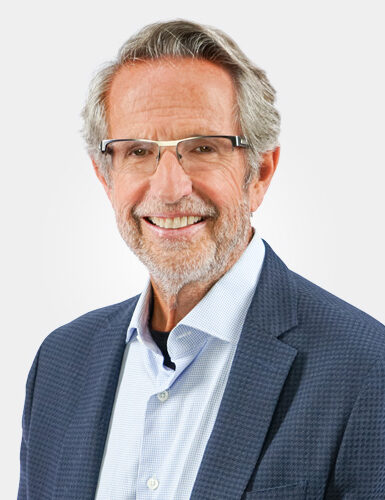
Bob Chapman, Chairman of the Board, Barry-Wehmiller
Denver: Welcome to The Business of Giving, Bob.
Bob: Appreciate the opportunity to share our message. I look forward to the conversation.
“What we realized is in the last 10 years, we have learned a lot. And we felt that we needed to add to not only how you do it and how I got there, but what is the impact on the lives of the people that you have the privilege of leading?”
Denver: Likewise. You just didn’t reissue Everybody Matters, you added 90 pages. When you look at the post-pandemic workplace, and I’m talking about quiet quitting, the mental health crisis, the engagement collapse, what made you say, “We need to get this message out again, only louder.”?
Bob: We wrote the original book 10 years ago because a gentleman named Srikumar Rao, who’s a contributing editor to Forbes Magazine, came in to see our culture and said, “I have never seen anything like this. You have got to share this with the world.”
So the purpose of the original book 10 years ago was to share our message, and the way they said to do that… because I’m not an author, not really a writer… they said the first part of the book was The Hero’s Journey, how I went from management to leadership. And then the second two-thirds was: How do you do this? How do you do it with the intent of helping others embrace this concept of Truly Human Leadership.
Well, it’s been 10 years. The book has been massively more successful than we ever imagined with over 110,000 copies.
Denver: Congratulations.
Bob: What we realized is in the last 10 years, we have learned a lot. And we felt that we needed to add to not only how you do it and how I got there, but what is the impact on the lives of the people that you have the privilege of leading?
So we spent the last year writing those five chapters to capture the impact of what you do, which amplifies the reason why we do it. So those five chapters, 90 pages, were full of the richness of what we’ve experienced that we wanted to be sure we shared, because our hope for the book, and I believe it will be, it will become a foundational book used to teach leadership in schools.
“…95% of the feedback we get on this journey when we educate people on how to go from management to leadership, how to go from using people to caring for people, 95% of the feedback, which amazed me, was how it affected their personal life when they got home.”
Denver: What have you learned over the last 10 years? Just give us a highlight or two of things that maybe surprised you, or maybe some of the resistance and misconceptions you ran into. What really struck you?
Bob: Well, the biggest thing that struck us is the way we lead impacts the way people live. I was never taught in my business school education that the way I would run Barry-Wehmiller would affect your health or affect the way you go home and treat your spouse and your kids.
But 95% of the feedback we get on this journey when we educate people on how to go from management to leadership, how to go from using people to caring for people, 95% of the feedback, which amazed me, was how it affected their personal life when they got home.
And a simple statement that you’ll relate to, this one young lady recently said to me in the listening session I was having with new team members, she said, “Mr. Chapman, I’ve been here six months. I work in the accounting department. I have two kids. I just took one of your classes at the university on listening. I now realize I’m not a good mother.”
That just went right to my heart. It just… I get that feedback all the time, so never would’ve occurred to me. I thought it was all about… we’d measured how Barry-Wehmiller was doing, our progress on organic growth. But in this journey we’ve been on, the feedback around the world; remember I speak all over the world, we operate all over the world– It is a universal feeling– people want to know they matter.
And since we wrote the original book, when Bernie Sanders was a possible presidential candidate, he talked about socialism in the CEO Roundtable, America’s top CEOs, in defense of free enterprise, came out with a statement, “We need to think about more than just the shareholders.”
Well, what I’ve learned is you can say that, but caring is a skill. You can’t just ask people to care about the people in your organization. You have to teach them how to care. It is a skill, just like a language. So huge learnings on the importance of teaching to sustain this and the impact we can make in our society.
And again, in the last 10 years, the company has more than doubled in size. So the exposure we’ve gotten from China to India, to Serbia, to Italy, to Germany, it is a global issue. We just simply don’t know how to care for each other.
Denver: Yeah, yeah. So you’re modeling behavior at work that people are taking back home again?
Bob: I would say we’re teaching behavior; we’re aspiring to model behavior. But remember 20 years ago, we decided that for this to live beyond my time, which was my passion, that we needed to create disciples who would carry it beyond my time. And to create disciples, we decided we needed to create a university.
And so we created 20 years ago Barry-Wehmiller University and began teaching human skills to our leaders and virtually everybody, eventually everybody. And that is listening without judgment, which is the greatest of all skills. How to recognize the goodness in people in thoughtful, timely ways– It’s a skill just like listening is a skill. Letting people know they matter is a skill.
And finally, a culture of service. Moving from a me-centric world to a we-centric world, where we actually care for each other. And so the feedback has been profound.
Denver: Yeah. Yeah. Well, you’ve always viewed your people and not your machinery as your true product. Have you institutionalized the measurement of human value within the company, making it, let’s say, as tangible as financial metrics or not?
Bob: I get most people need some justification to embrace our truly human leadership.
Denver: Yeah.
Bob: And when they say to me, “How do you justify this broad base of initiatives?” I say, “I don’t need to justify caring. I’m going to ask you: How do you justify not caring? How can you create an organization that doesn’t have the skills to care for the people that you have the privilege of leading, knowing you have them in your care for 40 hours a week?”
So my board never asked me to justify it. I never justified it. I just felt we were blessed with this vision of the way the world was intended to be, where people cared for each other in the process of creating economic and human value, as opposed to use each other to create that value.
Denver: Bob, I speak to a lot of nonprofit executives, and I talk to them a lot about culture as well. And often what they tell me is they’re onboard; they love to invest in culture and care, but they’re in survival mode right now in the nonprofit sector. They barely can make payroll.
How do you respond when a leader says they literally can’t afford to implement this kind of approach?
Bob: Well, going back to your first thing, I always like to add, people say, “How do you measure the impacting employee engagement, turnover, et cetera, all those typical metrics?” And I say, “How do you measure love? How do you measure love?” You can’t really measure love… you feel it.
And the way I measure the impact we’re making is I have listening sessions with people all over the world, either in person or by Zoom, and share with them our vision of stewardship that we have towards them, and ask them how they feel.
And the feedback I get fills my heart. I don’t need to justify this to anybody, okay? But when somebody says, “Times are tough. We can barely make the payroll,” I’d say, “What’s that got to do with Karen? What has that got to do with Karen?”
We don’t compromise safety. We don’t say, “Oh, we’re not going to buy safety glasses to cut costs.” And safety’s a physical– your eyes, your fingers, your toes. We’re talking about your soul. We’re talking about profound impact.
And so I can’t imagine anybody who hears this message wouldn’t say, “This isn’t optional any more than safety is optional.”
Denver: Yeah.
Bob: It is foundational that we care for the people we have the privilege of leading, knowing that when we send them home feeling cared for, it will profoundly affect their marriage and their relationship with the children, which we’re all very much concerned with– the health of the family unit in our country and all the struggles they have.
So I don’t try and measure it, even though Washington University and Georgetown came in and did a survey because they wanted a metric.
Denver: Yeah.
Bob: And even though 88% of people in this country feel they work for an organization that doesn’t care for them, their survey showed that 79% of our people feel they work for a company that cares for them. That meant a lot to me. But again, we don’t try to measure things that are so much foundational responsibility. You should not have to justify caring.
Denver: Yeah. Yeah. How has it been in terms of scaling– caring? Very often I talk to a lot of organizations when they scale, and they say the hardest thing to scale is culture. And in this particular case, the caring culture.
Has that been a challenge or has there been a way that you’ve looked at it because you’ve doubled in size? It’s sometimes more challenging the bigger you get. How have you looked at that and been able to be so successful?
Bob: Yes. I would say when we began this journey 20 years ago, we were probably 400 million and we’re 4 billion now. Okay?
Denver: Wow.
Bob: And just for your audience, we’re the combination of 150 adoptions, some people call them acquisitions, I call them adoptions, around the world, from Serbia to China to Italy. So we are a multicultural company.
The easiest thing we do is to show people we care. Why? Because it is a universal need. It is like feeding candy to kids. I mean, we bought a company in a small town outside Belgrade in Serbia.
Denver: Okay.
Bob: And I think the gentleman running the company was 15 million in size, they made packaging equipment, and he chose us among four bidders because of our culture.
And I visited this operation recently. They’ve doubled in size, and they’ve embraced caring beyond your imagination. They’ve created their own university to help teach this. It is profoundly meaningful, so getting people to care is like feeding people.
We are hungry to feel valued, so all we’re doing is feeding the hungry, the hungry soul for, “I actually matter. I’m not just here for your success. You actually care about me.” So I would say to you, I cannot think of a case in 150 adoptions around the world where we struggled with the culture.
I’ll give you an example. We bought a company in France.
Denver: Okay.
Bob: They have workers’ councils. They have government intervention. They have all these things to protect workers from the greed of management. And my board was somewhat resistant to do that because of this governmental involvement in the business.
But I flew over there after we agreed to acquire it. The workers’ council had to vote to approve it, which was fine. So I met with the workers’ council, shared our vision. At the end of it, the workers, a gentleman, looked like he’s in his early 60s, named Felipe.
Denver: Okay.
Bob: Looked at me and said, “Mr. Chapman, could I say something?” And I said, “Sure.” He said, “Mr. Chapman, we’ve been waiting for you for 32 years.” And they began crying.
Denver: Oh my.
Bob: Yeah. I mean, can you imagine how I felt… an ugly American coming over to this wonderful country of France with all the government intervention and just because the government can’t protect your soul?
Denver: Yeah.
Bob: And the hunger there was unbelievable. And the trust they placed in me when I shared with them, “We believe in you and we’re going to have a good future together.” And I take that very personally. People trusted me.
So I would say to you: we see it all over the world, and it is not just business… nonprofits, hospitals, military, government. We simply don’t have leaders. We have managers, bosses, supervisors, principals, but we don’t have leaders, coaches, and mentors, who look at the people that they have the privilege of leading and treating them with respect and dignity and making sure they go home knowing they matter.
Denver: How important is the hiring process in all of this? I mean, I know from my perspective, there are people sometimes who are caring people. And you get them into your ecosystem and they’re the kind of people that are just built that way. Hiring is critical to this or no matter, in these acquisitions, no matter who’s there, there’s an ability to get almost all of them to care?
Bob: So that’s usually the top three questions I’m asked in every speech in the last 20 years. And there’s another way of saying, What do you do about the people that don’t get it?
Denver: Yeah.
Bob: And Bill Ury of Harvard, he’s a world peace negotiator, came to our company and he described it this way– courageous patience. He said, “Bob, you remind me of a bus that comes around in a circuit, pulls up to you, and the door opens,” and said, “Do you want to join us in this journey?”
And you say, “You know what? I’m just not ready to step on that bus yet.” And we say, “That’s okay. We’ll be back.” And so I would say to you, our courageous patience, knowing that everybody is uniquely different, their experiences are different, whether they trust us or not.
But what we did in the early days, Simon Sinek urged us and it was incredible advice: Don’t worry about the people that don’t get it. Focus on the people that do get it. Okay? Hold them up and others will join in time. The law of early adoption. And that, we’ve been doing this 20 years, and that’s absolutely true.
We have a gentleman named Randall Fleming who’s a poster child for that military guy, the kind of guy you walked in the plant. He worked on a machine in the back of our plant. Stay away from Randall. He’s a tough son of a gun. And Randall wanted nothing to do with this when it was launched.
Eventually, the bus came around and he said, “I think I’m going to step on the bus.” He now is a professor teaching caring in our organization. And when Harvard came to visit their top seven MBA professors, they wanted to write a book just on Randall’s journey.
So I would say to you: We focus on the people that do and the people that don’t. We have courageous patience, but eventually it’s just like parenting, eventually hard love. If that individual is making a negative impact on others, we address it in a human way with respect and dignity because when we’re raising kids, there are consequences to behavior.
Adults are the same way. There are consequences without anger, so they can learn from it and hopefully come out of it stronger.
Denver: Yeah, I love Simon’s advice. I’ve talked to a lot of companies. I sometimes encourage them not to do exit interviews, but “stay interviews.” And when we focus on what’s wrong and why you’re leaving, that is not as healthy as to take your best performers and say, “Why are you staying?”
And then really double down on the things that make your organization great because it’s almost like putting grass in and fertilizing it. It will kill the dandelions by focusing, focusing on the positive.
Let’s talk a little bit about the Chapman Foundation that’s touched nearly 20,000 lives, and it is across nonprofits and schools and communities. Talk a little bit about that, any different patterns that you see, the thread that runs through all of them.
Bob: Yes. That really began, again, about 20 years ago. Cynthia, my wife, was with me on one of our visits where we’re having a listening session with people that took our classes. And she was sitting in with me and people said, “I wouldn’t be divorced now.” “My teenage daughter’s talking to me.” “My mother and I have healed our differences.”
I mean, she was so overwhelmed sitting in a manufacturing company with people talking about the personal impact of our classes, our human skills classes. And as we got out in the car to drive back to the plane, she looked at me and said, “Bob, we have to take this outside the company. This is too powerful.”
Denver: Yeah.
Bob: So all of a sudden, we decided to bring this in. It’s now called the Chapman Foundation for Caring Communities. We go into communities across the country, and we’ve taught 20,000 people these human skills around the country. And we partner with communities who want to bring this to communities because we affect the healthcare system, we affect the schools, we affect city council, we affect the police department.
Just think of this example. I live in Aspen, Colorado and we have a very vibrant set of classes in Aspen. And I was sitting at a graduation event with a group that has just taken our class, and two of them were police officers, and we have Defund the Police and all the issues with policing.
And I said to these policemen, “I’m really honored that you took our class, three-day intense class. What did it mean to you?” And they said, “Mr. Chapman, we take hundreds and hundreds of hours to learn how to enforce the law. We’re never taught how to deal with people. This is the most important class I’ve ever taken to serve my community.”
And then they told stories about how they dealt with several issues when they brought these human skills into situations where there were policing issues. And it was profound. So I would say to you… I mean, nurses in hospitals. We have a tremendous issue in the hospitals in our communities, with burnout of nurses and doctors because of the tremendous pressures.
We are bringing our classes on what should be the greatest skill of a nurse or a doctor, or a leader of a hospital– to listen without judgment, to listen to people. So I want to emphasize, the biggest thing we’ve learned is our education system. We have taught people to articulate their thoughts through speech and we’ve taught them debate, critical thinking, how to debate and win.
And what we don’t teach them is how to listen. It’s astounding to me that we missed that in developing our stewardship of these lives that we have in education, that we are giving them academic skills so they can get a good job, make money… in theory, be happy, but we are not giving them commensurate to human skills.
So we felt because we had developed these unique human skills to teach adults, we started bringing these human skills in age-appropriate ways, from kindergarten through 12th grade, into graduate school, so when people leave our education system, they’re ready to live in the beauty of diversity, not the conflict of diversity.
Denver: That is marvelous. And from my point of view, I think listening, it’s become degraded in recent years, and I think the culprit in that would be Zoom, to be quite honest with you.
I really believe Zoom is great for talking and it is horrible for listening because I go to a lot of these meetings as I’m sure you do, Bob, and people like to say their piece on Zoom, and then they check out. They’re on their phone. So it’s become exacerbated since COVID.
Bob: Well, we have taught this in every part of society. So it’s called the Chapman Foundation for Caring Communities. We wonder what’s wrong with kids today, your grandson, others.
Well, if in fact we send 88% of all people home feeling that they work for an organization, doesn’t care about them, which affects their stress level, their ability to be loving themselves, and they don’t treat their spouse as lovingly as they would if they felt valued, or their kids.
And so the healing impact of teaching people how to listen, to value, because it never would’ve occurred to me that listening would actually say, “I actually care about you.” So the greatest, I would just say, the greatest of all things we came upon in this journey to create leaders was the foundational importance of the skills of listening.
Not listening to debate, not listening to judge, but listening to validate the worth of others. It is the greatest act. I thought when you cared for somebody, you went over and talked to them.
Denver: Yeah.
Bob: It turns out when you care for somebody, you go over to listen to them and be present, and be thoughtful.
And again, we’ve taught 20,000 people. I have seen the healing power of listening in every part of our society, not just business… education, and everywhere else. So again, I’d want your listeners to say, “We felt compelled to bring this.”
And we’re now working again with school districts to bring these human skills in thoughtful ways, integrated with academic skills, so when these kids graduate, they’re ready to live in society and have the kind of relationships we all want to be a part of our lives.
Denver: Yeah. And the Charlotte Latin School, correct, would be one of your first?
Bob: Yes. Yeah, that was the first one. Somebody had read my book there, invited me down because they were going to start a leadership program. We got in and we agreed to partner to bring what we were teaching at Barry-Wehmiller University to adults to bring it to children.
And let me tell you what stimulated that, which I think is important to your listeners. A gentleman named Bill Ury, world peace negotiator, came in to see our company because Simon Sinek said, “You’ve got to see this, Bill. You got to see it.”
Bill Ury comes in, world peace negotiator, Harvard, spends two days talking to our people. And given the issues with Ukraine and China and Russia, all these issues we have right now, this world peace negotiator says after two days, “I saw the answer to world peace in your company.” I said, “Bill, how on Earth could you say…” That doesn’t make sense. And he said, “I saw a place where people genuinely care for each other.”
And then he added an unbelievable statement, “I now realized I’ve been going to global peace talks for 30 years, and I now realize that’s exactly what they are, they’re global peace talks. The reason we can’t resolve our differences is because we don’t know how to listen.”
We have a society where whether it’s republican, democrat, liberally conservative, Russian, American, I’m right and you’re wrong. So our capacity to live together in society is just continually being broken, and it’s destroying the world because we don’t know how to get along with the uniqueness in every individual. And that’s what we’ve learned. We’ve been doing this 20 years.
Denver: They learned a lot.
Bob: The healing power of listening is profound, is profound.
Denver: Yeah. It was interesting. I had a guy on the show a couple of years ago, and he had done a study with people who had MS, and they had two groups. In group A, somebody gave that individual a call every week for 52 weeks. And in group B, the people with MS, made the call to someone else who had MS and listened to them.
And the difference between the people who received the call, which was improvement, was minor compared to the people who placed the call and listened to others who were struggling. And it was profound. And it was just such a dramatic example of what you were just talking about.
Bob: Well, I say the school districts… well, at that Charlotte Latin you talked about, after a vibrant discussion with the trustees, et cetera, about this partnership, they said, “Would you like to see a class?” And I said, “Okay.” So I had no idea where they’re going to take me. They take me across to a debate class.
So they said, “Mr. Chapman, these four young gentlemen are getting ready to go to Chicago for a national debating contest. Thank you for coming and sitting in, and we’d love to hear your thoughts.” So I listened for maybe 15 minutes of them debate, in this case, healthcare internet security.
At the end of it, the teacher looks at me and said, “Bob, we’d love your comments.” And I said, “I just saw what’s wrong with this world.” And he said, “What?” I said, “Yes. These are future senators, governors, presidential candidates who we teach “I’m right and you’re wrong.” Why don’t we teach listening?”
Denver: Yeah.
Bob: The answer was, “We don’t teach those things.” I said, “I know you don’t teach those things. Why don’t you teach? It’s the most foundational human skill.” And we’ve been doing it 20 years around the world. And again, this is not an American issue. It is a universal issue.
We have a world where we don’t know how to listen, and it is the greatest act of caring. So again, I see it every day. And that’s the Chapman Foundation to bring, to start healing communities by bringing these human skills into this police department, the school district, the hospital, the nonprofits, the local communities. And we’ve seen it, it’s profound.
“So in terms of the healing that we all are looking for in this country, until we learn to care for each other, which is a skill… you cannot ask people to care for others, you have to teach. It is a skill, just like a language. And we’ve seen it.”
Denver: Yeah. Yeah. No, it’s so eye-opening. I think with most people, when someone’s talking, they’re thinking about the response about 15 seconds into half of this person’s talk. It’s like, “Come on, wrap this up. I got to talk. Let me begin to talk.” And we never fully listen.
And I think a lot of listening, and tell me if I’m wrong about this, comes from the confidence. That if you just listen to someone fully, the right response will come to you when they’re finished. Don’t have to prepare it. You just have to listen to them and have confidence that you’ll know what to say.
Bob: I would say to you that the way I would put it is: you don’t even need to respond. You just need to genuinely listen. Okay?
Denver: Right.
Bob: Because that is a response. Just because it’s not so much what people say is what they mean. And I think you probably know this, but when we teach listening, you take a DISC profile to take the class, which defines your personality.
There’s four basic types of personality: D, I, S, and C. And what I’ve learned, which I’d love to share briefly with your audience, is these four personalities that you didn’t pick the color of your eyes, the color of your hair, you didn’t pick those. And you also didn’t choose your personality. You were born with a particular personality.
And that particular personality creates a lens through which you process the world. That’s why two people can look at the exact same situation and see it entirely differently. Who’s right? It’s not right or wrong, it’s validating that I now understand why Mary or Bill sees it that way. They just have a different lens.
It doesn’t mean the way I see, it’s right, so it dramatically make this point as powerful. The bad news about COVID, it was highly contagious. The good news about caring, it’s even more contagious than COVID. When people feel cared for, it releases in them the capacity to care for others. We’ve seen that, and it’s powerful.
So in terms of the healing that we all are looking for in this country, until we learn to care for each other, which is a skill… you cannot ask people to care for others, you have to teach. It is a skill, just like a language. And we’ve seen it.
And we also teach recognition and celebration. How do you let people know they matter in thoughtful, timely, appropriate ways? So we have this cadence of shining the light in the organization, looking for the goodness and holding up and saying thank you.
So this blend of human skills– listening, recognizing, and serving others has been profound. And again, nobody from Harvard, McKinsey, Stanford, nobody’s ever come into our company and said, “Oh, I know a company like that,” and I can’t believe it. I mean, it’s just this eclectic journey we’ve been on. We’ve created something that gives people hope.
Denver: Yeah. Yeah. It is contagious, I must say, even in the smallest ways. If I’m walking through into a store and somebody holds the door open for me, I tend to hold it open for the next person.
Bob: Yeah, yeah, yeah. It’s hard, but the opposite is true. If 88% of all people feel they work for a company that didn’t care about them, it’s kind of hard to care for others. And so we’re creating caring environments. And the neat thing, when General Flynn, who wrote the foreword to Simon Sinek’s book, came in from the Pentagon, he developed leadership in the Pentagon.
He came in and spent a solid day talking to our team members. At the end of it, he said, “What struck me is your people describe it as a family in their words.” He said they didn’t describe it like a family. They described it as a family. And so we had a vibrant, Simon and General Flynn and I were sitting there, we had a vibrant discussion.
These people are not related to each other. That’s not my brother, not my sister… why did they describe it as a family? Because what does the word family mean in our society? The place of ultimate safety and care. When people describe your company as a family, they’re not talking about family relationships. They’re talking about feeling cared for, and that’s profound.
So I would say to you, what we’ve learned is when we treat people with respect and dignity and we have them in our care for 40 hours a week, we could start healing these issues that we see in our society because people, when they feel cared for, care for others.
“This is something that everybody can embrace, and we can start healing. The greatest act of charity is not the checks we write. The greatest act of charity is how we treat the people we have the privilege of leading.”
Denver: Yeah. So someone listening to this, let’s say they’re working at a small nonprofit with a dozen people, shoestring budget, and they’re inspired. I don’t know how anybody could listen to you and not be inspired. And they decided they want to start moving towards Truly Human Leadership. What should the one thing they do tomorrow be?
Bob: Well, on YouTube, when I gave my TED Talk on listening, an organization did an animated version of it. So my 20-minute TED Talk is in a kind of a graphic animated way done on YouTube, which I think 50,000 people watched. So you can start by just, A, listening to your podcast, and B, going to the internet, finding the YouTube video that is an animated version of my TED Talk and see how it resonates with you.
I mean, I can’t imagine it not resonating because whether you have two people or 10 people or a thousand people, we have 12,000 team members Don’t you want them to feel cared for? The numbers are not really important. It’s the fact that you have a chance to impact those lives.
And then if this all makes sense, we wrote the book to show you how to go from managing people to caring for people. Remember, nonprofits are no different than other organizations. People feel just as not valued. It’s our cause, it’s the purpose, not the people.
Remember, I was interviewed by Washington University organizational development professors for an hour and a half, and at the end of an hour and a half interview, they said, “You’re the first CEO we’ve ever talked to that never talked about your product.”
Denver: Yeah.
Bob: I paused a minute and I said, “I’ve been talking about our product for the last hour and a half. It’s our people.”
Denver: That’s right, the people.
Bob: “I won’t go to my grave proud of the machinery we build. I’ll go to my grave proud of the people who did that.” Caught them completely off guard.
So whether you have two people, 10 people, 15 people, we are sharing this with this podcast, with all the video. This is something that everybody can embrace and we can start healing. The greatest act of charity is not the checks we write. The greatest act of charity is how we treat the people we have the privilege of leading.
Denver: Yeah. Yeah. I think actually, Bob, it can sometimes be worse in nonprofits because their product is caring. And in the abstract, they’re doing things to care for people. And when you have that cognitive dissonance in the organization to say, “This is who we profess to be,” but look at this place, it’s even more dramatic than it would be often for a for-profit company.
Bob: Yeah. And it’s not because it’s not a noble cause, because the leaders of that nonprofit were not taught to care, the leaders of these major corporations where people feel that way. We are self-destructing in this country because we don’t know how to care for each other.
Denver: Yeah. Finally, Bob, you call this a human revolution, and I would agree with this, the idea that we forgot to see people as our purpose. But revolutions don’t end with one book or even a 10th anniversary edition, or one foundation, it requires generation.
What’s the part of this revolution that you have started, but won’t completely finish? And what are you handing off to the next generation of leaders to complete?
Bob: Well, clearly that’s an easy answer, is education. We will not have the society that you and I want to be a part of ourselves or bring our children, our grandchildren into until we change education, from academic skills to a blend of academic and human skills, so we can create human and economic value in harmony. That is the key.
So we are working really hard now to develop age-appropriate curriculum to bring these skills from kindergarten through graduate school. And we have a number of school districts in the country we are working with, including CASEL, which is a coalition for social-emotional learning.
So we will not have the society that you want to be a part of, that you want your grandson to be a part of, until education embraces their role and the brokenness we have because we are not teaching human skills, which are the key to the world that it was intended to be, where people genuinely care for each other.
Denver: Yeah. That’s so well said. And now we live in a world too that academic skills are more ephemeral than ever, but those human skills last a lifetime.
Bob: Yeah. I mean, again, we’ve been doing this 20 years, 300 speeches in the last five years. Nobody has ever debated what I just say to you. It’s just, if you walk out and see the moon, you’re not going to debate there’s a moon, but doesn’t mean you know how to get there.
So what we’re trying to do is take people over that bridge, from management to leadership, from using people to caring for people, and it will fill their heart with joy to see the reaction of people when they give the feedback. So we’re talking about healing, the power of business to heal the brokenness we’re feeling in the world when we actually care for the people we have the privilege of leading.
Denver: Amen. The book again is Everybody Matters: The Extraordinary Power of Caring for Your People Like Family, expanded 10th anniversary edition. It’s not just a business book, it’s a reminder that the way we treat people at work shapes the way they treat everyone else in their lives.
I want to thank you so much for being here today, Bob. It was a real delight to have you on the program.
Bob: It’s a privilege to share our message with you, and my hope is I’ve touched your listeners’ hearts so we can start a movement that will heal this brokenness.
Denver: You certainly have.
To celebrate my 50th year in the nonprofit sector, I’ve put together a gift for you — a practical, field-tested guide to building world-class nonprofit workplace cultures. It’s called Cultivating Nonprofit Excellence, and it’s based on insights from nearly 1,000 interviews and 150 focus groups with nonprofit leaders around the globe. It’s completely free and instantly downloadable at blanchedalmond-mosquito-418475.hostingersite.com