
Plinio Ayala didn’t just leave the South Bronx of the 1970s and ‘80s—he returned to it with a blueprint for economic mobility that’s now reshaping workforce development across America.
As President and CEO of Per Scholas, Plinio leads a tech training nonprofit that’s placed over 25,000 graduates into careers earning three times their previous income. But here’s what sets him apart: while most nonprofits shrink from rigorous evaluation, Plinio embraces randomized controlled trials. While foundation funding tightens, he’s building corporate investment as his primary growth engine. And while AI disrupts every sector, he’s racing to future-proof America’s workforce—one 15-week bootcamp at a time.
As Plinio told me: “I wake up in the mornings, Denver, and I think about the millions of Americans across the country that woke up that day looking for that one opportunity, and almost all of them won’t find it.”
Today, we explore how Per Scholas is creating more of those opportunities—and why Plinio won’t scale without data, won’t compromise performance for growth, and won’t accept
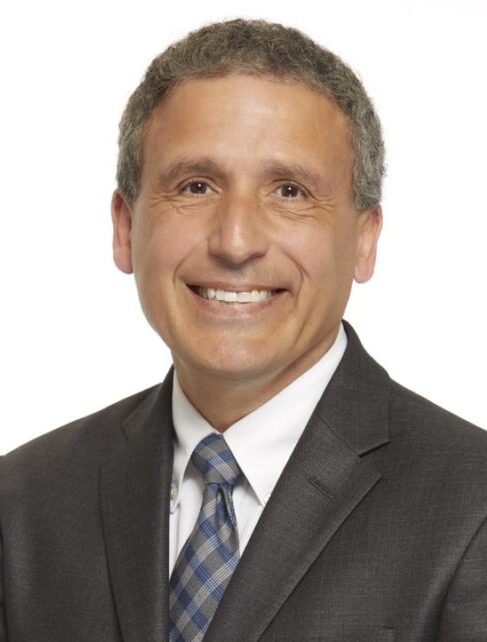
Plinio Ayala, President and CEO of Per Scholas
Denver: Welcome back to The Business of Giving, Plinio.
Plinio: Denver, it’s a pleasure to see you again, and thank you for having me on your show.
“I am a firm believer that talent is indeed ubiquitous, but people don’t know where to go to get a chance to get that one opportunity that can change everything. And so from my perspective, growing up in the South Bronx and seeing it live, and continuing to see it in communities across this country, only re-energizes me and really pushes the needle around wanting to scale the organization so that we have greater impact across the country.”
Denver: It’s my delight. How does your South Bronx upbringing still shape what risks you’re willing to take, and which ones you absolutely won’t, as you scale Per Scholas nationally?
Plinio: Denver, as you know, I grew up in the South Bronx in the ’70s and ’80s, and it was a very tough time for the borough. But what I quickly realized as I was growing up was that the talent was there. There were incredibly smart, committed individuals wanting to create change for themselves and their families they just didn’t have an opportunity to pursue.
And I think that’s still very prevalent in our communities across the country. I am a firm believer that talent is indeed ubiquitous, but people don’t know where to go to get a chance to get that one opportunity that can change everything.
And so from my perspective, growing up in the South Bronx and seeing it live, and continuing to see it in communities across this country, only re-energizes me and really pushes the needle around wanting to scale the organization so that we have greater impact across the country.
Now, with that said, we’ve got to do our growing very strategic and intentional, understanding that we’ve got to continue to perform and meet our metrics. There should be no dilution of our performance as we scale. And so we’ve looked at a number of cities where all of the pieces were not in place and decided not to go there.
And I think that was the right decision for the organization and for that community. And we’ll continue to do that as we expand our reach across the country, being very intentional, very strategic. But knowing that there are so many Americans that can benefit from our program, it’s our responsibility to continue to grow it.
Denver: And they already have. For listeners who are not familiar with Per Scholas, tell them exactly what you do.
Plinio: Denver, we work with employers to help inform all aspects of our tech training initiatives. We run about 14 different training tracks currently, finding people from communities that are often disconnected from these good paying tech jobs.
Put them through a 12 to 15-week training bootcamp and work with the same employers to create opportunities for jobs and careers. And 80% of our graduates get jobs in the industry; 85% graduate from our program, and they’re still earning three times more than what they were earning before they entered our training.
So the economic impact of our work is significant, and we’ve been able to scale it from that one little office in the South Bronx when we were founded 30 years ago, to now 25 cities across the nation, serving over 5,000 individuals through our program.
Denver: Remarkable. Plinio, AI is changing so much. Name one technical skill you’ve stopped teaching in the past year or so, and one capability that didn’t exist in your curriculum two years ago, but is now essential.
Plinio: We’ve made so many modifications to our coursework over the last year and a half. We’ve slowed down our software development training. The jobs have dried up in many cases in that area. But we’ve added all types of AI elements for the remaining courses that we have.
Who knew that terms like agentic AI and ChatGPT and all the things that we are now playing with would be in existence now the way it has? And AI is certainly transforming the space, but again, talking to employers, we are learning exactly what we need to inject in our coursework so that we continue to develop the talent that companies are saying they need.
Denver: With things moving so fast, how do you go about future-proofing of the workforce?
Plinio: I think, Denver, that’s a great question. I raised this flag six years ago.
Denver: I recall.
Plinio: Yeah. And I was extremely concerned that as a nation, we were not preparing our workforce for all the changes that AI would create, and it is certainly disrupting every facet of work in every sector. And we need to be mindful that the entry-level requirements of these new jobs are only going up.
And we need to make sure that we’re teaching people the skills that they need to be able to take advantage of these good paying jobs. And I am not sure that we are doing that en masse. And so I’m afraid that the chasm between the haves and the have nots will only increase as a result of this.
And that’s just not an economically sound approach for our nation to take. We need to be able to expand our training and ensure that more people are exposed to what’s happening in the AI space.
Denver: You stay abreast of technical training, and you continue to deliver that, but you also focus on soft skills and communications. What are the mindsets you try to instill in the people who go through your program, recognizing that much of what they’re learning there might be out of date in a couple years?
Plinio: Denver, we’ve spoken to so many employers over the last year and a half to better understand all the shifts in the tech space, and almost every single one of those employers comes back to us and says: It’s the durable skills, it’s the soft skills that we value the most.
And so we have continued to double down on the durable skills training. We incorporate that into every single one of our courses. We are now revamping that course to meet the current times. But our graduates lead not only with the tech skills, but they’re ready to go. Their communication skills, working in teams, being able to think outside the box, that’s all part of the durable skills training that we provide our graduates.
Denver: Yeah, and I remember when I was up there and I spoke to some of the people on your team, they talked about continuous learning. And it was embedded in them that they recognize that whatever they knew right now, they had to have that mindset that this will never end. They will have to continue to learn on an ongoing basis. And if you have that, some of these challenges are not nearly as challenging.
Plinio: Denver, that is so true. I think part of our secret sauce is not just the tech training that we provide, or the durable skills training, but also, we teach people how to learn. And that is so valuable in this space, knowing that you constantly need to upskill yourself to remain relevant.
And our graduates leave our courses hungry for more, and that is so valuable as our graduates continue to build their careers.
Denver: Oh, that’s a lifetime gift you give them. It just keeps on giving and giving.
Plinio, most nonprofits avoid randomized controlled trials because they’re afraid it might disprove their impact. That’s not you. What gave you the intellectual courage to risk that discovery, and what results surprised you?
Plinio: Well, first of all. They are very painful.
Denver: They really, they pin down an organization, don’t they?
Plinio: They sure do. They sure do. And it’s a moral issue in many cases, right? How do you say no to someone that goes into the control group, versus the treatment group?
But I think it’s important for the space and for the field to show models that have impact. And I think for us, we hold it as a responsibility to ensure that our return to our investors is the best we can generate. And you can only do that by evaluation. And so random controlled trials allow us to be able to learn what’s working and what isn’t.
And I think if you don’t think of an RCT as a punitive evaluation, I think that’s important because I think most organizations are afraid to participate in this because they don’t know what will happen, and the results are not positive.
We are constantly evaluating our works to ensure that we can produce the best talent that we can, and it’s viewed as a good thing to have, not a dangerous thing to do.
Denver: Yeah, yeah. The people I know who’ve done it, they say that often what they do is to try to prove their impact to raise more money. And all those who have that mindset have miserable RCTs.
But the ones who go in with: “We just want to learn so we can get better,” they have wonderful RCTs because they have a different approach to it all: We want to get better, or we want to learn, as opposed to: We want to raise more money. If you do the former, the latter will take care of itself.
Plinio: That’s exactly right.
Denver: What’s something that came out of it that perhaps changed the way you approach what you were doing?
Plinio: I think the employer-centric approach was enlightening, but intuitive. If you talk to an employer, and they tell you these are the things that you should be training folks in, and you do that, then you can hold the employer accountable to hire our graduates.
And the first RCT really taught us that that approach made the most sense. And so we’ve used that since building everything that we do, every course that we create, every assessment tool that we use through the lens of our employers. And that gives us the best chance to produce the talent that employers say they need and that they’re hiring.
Denver: You just mentioned graduates. Tell me about one graduate whose success didn’t just change their life, but shifted their family’s or community’s entire perception of what’s possible.
Plinio: Denver, I was in Atlanta two weeks ago and I met this amazing woman, named Janae, and she shared her story with me. She was a 16-year-old mom who had to drop out of high school to support her daughter, took whatever job she could find. But she, over time, realized that that just wasn’t sustainable, that she needed to build a career.
And through the recommendation of a graduate of our program, she decided to enroll. She took our IT support course. She graduated with a number of certifications, and she’s now working for a very large company as a data center technician.
And she said to me as she was tearing up, “The work that Per Scholas does is multigenerational. My life is different as a result of this program. My daughter’s life, my children’s lives will be different as a result of this.”
And that’s exactly right. When we look at this work, we know that we’re impacting more than just that person who graduates from our course, that if they have children, their significant other, everybody benefits as a result of that individual succeeding. And so our impact goes way beyond that individual. It truly is multigenerational.
Denver: Yeah. Yeah. That’s wonderful. Tell us a little bit about your corporate partners. I mean, what those relationships are like, how you try to have your training fit what they’re needing in the marketplace right now… maybe some industries that have proven to be resistant to true co-creation. Give us a little sense of how those relationships develop and how they evolve.
Plinio: This is a perfect time to talk about the importance of those relationships. With all that’s happening with AI, we have built this very strong team of CTOs informing us on the changes and making recommendations to our curriculum.
And we’ve been able to make those adjustments in real time almost based on their feedback. That is invaluable. Getting that information from our corporate partners really is part of our success as an organization.
I think for the most part, employers view us as a significant value proposition. This is not about altruism. And so they’re more willing to engage with us because they know that we’re producing a talent that they can consume in large numbers, that hit the ground running, and generate a return almost immediately for that corporation.
So we’ve had very few that have been resistant to wanting to work with us. I think for the most part, everybody understands just how big the value is that we bring to those partnerships.
“Well, I think the end game here is getting that learner into the best possible job that we can. And as a result, helping them build what eventually becomes an amazing tech career. And so I think for the most part, our instructors, our coaches, our staff have put aside what they might feel about corporate America for the end game, which is getting these individuals into these amazing opportunities.”
Denver: Plinio, how do you sell McKinsey frameworks like Big Rocks, and I know you’re working with OHI, to mission-driven instructors who might sometimes see corporate strategy as not what they embrace in terms of what they want to do?
Plinio: Well, I think the end game here is getting that learner into the best possible job that we can. And as a result, helping them build what eventually becomes an amazing tech career.
And so I think for the most part, our instructors, our coaches, our staff have put aside what they might feel about corporate America for the end game, which is getting these individuals into these amazing opportunities.
And so we’ve had very little resistance from staff. Yes, we’re all very mission- driven, but we also understand the responsibility that we have to our learners, to our corporate partners, to our funders, to produce the best program we can. And opinions and feelings and all of that is put aside so that we can do the best work we can.
Denver: I’m a huge fan of Social Finance, and I just admire the work that they have done for so many years now, and they’re obviously into workforce development. Beyond retention numbers, what’s the most unexpected way those zero-interest loans change how graduates approach their careers?
Plinio: Denver, those zero-interest loans… by the way, I love Social Finance. I think the leadership is amazing. They are a top…
Denver: Yeah. Tracy Palandjian is just superb.
Plinio: Tracy is just incredible. I’m a big fan of hers.
In retrospect, we should have known better. I mean, when someone has a little money that they can use in case of an emergency or just to get themselves to training, it does increase retention, and it increases employability.
And that’s one of the biggest lessons I learned through this, that we were getting some of our graduates not going to interviews, and we were just puzzled as to why. And it was simple. They just didn’t have the money to get to the interview or wait until their first paycheck two weeks later. This loan allows them to have that runway.
And so I think I’m excited about how we’re using this. I think the field can learn from this. People need money to survive a 12-week, 15-week bootcamp, and this gives them that opportunity to do so.
Denver: Yeah. Yeah. It’s amazing how prevalent that is. I had somebody on talking about bail reform and often, people don’t go out to their bail hearings and they try to figure out why. They didn’t have the car fare.
Plinio: Fare, right.
Denver: They didn’t have the subway fare.
And when that was provided to them, I think 96% or something like that went. But we never think about that. We think about, well, we think of other reasons.
Plinio: Why didn’t they go?
Denver: Why didn’t they go? And you can’t count on them. They don’t have anything.
What do you think is the single biggest mind shift among funders, employers, and your own team needed to make corporate investment your primary growth engine?
Plinio: I think that there needs to be a realization from corporate America that they need to be part of the solution, that the creation of talent has to be here in this country, that we’ve got to have homegrown talent that could move into these great paying jobs.
And I think for the most part, corporations understand that in order for them to remain competitive in this global market, that they’ve got to help figure that out and make the appropriate investments in organizations that actually produce the talent, so that those organizations can scale and provide talent for those corporations across the country.
And I think that’s why we’re a good example of a tremendous value proposition for employers. We can really address the issues that employers have across this nation because of our reach, and do it in a way that’s intentional, that’s strategic for the employer and for this country.
Look, the bottom line is this. I truly believe that our work has a moral imperative attached to it, but it’s also an economic imperative. We’re helping to rebuild the middle class, moving people from being dependent on the system to now being tax contributors.
This is a nonpartisan issue, and so government should be running alongside us. Corporations should be running alongside us. It is the ultimate triple win. Communities win, our economy wins, and our employers win.
Denver: That’s right. And the next generation wins, as you said a moment ago.
Plinio: Right. Exactly.
Denver: And it really is a symbiotic relationship because as you said, these CTOs make you better, and you in turn make them better, so you do have a virtuous circle there.
This is a tuition-free program, so I have to ask you about your business model. Foundation giving is declining, or probably will… it’s getting tougher. Corporate philanthropy is tightening. You obviously have a value proposition for corporations, but certainly philanthropy is tightening.
How has Per Scholas adapted its funding strategy to thrive in what is a challenging environment for every nonprofit organization?
Plinio: I think there are a couple of things that we’re trying to do. I think to the extent that we can get employers to contribute to the cost of training, we’re doing just that in an earned revenue type model.
But I think part of what we’ve been attempting to do over the last 18 months is create layers of efficiency across the organization that can bring the cost of student learning down, cost per learner down, using AI.
So I think we are ahead of the curve, perhaps than other nonprofits as we really are trying to infuse AI into every aspect of operation so that we can realize efficiencies and bring the cost per learner down. And I think we’re beginning to see that.
Denver: Is there a place where AI has really been particularly effective? And I’m asking this, let’s say in the context of another nonprofit organization who might be thinking: Well, what am I going to get out of this AI? Where has it really paid huge dividends for you?
Plinio: I think in a number of areas. I think for our development team, for sure. We’re producing grant opportunities faster, reports faster. We just created an AI tutor buddy for our learners. So if someone needs remediation or is running behind a bit, we’ve got this AI bot that is providing…
Denver: Those are great.
Plinio: …additional training for our graduates.
And I think it’s been interesting to see how the organization has begun to absorb this and adopt it and want more. And I think over the course of time, we’ll continue to inject more AI opportunities across the operation to realize more efficiency.
Denver: As I just mentioned, this is a tough time for a lot of nonprofits, and they’re pulling in their horns a little bit. You’re looking to triple your impact by 2030. Tell us about that counterintuitive thinking.
Plinio: Well, Denver, that’s just the way I think.
Denver: That’s the way you are. Okay. Next question.
Plinio: Against the grain. I think it’s our responsibility. We have something that’s working. And yes, it’s tough to raise additional funding to be able to pull off this scale, but I think we need to try. And our communities need more Per Scholas, they don’t less. And so, look, we have a moonshot here. Maybe we hit it, maybe we don’t, but I’m convinced that we need to do more.
And that’s exactly the path that we’ve embarked on. I wake up in the mornings, Denver, and I think about this every single day. I think about the millions of Americans across the country that woke up that day looking for that one opportunity, and almost all of them won’t find it.
And so I need to go to bed every night knowing that I did my best to create more opportunities across this nation for people that want it and need it. And so, yes, we’re going to grow, and it’s going to be tough. And we’ll have our challenges, but at the end of the day, it’s trying to create more impact for more Americans, as much as we can, over the next several years.
“But what we believe in is doing the best we can for the people that we enroll, using data to continue to fix and modify and better the program so that we have greater outcomes and greater impact.”
Denver: Scaling impact, scaling your footprint, finding new cities, all those things are challenging. But what I find to be equally challenging, if not more so, is scaling your culture. How do you do that when that footprint is just going from size 7, to size 9, to size 12?
Plinio: In the middle of a pandemic, in almost every challenge possible over the last four or five years, it’s been one of the toughest things to keep in place that culture across every single one of our sites, in every single city, that in many ways is different from the other city.
The best thing that I could say to that is we use data to drive our decision-making. And it eliminates a lot of the making decisions by feelings. It’s very objective; either it’s working, or it’s not.
And it creates a sort of baseline or a playing field that’s level, that people can start working from. And no one can dispute that. So data doesn’t lie. And so if we can build upon that, and that’s what we’re trying to do, I think it helps to maintain aspects of the culture that might get diluted over time.
But what we believe in is doing the best we can for the people that we enroll, using data to continue to fix and modify and better the program, so that we have greater outcomes and greater impact. And I think everybody buys into that, and that’s a great starting point for the organization to move forward with.
Denver: Yeah, I would agree. Something about culture that people don’t talk enough about is fairness. And when you have data playing an outsized role in terms of decisionmaking, then it doesn’t become: He likes or doesn’t like him… doesn’t like this. There’s a fairness.
And when you have that, people can put up with an awful lot, you know?
Plinio: Yes, exactly.
Denver: Because they realize that this is a fair organization, and that is great.
As CEO, Plinio, what’s one leadership habit you’ve had to unlearn as Per Scholas scaled from hundreds to thousands and thousands of graduates annually?
Plinio: Trusting the team around me. And giving…
Denver: Is that hard?
Plinio: Yes, it was very hard, Denver. But I’ve realized over time that my role needed to shift to be more of a visionary and let people execute within that vision, and trust that they’re going to make good decisions. And I think that’s exactly what we’ve done.
We’ve built an amazing team around me. I go into these meetings not wanting to be the smartest guy in the room.
Denver: Yeah.
Plinio: And when you can feel comfortable with that as a human being, as a leader, I think that’s when progress happens.
And so, yeah, giving up control was hard, but I think it was the right thing to do, and I think it has allowed our ability to scale and the speed of scale to be much faster than if I tried to control everything.
Denver: Yeah. Yeah. Also takes a lot of the pressure off. I think there was a time, particularly with leaders years ago, where you figured you had to have the answer to every question because you were the leader. And once you get relieved of that, it just is a tremendous weight off your back.
Plinio: I’ll share a story with you, Denver. Our founder who has since passed, John Stookey, an incredible man, when I first became CEO, he would walk me around the facility, and he would ask me, “What’s happening in that room? What’s happening in that room?” And I had the answers for him.
He did that a couple of years later and I didn’t have the answers. And he said, “Now we can grow. Do you trust the people in those rooms? Then we can grow.” And that was a lesson learned, and he was absolutely right. You don’t need to have all the answers. You need to make sure that people around you have all the answers.
“I think it’s the degree requirement… these artificial barriers that employers are creating for themselves that’s really hurting their ability to acquire amazing talent from these alternative pipelines.”
Denver: That is a great story, a great illustration.
Finally, Plinio, if you could eliminate one hiring requirement or cultural assumption overnight in the workplace, what change would legitimize skill-based careers at a national scale?
Plinio: I think it’s the degree requirement… these artificial barriers that employers are creating for themselves that’s really hurting their ability to acquire amazing talent from these alternative pipelines.
It is the, I think, biggest barrier… if eliminated, can give access to corporations to incredibly talented, gifted individuals that get excluded because the AI boots them out. AI boots out their resume, which is ironic.
Denver: Yeah.
Plinio: But given a chance, that person can just be an amazing talent. I think corporations are beginning to think that way, but not as many as I had hoped.
Denver: Yeah. I think that’s a good observation. And to a degree, they’ll pay a little bit of lip service, but they’re in a situation ironically that parallels a situation you were years and years ago when they didn’t trust.
And they just can’t give up something that they’ve had for decades and decades and decades. They know it doesn’t make sense anymore, but they just can’t let go of it.
Plinio: It’s a hard thing to do, right?
Denver: Yeah. Yeah. It’s a, why feed the hand that got me here? This is the way we’ve always done it. These have been… even though it doesn’t make sense anymore in today’s world, they just can’t surrender it.
Plinio: That’s exactly right. Unfortunate.
Denver: Yeah. Plinio, for listeners inspired to support Per Scholas, what’s the most impactful way they can engage on your website and beyond?
Plinio: Please visit www.perscholas.org. There are opportunities to volunteer. We love when we have folks do mock interviews with our learners, review resumes, provide our learners tips on how to prepare for the world of work.
Please get involved. We love having volunteers. It’s part of the lifeblood of this organization.
Denver: Well, I live in Boston now. I can’t do it on a regular basis, but when I’m in town, you can count me as one.
Plinio: That is awesome, and we’ve got to get you to visit our Boston office…
Denver: Oh, cool.
Plinio: …in the next month or so.
Denver: Sounds great. Well, thank you so much for being here again today, Plinio. This was great information. You have such an interesting organization, and it was an absolute delight to have you on the program.
Plinio: Denver, the pleasure was all mine. Thank you very much.
To celebrate my 50th year in the nonprofit sector, I’ve put together a gift for you — a practical, field-tested guide to building world-class nonprofit workplace cultures. It’s called Cultivating Nonprofit Excellence, and it’s based on insights from nearly 1,000 interviews and 150 focus groups with nonprofit leaders around the globe. It’s completely free and instantly downloadable at blanchedalmond-mosquito-418475.hostingersite.com