

Right now, in fields across dozens of countries, there’s an invisible race happening. On one side: curious children wandering into what looks like empty farmland. On the other: teams of specialists working meter by painstaking meter to find what’s buried there first.
Today we’re joined by Darren Cormack, CEO of the Mines Advisory Group—an organization born from witnessing the devastating aftermath of conflict in 1980s Afghanistan. MAG has since become a driving force behind the global movement to ban landmines, co-founding the International Campaign that earned the 1997 Nobel Peace Prize.
With 80% of landmine casualties being civilians—nearly half of them children—Darren’s teams operate in some of the world’s most dangerous territories. Recently honored with the 2025 Hilton Humanitarian Prize, he brings hard-won insights about innovation, leadership, and what it takes to build hope in the shadow of war.
“We’re in a race to find a landmine before a child does, and this money will help us run that race faster.”
Join us for this compelling conversation about courage, community, and the delicate art of clearing the path to peace.
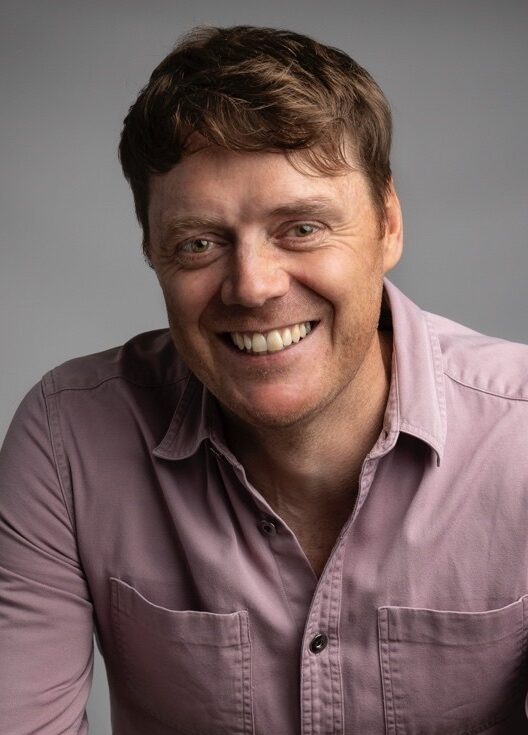
Darren Cormack, CEO of the Mines Advisory Group
Denver: Welcome to The Business of Giving, Darren.
Darren: Yeah, thank you. Thanks so much for having me.
“…MAG’s work is founded from what our founders had witnessed, the devastating effect that landmines and unexploded ordnance were having on communities in the late ’80s in Afghanistan. And that deadly remnants of conflicts were impacting civilians all around the world, and it continues to be a pressing issue. So put simply, MAG is a humanitarian development and peace-building organization that works to find landmines before a child does.”
Denver: For those who may not know MAG, can you give us a brief introduction to the organization and the impact it seeks to make?
Darren: Yeah, thank you. So, I mean, MAG’s work is founded from what our founders had witnessed, the devastating effect that landmines and unexploded ordnance were having on communities in the late ’80s in Afghanistan.
And that deadly remnants of conflicts were impacting civilians all around the world, and it continues to be a pressing issue. So put simply, MAG is a humanitarian development and peace-building organization that works to find landmines before a child does.
Ultimately, landmines have devastating effects on life and limb, and also have a major impediment to humanitarian and development assistance. And our work is to be at that forefront really of that response, is to enable communities to live safely and to live without the fear ultimately that landmines and unexploded ordnance presents.
Denver: Yeah. Many people don’t realize what demining involves, and I, in fact, would be one of those people. So could you walk us through quickly how your teams detect, remove, and destroy landmines safely, and what safeguards protect staff and communities?
Darren: Yeah, thank you. I mean, the starting point really is to work in context where we know obviously there has been conflict and the legacy and the use of munitions and landmines.
But so much of that problem is about engaging the community. It’s about working with community members who might have been involved in conflict, might have been displaced from conflicts. Or tragically… I was recently in Iraq and I was meeting with a village elder who very simply came up to me and said, “Thank you for clearing this valley. I have lost a brother, a nephew, and a son out herding goats in this valley. And I can now live free from fear. I can now die in peace knowing that my future generations are safe from this.”
And it’s that community experience that so often will help us, will be the starting point of where we must work, where we’ll have the highest impact. So we’ll go and survey an area, taking the evidence point of a community interaction, or sadly an accident, and define the problem to make sure that we are being efficient, effective. You have to really get that problem statement as clear and as small essentially as possible before you can then start perhaps intrusive work.
So from there, we might be able to confirm the area is hazardous and start demining, and that would be a deminer typically employed from a local community. Working, lying down, kneeling inch by inch, meter by meter, to make safe land from communities they’re in.
And that’s very practically how most of our work is still done, with people from local communities putting themselves into these environments to make land safe for their wider communities to prosper.
Denver: Where are some of the most dangerous places in the world today when it comes to landmines?
Darren: Well, interestingly, so if people do what they’re supposed to do, there are challenges given the complexity of a device or some of the terrain you might be working in, but principally, we’ve got five and a half thousand staff working around the world.
The bigger risk to staff is going to be the safety of the humanitarian space. We’re seeing aid workers killed at record numbers right now, and so much of the threats that the organization faces is the context. So if 50 miners, 20 miners are following protocol, following those standard operating procedures and doing everything as they should be, with training, with adequate supervision, with constant sort of engagement…”Are you too hot? Are you tired? Is your commute too long? Have you got stuff going on at home?” And so often, I was talking with a mother of a…who was on one of our demining team leaders, and she was, at the time, she was commuting two hours having been… keeping awake with her children because she was concerned for their safety.
There were drones flying overhead at night. They were up in the night scared. And then she was driving two hours, and then she was demining, and then she was driving back. And so much of good management of minefields and what we do is that, that engagement, that listening with staff, that empathy, that sense of understanding of where somebody’s coming from so that they’re not starting to get tired, cut corners; and if they follow protocol, then generally the end result will be the same.
And that’s really what we try and ensure, is that our culture is supporting safe practice and encouraging safe practice.
Denver: Yeah, in a very holistic way. Not just when they’re on the job, but when they’re home and everything else because it’s all connected.
Darren: Absolutely.
Denver: Yeah. Yeah.
Darren: Yeah.
Denver: How are tools like drones and sensors, or AI changing your work, Darren? And is there a recent innovation that really excites you?
Darren: I mean, I think there is huge potential really for us to embrace technology further as a sector. And we’re seeing conflicts like Ukraine and the focus that’s bringing in terms of different forms of philanthropy and investment really propel that. And I think what’s most exciting for me is where we can reliably use technology such as drones fitted with sensors to help us define a problem statement quicker, sooner.
And I was coming back to the earlier point about: How do we define a minefield? If you can harness technology to help you discount areas that are currently suspected as being hazardous, but probably aren’t, and get that problem statement down to something that is confirmed, releasing the land which maybe was never contaminated but it was registered as a suspect… if you can get that problem statement down and you can use technology, enormous gains can be made in what we do as a sector to improve the efficiency and effectiveness.
But there’s a range of partners we have to work with as part of that journey, and MAG and many other organizations are committing to harnessing technology. Another example from working in the Middle East… MAG scaled up significantly in response to the threats of industrial scale production of landmines and IEDs by Daesh across Syria and Iraq.
We are using drone technology there to survey urban environments to ensure the safety of our staff. We could put technology, use technology, such as drones to fly into buildings to help understand, Okay, is this booby trapped? Is there something we need to be alert to here? And that’s another way of ensuring the safety and efficiency of our work that we’ve been talking about.
Denver: Yeah. Yeah. Because it does seem, to your point, urban warfare is far more prevalent than it used to be. And I would imagine you have to adapt your operational models and team structures to meet those emerging threats.
Darren: You’re absolutely right. And there are many factors to that. One is that urban environment can change the probability with which, say, bombs explode and impact. You are dropping bombs, which might have been tested in a more benign environment. You’re dropping them into a three-dimensional environment, that sort of pancaking effects, which might mean that bombs don’t explode, and that increases the likelihood of finding an unexploded ordnance.
Secondly, you’re working in a context where that in-urban environment is full of rebar and other types of metal that make finding the actual hazard far more complicated and far more inefficient because there’s so much metal, as you can imagine in buildings that have collapsed or been contaminated.
So there are a range of factors that make that sort of challenge different from perhaps the sort of traditional minefields that you might be familiar with, from somewhere like Southern Africa, where you’ve got huge swaths of unused agricultural land that we can work through.
“I think another area where MAG has really been, I hope, at the forefront in terms of adapting to new threats and trying to find ways to engage communities is this risk education. And 80% of the 6,000 people killed or injured by landmines, say in 2023, were civilians. And nearly 40% of those were children.”
Denver: Would there have been a, let’s say, a thoughtful critique or setback that prompted MAG to rethink its approach? And what changed as a result?
Darren: I mean, I think we’re constantly innovating as an organization, in particular in these adaptations to the changing nature of the threat that we’re trying to deal with. So, we will always look at an incident or an accident, and ensure that as a culture we’re learning from this and we’re transparently sharing the learning.
So we might have been dealing with a device that’s quite temperamental, and we were previously working with that manually, and a deminer was diffusing that. We might then decide what we need to use is a mechanical asset to deal with that and to adapt our approaches to ensure safety and effectiveness of what we do.
I think another area where MAG has really been, I hope, at the forefront in terms of adapting to new threats and trying to find ways to engage communities is this risk education. And 80% of the 6,000 people killed or injured by landmines, say in 2023, were civilians. And nearly 40% of those were children.
And children are curious. I mean, I’m a father of three. I worry about them playing out in the street outside our house. I don’t have to worry about them getting blown up though because they’re wondering what’s over the neighbor’s fence and they climb over to get the ball or whatever they might be telling you they’re doing.
Denver: Yeah.
Darren: And they’re finding stuff that’s shiny and they’re tampering with it. So we’ve had to find ways to adapt our messaging to relate to our audience. And that attention span and that bandwidth, and we were talking about this a little bit earlier in a different context, but how do we relate our messaging in a way that is engaging?
And that’s from adapting our approach to social media and finding content that’s more engaging for teenagers who might be absorbing information that way, to: I was recently in Vietnam, and I was there at a very traditional puppet show, and then a game show where people were spinning the wheel and getting prizes for getting the right results… and in the interaction and the engagement of children…because it was in a way that they enjoyed and probably because it got them out of school. But you’d be able to relate to people based on the threats that they face and the way that they learn. And that’s how we’ve been adapting and innovating, an example of how we’ve been adapting and innovating as an organization.
Denver: Yeah, that’s fascinating. Meet them where they are. That’s…
Darren: Yeah, exactly.
Denver: Yeah. Yeah. Alongside clearance, Darren, what role does MAG play in influencing governments and international bodies to prevent future use of landmines?
Darren: It’s a really important topic of the minute. And so we’re seeing some real challenges in this space with European states expressing their intention to withdraw from the Ottawa Treaty, the Anti-Personnel Mine Ban Treaty.
And MAG is a co-founder of the international campaign to ban landmines. And as a result, we’re a co-laureate of the Nobel Peace Prize in 1997 for our efforts to outlaw, to stigmatize landmines. So to see them being used more frequently in conflicts of late, and to see states considering withdrawal is a real concern.
And our job is to… it’s about civilian protection. It’s about reminding states that whilst there are pressures given, the security context that we’re witnessing, certainly in Eastern Europe, whilst there are legitimate concerns and understandable pressures, our experience is too often: civilians pay the price for that deadly legacy.
And our job is to be a voice for people who don’t have a voice in those settings. And we will continue to engage and to uphold these treaties and to bring that civilian perspective to these discussions. And it’s challenging, but international law was not written for the easy times. It was also written for the dark times, and I think we’re in one of those right now.
Denver: Yeah. Yeah. Besides clearing the land, how do you assess, let’s say, harder to measure outcomes like restored safety and dignity and hope in returning communities?
Darren: Yeah. It’s a great question, and a lot of that is about how communities feel. And we do a lot of work to engage with communities before and after those… that engagement, knowledge, attitude, practice, surveys that can give us that sense of: How do communities now feel?
Because there are inevitably metrics. We’ve got metrics from food security studies in Lebanon where we’ve significantly increased the yield of land that is now being used more safely. And that might be because farmers feel safer to employ farm help onto the land, whereas previously they might have felt, Okay, well, I can take the risk, but I don’t really want to be responsible or liable for somebody else.
But all of a sudden, the land is safe, and they can say, We can scale up our intervention here, or we can use different crops more efficiently. So we’ve seen yields from land we’ve cleared significantly increased, and that gives us a quantifiable metric of three, four times return on investment for our intervention. But it’s: How do communities feel… that sense of fear? And if that is reduced, that is also another important metric for why we do what we do.
Denver: Let’s talk about your field teams. I mean, I know that empathy and care are high up on your list in terms of values, but what do you do to support the psychological wellbeing of people who are doing some of the most difficult work on the face of the Earth?
Darren: Right. Absolutely. And so much of it is about those values as an organization, and wanting to just be able to relate to staff where they are. We invest significantly in various schemes– formal and informal.
We have available wellbeing schemes that we invest in as an organization to give our colleagues a space to go and talk about their experiences. And that can either be the direct experiences of clearing landmines, as you say, and the pressure that puts on individuals, but also so much about what they witness as part of being on that frontline humanitarian response, and the pressures they’re under.
So, I’ve recently, as I say, in Ukraine and that sense of constant sleep disruption and fatigue that colleagues are feeling, and going to work exhausted because air raid sirens have been keeping them up all night. That can lead to shortcuts. That can lead to pressures on staff that are equally as concerning, or a threat as to sort of perhaps the technical risks of demining in a lane.
Denver: Good point.
Darren: Trying to take that holistic response and asking staff how they’re feeling regularly is really important. And I try and lead with that. I try and engage with staff as much as I can and be as authentic as I can.
I’ve not got it all figured out either. And I think being able to show that is not a weakness. It hopefully helps open the conversation about how staff are feeling around the world.
Denver: Absolutely. When the leader demonstrates that it’s okay to feel that way, then people can get it out and talk about it really.
Well, what do you do to maintain your resilience? You’ve been at this for a long time, and is there anything that you do to keep it going?
Darren: Yeah. I mean, I’ve got three young kids, so sometimes I feel like I come to work to relax, to be honest. But no… and you’re juggling time zones and travel with a job like this.
But I mean, I’m enormously passionate about what we do, and I think that creates a certain engagement that is fulfilling for me. But yeah, I exercise. I think for me, a big part of me being the best version of myself is one, to exercise and to make sure that’s routine.
And two, is to disconnect. You can work at this job 24 hours a day; we all can ultimately. And we all think that we need to be on-hand for every email and every message, but I put boundaries. I don’t if I don’t have to… if I’m not traveling. I don’t touch it at weekends, and try and be present and as balanced as one can be in a job.
And so there’s priorities, right? Those three kids that I like to escape from occasionally are what I ultimately am putting first, and MAG comes second. And happy to say that publicly, and I think that’s an important tone, but it’s an important job that needs doing, and I love doing it as well. So, that’s never a compromise, really.
Denver: Yeah. Yeah. And I got to tell you, that is so laudatory in terms of being able to say that and knowing that the staff can do the same thing because often, as a boss, and I’ve been a boss, we sometimes have that false front in terms of the job.
But when they can see you go to see your kid’s soccer game or do things like that, it’s permission for them to do the same. And it’s going to make the organization better and more productive in the long run. There’s no question about it. Yeah. Well…
Darren: My biggest challenge is trying to get people not to work long hours rather than encouraging them to work harder, and that’s so much across the sector.
Denver: Yeah, that’s exactly right. We could have a whole panel on that some day. We should do that.
Darren: Yeah.
Denver: Winning the 2025 Hilton Humanitarian Prize is an extraordinary honor… and my heartfelt congratulations! Darren, how will this recognition and its resources transform MAG’s priorities and accelerate your ability to clear landmines and rebuild communities?
Darren: Oh, I mean, we are enormously grateful for this award and the recognition it brings for so many staff who’ve dedicated so much of themselves to the organization over so many years. And the vast majority, as we’ve been talking about, are from communities affected by conflict.
And this comes at a time when so many of the traditional funding models that we underpin the MAG model essentially are being challenged, are being tested as foreign policy priorities shift, as conflict changes. And to have this recognition is incredible. It’s an incredible honor.
Secondly, I think to have the opportunity, I guess the platform, to be able to talk about our work to a broader, different, and more diverse audience is vitally important. Needs around the world continue to rise, and being able to represent those needs to philanthropic communities to whom we’re increasingly being exposed, to an opportunity to be on your podcast as a result of this. This is just a small example.
And we intend to build on that. We intend to drive this to help diversify MAG’s income model and to continue to meet the challenge that communities face through different means where necessary. In terms of how we’ll use the money, I think one, we have to leverage some of those opportunities I’ve just mentioned to diversify our funding.
Two, I think there are opportunities to continue to innovate both with the efficiency of what we do, but the efficiency of how we’re run. And there are so many limitations, understandably, and pressures on traditional funding mechanisms that the chance to do things differently, the behind-the-scenes bit, the plumbing, that’s so vital to the organization, I hope we can do some of that.
But principally, I also want to be able to listen to staff. We have tried to be an inclusive organization. It’s something that I’ve tried to drive since taking over, and I’d love to create a mechanism where we can listen to staff. One good idea or something like that could come through from staff, or periodically… and we listen to what the needs are that we don’t, as managers… where we sit in Manchester… understand from the pressures that programs are under.
And a conversation with staff about how we might use this is something that we also want to include. But simply, we’re in a race to find a landmine before a child does, and this money will help us run that race faster.
Denver: And sometimes money like this, too, gives you one second to breathe so you can think. You know what I mean?
Darren: Yes. Yes.
“…one of the really interesting things about clearing landmines, it’s a tangible expression. It’s a tangible, quantifiable intervention that you can take to an investor and say, “We can clear this amount of land.” And in consultation with development partners, funders, it can result in outcomes ultimately that show the return on investment for our work.”
Denver: And that can really be quite productive. Often, it’s just every day… you don’t get to look up. You don’t get to think. And it gives you a sense of… and not a long time I understand, but at least a chance…
Darren: No.
Denver: …to think about where we go. I mean, have there been any innovative or emerging funding models that caught your attention as you begin to start to think where you go from here?
Darren: I think the role of innovative finance, of new funding mechanisms as a possible means to fund, to invest in the outcomes of our work. I think one of the really interesting things about clearing landmines, it’s a tangible expression. It’s a tangible, quantifiable intervention that you can take to an investor and say, “We can clear this amount of land.”
And in consultation with development partners, funders, it can result in outcomes ultimately that show the return on investment for our work. And I think there are avenues such as that that the sector is exploring and MAG is a part of.
So there’s one example, I think, that we’d like to explore how to leverage the engagement of businesses and private philanthropy in this journey to find landmines, to enable development and so communities can live safely.
Denver: Yeah. Yeah. What you do is very concrete, not abstract at all. I mean, you get them out of the ground, and it changes things immediately.
Darren, is there a, I don’t know, a particular community or an individual story from all the work you’ve done over these years that stays with you, a moment when the profound impact of MAG’S clearance efforts really, truly came alive?
Darren: I mean, there’s two stories. I mentioned earlier the story in Iraq, but just to kind of expand on that a little bit, it was this sense of a deadly legacy for decades had been ripping a community apart.
There was an individual who just ran up to me at this handover ceremony, and he pressed these prayer beads into my hand, and with tears in his eyes, he said, “I can now die in peace because future generations will not have to live with a legacy. My children, who… one of whom I have lost… can now go on and live safely.”
And to relieve communities of that fear, that deadly legacy… There are two ways to clear landmines: an organization like MAG clears it, or somebody steps on it. And to be that practical solution so communities can live free from fear…. That experience in Iraq, decades after conflict ended there, had an enormous impact on me. And it’s for those communities that we continue to do what we do.
Denver: Yeah. Finally, Darren, what bold vision guides you for the next decade of MAG’s work? And how do you hope your leadership will shape both the organization and the wider global movement for safer, more resilient communities?
Darren: My focus there is twofold. One is to continue to advocate for communities who continue to be at risk. There are some difficult decisions ultimately that governments make, but to witness the effect that we have, the enabling effect that we have both on communities for that wider development, is to continue to champion those needs of communities amidst rising levels of global conflict, to continue to run that race as fast as possible to find a landmine before a community member does.
But secondly, for me as a leader, I know how vital culture is. And this has been a difficult year. Foreign aid has been under pressure in lots of different ways. And to continue to build an inclusive culture within the organization, I absolutely believe that that is a superpower for the organization.
It’s not easily done and I’ll continue to work at it, to be a transparent leader who communicates regularly and works to recognize that relentless effort of our staff around the world. So that mission to uphold the work that we do and to shape culture, to enable and support the community that the people who work with us to do it, they’re two things that are vitally important for how I’m trying to lead MAG.
Denver: That is great. I understand that, too. I think in organizations, you have good days when things happen and you have bad days when things happen, but culture shows up every day.
Darren: Yeah.
Denver: It’s one constant. So if you put your focus on that, it’s going to be the thing that’s going to lead and guide you.
For listeners who would like to learn more about the Mines Advisory Group, or maybe financially support this unbelievable work if they’re so inclined, tell us about your website and the kind of information they can find on it.
Darren: Yeah, absolutely. So maginternational.org is where we are, and we have a sister organization who you can be directed to via that website, based in Washington, D.C. as well. So there are two approaches that listeners can go on and support our work, find out about what we’re doing and the difference you can make to our emergency response in places like Syria right now, where over a thousand people have been killed or injured this year, or to those conflicts that have long since been forgotten, but continue to impede development.
We are there in communities around the world, and your support would be so gratefully received.
Denver: Fantastic. I want to thank you so much for being here today, Darren, and for this wonderful and inspiring conversation. It was such a pleasure to have you on the program, and congratulations again.
Darren: Thank you. Thanks for having me.
To celebrate my 50th year in the nonprofit sector, I’ve put together a gift for you — a practical, field-tested guide to building world-class nonprofit workplace cultures. It’s called Cultivating Nonprofit Excellence, and it’s based on insights from nearly 1,000 interviews and 150 focus groups with nonprofit leaders around the globe. It’s completely free and instantly downloadable at blanchedalmond-mosquito-418475.hostingersite.com