

Welcome to The Business of Giving. I’m Denver Frederick.
Picture this: A young lawyer with $3,500 from a church committee and an audacious dream to fix what seemed unfixable—the fact that when development projects failed in low-income communities, they left “a hole in the ground for the next 30 years.”
That lawyer was Elyse Cherry, and today she’s the CEO of BlueHub Capital, having turned that modest start into a staggering $20 billion in community transformation across 42 states. But here’s what makes her story remarkable: she’s never forgotten that first lesson about standing “at the intersection of downtown and community.”
You’ll hear how BlueHub’s game-changing SUN initiative has prevented nearly 1,250 foreclosures while injecting $67 million back into communities.
From the very start, Elyse was clear about their mission: “We did not want to be an organization that said, ‘Oh, well, we gave it a great try.’ We wanted to be an organization that was really successful.”
It’s Elyse Cherry on The Business of Giving.
Denver: Welcome to The Business of Giving, Elyse.
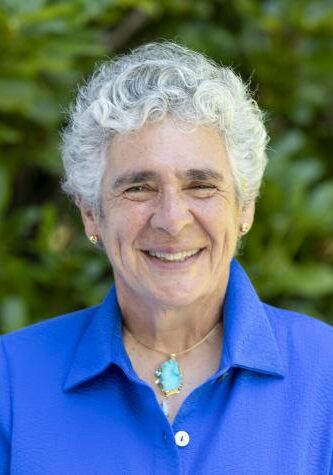
Elyse Cherry, CEO of BlueHub Capital
Elyse: Thanks very much, Denver. I appreciate that you’re doing this.
Denver: Elyse, you were a founder in 1985. Take us back to that room. What was the specific injustice or market failure that sparked the creation of what is today known as BlueHub Capital?
Elyse: Wow, that really does send me down Memory Lane. So at the time, I was a young associate at Hale and Dorr, one of our biggest law firms. And some of my friends came to me and said, We’re really having a lot of trouble getting development going in low-income communities. Because the challenge, of course, is if you do something downtown… and something goes awry, you have six other developers waiting in the wings.
But if you’re in a community and something goes awry, you tend to have a hole in the ground for the next 30 years. And so the idea was: Couldn’t we figure out a way to combine expertise and money funding so that we could actually help build real estate, housing, and schools, and daycare centers?
Although at the beginning, we just focused on housing in low-income communities that would be really successful projects, not just from the perspective of the project itself, but really from the perspective of the community. And I often say, We had virtually no money. We had $3,500 from the old south meeting house social action committee. And in those days, not enough gray hair to know that you couldn’t do anything with $3,500.
So we started. And the idea from the beginning really was that we wanted to combine downtown expertise and capital with community values. And so that’s what we set out to do, and we really set out very early on to assure that what we did would be successful. And that was a value from the very beginning.
We did not want to be an organization that said, Oh, well, we gave it a great try. We wanted to be an organization that was really successful, and success meant that we had to be successful as an intermediary because on the one hand, you’re building, say, affordable housing in a community, but that money has to come from somewhere.
And so whether you’re borrowing from individuals, or as we ultimately did, borrowing from large national banks or local banks or regional banks, they’re not inclined to lend you a second time if you lose their money the first time.
Denver: Yeah.
Elyse: So we really did set up as an intermediary, and that was from the very beginning we understood that. And we also understood, and this was, again, a value that we still hold today… but we held from the very beginning that effective organizations changed to meet the evolving needs of their communities.
And so we understood that we needed to have an ear to the ground and really understand what our communities needed and not simply rely on our own thinking about what communities needed. People talk a lot today about proximity to the people who are being served. That was not a word that we used in that way.
Denver: No, that’s right.
Elyse: But we did understand from the very beginning that we needed to be at that intersection between downtown and community, so that we really had our ear to the ground about both sides of that equation.
Denver: Yeah. One thing you said that really caught my attention is that: We try to be successful from the beginning, and we sometimes now salute failure because we’re not risk-averse enough, or we’re too risk-averse in this sector.
And I remember I had Rip Rapson from Kresge on the show and I asked him about failure and his attitude towards failure. And he says, “I try to avoid it at all costs.” And I said, “Good. Let’s not always salute failure.
Elyse: Well, on that point, it’s interesting, I often talk about embracing failure.
Denver: Yeah.
Elyse: But not that you’re trying to get there, but…
Denver: That’s right.
Elyse: …that failure is really the point at which you learn the most important lessons. For example, I think about the economic downturn in 1992… was very close to the beginning of my career. And what we all learned from that, I don’t think we’ve ever repeated since.
Denver: Yeah.
Elyse: So it’s important to not just ignore it or avoid it, but I certainly am not aimed at it.
Denver: You don’t aim at it and…
Elyse: Not at all.
Denver: …what you do is reflect upon it, because if you don’t aim to reflect, no learning will take place. The other thing that you said in that first answer too that caught my attention, is that “we started with $3,500” and… not enough people start until things are right.
Elyse: Right.
Denver: And things will never be right.
Elyse: Right.
Denver: So you just have to start.
Elyse: That’s exactly right. I mean, you really have to figure out: Can you look down the road far enough? And then you begin. So I remember, and I should just to put this into context: From that $3,500, we have now done better than
$3 billion worth of lending. And we’ve managed to persuade our banking and other finance colleagues to leverage… really to put in another almost $17 billion.
So we’re really talking about $20 billion of economic development, all of which is aimed at helping to build healthy communities where low-income people live and work since that’s our mission. So it is kind of an astounding… it still astounds me that we actually moved from that teeny tiny beginning to now being a national organization.
Denver: Incredible. Well, the BlueHub Loan Fund is incredibly diverse. But Elyse, how do you decide which community projects to invest in? And maybe you can share one of those projects of that $3.2 billion… or whatever the latest number is that really created a positive ripple effect.
Elyse: Sure. So one of the things that we tried hard to do from the beginning was not to be capital-constrained. So when we’re thinking about projects, we don’t generally have to choose between one project and another project. What we’re really looking at is whether the project is consistent with mission, that is: Does it help to build healthy communities where low-income people live and work? And is it consistent with what the community wants? And is it consistent, for example, with our expertise?
So the project might be an affordable housing project. It might be a school. One of the things that we have done recently is to support the Franklin Cummings Institute with New Market Tax Credits. One of the reasons we’re so excited about that is it’s an institute that is actually now building right in our backyard, in the Nubian Square area of Boston, and it’s a place that will help community residents get the technical skills that they need to be successful going forward in their careers.
Denver: Oh, that’s fabulous.
Elyse: And so whether it’s AI, whether it’s climate tech, whether it’s some of the new building techniques, and so we’re really, really excited about it because building housing is a wonderful thing. People need to be housed, but if you can get someone relatively early in their career, maybe in high school or just after high school, and help assure that they have the skills they need to really build a career and earn an income and raise a family, that’s a home run for us. And that’s one I’m particularly fond of and particularly proud of.
“One of the things I sometimes say about CEOs is: We can’t predict the future, but we can certainly prepare for the future. And that’s really what we’re trying to do because there is an enormous level of uncertainty at the moment.”
Denver: With interest rates, housing costs, access to capital, I mean, all of these things are shifting right now at quite a rapid rate. What are the biggest challenges you’re seeing for the communities that you serve? And how are you trying to adapt your model to meet this moment?
Elyse: Well, that’s a question that I have been mulling for weeks and weeks and weeks now, so it’s very timely. I think what I would say is: We are really, for the first time in 40 years, in a circumstance in which the federal government support for some of the communities we serve is really uncertain. No one is quite clear where it’s going.
And so part of what we are doing is really looking at not just the loans we make, for example, to a developer of affordable housing, but looking down the road to say, Okay, perhaps we are supporting the pre-development costs, or we’re supporting the construction costs, but is this developer going to be able to transfer into permanent finance?
Is there enough subsidy in the project in light of the uncertainties from HAN and from what we call Section 8 subsidy for affordable housing from the federal government? And so we’ve been taking a very careful look at our portfolio, really trying to understand if some of the cutbacks that are being discussed come into play, what impact does that have on our communities, and are we set up properly in order to manage that?
And I would say that that’s something new for us. So, something new for everybody in this area.
Denver: Everybody, yeah.
Elyse: That’s right. So we’ve been taking a very careful look and trying to assure as we go forward that again, we can fulfill our role as an intermediary. We don’t just finance projects, we borrow the money to finance projects.
And so we have to be in a position to pay back the institutions and the people who lend to us, or we’re not going to be in business for very long. So we really spent a lot of time looking at both sides of that equation and are taking a much more careful look right now than perhaps we would’ve needed to historically.
One of the things I sometimes say about CEOs is: We can’t predict the future, but we can certainly prepare for the future. And that’s really what we’re trying to do because there is an enormous level of uncertainty at the moment.
Denver: Yeah. Yeah. I certainly have never seen anything like this, and there’s always been uncertainty, but it’s not been so manufactured uncertainty. It’s been external forces that have come upon us.
Elyse: Yes.
Denver: Elyse, after 40 years of driving community change, if you could distill everything you’ve learned into a single guiding principle, what would that be?
Elyse: Well, that’s a tough question. I think what I would say is what we’ve tried to do is to live with a foot in many worlds, that we don’t necessarily think that we have the right answers. We don’t think that the answers that we have necessarily apply to our communities. We really try hard, and as I think I’ve said, to stand at the intersection of downtown and community, meaning that we take the money, the expertise, the values, and really try to make decisions consistent with all of those interests.
And I think that’s really important, right? Philanthropy has changed over the years. There used to be a time in which people who were philanthropists were pretty sure that they had the right answers. That didn’t necessarily work. Now we’re in a time in which people talk a lot about proximity to community, but that doesn’t necessarily work either because in fact, you need both sides of the equation.
People in a community can have very clear ideas about what they need, but whether the funding is there, whether the funding can be put together, doesn’t necessarily work. So I think that this notion of standing with a foot in many worlds, and particularly at the intersection of downtown and community, is one of the things that is most important in terms of why we’ve been successful over the years.
Denver: Yeah, that’s an interesting answer. I have found that people who are really dedicated to what they do sometimes lose their peripheral vision like a horse with blinders, and they’re barreling straight ahead. And it’s good that they do, but they’re missing so many things. And you need that foot in many worlds, that peripheral vision, if you’re going to make things happen at the level that you want.
Elyse: You really do. I mean, I sometimes talk about people marching right off a cliff, right?
Denver: Oh, yeah.
Elyse: Out of habit? And they keep going and the next thing you know, it’s like one of those old cartoons, where the cartoon character looks down and there’s nothing below them. So right, avoiding that I think is really important.
Denver: You’re absolutely right, and I think it’s just so difficult running these organizations right now. You’re just putting one foot in front of the other all the time and working as hard as you can with your constituencies and your board and your funders, but there’s a lot going on outside…
Elyse: That’s right.
Denver: …that you are not aware of, and it’s really costing you.
BlueHub is using AI for the very human work of community lending. How do you ensure a tool of scale and efficiency still serves people with empathy?
Elyse: Well, that’s a very interesting question. So one of the things we have really launched on in the last year is to be sure that as an organization, we are fully embedded in the second quarter of the 21st century.
One of the things I think that sometimes happens to nonprofits is we don’t invest in systems… we don’t invest in operations, and pretty soon, we have a productivity and an efficiency problem. We’ve always tried to avoid that. So in fact, we just in the last year hired our first chief information officer, and one of the things we have tasked her with is figuring out how to create an internal… for want of a better word… an internal ChatGPT.
And the goal there is not to be inhuman. The goal there is really to be able to access our information much more quickly. So for example, let’s say we are thinking about investing in a particular housing project and it has a set of reserves, or it has a set of ratios. Right now, in order to figure out whether we’ve ever done any other projects that look like that and how they came out would be an enormous time sink.
Denver: Yeah.
Elyse: What we’re hoping at the end of this is we’re going to be able to say: Tell us about a project that looked like this and what happened, and then we can use that to learn. So the idea is not to impose AI in the community. The idea is to use AI internally… so that this stuff is not all over the internet… to really be able to access our own history and our own information in ways that allow us to make better decisions.
Denver: Boy, that’s hours and hours and hours and days in your pocket… That is fantastic.
Elyse: Exactly right. And that allows us to spend more time being out in the community. Something you said a moment ago about really being aware of everything around us…
Part of what I spend my time doing is really surveying the universe. Really trying to figure out what’s happening on the federal side… what’s happening with the states… what’s happening internationally. What impact will it have on us with tariffs on building materials? What’s that going to do to our developers?
So it’s part of what makes this work so interesting, but also so challenging.
Denver: Yeah. You sound like a walking scenario plan, and that’s probably what you are.
Elyse: That’s a great way to describe it.
Denver: You have a number of wonderful initiatives and I want to share some of them with the listeners. Let’s start with the BlueHub SUN initiative.
Elyse: Sure.
Denver: Directly tackles foreclosures. Tell us about that and maybe give us a story of where it came to be of value and to
Elyse: Sure. Sure, sure, sure.
Denver: …help someone.
Elyse: So if I can take us all the way back to the Great Recession… and I was realizing the other day, that was 15 years ago. We have an entire new generation of people in the workforce who didn’t go through that.
But for those of us who did go through it, one of the things we recognized was the people were not only losing their jobs in great numbers, but housing values plummeted. And so we had a housing market that had more or less reliably gone up. It wasn’t going up. People were losing 30, 40, 50% of the value of their homes at a time when they also didn’t have a job, and so they couldn’t pay their mortgages.
And so the foreclosure rate was really through the roof. And we were very worried about our communities being destroyed because part of the problem with foreclosure, it doesn’t just impact the home and the family who’s going through foreclosure, it actually reduces the values around that home.
And it turns out that in low-income communities, those values are reduced even more than they are in middle or upper-middle-income communities. So we set out to try and keep people in their homes. And we went out to the lenders, because again, we’re an intermediary. And we said, Look, you’ve got a $500,000 mortgage, because… at this point we’re now in 12 states, but at that point we were just in Boston.
Denver: Yeah.
Elyse: And so the mortgages were very high. And we said, the home isn’t worth that anymore. It’s only worth, say, $300,000. Nobody’s going to give you $500,000. Why don’t you just sell it to us at this much cheaper price, and we’ll sell it back to the homeowner? And they said, Not in a million years!
And of course, the reason they said “Not in a million years” was because they said, If we just allow people not to pay their mortgages and then reduce what they owe, why would anybody pay a mortgage? Now, you can have a whole long conversation about that, right? The commercial side of the world… it’s true that if values drop, you can do something called cramdown, and you’re only responsible for the secured part.
That isn’t how it works in the residential world. And we could have a long conversation about whether it should or shouldn’t, but we function in the real world here, and they wouldn’t.
Denver: Yeah.
Elyse: So we had a long negotiation with them and finally said, Well, what if we said that if folks get their mortgages reduced, then their ability to earn equity is consistent with the percentage of the mortgage they’re paying? And I hate to get into the complexities of mortgage finance. It’s pretty complicated. But to use a more or less simple example, say the mortgage was $500,000 and the homeowner ultimately wound up with a mortgage of $300,000.
Several things have happened. One is, they’ve been released from $200,000, which is a huge thing. Two is, they start earning equity when the market turns around. Instead of waiting for the home to get back up to $500,000, they start earning equity at $300,000. And three is, they’re paying 60% of the outstanding mortgage that they originally owed.
So the idea was, Okay, then you get 60% of the appreciation. To put that into sort of financial terms, what it really means is by the time your home has gotten back up to $500,000, you’re $120,000 ahead even though you didn’t pay that part of your mortgage. And so we put this into place, and then we encouraged people to go out and clean up their credit and go back into the conventional market as soon as they can because that cuts off the shared appreciation.
And so over time, we’ve actually managed to save the homes of better than a thousand families… families that were either already being foreclosed upon or were on the verge of being foreclosed upon, and all of whom were facing eviction. And so it’s just been a huge, huge, huge impact on those families. And they’re all way better off.
We think we have prevented almost 1,250 in terms of foreclosures. People have paid less. In the last five years, they’ve paid better than $500 less on their mortgage than they would’ve if they just kept their original mortgage. And one of the best, they’ve saved on average, maybe $90,000 plus dollars in terms of what they owe.
And one of the best things is people talk a lot about the wealth gap. We’ve actually managed to put better than $67 million…
Denver: Wow.
Elyse: …back into the community inequity. And so we’re really, really, really proud of our work.
These days, people aren’t underwater. The problem is: if you get into trouble because you’ve lost a job, say, you’ve gone into foreclosure… no one in the conventional market will work with you. And some, we now do those loans too, but unless you’re getting a discount off your original mortgage, there is no shared appreciation piece.
Denver: Yeah. Those families are better off; those communities are better off; even those financial institutions are better off because they’re dealing with the world the way it is.
Elyse: They actually are. Yeah.
Denver: Or the way maybe some people hope it is.
Elyse: No question about that. And I will say that I think our history as an intermediary made us the perfect partner to deal with that because they weren’t saying, Oh, you guys are just off doing whatever. They knew us because we had been negotiating loans with them. They’d been investing in our projects and so forth.
And so they knew that we were sensible, and we were the only ones that they ultimately agreed to work with. And we tried really, really hard to get other people to do something similar. In fact, we put together a hundred-page document that we called Blueprint, trying to get other folks to do it. Nobody could get this going.
And I’ll tell you, we haven’t made any money at it yet either. So it’s not as though we have lots of competition from that. We don’t have any competition, but certainly none from the for-profit side. But it has been an enormously impactful project, and we’re really, really proud of it.
Denver: And you really need to be proud of you, as you are your reputation.
Elyse: Oh, thank you.
Denver: Because it’s 40 years of doing the right thing over and over and over again. That puts you in a position that somebody trusts you.
Elyse: Well, thank you. It has been… trust is at the core of everything. And Boston is a very interesting combination. We are a world-class city in a small town all at the same time. And everybody knows, if you break your word, everybody knows it. And we never do.
Denver: It does go around pretty quick up here, that’s for sure.
Elyse: Yes, it does.
“And I think that’s a really important thing that in order to break out of the cycle of poverty, families need supports in lots of different arenas. Housing isn’t enough, food isn’t enough, education isn’t enough, neighborhood isn’t enough. You really need all of those things together.”
Denver: I can imagine. Having been at this for three, four decades since the mid ’80s, is there a core belief that you once had about alleviating poverty that maybe you’ve rethought over that period of time?
Elyse: Oh, what an interesting question. One of the things I have thought a lot about over the years is really the need to have an integrated approach. I mean, I remember back in my law firm days, we did a lot of affordable housing work, and it was really powerful work, and a whole bunch of families would get really good housing.
But I would find myself wondering, Well, all right, but what about food? What about schools? How are they going to get into college? How do you really build a future here? And I think that’s a really important thing that in order to break out of the cycle of poverty, families need supports in lots of different arenas.
Housing isn’t enough, food isn’t enough, education isn’t enough, neighborhood isn’t enough. You really need all of those things together. And I think that as we look at, certainly here in Massachusetts, what government is trying to do, it really is to provide all of that support. And I don’t know that I had a view upfront particularly because of course you step into this world, and then you see what’s around you.
But I certainly, from this vantage point, we’ve got to get the next generation and assure that they have the skills and the expertise that they need… and the health that they need in order to really build productive, healthy lives.
Denver: Yeah. It seems to me that’s the quiet metric that your organization tracks internally. It isn’t having to do with the housing, but it’s the way people live their lives, and they’d need more than a house. They have to have all those other things, and clearly that is in your thinking as you approach your work.
Elyse: It is. So for example, when we started, we limited ourselves to affordable housing. I think we were just in Boston proper, and then we moved out to Massachusetts, and then we moved out. We’re now in 42 states across the country, but we finance much more. So we now finance health centers and grocery stores and daycare centers, and lots of schools and housing, really trying to meet people where they are in all of the different aspects of their lives.
Denver: What have you learned about scaling? Because you’ve scaled in so many different ways. You’ve scaled out of Boston, you’ve scaled out housing. Is there a lesson that you’ve applied to be able to do that so successfully?
Elyse: Well, I think one of the things we try to do is to think from the very beginning about how things work, and then you try something, and if it doesn’t work, then you stop and you pivot and you try something else.
But what’s critical I think from the beginning is not seeing everything as a one-off. In fact, when we think about.. this is really inside baseball… But when we think about loan documents, for example, people want to talk about the ways in which each project is different. And I say No. Each project is probably 90% similar in terms of what the loan looks like. It’s 10% different.
Let’s carve out the 10 and deal with that, but not think of each of these as a one-off. And I think taking that approach, and it’s not just around loans, it’s really around developments, around all kinds of things. Really sort of trying to figure out the commonality more than the difference, I think is key.
In fact, it’s also about how people talk to each other. We often want to think about the ways in which we disagree, but if you take a step back, we don’t disagree about 80% or 90% of it. It’s a much smaller piece. And so really trying to focus on what’s different to be sure that we get it right, but mostly focusing on what’s the same so we don’t lose track of it.
Denver: Yeah. Yeah. And I think it also helps a lot of people, particularly with change in organizations… when you focus on what’s going to be the same, it doesn’t make them feel that they’ve wasted the last 10 years of their life.
Elyse: Right.
Denver: That essentially, what you’ve been doing has been right for 85%, but you know the world’s evolved, and we need to tweak it, as opposed to everything is going in the trash can.
Having done this work for decades now, this is truly a marathon, and you are known for your work ethic. What is the one thing you’ve had to sacrifice for this role? And I’d be curious as what is that non-negotiable practice that keeps your fire lit?
Elyse: Interesting. I would say that I have been incredibly fortunate to be able to build a life without a lot of boundaries, meaning work and life are very similar. I do lots of, personally, lots of political work. I do board work, for example with The Boston Foundation or Wellesley College, or The Equality Fund.
Over the years, I’ve been very active in the LGBTQ community. I chaired Mass Equality when we were having our legendary and landmark fight for same-sex marriage here in Massachusetts. We were 10 years ahead of the rest of the country. But all of that feels really consistent with who I am. I have been really privileged to be able to live a values-driven life.
I think the one thing that I would say is absolutely non-negotiable is getting out and walking, both from a personal…
Denver: Well, tell me about your walking regimen.
Elyse: Well, I don’t think of it as a regimen, but it has one or two pieces to it. Either I take a list of phone calls with me and I do them on my walk, and I’m generally much more patient, and so we can have longer conversations while walking.
Denver: That’s great.
Elyse: Or there are a whole set of things I’m trying to think about, and I tend to do my best thinking while I’m walking. So I live in an area that has a larger reservoir and a smaller reservoir, and I generally am walking around one or the other.
And so it’s a beautiful area to see birds and to watch the seasons come through, and to really anchor myself in the natural world, which is always also important to me… and to get some exercise, and to get some work done. And that’s just been really, really key over the years.
Denver: Well, we should share a walk sometimes.
Elyse: I’d love to.
Denver: I used to run marathons. I got hip replacement surgery.
Elyse: Oh my goodness.
Denver: And so I walk now. And I got to tell you, I don’t particularly like walking, but I set up a chain a couple years ago, and I have now done a minimum of three miles for four years in a row.
Elyse: Wonderful!
Denver: I have not missed a single day, and I actually average about five miles.
Elyse: Wonderful!
Denver: But I can’t set up a chain more than three because there are going to be days that I’ve come home at 11 o’clock at night saying, “Oh my gosh, I haven’t done my walk.” And it is some of the best time I have all day long and…
Elyse: I have been known to do that, too.
Denver: …like you, I don’t listen to a podcast. I don’t listen to music. I think or I talk, and those are the things.
Elyse: One or the other, right?
Denver: One or the other. I could ask you 50 more questions, but I’m going to close with this, Elyse. What is the one question you’ve always wished an interviewer would ask, but no one has gotten around to it just yet?
Elyse: I don’t really know. I think maybe…I really don’t know. I never have.
“…I remember I gave a speech a very long time ago when I graduated from law school, and one of the things I said was that the world I wanted was a world in which equality… now I think I would say equity… was a given, not a goal. And that’s really what we’ve been working toward all these years.”
Denver: Well, what’s a question you would ask yourself?
Elyse: I think the thing I wind up thinking about a lot: perfection is way overvalued. It’s way too expensive and generally not useful. But the thing that you really want to be sure about is the way you’re spending your time… Is what you’re thinking about, is the work that you’re doing at the end of the day helping to build the world you want?
For me, that’s the key. And I remember I gave a speech a very long time ago when I graduated from law school, and one of the things I said was that the world I wanted was a world in which equality… now I think I would say equity… was a given, not a goal. And that’s really what we’ve been working toward all these years.
It’s not in the particulars. It’s a world in which people feel as though they are a part of a broad, equitable society. And every single bit of what I’ve done is really aimed at that, whether it’s my work in the LGBTQ community, whether it’s my political work, whether it’s my economic development work, whether it’s my work with BlueHub Capital, it’s all the same. It’s just a different vehicle.
And so maybe that: What is the world I want? And the world I want is a world in which equity is a given, not a goal.
Denver: Wonderful answer. See, you were really good at that. You hesitated, but you nailed it. I think also what I love… what you said about that is: We’re always trying to get better at what we’re doing, but we never stop and think if what we’re doing is the right thing that we should be doing at this moment. And that makes a huge difference.
Tell us about your website and the kind of information visitors can expect to find when they come visit.
Elyse: Sure, www.bluehubcapital.org. Come and visit. And so you’ll learn lots and lots about what we do. We’ve got, I think, podcasts up. We have statements up. We have articles up. And I think what you’ll find is that we have a pretty broad approach to economic and community development, and lots of that is up there.
You’ll also see I have been blessed over the years with a wonderful staff. They’re hardworking and creative and productive, and they’re all up there, too. And so you can come and celebrate them.
Denver: Fantastic. Well, Elyse, thank you so much for your generosity and wisdom today. It was a real honor to have you on the program.
Elyse: Well, thanks so much. I really, really appreciate your time and your interest here.
To celebrate my 50th year in the nonprofit sector, I’ve put together a gift for you — a practical, field-tested guide to building world-class nonprofit workplace cultures. It’s called Cultivating Nonprofit Excellence, and it’s based on insights from nearly 1,000 interviews and 150 focus groups with nonprofit leaders around the globe. It’s completely free and instantly downloadable at blanchedalmond-mosquito-418475.hostingersite.com