
What happens when you realize your values guide only half a percent of your wealth while the other 99.5% operates by completely different principles? You become what Sharon Schneider calls an “Integrator.”
As founder of Integrated Capital Strategies and author of “Handbook for an Integrated Life,” Sharon works with ultra-wealthy families who’ve grown tired of the schizophrenic dance between making money and doing good. Her journey began at Foundation Source, where she helped families perfect their charitable giving while watching their investment portfolios—often 20 times larger—fund the very industries their foundations were fighting against.
Today’s hyperconnected world has made this contradiction impossible to ignore. When your phone shows you exactly who made your t-shirt and your coastal property insurance rates explode due to climate disasters, the old two-pocket system stops making sense.
“So, imagine your values being expressed in only 0.5% of your life, and 99.5% is divorced from your values. I mean, you could see why that’s a recipe for total lack of progress and things continuing to erode.”
Today, she reveals how Integrators are rewriting the rules of wealth.
It’s Sharon Schneider on the Business of Giving.
Denver: Welcome to the Business of Giving, Sharon.
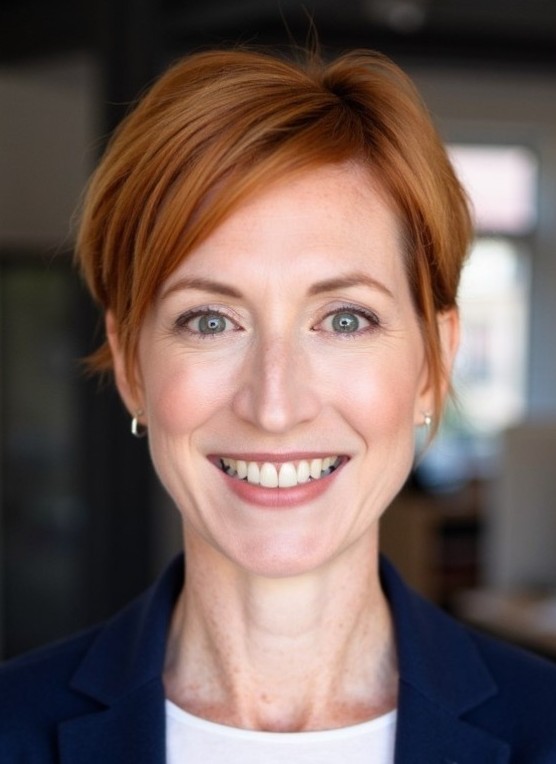
Sharon Schneider Founder of Integrated Capital Strategies
Sharon: Thank you. I’m thrilled to be here.
Denver: Let’s start with your powerful concept of the Integrator. How would you describe this new archetype of wealth holder to someone who’s still thinking in the old model of separating their investments from their values?
Sharon: I think the Integrator is the person who sees the connection between all areas of their life, of their wealth, of the way they show up in the world, and so rather than siloing out investing, business… philanthropy is something you do separately… you give back a little as a totally separate activity… your lifestyle, Integrators are people who want the same values that show up in their philanthropic giving, which is where we usually define values, to show up in the rest of their lives.
What does it mean if you care about women’s issues? What does that mean about how you source your food or your clothing, how you run your business, how your investments are handled, and all kinds of capital? So, it really is about integrating those values into all those other areas of your life. And people who care about that and are trying to do that, which is my clients, is what I call the Integrator.
Denver: Yeah. They connect the dots and they see how everything is interrelated.
Sharon: Yeah.
Denver: We’re seeing record-breaking wealth and right alongside, climate disasters, deep social unrest, and so much more. How are these converging crises actually driving the emergence of this Integrator movement?
Sharon: I think that’s exactly it… is that in the ’80s… I’m a child really of the ’80s, you didn’t know who made your t-shirt, like it just appeared in your, you know, just like food appears at the store, right? You have no idea where that comes from or what the process is, but today, we know that the impact of our interconnected globalization, social media… just phones and cameras in everyone’s pockets means that, and so where you could have credibly ignored and gone for always what was most cheap and convenient for you, we have now started to really see the consequences, the consequences of fast fashion, the consequences of ultra processed food, not just on us, but on the people producing it, the consequences of business and how businesses are run on the employees, on the vendors, on the communities where they are.
And so, I think, again, we used to think those were really separate worlds, and business was business….and just we know too much, and so it’s not that Integrators have to be younger; you can be in your 70’s and still be an Integrator, but if you’re a younger person who grew up in this very different interconnected world, then you’re much more likely to be an Integrator.
Denver: Yeah, yeah. I think my generation? We had two pockets. We had one pocket where we make the money and stick all the money in, and we had another pocket where we pull the money out and give; and this generation, just one pocket.
Sharon: That’s right. That’s right. And you know, that was my professional journey was I started in philanthropy where I was working on the 5% distributions, and that was the one pocket, but it was realizing that the other pocket, the business and investing pocket, was 20 times larger.
Denver: I know.
Sharon: It’s 95% to 5%. No wonder we’re not making progress; we’re not moving forward if we’re only using a pocket that is 5% of our lives. And frankly, for really wealthy families, it’s not even 5% because the foundation might only be 10% of their total wealth.
Denver: That’s right.
Sharon: Which means the grant making is 0.5%. So, imagine your values being expressed in only 0.5% of your life, and 99.5% is divorced from your values. I mean, you could see why that’s a recipe for total lack of progress and things continuing to erode. So, I think it’s realizing the slide and trying to start to correct it.
Denver: Precisely. That’s the way it’s always been, and we just assumed that’s the way it should be without ever examining it. I remember I had Clara Miller from the Heron Foundation years ago, and she indicated that they had the 95-5, which she broke down, but she said the only time the 95 spoke to the 5 was at the holiday party, and she said the utter insanity of that model that we somehow have just accepted! In your booklet, you talk about moving beyond wealth preservation. What does stewardship mean to an Integrator, and what are they actually stewarding if just not assets?
Sharon: Well, they are stewarding purpose in the world and, again, the traditional kind of family office and wealth management model is still really focused on stewarding the wealth. And I actually dislike the word steward in general because I think it implies your job here is about protection. Don’t mess it up. Just you have to get the money from your ancestors to your descendants, and don’t mess it up.
And while I applaud, like being responsible, right? I’m not saying people should just be profligate. Stewardship is, I don’t know, it’s passive, right? I want people to feel empowered to activate the will to do something. Stewardship isn’t about accomplishing something, it’s about preventing the dissolution or the loss. And so, instead, I think Integrators are more interested in having a sense of : What is this wealth for? What am I stewarding? Because money is not the end of their meaning, of their purpose, and even their own family. I would say, there’s been a big movement called Wealth 3.0 you might be familiar with, that’s really evolved over time.
Like, Wealth 1.0 was literally just focused on the wealth. Preserve the wealth from generation to generation. Wealth 2.0 started to say, Oh, like you need the family, and so if the family is not healthy, if the family fights, so let’s try to preserve the family along in order to preserve the wealth. And then Wealth 3.0 said individuals cannot thrive, like the wealth and the family cannot thrive unless individuals thrive, so we need to think about developing each family member as an individual. What I’m saying is even those individuals cannot thrive in a society that is sick, the planet is burning, the CEOs are being shot in the street, and so it really is them turning beyond the internal purpose even of stewarding their family to say, “What is my larger purpose of this wealth in the world, like mine as an individual and the wealth? So I think we just keep expanding the aperture, or as my friend says: Expand your circle of moral concern.
Denver: Yeah. Yeah. Great description. And we just don’t think enough about the common good. That’s what it gets down to. We have to do something for the common good. The other thing about stewardship I don’t like is nobody knows what it means. If you really want to turn off people on the street to talk about what you’re talking about, state words like stewardship.
Sharon: Yeah.
Denver: Watch their eyes glaze… this is a conversation which is not for me.
Sharon, you’ve identified five core tensions that make traditional family offices, I don’t know, feel toxic to Integrators. When a frustrated family walks into your office, which tension is usually causing them the most pain, and how do you help them see it’s a structural problem, not just a personal failing?
Sharon: Oh, great question. I think the first one that I often hear is this tension between family and society, that there’s the old-fashioned kind of approach is to say: if it’s a choice between, and it is a choice, it’s always framed as a choice between what’s best for the family and what’s best for society. And what’s best for the family is defined as maximizing our wealth. So, you have these assumptions built in… you always pick the family, that’s the traditional model. You do what’s best for the family, except in your 0.5%, again, which is where you think about what’s best for society, and I think Integrators are not saying, “I don’t care about my family.” They’re not saying, “I don’t wanna preserve and be part of that family legacy,” but they are saying, “I wanna do what’s good for my family and society. Isn’t there enough for all of us to prosper?”
As opposed to all the benefits of every transaction, of every business deal– everything from how we source our groceries, to how we pay contractors, to how we do investment deals, we tilt the scales as far in our favor as we can. That’s the default is get the best deal, get the best terms, liquidation preferences, I mean, at every level, it’s all tilted. And they’re saying, “Do we have enough? And because we have enough, can we untilt those scales so much, leave something on the table, or pay the equivalent of fair wages, living wages? Thriving wages would be amazing.” And so, they’re looking for the both and solutions, like: What’s good for the family and good for others so that we’re striving towards shared prosperity instead of maximizing benefit only to us?
Denver: So, it’s not an either or.
Sharon: Exactly.
Denver: Well, here’s a classic challenge I know you’ll run into. How do you help multi-generational families navigate the often wildly different values of the third gen, especially when they feel, I don’t know, somewhat disconnected from the original founder’s vision?
Sharon: Yeah, this is what usually is triggering in multiple generations. The third generation is now wildly different, not only from the founder, ’cause just generationally growing up in the world, they’ve had a very different life experience, but also from each other. We’re talking about cousins that probably grew up in different cities with different parents, and by the way, one of their parents, again, married in and has their own family of origin, their own values, so they’re shaped by a much broader array of forces. And so as you might expect, they’re quite different, and yet they’re all still bound by the structures, by the rules, by the guardiance that were established by their grandparents.
And so really, they start to experience this friction. And the question is, for me, usually one of the really guiding principles is: How do you help the family office give them the autonomy to follow their own path? Because a lot of those structures often tie them together, whether it’s like: you’re going to be on this board together; you are in business together.
You maybe never wanted to be in business with your cousin, but now you’re both like major shareholders in this family-owned company. Is there a way to allow the people that want to stay on that path stay, but allow the ones that kind of want an exit ramp without having to sue, without having to go to court and have a contentious relationship because all they want is to be cousins or siblings? They’re like, “I just don’t want to be in business.” So, what I’m often trying to do is helping them find as a family… honestly, you want people to be together by choice, so let the ones that want to be together by choice stay, and let the ones that don’t go their own way.
And I think this is going to be a growing trend, which is major large foundations that end up breaking into multiple successor foundations or get paid out to DAFs or something that allow the family members to pursue their own passion, and their own interests. I know there are so many people that are going to say, “But Sharon, philanthropy is the glue; philanthropy creates unity.” And I think that is beautiful as an intention and often not really the reality.
The reality is the foundation is going to reflect the family relationships that exist elsewhere, and so if there is a toxic or dysfunctional or problematic relationship in other places trying to force unity through a foundation, really just gives you another ground to dig in, fight, have conflict. So, allowing people to have room to breathe and be individuals rather than be…. because sometimes it feels like the Borg… Are you a Star Trek fan? Like you just have to assimilate and be part of the whole, and it’s, “Actually, I’m an individual human being too. How can I do not just what the family wants from me, but what I want?
Denver: Yeah. And if they take issue with you, all you have to do is ask them to think back to Thanksgiving dinner after a presidential election, and that will pretty much settle that issue once and for all.
Sharon: Yeah.
Denver: So, I guess a lot of this, and I know you’re a real champion of this, has to do with family design of a governance structure.
Sharon: Yes.
Denver: Tell us a little bit about that, because I think that’s probably inherent in a little bit of… in terms of what you’ve said as you begin to put these pieces together or take these pieces apart, where you can have some level of cohesiveness, really have people pursue their own passions.
Sharon: Well, it starts with the founder, if I’m lucky, I’m working with actually a founding generation, and we’re making design decisions about how this is going to play out. So, I think one mistake people make is, they let the estate planning attorney give them a template that is. “Oh, here’s how I do it. You are the controlling member, and then when you die, you’re next to–” you know; they have sort of a way, and that way is a great tax structure. It’s like tax is driving the bus. Instead of saying, “I like to start with what I call the internal mission,” which is “What is the role that you want philanthropy and the family office to play? What is the purpose of your wealth?” Ideally, we’re starting at that: What is the mission? Because if you don’t set that up, the purpose of the family office and therefore everything underneath of it because it all flows from that. The default purpose is to maximize, preserve, and pass on as much wealth as possible to my own children. That is the default.
So, if you’ve never said, “Wait, what is the purpose of my wealth? What is the purpose of this thing we’re going to build in supporting that, my purpose in the world?” you get a lot of defaults, and those defaults are going to be maximized for tax avoidance; they’re going to be maximized for risk avoidance. They’re not going to be maximized for impact, especially for social purpose.
So, you start with creating an internal mission of: What is the purpose that I want? And then that filters to the foundation. So, for example, sometimes a family foundation, the internal purpose could be to help each person pursue their own philanthropic interests and teach them to be a philanthropist. Sometimes, it might be to honor the founding generation and continue their areas of interest or the geography where they made their money because that was really important to them. Or it could be unity, like helping us learn to work together.
So, that’s often not defined, and then what happens is a couple years down the road, they’ve set up a governance structure, but it’s really just the founder telling everybody, and everybody is rubber stamping, and nobody really knows what they’re supposed to be doing. And then the founder passes, and there’s a massive power vacuum because even if there’s more than one child, then everybody has their own opinions. Or it’s like: Who’s going to fill in for our parent? And we might not agree on who that should be.
So, by the way, this is when a lot of people call me in this moment where they’re facing the challenge of the passing of a founder, but ideally, you get to it first and you have anticipated that. Again, the generations are going to move; they are going to have their own interests; they are going to not be carbon copies of you. And so what is it that you want to happen when the third generation, the fourth generation… which by the way, their levels of wealth will have differed by then. Some branches will have maintained, some might have not nearly the level, and so access to these services or to the foundation becomes a lot more important to some than others. And so really, again, I think governance has to be driven at the very highest level from that internal mission and the purpose rather than tax- efficient strategies.
I just came up with an analogy last week. I said, Look, it’s like when you want to go somewhere, you decide where you’re going, you say the mode of transportation, and then you put it in Waze and you say, “Waze, tell me the most efficient way to get there.” That’s what we want tax planning and legal and things, that’s the role we want, which is you set the destination, the way you want to travel, what tools you want to use, and then you say to the tax attorneys and the other kind of technical advisors, “Great, I know where I wanna go. You help me get there in the most tax-efficient way.” But you wouldn’t say to Waze like, “Hey, where should I go today?” Or”Take me where you think is best.” You have to be the one to set the destination.
Denver: Yeah. Yeah. So, the dog is the mission, purpose, and values, and the tail are the taxes, but we have made the dog the taxes, you know?
Sharon: Yes.
Denver: The preservation. And then the tail is just…
Sharon: The tail wagging the dog. Yeah.
“And so, it’s so shortsighted to only think accumulating more and more wealth is the path to being a good steward or a good fiduciary if it’s at the expense of people, planet, society, et cetera.”
Denver: That’s not where we go. Sharon, how could we practically redefine an advisory’s fiduciary duty to legally encompass societal and environmental stewardship, and not just financial returns? Or is that a bridge too far?
Sharon: No, listen, if there’s a word I cringe at more than stewardship, it’s fiduciary duty.
Denver: Like everyone now.
Sharon: Yeah. Traditionally, again, fiduciary duty has been interpreted, like what it actually means is you do what’s in the best interest of the beneficiary, not in your own, right?
Denver: Yeah.
Sharon: But the key there is to say, What do you mean by the best interest? And the old-fashioned way is to define the best interest of the beneficiary in purely financial terms. That what is best for them is to maximize their own wealth. But again, I think in the face of the crises of the environment, the political kind of situation, the economy, I’m very worried about the housing market and the impact of the tariffs as we get closer to the actual, trickle down effects. Is it really in your best interests to be funding things that, I don’t know, are increasing the number of natural disasters… like you probably own some property on the coast, and either your insurance has gotten out of control, your property is getting destroyed, you can’t live there anymore. So, how do you define best interests?
I argue that you actually don’t need to make any legal change to fiduciary duty. What you need is a mindset and a culture change that says: It is in the best interest of my beneficiaries, right, of whatever this entity is, to live in a society and a planet that is healthy and thriving and for my person also, for my beneficiary.
For Integrators, it is stressful for them to feel like they are out of alignment, like they know that their money is out there doing things in the world that are exacerbating the problems that they care about. If you even take their mental wellness and their thriving into account, then allowing them to make sure that whatever assets the fiduciary is responsible for are aligned to their values and are not contributing to making problems worse, I would argue that sounds like their best interest to me, rather than just making them wealthier. I keep thinking, okay, I guess you can go the Zuckerberg route and buy an island and build a bunker and decide you’re going to be the king of ashes, that’s one way to go. But most of us are going to have to live in this world, and we are going to have to navigate, and our children are going to inherit this.
And so, it’s so shortsighted to only think accumulating more and more wealth is the path to being a good steward or a good fiduciary if it’s at the expense of people, planet, society, et cetera.
“… they might say, ‘I don’t want them to have to worry,’ but I also… it’s the famous Warren Buffett quote, right? ‘Give your kids enough so they can do anything, but not so much that they can do nothing.’”
Denver: Yeah, and we see it every night on the news. I remember climate and the waves coming in those houses in the front row and wishing I had one of those, so to speak, and certainly, I’d like to be in the back row these days. It is absolutely amazing.
Let’s stick with the infinite accumulation of wealth because you’ve written a lot about it, and Sharon, how do you even begin that conversation with the family about determining what enough wealth is for them so they start thinking in a different way?
Sharon: Yeah, I think this question is one that a lot of advisors are pretty terrified of asking, like: What is enough? But what I’m finding is, again, Integrators, they’re already thinking this way, which is they have an innate sense that they have enough and want to spread prosperity to other people.
And so, for example, most financial advisors are already doing some version of retirement planning, where they’re like, “Okay, what’s your cash needs? What’s your lifestyle that you want to be able to maintain in retirement?” So, there is a very understood process of working through with people– What is it that you actually need?
And, look, it’s not a judgment, if you want that house in the south of France and another house in Banff to go skiing, nobody’s saying, you have to live a life of poverty. So, whatever your lifestyle is, “Great, let’s define that. What do you need?” And frankly, the big one is actually, “What do you want your children to have?” Because the impact of inheriting significant wealth is real. It is real on motivation, on sense of purpose. A lot of children end up floundering. It’s like, “Well, if I don’t have to make a living and find my way in the world, and all these doors are open to me, and I can just take withdrawals, then what am I doing here?”
So, that’s a really real thing, and people are increasingly saying, “Yeah, I want my kids to have a base.” Maybe it’s $10 million, maybe it’s $30 million. I work with billionaire families so it’s very big numbers in terms of what is possible, but they might say, “I don’t want them to have to worry,” but I also, it’s the famous Warren Buffett quote, right? “Give your kids enough so they can do anything, but not so much that they can do nothing.”
Denver: That’s right.
Sharon: And that has really, I think, taken a lot of hold where instead of, again, the idea being “accumulate as much as you can and give it to your children,” people are saying, “I don’t know that I even believe in dynastic wealth; I’m not sure I’m totally comfortable with that,” again, given where we are as a society. So, then once you start to have that conversation and figure out, “What is enough?” And frankly, again, with the kinds of families I’m working with, figure out that number and double it for security if that makes you feel confident that you’ll get there.
But find that number and then start; it opens up this freedom of treating the rest as excess, the rest as something to be activated rather than something to be preserved. And so whether that means giving it to charity, whether that means investing very differently, whether that means, again, it’s the way you structure individual deals,so that you’re like, “I don’t really need 15% out of this real estate deal, so maybe I can do these affordable housing projects where I’m taking a flat 3%, because I don’t need 15%.” So, even though you could get 15, if you say, “What is enough for me in this deal? What is enough for me in this overall return?” Maybe you only need 2% blended return across your portfolio. It’s really freeing to then say, “Oh my gosh, what does that mean for every aspect of how I show up in the world?”
Denver: But it requires a change of mindset, and I always remind myself, we live in a society where it’s “all you can eat.” You know what I mean? We just keep on putting it on our plate, but you’re right.
Let’s talk a little bit about incentives. The system is built on fees tied to assets. So how can we restructure compensation models to reward advisors for value-driven outcomes and not just pure financial growth?
Sharon: Yeah, I think incentives are critical when we look at not just individual investments or individual decisions, but we go up to the 30,000-foot view of a family office or wealth management system that an individual has set up for themselves and for their lives. People around them that they hire are often incentivized by financial return. Certainly, in the finance industry, that’s not a shocking thing to say, but in other areas as well. So, ideally, they want to be aligned, but they also want to maximize their own income.
And so, it’s so interesting because we set up the fee base that’s assets under management thinking, “Look, we’ve aligned the advisor incentives with your incentives because now everybody’s incentivized to maximize your wealth.”
Denver: Yep.
Sharon: Yes, but the assumption is that what you want to do is maximize your wealth. So, if the Integrator has moved away from that assumption, but the advisor is still incentivized on that assumption, that’s where you get this mismatch.
So, what I am interested in is models that focus more on complexity and effort rather than growth because what if you say, “I only need 2%. I want you to invest in concessionary things. I want you to give away more. I want you to do these things that are going to reduce my wealth, or at least not grow it over time.” How do you still compensate that advisor fairly?
So, part of it is, I think, the advisors also have to say what is enough. The thing is their fee structure… the way that most financial firms work is they take the same investment approach, the same products, the same asset allocation, and they sell it to 10 different people, exactly the same. They don’t reduce the fees for person 2 through 10. And so, that’s how they get margin, that’s how they get growth, that’s how they get very wealthy because the value of their firm is based on that ability to grow exponentially without actually adding more effort, more people, whatever.
It is trickier than it sounds, but what I think you have to do is start to have some of those bonus incentives that might still allow you to reach the same level of compensation, but they are tied to alignment with values, or they are tied to the achievement of impact, and that one’s really tricky. People always say, “How do you measure impact?” And I think 50% of the people that say that, just say that because they don’t know how. They don’t know how to measure impact, so they go, “It’s really hard.”
Actually, there’s a whole industry of individuals, that’s what they do. They study it, they think about it, they’re putting things in place. It’s still imperfect, but I also think there’s something to be said for that kind of bonus and incentive based around just purely being aligned with my values. You could imagine that like when you start your portfolio, let’s say it’s 0% aligned. You’re invested in private prisons and defense contractors and big oil and big tobacco, and those things are profitable in the short term.
So by the way, you probably are, all of you listening, if you have an investment portfolio, that is what’s in your investment portfolio today because those are very profitable industries in the short term, which I think is critical to note. So it’s going to take you some time because it’s not usually all in stocks. You’ve got considerations about liquidity or about timing of tax loss, harvesting, those kinds of things. Or if you’re larger, you have alternative illiquid or private market investments that you can’t just dump, at least not without losing quite a lot of the value.
So, let’s say you start in year one, you’re 0% aligned. Each year, maybe you are increasing the bonus that is based on the percentage of the portfolio that’s aligned, so the liquid stuff is actually the easiest. You move your money market to a community bank, a CDFI, somebody that is not loaning it to oil pipelines, for example. You can do that pretty quickly. You can move your public markets, right? Your ESG screening, stuff like that, is all able to happen relatively quickly within a year or two, and then you start working on the other things. And it’s going to take some time, like I said, to get some of these longer term investments.
So, you set targets; you incentivize some base fee for complexity and time and expertise, and then bonuses are based on alignment or impact objectives rather than growth.
“…the book is really aimed at everyone, Handbook for an Integrated Life, and I said, ‘Listen, if your yardstick is: Will this plastic straw, if I don’t use it, will that save the world or change the world?, the answer is always going to be no. And so you’re going to go, Oh, why should I bother? But if your yardstick is: Is this aligned with how I want to show up in the world? Is this like the person I want to be?’ then the answer is: It’s always worth doing.’”
Denver: So, get some quick wins, build some momentum, get that low-hanging fruit, and recognize it’s really going to be personalized medicine as opposed to a doctor prescribing the same thing for every patient who walks into their office. It’s really going to be a personalized way to do it because I know how hard it is to get people out of a way of thinking, and you have a lot of experience in the nonprofit sector and I think we both know that how much goes directly to the program and how much goes to overhead still persists despite 25 years of saying, “You cannot come up with a worst measure.” And often, that’s because we haven’t come up with one that is as easy to get people to embrace even though we know it’s a horrible measure.
Sharon: Numbers are bullies.
Denver: Yeah.
Sharon: You know, finance people can be bullies. They bully you with that kind of stuff and say, “Look here, it is in numbers,” and I think that there’s really something to be said for standing up to that kind of bullying and saying, “This is how I want to show up in the world,” and one of the things I said in my book, which it was the precursor to the white paper that just came out on Integrators, but the book is really aimed at everyone, Handbook for an Integrated Life, and I said, “Listen, if your yardstick is: Will this plastic straw, if I don’t use it, will that save the world or change the world?, the answer is always going to be no. And so you’re going to go, Oh, why should I bother? But if your yardstick is: Is this aligned with how I want to show up in the world? Is this like the person I want to be?, then the answer is: It’s always worth doing.”
Denver: Yeah.
Sharon: It’s worth doing because you feel much more joyful and light and like good and all of those benefits, and frankly, it is going to be a bunch of individuals deciding that’s how they show up in the world that’s going to add up to actually making a difference anyway. So, I think small steps, baby steps, and it’s the same with your own lifestyle.
I’m still, look, if you looked at my household budget or like the products under my sink, it’s not perfect. It’s not like my household is perfectly values aligned and fully sustainable and all of those things, but I just keep trying to make progress, do a little more, find another place, and I think that’s the best we can ask.
Denver: That’s all you can do. We all have a piece of cake when we’re on a diet. Doesn’t mean we don’t have a proper diet.
As we look at the change within these family systems, so often they’re being led by women and younger family members; they’re the ones who are leading the charge. Talk a little bit about that and why that is the case.
Sharon: Yeah, I mean it’s fascinating to see that we talk about the great wealth transfer as if it’s going to go right to the next generation, but actually, for most families, it will first go to the surviving spouse, which just, it’s going to be a woman, right? It’s usually, just statistically, women live longer. I’ve already seen that with women, again, in their 70s or 80s who inherit and get control of assets and are much more interested in giving it away and looking for ways to make a difference with that money in the world and help others.
We’ve known that in philanthropy for a long time, but I think what I’m now seeing with, again, Integrators, is that, as I mentioned before, if you are 40’s or younger, you just are more likely to be cognizant of the interconnected nature of all of these issues that, you know, where you shop, what brands do you support, how you vote, how you eat. All those things are connected and having impact on the world, and so it is really younger wealth creators, next gen inheritors, and women that are at the forefront of this Integrator movement. And, like I said, not that a 70-year-old man can’t be an Integrator, but statistically, I just think they’re much more prevalent among younger folks.
Denver: Yeah, I think it’s certainly the case, and I think, at least from my experience, a lot of these guys spent their life accumulating the wealth, and I’ve worked for a few of them in my nonprofit capacity, and they can’t bite the hand that feeds them. They cannot change. I don’t know if it’s superstition or not, and they also have been… because I’ve had a couple bosses, they’re gazillionaires, but they’re still looking the way they did probably the day they opened the business, and it is just the way they are.
And, the Integrator, both the book and the booklet, what personal sparks, Sharon, fueled your mission to redefine how families wield their wealth? There must have been a moment that you just said, “This is where I’m going.”
Sharon: I used to have a blog when I used to work at Foundation Source and we, again, that company is probably the largest private administrator of private foundations, and so I was interacting with hundreds of families, boards, founders… a lot of them are entrepreneurs, and I say my professional journey was that I got really good because they would have crazy ideas, and they’d come and say, “Hey, I want to do this through my foundation… Can I do that?” Actually, I made that sound too optional; it’s like, “Figure out how to do that.”
Denver: By tomorrow.
Sharon: Yeah. So, I would go talk to the attorneys and come back and go, “Okay, this is called a program-related investment. Okay, we have to do expenditure responsibility, or this is a directorial activity or whatever.” So, got really good with the innovative tools of that 5% grants distribution. But we also were, as their administrator, we had all the financials; we did the tax returns; that’s all public information too, and I was going, “Hold up,” like, “I love what we’re doing with the 5%, but what’s going on with the 95%?” Like, many people started to see that disconnect. And for me, the next question, because again, a lot of them were entrepreneurs, was I started to go, “How did you make this money?”
So, I just kept feeling like I needed to go upstream from the 5% to the 95%, to the source because again, that’s where the real kind of power and assets and if we’re only looking at the 0.5%, it’s important but it’s never going to get the job done.
Denver: Not at all.
Sharon: And what happened was eventually with this blog and over my career, I turned that same lens on myself. I thought I was too small to matter. I thought it, you know, and so, I said, I guess I’m doing the same thing, like I have 5% that I give to charity, but what about my 95% of my health, my budget, and what about how I make my money, how I invest my money, like all of those other things?
And so, I think turning that question back on myself was really important to wrestle with because it’s easy to wag a finger, “You’re not doing enough” or this, but I think if most of us do that, we might find areas we could improve, right? And so this idea of the integrated life became my North Star, and helping other people, not in a judgmental or again, I’m not trying to wag my finger, I’m just trying to point the way and say, “I’m on this journey with you, and it’s hard, and here’s how we keep making progress, incremental but steady; slow but steady wins the race, and some things we need to speed up for sure, but if we can just get everybody moving in that direction to start.” So, that was really my personal spark.
Denver: Great insight. And it also says if you want to be a change maker, pick up the mirror.
Sharon: Yeah.
Denver: Before it starts.
Sharon: Amen.
Denver: Yeah. Finally, Sharon, looking into your crystal ball, how will the family office industry itself have to evolve by, let’s say 2035, in the next 10 years, to properly serve the new generations of Integrators?
Sharon: Yeah, I think the best hope is for the industry. I think it’s really hard for existing institutions that I sometimes feel like I’m just trying to put lipstick on a pig. It’s so baked into the DNA, into the structures, into the policies that this wealth maximization mandate. I think what’s really going to change is that 10 years from now, from my lips to God’s ears, this is my life’s work. From 10 years from now, when you are approaching a wealth event, the first questions will be about the purpose of wealth, and they will be about not carrying assumptions about your relationship to wealth to intergenerational wealth transfer, all of those things.
But actually it will be standard to ask about it, to determine the family’s North Star, that provides then guidance for those technical advisors, and that you’ll build structures, you’ll build estate plans, you’ll build investment policy statements that reflect that purpose and that North Star, rather than the assumptions that are built into a lot of what we get now. So, I think it will be built for flexibility and autonomy for future generations, again, rather than locking them in. I think it’ll be built for purpose and for helping them find and pursue their life’s purpose, whether that’s inside or outside of the family.
And I think that, yeah, values will be integrated into all of the verticals not reserved just for that 0.5% or 5% that is philanthropy, but it will be evident in the personal, the property management, the estate plan, the business, the way they run the business, the way they get reporting and align their investments, all of those areas.
It’s going to take some change in adaptation and honestly, I’m looking for the firms that are willing to go through some short-term pain because they’re going to have to change some things, and they might be afraid of, again, spend down clients. But if they don’t, if they don’t adapt to this Integrator, they’re really going to feel the pain 10, 20 years; they’re not going to win clients; they’re not going to keep, oh my gosh, they all know that when the next gen gets the money, they’re planning to leave.
If you want to keep them, you got to adjust to this, really, truly values align, not a veneer. This is what impact investing has become. They have the language and the veneer of impact and values, but it’s really the same products and the same stuff underneath. It’s like we have to actually change the way that we approach values as the North Star for everything in the family office.
Denver: Absolutely. Create a new default and stay ahead of the curve.
Sharon: That’s right.
Denver: For listeners who want to continue this journey and learn more about becoming an Integrator, where can they find your “Meet the Integrator” resource booklet and your book, or connect with your work at Integrated Capital Strategies?
Sharon: Oh, thank you. They can find all of that at our website, which is incapstrategies.com, so a shortened version, incapstrategies.com.
Denver: Well, thank you so much, Sharon, for being here today and for a fascinating conversation. It was a real delight to have you on the program.
Sharon: My pleasure. Thank you so much, Denver.
To celebrate my 50th year in the nonprofit sector, I’ve put together a gift for you — a practical, field-tested guide to building world-class nonprofit workplace cultures. It’s called Cultivating Nonprofit Excellence, and it’s based on insights from nearly 1,000 interviews and 150 focus groups with nonprofit leaders around the globe. It’s completely free and instantly downloadable at blanchedalmond-mosquito-418475.hostingersite.com