
Welcome to The Business of Giving! Today, we’re thrilled to have Dr. Russell James, a trailblazing professor at Texas Tech University, renowned for his groundbreaking work in charitable giving and planned giving. With a Ph.D. in consumer economics, experience as a tax attorney, and a passion for neuroimaging, Russell blends hard data with the art of storytelling to uncover what drives generosity. In this episode, we dive into how stories, not just numbers, ignite major gifts and how fundraisers can tap into donors’ life narratives to inspire impactful philanthropy.
As Russell puts it, “It is all about sequencing the emotion first, and then the numbers later. It’s not emotion versus numbers. It’s sequencing it the right way.”
Stay tuned for a fascinating conversation that will reshape how you think about giving!
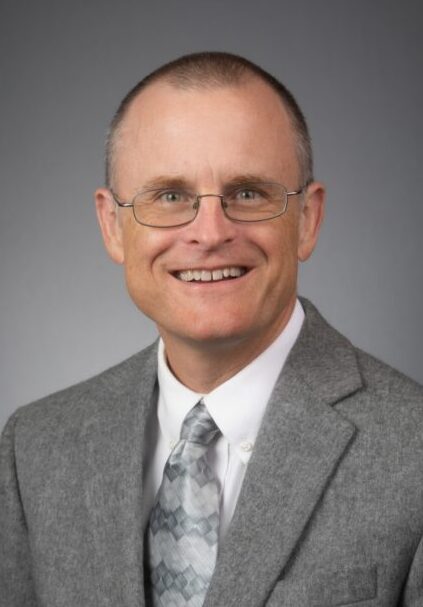
Dr. Russell James, Professor at Texas Tech University
Denver: Welcome to The Business of Giving, Russell.
Russell: I’m glad to be here. Thanks for the invitation.
“…my perspective on research is really just trying to answer one simple question: How do we encourage generosity? Now, I’m particularly focused on how do we encourage generosity with major gifts of assets, so not just the kind of fun little experiments where we see: how do we get people to move from giving $10 to $12, which is all fine and good, but I’m more focused on how to encourage generosity with major gifts of assets.”
Denver: You started out as a self-described numbers guy diving deep into quantitative analysis, yet your research led you to the power of storytelling and brain science and fundraising. Was there a pivotal moment that shifted your perspective from crushing those numbers to seeing stories that are at the heart of philanthropy?
Russell: Well, it’s really just part of a long journey, and certainly I started out focused on numbers. Now, why is that? Well, my Ph.D. is in consumer economics. My dissertation was on charitable giving, and that dissertation was all about crunching massive datasets and seeing what we could learn about people’s behavior.
And then besides that, I’m also a tax attorney, and so obviously, I’m going to care about numbers when it comes to those sorts of things. So that was just kind of my natural orientation. But over the years, as I’ve moved from a number of years as director of Planned Giving for a small college, to being college president– so focusing on major gifts and principal gifts– since that time, I’ve focused on research.
And for me, my perspective on research is really just trying to answer one simple question: How do we encourage generosity? Now, I’m particularly focused on how do we encourage generosity with major gifts of assets, so not just the kind of fun little experiments where we see: how do we get people to move from giving $10 to $12, which is all fine and good, but I’m more focused on how to encourage generosity with major gifts of assets.
So the idea is I want to be what you might call methodologically agnostic when it comes to answering that question, meaning that I’m open to any sort of a strategy one way or the other. Now, one of the things that I did come across in my data analysis was a connection with various studies that looked at cognitive scores and various other sorts of measurements and people’s charitable giving behavior.
But things actually changed when… now, this is going back a few years, but the university where I worked, Texas Tech University, actually got a grant to start a Neuroimaging Institute with a new multimillion dollar MRI machine. And so I was part of that startup of that process and thought: Hey, this would be really good to learn more about that decision making process.
Well, it turned out that when we took a look at how people thought about, in particular, charitable gifts and wills, which are of course major gifts of assets… that’s not just disposable income gifts, that it was really all about their life story, that they were actually engaged in what we might call visualized autobiography when they were thinking about: Should I include this organization with a gift in my will?
And so the idea is that my really kind of super quantitative, super technical approach to answering the question ultimately led me to story, to the life story of the people making these kinds of gifts, because we found that the more that these visualized autobiography regions of the brain activated, the more likely they were to say, “Yes, I want to include that charity in my estate plan.”
Denver: Yeah.
Russell: And so that then started the process of, okay, well then, what do we know about story? What’s compelling? What makes something a story? And what makes it a compelling story?
“It is all about sequencing the emotion first, and then the numbers later. It’s not emotion versus numbers. It’s sequencing it the right way. I like to say the emotion is the engine in the car and the number side is the brake. Well, if the engine isn’t started, it doesn’t matter if you get them to take their foot off the brake, you’re not going anywhere, right? You’ve got to start that engine first.”
Denver: Yeah. That’s really well said. I think they’re both so important, but the sequencing is the key, and the story has to precede the numbers. And even when I used to sell sponsorships for the Statue of Liberty, everybody bought it based on the emotion. And I always thought that after they bought it emotionally, then the numbers were their head working in: How do we make this work?
But you never sold them with the numbers. You sold them with the story and the emotion, and then the numbers were sort of like the PR part to say: Let me justify it to my boss and figure out what it’s going to be. So that’s really an interesting sequencing. And that sort of takes me to your Socratic fundraising, which I found to be really exceptional, and how you…
Russell: Thanks.
Denver: …frame it as guiding donors to discover their own reasons for giving. Talk a little bit about that and the kind of questions you might ask a donor that will bring that to the fore.
Russell: Yeah. So, I mean, you’re absolutely right, Denver. It is all about sequencing the emotion first, and then the numbers later. It’s not emotion versus numbers. It’s sequencing it the right way. I like to say the emotion is the engine in the car and the number side is the brake.
Well, if the engine isn’t started, it doesn’t matter if you get them to take their foot off the brake, you’re not going anywhere, right? You’ve got to start that engine first.
Denver: Great, I love that. I’ll steal that from you.
Russell: So then the question comes up of, Okay, how do we actually practically do this? And in that deep dive into what is story… What is it neurologically? What is it historically? What is compelling? there was this concept of what you might call a universal story or a universal hero story…something that was called the monomyth originally in The Hero with a Thousand Faces, a book that looked into these stories across cultures, across times and lands by a professor by the name of Joseph Campbell.
That story concept, ultimately, I tried to simplify it as much as I could, comes down to three words, a three-word sequence. So hopefully, three words isn’t too complicated. And those three words are: Identity, which connects to a challenge; Challenge, which promises a victory; and a Victory, which is personally meaningful because of its connection back to identity.
So if you just remember those three words of identity, challenge, victory, and that as a sequence, then you understand what connects with that idea of compelling story. Now, what in the world does that have to do with the questions that we ask? Well, actually, we know that ultimately, we’re leading to making a challenge to the donor, right?
That is the challenge to make a gift that has a particular, hopefully visualizable impact. How do we make that challenge compelling? Well, we’ve got to uncover, or more powerfully, help the donor to uncover the other connections in the story. In other words, how does their identity connect with a potential challenge?
Now, when I say identity, I mean: How do their people, values, life story connect in with that particular challenge? And also, how does a promised victory become personally meaningful because it connects back to their people, their values, or their life story? So the kinds of questions we ask are the kinds of questions that either elicit these connections to the cause or the project, or philanthropy in general, and then we try to help them to define what I would call a personally meaningful victory.
So what are some example questions? If I’m helping you define a personally meaningful victory, I might say, “Denver, if the sky was the limit, money’s no object here. What kind of an impact would you like to have at this organization or in this cause?” Right?
Well, that then frees you from this sort of numbers calculation, the foot on the brake, to start thinking about: Well, what would be really compelling for me? What kind of an impact would I really like to make? And in the same way, I might ask about: “So, tell me about what led you to support this organization? What led you to make your first gift? What inspires you to give to this organization?”
Now, what am I doing there? Well, now I’m trying to uncover those identity connections with the cause or with the organization. So I might get more specific, and we can talk about people, values, or life story. I could talk about: Hey, when did you first get connected with this cause? When did this first become important to you? That’s a life story question. Or does anyone else in your family care about this cause? That’s a people connection.
And ultimately, that’s the idea that we’re trying to elicit for the donor, those story elements, because when I make that ask, I’m going to not just make a naked ask for money, I’m going to make an ask that connects with their people, values, and life story that promises a meaningful victory, that connects back to one of those identity elements.
Denver: Yeah. Yeah. I have always found something that’s worked with me in fundraising… and I’ve been doing this my whole life– nostalgia. And I have been trying to… I remember I was working with a music organization… I was able to take a donor back into their living room as a child, listening to their mother playing the piano. And sometimes when you can just transport them back 70 years or something, everything just goes away in terms of some of the obstacles that you’ve had.
Another point I’d make about this, which I think you just do so exceptionally well, is in these conversations, you really have gotten deep into the language. Words matter, and simple things like, “Make a gift that pays you income for life,” can really resonate. On the other hand, there’s some language that nonprofit leaders and planned giving officers need to avoid. Tell us a little bit about each of those.
Russell: Yeah. So let me talk about the positive side first, and then I’ll talk a little bit about the negative side. So Denver, you pointed out the power of nostalgia, and indeed, that is powerful. That is exactly an example of what we’re talking about with making a connection to the donor’s life story, when you make that nostalgia connection.
Now, let me give you an example of how that connects just to words and phrases. So, as I mentioned, in the neuroimaging study, we found that it was this life review process, visualized autobiography that predicted willingness to include that charity in an estate plan. Now you can get to that other ways. My colleague and coauthor, Claire Routley in England, she did an in-depth qualitative interview study about : Why do people pick the charities they pick to go in their estate documents? And she found the same thing that for most people… it was about the connection to their life story.
So we actually took that and connected it to a magic phrase that if we add it onto the end of a description of a planned gift, dramatically increases people’s willingness or interest in making that gift. So, for example, we might ask people about their interest in making a gift in a will, and that is good phrasing. That’s the best way to phrase that particular question, is to use that term “gift in a will.”
However, their interest got dramatically higher if we ask them instead about their interest in making a “gift in a will to support causes that have been important in my life.” So notice what that does. When I ask the question that way, it makes you think. It makes you think, Well, what causes have been important in my life? What are you doing? You are engaging in visualized autobiography, which we know from the brain scanner is what predicts the interest in including these sorts of gifts.So that’s an example, which is exactly like you were saying with the nostalgia side of things that increases interest. So that’s the positive side of things.
What’s the negative side? Well, one of the things that we find in phrasing is whenever we start using technical, financial, legal, contract language, interest in a charitable gift just collapses. If instead we use simple words and stories, interest goes higher. I kind of think, I sometimes will describe it as family language versus formal language.
Denver: Yeah.
Russell: Family language is: “Would you have said this phrase in a conversation with your grandmother?” If so, then that’s family language. If not, be careful that you’re not getting into overly formal technical language.
Now, there’s actually a psychological reason for that because when I start using contract, formal finance terms, that puts us into the market exchange frame of mind. That’s where we engage in transactions to gain benefit. It’s a competitive frame of mind. Whereas if I’m using social language, family language, that is a more group, social sharing kind of language, and so that leads to different behaviors.
So what are some different examples of that? Well, for example, we find that if you use “gift in a will,” more people will say, yes, they’re interested in doing that. If we use the more technical terms like a “bequest gift” or an “estate gift,” people are less interested in that.
Now, one of the things that some other research had found is that when we use terms like estate giving or legacy giving, even though those might be the right idea, it excludes a big part of our donors because they don’t view themselves as being wealthy enough to qualify for legacy or estate. Those terms are a bit too grand for them. Whereas “gifts in a will,” well, everybody needs a will.
In other language, we find that, for example, if you’re going to describe a charitable gift annuity or a charitable remainder trust, what works is to describe what it does. If you describe what it does, and you call it a charitable gift annuity or a charitable remainder trust, that actually reduces interest as compared to just describing what the thing does.
So anytime we start using these technical, finance terms– insider terms that we as experts might use amongst each other to introduce the concept– that actually tends to reduce interest.
Denver: Yeah, that’s a great insight. I think also the bottom line is people don’t want to feel stupid, and if you tell them something which they’re not sure of, they’re going to show disinterest because they don’t know what you’re talking about. But when you put it in plain, simple English… Oh, I understand what you’re talking about, I feel empowered… And that makes a big, big difference.
Talk to us a little bit more about this neuroimaging because you just brought it up again here and I’m fascinated by it. I mean…
Russell: Okay.
Denver: …well, you know, what happened when their brains lit up, what parts, what insights, what did you learn just from that? Just sounds like a really fascinating undertaking.
Russell: Yeah, sure. So, we’ve done a number of studies, and again, the idea is that we want to see what’s happening in the brain when people are making different decisions. So I’ll give you another example. So in this next study, what we did is we had people do their estate planning, but they had to do it in the brain scanner. They had to answer those estate planning questions in the brain scanner.
They not only got paid for their time, but you actually got an estate planning document out of it, a will document. So what were some of the things that we learned from that? Well, we learned, for example… this is not necessarily a surprise… that when people were deciding what to give to family members or friends, that the emotion and memory regions of the brain activated much more strongly than when they were deciding what to give to charity.
Now you might say, Okay, you can publish that in the Journal of Duh. We really know that that’s the case, but that then led to another experiment. And so in this experiment, what we did is we looked at the power of making what you might call a tribute gift in a will, that is a gift in honor of, or memory of, a loved one.
And we had found actually, that was a really, powerful intervention, and this was outside the brain scanner that we found that, Look, if you ask somebody about: Hey, what is your interest in leaving a gift in a will to, say, the Ottoman Society? And they might say, I’m not really interested in that.
But if we then ask them about, “Well, do you happen to have a family member who might have appreciated your support of this kind of cause?” And if they had that connection and then we asked them about their interest in a gift in a will in honor or memory of that family member, well, their interest went up dramatically, right?
Denver: Wow.
Russell: …because that sequence. Well, we were able to then take that, which we knew from experiments was effective and replicated it in the brain scanner.
And what we found was that when we first asked people about including the organization with a gift in their will, again… very little connection, no memory, no emotion being connected. But if we then later asked them about a gift in a will to the same charity, but in honor of a loved one, after we’d had them think about that person’s connection to the cause, wow, all that memory and emotion regions really kind of mushroomed.
So the idea was that neurologically, we could essentially plug into that memory and emotion of that loved one with the charitable ask by asking about a gift in a will in honor of, or in memory of, a loved one. Other things we found outside of the brain scanner is that it was more powerful if their connection was with an ascendant, not a descendant… that didn’t work, but, in particular, a female ascendant. So if it was with a mother, a grandmother, aunt, that was particularly powerful.
“So this is the idea of setting a social norm. We want to communicate to the donor that people like them make gifts like this. Like, this is a normal thing for them to do. The idea of people like me make gifts like this is one of the most powerful messages in fundraising… And what we’ve found in the experimental research is that the more stories that we share, the more people become interested in that kind of gift. But it turns out that it’s not enough just to share stories. We actually want to share stories of people who the donor feels are like them.”
Denver: Let me ask you a little bit about connection because you did some research in terms of one’s identity can be strengthened by their connection to a group. And that’s interesting. How do fundraisers do that and build a sense of shared community in these times when everybody is such an individual and we’re all so polarized?
Russell: Yeah. So this is the idea of setting a social norm. We want to communicate to the donor that people like them make gifts like this. Like, this is a normal thing for them to do. The idea of people like me make gifts like this is one of the most powerful messages in fundraising.
So how might we do that? Well, we can do it in really simple ways. We can start by just sharing stories. We can share stories of other people like the donor who have made the gift, or included a gift in a will, or used a planned giving instrument. All of these are examples of how we start to set the social norm.
And what we’ve found in the experimental research is that the more stories that we share, the more people become interested in that kind of gift. But it turns out that it’s not enough just to share stories. We actually want to share stories of people who the donor feels are like them. So every time in an experiment the example that’s given is more similar to the person that is being asked for the gift, well, their willingness to give goes up.
To give you an example, we did a series of experiments on charitable gift annuities. Okay? So it turns out that it’s better to, instead of telling somebody about what they can do with a charitable gift annuity, to instead share a story about what Sarah did with a charitable gift annuity. So, identical stories, but after telling about Sarah, they actually had a higher interest in making a charitable gift annuity than if you just told about what you could do. So that’s the normal social norm. That’s the story.
What we then did is we showed a picture of Sarah, and the results actually got worse. And so we’re trying to figure out: Why did the results get worse? So what we did is we tested a bunch more pictures of Sarah… that is, some that were younger age and the 20s, some that were in the 40s, some that were in the 60s or 70s.
And what we found was that as the age of the person answering the question got closer to the age of the picture that we were using, the story became more influential. So if you show me a story with a picture that is definitely not like me, then it makes the story less effective. If you show me a story with a picture of somebody who is closer to me, then it makes the story more effective.
The interesting thing about that study is that this statistical association was not just about age matching, it was completely explained by their answer to one single question, which is: How much do you identify with Sarah? From: she is a lot like me to she is not at all like me. So that’s how we create a social norm. It’s not just that other people do this, but other people who are like me like to do things like this.
Denver: Yeah, if I can share a crazy story from an organization called Donors Choose?
Russell: Sure.
Denver: They did an experiment a number of years ago in trying to get contributions to their organization to support a classroom teacher somewhere across the country. And they did it based on where the prospective donor grew up. Let’s say Lubbock, Texas. It’s going to be a pretty strong pull if the teacher is located in Lubbock too. And they also did it based on if the donor’s major and interests matched the teacher’s subject…if the person, let’s say, was a musician, and they were going to give it to a music teacher or something along that line.
But the factor that outdistances these by a mile was if the teacher’s name was the same as their name. If the teacher’s name was Russell, you would be more inclined to… even if it’s in a place you’ve never been to, in a subject you don’t care about. And that’s a little bit similar to what you were saying.
Russell: It’s exactly right. And we see this again and again. Another experiment, it randomly changed when somebody would call in to donate to public radio, they would say, Well, we just had a donor make a gift of a certain amount, which was above their sort of average amount. And they just rotated whether they described that as: We just had a donor make a gift of this amount; if you change the gender– she made a gift, or he made a gift.
Denver: Yeah.
Russell: Well, if it gender matched, then the example is more powerful than if it was a different gender. So again, we actually see this in dozens of different ways, whether it’s anything that is sort of a feature that that person thinks is a meaningful component of their identity, it’s going to make the example more powerful.
Hey, and you know, Denver, in conversation, what I might do is if I’m going to share a donor story with you, I’m going to try to think of a way in which that donor is like you, and I’ll point that out before I share this story. And if I can’t think of any way, I’ll say, “I was working with another donor… you kind of remind me of her, and what she did was blah, blah.” Okay, right?
Denver: Yeah, yeah.
Russell: So, again, that’s that same idea of we want to tell stories about people who are like the donor. And it really comes back to storytelling. What’s the first thing you need in storytelling? You need to be able to identify with the characters, right?
Denver: Yeah, yeah.
Russell: If you don’t identify with the main character, you don’t care what happens to them. Like the story, you’re not going to be interested, right?
Denver: Yeah. No, I love the psychology because when you were talking about Sarah before, and you tell me about her, I imagine who Sarah is. And then when you show me her picture, it doesn’t match up. I sometimes equate this to the radio. Haven’t you, Russell, listened to the guys on the radio or gals on the radio, and you have a picture of who they are?
Russell: Yes.
Denver: And when you see them, whether they’re good looking or not, you’re disappointed. You know what I mean?
Russell: It’s wrong. That just look wrong.
Denver: That’s wrong. That’s not what I had in my mind’s eye.
Talk a little bit about donor surveys and planned giving. I know they can really show some potential donors and potential prospects. Tell how they can be used, and give us an example of one where maybe that led to a major planned gift.
Russell: Yeah. So what we want to do with the donor surveys is ultimately to uncover if somebody has either made a gift in a will or are considering it. We can also uncover other kinds of contemplation of major gifts of assets. But when it comes to talking about death, there’s a way to do it right and a way to do it wrong.
And the wrong way to do it is to lead with death. The reason I say that’s the wrong way to do it is that if you lead with death, you’re going to get a smaller audience. Meaning that when we remind people of their mortality, we get two kinds of responses. The first response is avoidance. Most people, most of the time, respond with avoidance.
The second stage is pursuit of symbolic immortality, which we can get into at a different stage. But the point is, is that if you lead with death, if you say, I’m just going to… Hey, here is an appeal letter, we need gifts and wills, and the response card is, I’ve already included your organization; or please contact me about my upcoming death, which isn’t how those are phrased, but that’s what it means, right?
What are you going to get? You’re going to get avoidance. I’ve worked with organizations. One sent out over 30,000 of these blunt appeal letters, and they got back nothing. Zero responses.
Denver: Wow.
Russell: But here is the important thing. That same organization later sent out a survey that started with: How did you first get connected to the organization? We do these various areas of work which are most important to you.
And then along the way asked: People like to support this organization in a variety of ways. Which of the following have you done or might you consider? Gift of check, gift by credit card, gift by monthly withdrawal, gift in a will, gift in a will in honor of a loved one, gift of stocks, gift of real estate.
Now, notice what we do there because that organization was asking for the same information. Have you included us in a will, or are you thinking about it? But instead of getting a zero out of 30,000 responses, they actually got a 22% response rate…
Denver: Wow.
Russell: …when they framed it that way.
Now, why is that? Well, notice we are not at all leading with death. In fact, we bury the death question by putting it in, Oh, there’s lots of different ways that people like to support the organization. There’s this, there’s this, there’s this, there’s gift in a will. There’s this, there’s… Right? And so notice that we’re not leading with death, so it doesn’t make it aversive. We don’t get that avoidance response.
And the other thing that it does is we’re actually helping the donor to walk through that story process of thinking about: How did they get connected to this cause of this organization? Which kinds of impacts are most important to them? Remember the identity, challenge, victory? That’s we’re eliciting their identity connections, we’re eliciting their victory connections.
And so then when we get to that question about which of the following ways might you consider supporting the organization, we have sort of teed that up, where they’re going to increase the likelihood of being open to those kinds of conversations. So the difference between a zero out of 30,000 response rate and a 22% response rate for the same organization just shows how powerful it is if you do it right.
And believe it or not, a year later, they mailed again to the non-responders and they got another 18% response rate from the non-responders a year later.
Denver: Utterly fascinating. You’ve been at this long enough that you’ve been able to see donor psychology evolve. It’s probably not the same as when you started, although I know there’s certain timeless elements that will never really change. But as we look around identity and control and mortality as you’ve just talked about, how do you see us reshaping these legacy conversations, if not today, what it’s going to look like in five or 10 years?
Russell: Yeah. And you’re right, Denver, I do tend to focus on those things that have always been the case. Even going back to: What were people using 2,000 years ago in some of the historical records? And so many of those things, they aren’t actually different, and in fact, we see them across times and cultures.
Denver: Yeah.
Russell: But what is different if you are saying, hey, as compared to when I started… I started out in Planned Giving after I graduated from law school 31 years ago. So what’s different today? Well, there’s a couple of major trends that are different ,and one is that, especially when we look at the baby boomers and beyond, it’s not just that the baby boomers are a bigger generation, which of course they are, but they are massively more likely to be childless.
And part of this also, they’re much more educated. Those two things go together. Postponing childbirth, the part of getting higher education, and sometimes that leads ultimately to childlessness. The reason that’s so powerful is that childlessness is by far the single most powerful predictor of whether or not somebody’s going to include a gift to charity in a will. And so it is a massive, massive indicator.
Just to kind of give you a sense of the national statistics, if you’ve got somebody over 50 who has grandchildren, the likelihood that if they have estate planning documents that they’re going to include charity in those documents is right around 6%. If that person has estate planning documents and they are married and childless, over age 50, the likelihood that they’re going to include charity is 50%.
Denver: Whoa.
Russell: So we’re looking at this change from a 6% likelihood to a 50% likelihood. It’s a massive, massive indicator.
And the other major sort of mega trend over the last 50 years is the decline in frequency of attendance at religious services. One of the things that we know from charitable giving, is that if you tell me what your religious affiliation is, that tells me almost nothing about your charitable giving. But if you tell me your frequency of attendance at religious services, that’s actually what tells me a lot about your charitable giving.
And so we’ve kind of had to be working against that headwind where people are less likely to attend religious services, meaning that they’re less likely to get socially relevant donation requests, among other things. And so that has also been an ongoing trend.
Denver: Another thing that’s changed here in 2025 are the tax laws and market changes. What’s one charitable giving opportunity that you’re most excited about right now for donors?
Russell: So certainly the most exciting thing is when it comes to charitable giving, is starting next year, everybody gets a thousand dollar/ a person above the line charitable deduction. And this is particularly important coming at this time because we have now had a multi- year trend of a reduction in the share of people making charitable gifts that’s offset by these sort of mega donors that are making larger individual gifts.
But it’s sort of concerning as a society when you have fewer and fewer people who are participating. Well, this is the kind of incentive that we can say with absolute confidence is going to increase the number of people who are making charitable gifts. And so I’m most excited about that new change in the 2026 tax law.
“…the most powerful thing that we could do is to start having asset conversations about wealth sharing rather than just always being in this small gift category of always asking for the $50 cash gift. Those are the least efficient dollars when it comes to fundraising, and they tend to have less of an impact.”
Denver: If you had the chance to help shape the future, Russell, not just anticipate it, what’s one shift in mindset tools or systems you most want to see take hold in charitable giving over the next 25 years?
Russell: So the most powerful change that you can make with any donor who cares about your cause is to get them to start thinking about their wealth as donation-relevant, not just their disposable income. Most people throughout their entire lives will only think of charitable giving as something that comes from disposable income. It’s a pocket change decision. I’ll compare it to other cash decisions that I made, what I just spent at Starbucks, and that will inform what is a reasonable size of gift.
But once we can get people to start thinking about wealth sharing, not just disposable income sharing, that can completely change the magnitude of their giving, especially for those age 50 and above that tend to be the wealth holders. Now how do we get to those kinds of conversations? Well, we begin by not just talking about cash. Start talking about assets. Start talking about those major assets, which are non-cash assets, because that’s where wealth is held.
Wealth is not held in cash. National statistics show somewhere around two to 3% of household financial wealth is held in cash or cash equivalents, like checking accounts, money market accounts, the savings accounts, those sorts of things. All the rest of it, it’s held in assets, it’s held in non-cash assets, so that might be stocks or real estate, or life insurance. And of course it’s held in these instruments like IRAs and 401(k)s, that sort of thing.
So we actually… the most powerful thing that we could do is to start having asset conversations about wealth sharing, rather than just always being in this small gift category of always asking for the $50 cash gift. Those are the least efficient dollars when it comes to fundraising, and they tend to have less of an impact.
Denver: Yeah.
Russell: Whereas these major life investment gifts, which are wealth sharing gifts, that’s where we get the really big gifts that can make a substantial impact.
Denver: Yeah, and unfortunately those conversations can be a little awkward for a lot of development officers in terms of getting to the wealth conversation from the giving conversation. Any smooth way to sort of get into that conversation with a prospective donor talking about their wealth and assets?
Russell: Yeah, absolutely. So Denver, what you want to keep in mind is your goal in having a conversation is you want to learn the past, present, and future story of the asset. So we’ll open up that question by asking about the past or the present. And the reason that we do that is ultimately, we want to get to the future because the future is always the fundraising punchline.
Because let me tell you a little secret, there’s only two answers to that question of what’s going to happen to it. You are either going to sell it, or you’re going to die with it, right? And both of those two outcomes are great opportunities for charitable planning. So how do we get into this conversation? It could be something as simple as: “Hey, how’s business going? How’s the market been treating you?”
And we can then ask follow-up questions about, “What’s been going on? What’s happening? So how did you get into real estate investing? Or, so are you a collector? Well, tell me how you got started with that.” What are we doing? We’re just being social and we’re trying to… because look, assets have stories, and people love to tell the stories of those assets. So we’re trying to elicit those kinds of stories.
If you want to, you can even use what I like to call the reverse question. What’s a reverse question? Well, that’s where you make a statement that’s going to cause that person to ask you a question. What might this sound like? Well, here’s one that’s irresistible. If you ask me, “What do you do for the nonprofit organization?” Maybe we’re in an event, whatever.
I might say, “Oh, I help people give weird assets to the organization.” Nobody can resist. Oh, really? Well, tell me about…
Denver: Tell me more.
Russell: …what’s the weirdest asset somebody’s given to you?
Denver: Yeah, yeah.
Russell: And what are you going to do? You’re going to share a story about someone who made a gift of an appreciated asset rather than cash, and they got a double tax benefit because appreciated assets, you avoid capital gains tax and you get the charitable deduction. And they were able to make some impact with that. Or I might just say, “I help donors give smarter.” Right. How do you do that?
Denver: Yeah.
Russell: Again, permission to share a story, but then at the end of that story, I’m going to then ask them a question. Maybe that question is, “Have you ever invested in a weird investment?” Or maybe the question is, “Have you ever gotten hit with capital gains taxes?” And regardless of whether they say yes or no, we ask about it.
So if I ask you about: Have you ever made any weird investments? And you say, Yes. Of course, I’m going to ask about, “Well, tell me that story.” If you say, No, I’m going to say, “Oh, so do you like stocks or bonds or real estate? What’s of interest to you?” Again, we’re having a wealth conversation.
Or if I say, Have you ever been hit with capital gains taxes? If they say, Yes, well, “Tell me about it. What was that story?” And if they say, No, we say, “Oh, that’s smart. It’s good to avoid those as long as we can. Do you think that might be a problem in the future?” And again, we’re into having a conversation about their assets, about their wealth.
Ultimately, we want to have those asset conversations because we want to get to the punchline. “So, what are the plans for the future on that?” And let’s say, if they say, Oh, well, we’re planning to sell it at some point. “Well, there are some really powerful charitable giving strategies that if you look at those before the sale, you can avoid capital gains taxes. You can even create some income for you or your family for the rest of your life.”
Or if they say, Oh, I’m just going to hang on to it, pass it on to the kids. “Well, there’s some really efficient, smart ways that you can actually accomplish some of your charitable goals along with your family goals in your estate planning. Is that something that you’d like to hear more about? I could put together some options for you to look at, see if anything’s of interest to you.”
Denver: Great advice, and there’s no better way to answer a question that somebody asks you than give an answer where they say, tell me more.
Russell: Exactly.
Denver: If you can get to them saying: “Tell me more,” then it’s a whole different ball game.
Let me close with this, Russell. You blend academic rigor, ultra marathoning, expertise in ancient civilizations and cutting-edge behavioral finance. Whoo. How do these diverse passions influence each other? And what was the key lesson you took away from your first ultra marathon?
Russell: The key lesson from the first one was I wasn’t ready.
Denver: Well…
Russell: Preparation is key. I thought I was ready. It turns out I was not.
Denver: That’s unfortunately a commonplace answer because I think anyone who’s ever done a marathon, the first one they’ll say, Oh, I should have trained more.
Russell: Exactly. Exactly. Yes. You learn those things the hard way. Really what I would say is the most powerful kind of insight is what I like to call triangulation. Meaning that if we get an answer with one methodology, we have a certain level of confidence about that. But if we start seeing that answer again and again with this approach and that approach and that approach, something that was done 2,000 years ago and something that was done 20 years ago and…
So for example, I mentioned the result that we found with the visualized autobiography driving these decisions to leave a charitable gift in a will, well, that’s using this high-powered neuroimaging machine. But then, again, Claire Routley in her dissertation, she did in-depth qualitative interviews with people. And what did she find? It was all about their life stories, their life narratives.
Okay, now we’re getting some triangulation. Oh, and if we add this phrase onto the end of it to support a cause that’s been important in my life, oh, boom, that really bumps up interest. So that’s the kind of thing where when we start using multiple methodologies, that if every methodology keeps coming up with this same answer, in this case that the answer is story, meaning the person’s personal life story connections, we start getting more and more and more confident about the strength of that answer.
And indeed we connect that then with what do the most effective practitioners do? What phrases do they say? What words, what questions do they ask? And when we find all of those things aligning, that’s when we get more and more confident in saying, yes, this is fundamentally the human way to approach these questions.
So I think that’s the most helpful lesson that we can learn from the various methodologies, is to really gain confidence in knowing that, hey, I am giving you the right direction to go.
Denver: Fantastic. You are such a wealth of information… and I mean great information. Tell listeners about your website and the kind of information they’re going to find on it.
Russell: Well, thanks so much. So I share everything for free. I don’t sell anything. I’m just a professor. So if you go to encouragegenerosity.com, you will see every book I’ve ever written on the topic available there for free, PDFs of it. I’ve got audio books available for most of them that are linked there as well.
Hey, if you want to kill some trees, you can go on Amazon and you can order the paper copy. I’m happy for you to do that as well. But as I was saying, Denver, if the stuff that I do just sits on my shelf back here, it doesn’t make any impact. It’s got to get out to the people who are actually changing the world through their great organizations. So that’s why I share all of that for free.
Also, if you connect with me on LinkedIn, just Russell James at Texas Tech, you can find me there, then you’ll be connected with the latest things as I post about the new tax law and new experimental results and everything else.
Denver: Fantastic. Well, I want to thank you so much for being here today, Russell. Even though you’re just a professor, it was such a pleasure to have you on the program.
Russell: Thanks so much, Denver.
To celebrate my 50th year in the nonprofit sector, I’ve put together a gift for you — a practical, field-tested guide to building world-class nonprofit workplace cultures. It’s called Cultivating Nonprofit Excellence, and it’s based on insights from nearly 1,000 interviews and 150 focus groups with nonprofit leaders around the globe. It’s completely free and instantly downloadable at blanchedalmond-mosquito-418475.hostingersite.com