

Welcome to The Business of Giving. I’m Denver Frederick.
Most nonprofit boards treat technology as an operational afterthought—a cost center to manage rather than a strategic lever for mission achievement. But with AI reshaping everything, that approach isn’t just outdated, it could be existential.
My guest today is Alethea Hannemann, Co-founder and CEO of Board.Dev. Working alongside Aaron Hurst, she’s helping nonprofit boards become more tech-fluent and values-aligned by placing senior technology leaders in governance roles and upleveling entire boards around strategic technology decision-making.
“Having one person on your board is a great start, but if the full board is not aligned and talking about tech, then the progress is going to be slow, if at all.”
In our conversation, we explore their Tech 28 framework for sparking the right conversations, how the pandemic exposed technology gaps that AI is now amplifying, and why technology choices are fundamentally about values—not just operations.
Alethea also shares practical advice for nonprofit CEOs, tech executives, and funders on what each needs to do differently to build digitally fluent organizations.
Denver: Welcome to The Business of Giving, Alethea.
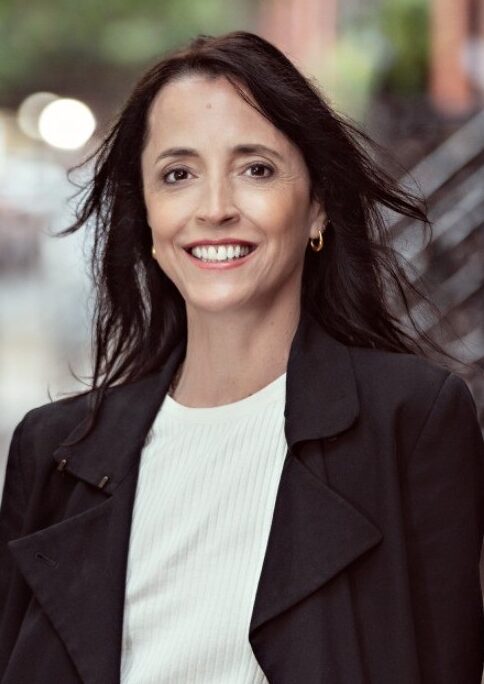
Alethea Hannemann, Co-founder and CEO of Board.Dev
Alethea: Thank you so much. It’s great to be here, Denver.
“So, pro bono can tackle a project, but boards are really going to help you set the vision and maintain fidelity to that vision, which is particularly important in technology right now. So that was the source of Board.Dev.”
Denver: Let’s start at the beginning. What was it that you and Aaron observed or lived through that led you to create Board.Dev?
Alethea: Excellent. So, my co-founder is Aaron Hurst, who’s the founder of The Taproot Foundation, and I worked with him there for about 10 years. And Taproot is all about scaling pro bono talent, and so we really saw how thousands of nonprofits across the country, what they were struggling with, and how professionals from a variety of fields could really support them in getting some big things done to achieve their missions.
But we were seeing that one-off projects were not always sufficient, and so a couple of things were really coming to the fore. Number one, the increasing importance of technology to nonprofit achievement. And number two, the potential of boards to really help drive strategy and achievement and execution for nonprofits.
So, pro bono can tackle a project, but boards are really going to help you set the vision and maintain fidelity to that vision, which is particularly important in technology right now. So that was the source of Board.Dev.
Denver: How deficient are nonprofit organizations at large in having tech experts… or people really well-versed in it on their board?
Alethea: So, I’d say anecdotally, we hear from almost every nonprofit we speak to that I absolutely need this expertise on my board. Or we’ll hear that they do have folks with the tech background, or from the tech industry, but they’re just not leveraging them. They’re not sure how to engage them in a way that is different from other board members.
So we hear that all the time. We also hear just more generally that folks need some help in setting and aligning their whole organization to a tech strategy that’s really integrated into what they’re doing.
And I should say this is not just about the nonprofit sector. If you look at figures in the corporate world, placement of tech-focused board members is really going up because those businesses are seeing the same challenges that nonprofits are.
Denver: Got it. So Alethea, in practice, what does a high-functioning, tech-empowered board look like? What is the difference in their conversation and the decisions that they’re making?
Alethea: Yeah. So number one, there is a conversation. So we’ll often see about 45% of nonprofits will talk about the budget implications of tech with their board.
Another way of saying that is: over 50% of nonprofits don’t even talk about the budget implications of tech, but they’re often seeing it as on a project basis, like “we need to get a new CRM.” They’re not thinking about how technology can really change their organization and how they should be looking forward.
So, number one, they’re having a conversation. Number two, it’s a conversation that’s built in rather than bolted on. It’s not an afterthought. It’s about strategy rather than operations.
And number three, it’s about asking questions as much as it is sort of a checklist of things that are working or not. Are we making the right choices for technology, for our mission, and for our strategy? Are we managing risks in the right way? What risks are there, and how are we tackling them?
And then: Are we resourced to use technology really effectively? So those three things– having the conversation, thinking about it as strategy rather than just operations, and then asking the right questions, whether or not you have the answers immediately.
Denver: I spent my entire career in the nonprofit sector, and for almost the entirety of that career, technology has been viewed as a cost center.
Alethea: Yes.
Denver: It’s an expense. How do you get people who are sort of stuck in that way of thinking… and I think a lot of CEOs are because they’ve been in the field much longer… how do you get them to begin to look at this as a strategic lever for achieving their mission?
Alethea: Yeah. Well, I’d say one thing right now: we’re sort of helped by the times in that the rise of AI really has folks thinking differently about technology.
So they’re seeing two things. They’re seeing massive increased risks. So boards that may not have wanted to talk about tech are feeling increasingly like they must. That’s a good thing.
Denver: Yeah.
Alethea: That’s a door opening, whether or not AI becomes the full conversation. And then, they’re seeing great opportunity right now as well for that reason. A lot of nonprofits closed down during the pandemic because they were not able to transition to more remote workplaces or virtual programs.
I think now with the rise of AI, we are, for a lot of reasons, going to be seeing the same sort of pattern. Organizations that cannot make that leap are not going to make that. And I think boards are really accepting and understanding that existential risk. Now they need to figure out how to deal with it.
Denver: Yeah. Fear is a great motivator. No question about it. That’s a wonderful observation.
Alethea: Yeah. Yeah. But the opportunity too, the opportunity is…
Denver: It’s an opportunity, too. The impetus to get you started…
Alethea: Yeah. And actually just to add something to that too, I think the organizations are increasingly starting to see that technology choices are really about values.
Denver: Yeah.
Alethea: And that can be a real driver, too. That’s where the board oftentimes will see a connection that they didn’t before because how you handle your data, for example, is critical to your trust in the community and like the ethical basis for your work.
Whether or not you decide to use generative AI in your programs, for example, is key to how you’re engaging with your stakeholders. And so, nonprofits and their boards are starting to see the values implications of this, which makes it feel like a board-level problem, not just a management issue.
Denver: Yeah, yeah. I get inspired by that, too, in terms of the nonprofit sector has always been sort of a tagalong after the private sector and the corporate sector. We’re always the last to the party, and I think when it comes to the ethical values of AI, this is a place where we really should be out in front, and we should be creating…
Alethea: Yes.
Denver: …the leadership model that the rest of society follows.
Alethea: Exactly. And industry, yeah.
“…we do three main things at Board.Dev…set the standards, provide training and tools, and then do placement.”
Denver: And industry, right. Yeah. Yeah. Well, walk us through your business model. Who funds Board.Dev? What’s the obligation on the part of the nonprofits? How does the whole thing work from the nonprofit side?
Alethea: Yeah. Excellent. So, we do three main things at Board.Dev, and we’re here to, number one, set standards around what technology leadership at the board level looks like.
Number two, we’re here to uplevel all boards and board members anywhere that want to get better in talking about tech. So, how do they meet those standards? And then number three, we work on getting nonprofits the right talent at the board level. So set the standards, provide training and tools, and then do placement.
Right now, most of our revenue comes from working with companies who engage us to place their tech talent on nonprofit boards. So the companies are really excited about this as a social impact strategy because they know it can be game changing for nonprofits.
It also really amplifies their other investments, so they may be giving cash or pro bono or product. And they know if they can provide a nonprofit with a really senior level leader to help guide and execute on the other things, that they’re going to go much further. So they’re excited about it for social impact. They’re also excited about it for employee engagement and retention reasons.
It’s a really unique experiential learning opportunity. There’s a lot of really talented tech leaders who will never set foot in a corporate boardroom, and yet having that strategy experience, those conversations at a nonprofit can be just huge for their development.
Denver: Yeah, I was going to ask you about the Tinder part of your job.
Alethea: Yes.
Denver: How do you match that tech executive with that nonprofit organization? And how do nonprofit organizations qualify, or how do they get involved?
Alethea: Yeah, so companies work with us mainly to place their tech leaders. We also do trainings for their nonprofits or trainings for their leaders. And sometimes they’ll provide charitable funding for us to do just out in the world field building as well.
So the nonprofits come to us in a variety of ways. They might be grantees of a foundation or a company that we are working with. We also work with several intermediaries and partners in the ecosystem like Fast Forward, for example, the amazing…
Denver: Barenblat.
Alethea: …tech nonprofit accelerator. Yes. Brilliant. Kevin Barenblat, the co-founder, is on our advisory board.
So, huge number of tech forward nonprofits there. We also do regular webinars; so we’re doing once a month webinars just on the basics of tech governance to help nonprofits understand the concept, why it’s important to them, and how they can start using some of these principles. And so folks will sign up that way as well.
And when it gets to the Tinder part, this is the fun. There’s nothing I love… I always say my whole career has been about getting resources to change makers and this matchmaking is a big piece of it.
We’ll look at what we talked to nonprofits and get some intake information from them about where they are in terms of tech fluency and capability across their leadership team and their board. Do they have any big tech changes coming up? Where do they see opportunities and gaps?
We have a whole framework for tech governance around four key areas: resourcing, strategy, risk, and security. And then, those big next gen ideas. And so we’ll ask questions around those four areas just to get the feel for where a nonprofit is and what they think their priorities are.
And then on the tech leader side, we’ll ask similar questions: What motivates them? What are their skills? Where’s their network? And so on. And then match people together. We give them the resources for a conversation– what are some good questions they might ask– because a board commitment is really big on both sides.
Denver: Yeah. Yeah.
Alethea: It’s not a small thing. It’s two, three years and you’ve got someone on the nonprofit side, you’ve got someone who’s helping really determine the future of your organization. So you really want to make sure you’ve got that right.
Denver: What do you do after placement? I mean, how do you support the tech executive? How do you support the nonprofit organization?
Alethea: I love that you asked that question. At Taproot, we used to say we don’t do: match and release. Not like: Here you go, Best wishes, Have fun!
Denver: On your own.
Alethea: We do a lot of training upfront, particularly for the tech leader, Nonprofit 101, Board 101. Because a tech leader may not have served on a board before, and that is totally fine, so we want to make sure they’re set up.
And then afterwards, we do follow up. There’s a bunch of materials and templates that we provide folks to help them figure out what are the top priorities at this organization; and how are we going to follow those through, say, the first year of the board term?
We do cohort meetups with a lot of our tech leaders. So yeah, if they’re running into some speed bumps, like, Hey, the rest of the board doesn’t want to listen to me! Or, Wow, the needs are overwhelming here; they’re more than what I thought… they can really help team problem solve.
And we also do one-on-one coaching if folks need it because we really want people to be successful in using this expertise, not just getting it on their board.
Denver: Alethea, have you found a common misconception that a lot of these tech executives have once they get on the board and realize something that they had not counted on?
Alethea: Yeah. Well, I’ll tell a story about that. There’s two answers to that. One is just there’s always going to be some context gaps. And so I think that what’s most important for the nonprofit CEO or leadership team and the new board member is to work through those.
I’ll give an example. We actually were having a conversation with a bunch of senior leaders from one of our company partners. And this was a pro bono event that they had set up, and I was super eager to do this. As you can imagine, I’m a big fan of pro bono and professional expertise… so thrilled to have these folks in the room.
But one of them said about security in a way that could have sounded dismissively. “Well, if you’re not processing credit cards and you don’t have protected health information, you have nothing to worry about.” And immediately I’m thinking, Okay, well what if I have information about undocumented immigrants? What if I have information about people seeking gender-affirming healthcare?
Like I have some really serious information, right? And if I were a nonprofit executive who was not familiar with some of those context gaps, it could have been a real off-putting moment. So I think making sure that folks work through those sometimes sticky points where the context is different is really important.
But I’d say that the second misconception that’s also really important to take into account is: sometimes, nonprofits are afraid that a for-profit… a person with a for-profit background will come in and make assumptions about them having resources that they don’t have. So they’ll suggest too big a plan.
But actually, what we find is sometimes folks suggest too small a plan because they don’t think the nonprofit will have the capability to execute on it. So you want to push that on both sides.
Denver: Yeah, yeah, yeah. And I would imagine trying to get the speed of the tech executive– what they’re used to from their organization, and the nonprofit, which is, let’s say, more considered and has to get everybody’s opinion three times before pulling the trigger.
Alethea: Yeah, speed is right on. You might just not get there yet.
Denver: You’ve talked a little bit about frameworks and resources, but tell us a little bit more about Tech 28 framework, what that is and how it’s used.
Alethea: Yeah, so The Tech 28 was the first output from the amazing advisory board that we are lucky enough to have pulled together. This is called the Nonprofit Tech Governance Congress. And it’s a group of CIOs, CTOs, and CEOs from across the nonprofit sector, philanthropy, and the tech industry,
And we brought these folks together to help us align all those worlds on what would be most helpful for nonprofits. So there’s really no resources out there right now to guide anyone in saying: What should we be talking about on the board level related to tech? There’s no guide, so we’re here to fill that gap.
The Tech Congress is the set of super talented folks we have doing that, folks like Oliver Hurst-Tiller, the CTO of DonorsChoose, the CEO of NTEN, CIO from Okta, and so on. So The Tech 28, we had our launch and our first in-person meeting in February.
And The Tech 28 is a set of 28 key questions that anyone can use to start talking about tech at the board level. So, what are our biggest risks? Are we resourced appropriately? Is our board trained up on tech the way we need it to be? What about our staff? And they’re not designed… it’s not a checklist.
What we don’t want is for a nonprofit CEO to say, “Oh, this is a report card for me. And if I can’t answer yes to all of these questions, then my board is going to grill me.” They’re all starting points, so people can figure out: Where are their priorities? Where are their hotspots? Where are their big opportunities? It’s a way into the conversation.
Denver: Tech is often viewed as a competitive advantage, and I wonder if it’s ever a challenge to reframe it where it’s a tool for collaboration and collective impact. Have you run into that?
Alethea: Yes, a competitive advantage, certainly. I mean, we are hearing that more and more right now. And we do try to help folks think more about the opportunity and less about the necessity, like less about a deficit mentality… Nonprofits are behind and they need to catch up.
I think some of the most exciting things we’re seeing are actually around collaboration and maybe more community-led impacts. There’s so much opportunity to get more input from the people you serve or engage. There’s so much more potential to share information as long as you know you’re doing so safely and in a way that protects the people you serve.
So, yeah, I mean, I think we see a lot of examples of that, of one of the organizations that I’m on the board of is called Lemontree. And they work in the emergency food space. And they started out as kind of a Yelp for food pantries.
Denver: Yeah.
Alethea: So folks navigating… and by the way, a huge number of people will navigate the emergency food system this year, increasing numbers of course, as services are cut. But it’s really hard to navigate because food pantries are sometimes small and staffed very lightly.
They don’t have good information online. Someone may take a bus all the way across town to get to a pantry and find out they don’t have the right documentation, or there’s no vegetarian protein there, whatever, or they’re closed.
Denver: Yeah. That, too.
Alethea: And so Lemontree started out as sort of rating and getting up-to-date information, but then they moved on to also taking reviews and inputs from folks. So they’re helping to increase the quality of the food out there because they can give feedback to a pantry or to intermediaries.
And then they’ve also developed a chatbot that lets them help folks find what they need when they need it, so it’s more interactive. And I just mentioned that example because I think it really touches on everything you just said, moving from just operations and information to a really improved experience for the people at this nonprofit.
“…having one person on your board is a great start, but if the full board is not aligned and talking about tech, then the progress is going to be slow, if at all. And so we moved from thinking mainly about placement to thinking about upleveling the whole board and setting standards for folks across the sector, because there was just this vacuum. And so that’s proven to be just as important as getting the right talent in the right seats. Everybody needs to be tech fluent.”
Denver: That’s a great example. Since starting Board.Dev, is there a belief you had to let go of, something you thought was true, but experience has ultimately reshaped?
Alethea: Yeah, I’d say… So, we’ve been in business a little under two years, and our mission goals have evolved fairly significantly actually, because what we thought… our hypothesis coming into this was nonprofits just need the right tech talent on their }. That’s it. We just got to do it like we got to do the matching. We know how to do that efficiently.
Denver: The end.
Alethea: Yes, exactly. It was match and release, maybe we were thinking that way. But like we know how to do that right and give people the resources they need to succeed. But what we found is, having one person on your board is a great start, but if the full board is not aligned and talking about tech, then the progress is going to be slow, if at all.
And so we moved from thinking mainly about placement to thinking about upleveling the whole board and setting standards for folks across the sector, because there was just this vacuum. And so that’s proven to be just as important as getting the right talent in the right seats. Everybody needs to be tech fluent.
Denver: Yeah. Yeah. That’s a great evolution you guys had. No question about it. With so much tech risk out there from AI to security breaches, in your mind, Alethea, what’s the one conversation every nonprofit board should be having right now?
Alethea: Ooh. Certainly a conversation about data security and privacy is hugely important right now, that every nonprofit is going to have some data that’s of interest somewhere. And especially in an era of increasing government surveillance, especially in an era of just increasing cybersecurity risks, that would be the number one place that I would start.
And then, if you’ve got that covered and you feel really comfortable about that, I would helicopter up again to this values discussion.
Denver: Yeah.
Alethea: Where does tech intersect with our values? What would be the principles behind which we are going to make every tech decision? So, wrap up your data, and then start thinking about: what’s the framework by which you’re going to make technology calls in the future.
Denver: Yeah. And maybe in some cases you have to revisit your values because this is a different world, and you have to make sure that your values are contemporary with what’s going on with the world. Most cases, they probably will be, but I bet you there are going to be some cases where we don’t have that really covered at all.
Alethea: Yeah.
“There’s a lot for funders to do in getting up to speed and thinking about tech. But number one I’d say for them, when you do fund tech– as they’re starting to do– don’t just fund a product; fund the leadership that a nonprofit needs to support that product. Think about that full picture because tech shouldn’t be project-based, it’s a process.”
Denver: Okay. If a nonprofit CEO, a tech executive, and a funder are each listening to this interview, what’s the one shift you’d like to see from each one of them? That would be a nonprofit CEO, a tech executive, and a funder.
Alethea: I love this question. So, nonprofit CEO, I would say, number one, make sure tech is on the agenda. And number two, reach out and make sure you do have the right expertise.
And there are ways for you to do that. Look through your networks. Ask folks already on your board. Post on LinkedIn. This is an area where even if you have a lot of tech expertise on your team, you can really gain by having that at the board level. So that would be number one.
For the tech executive, I would say, know that your skills are relevant when contextualized. A lot of tech folks have come to us saying, I’ve tried to get involved in the nonprofit sector, but it didn’t feel like they were really using me in a way that felt effective. Everybody says that, but the tech leaders say it more than everybody.
Denver: A little louder.
Alethea: Yeah. They say it louder and they say ROI about 15 times. And you know what? They’re right.
Denver: Yeah.
Alethea: And there are ways that you can engage and be useful, whether or not your tech expertise, your skillset is an exact match to the tools they’re using. Your business knowledge and the way you apply tech concepts to business decisions is going to be really important for folks.
And then the funders. Funders are critically important because what gets funded is what gets done. Something like 80% of grants include no provision for technology, for example. And the majority of funders have not started thinking about what their policies are related to AI.
There’s a lot for funders to do in getting up to speed and thinking about tech. But number one I’d say for them, when you do fund tech–as they’re starting to do– don’t just fund a product; fund the leadership that a nonprofit needs to support that product.
Think about that full picture because tech shouldn’t be project-based, it’s a process. So don’t just buy a tool. Make sure that you are supporting the right resources to make sure that tool or any tool decision in the future gets executed on wisely.
Denver: A very comprehensive answer. That would even look good in a blue book, if we remember…
Alethea: I could make it short. I could make it shorter: Fund tech.
Denver: Finally, Alethea, what’s the question you’re personally living into right now, the one that’s guiding your work, but you don’t quite have the answer yet?
Alethea: Ooh. One is… I guess I’m only allowed one, but…
Denver: We can go with two.
Alethea: Okay. One is like, where’s our place in the ecosystem? And that’s a question that’s always with me in all of our businesses. We don’t believe that a tech-fluent board is the answer to every challenge for nonprofits right now.
It is a critical challenge, and maybe by solving that challenge, we help free up organizations to work on other gnarlier problems, but always thinking about who else is doing work in this space and how can we best integrate our work to help accelerate everything that we are all collectively doing for nonprofits. So thinking about all the amazing organizations already in the space, like TechSoup and Fast Forward, and so on. So that, I think, would be number one.
And then number two, as always, just trying to make sure that our services really are attuned to nonprofit needs. Always top of mind, the last thing we want to do is create something that feels like another checklist item for nonprofits. Technology and the leadership behind it has to be an accelerator rather than an anchor. And so that’s the number one thing I think about every day.
Denver: Wow. That’s a lot. Those are gnarly problems and challenges, but you guys seem to be well on your way.
For listeners who want to learn more about Board.Dev, and I bet there are a lot of nonprofits out there listening who will want to learn more, tell them about your website and the kind of information they could expect to find on it.
Alethea: Excellent. Well, we are eager to learn more about what their challenges are and how we could help them. So Board.Dev does have a number of resources for folks to kind of DIY their way in two things.
Number one, you’ll find links to our monthly webinars where we introduce concepts related to tech governance for both tech leaders who might want to serve on boards, and nonprofit leaders who are trying to activate or engage a nonprofit, a tech board member.
We’ve also got a number of resources to help folks kind of step into this on their own. Number one, we’ve got a Tech Governance Assessment, which nonprofits can take. It’s a short questionnaire asking about some of these key areas that we talked about earlier, like risk management or tech resourcing.
And that can help you get a better idea of where some of your pain points are and where some of the big open opportunities for you are. And then with that information, you can also use our templates to create a role description to better describe who might be a really good match for you.
And so you can post that; you can circulate that in your communities, in your volunteer communities. You can share that with companies you already partner with to see if they have folks who might be a good match for you. Lots of ways that you can get started with tech board leadership.
Finally, nonprofits can also sign up to be on our list for placement. We work with companies all over the country on a rotating basis every year, and are always looking for good nonprofits who can be matches for these stellar professionals who want to give their time.
Denver: Very, very exciting stuff. I want to thank you so much for being here today, Alethea. It was such a pleasure to have you on the program.
Alethea: Thank you so much for having me. Love being in company with all the leaders you’ve had on the program before.
Denver: Thanks.
To celebrate my 50th year in the nonprofit sector, I’ve put together a gift for you — a practical, field-tested guide to building world-class nonprofit workplace cultures. It’s called Cultivating Nonprofit Excellence, and it’s based on insights from nearly 1,000 interviews and 150 focus groups with nonprofit leaders around the globe. It’s completely free and instantly downloadable at blanchedalmond-mosquito-418475.hostingersite.com