
This is The Business of Giving. I’m Denver Frederick.
What happens when the aid system meant to protect the world’s most vulnerable……vanishes overnight?
Earlier this year, the abrupt freeze in USAID funding sent shockwaves through the global nonprofit community. Refugee shelters closed, food distribution stopped, and hospitals ran out of medicine. But even before this crisis, one organization was quietly rewriting the rules of international philanthropy—putting power into the hands of local leaders and reimagining what aid could look like.
That organization is GlobalGiving, and at its helm is Victoria Vrana, a veteran systems thinker and relentless advocate for community-led change. As the organization’s CEO, she’s navigating one of the most consequential disruptions to global aid in decades.
I mean, shockwave is the right term. I mean, I think it’s like tectonic plates in our sector have shifted really forever.
In this episode, Victoria talks about the real-time impact of the funding collapse, what it reveals about the fragility of traditional aid systems, and why GlobalGiving’s founding vision—connecting private capital directly to grassroots leaders—is more urgent than ever.
It’s a pivotal moment for the sector—and one that calls for bold leadership.
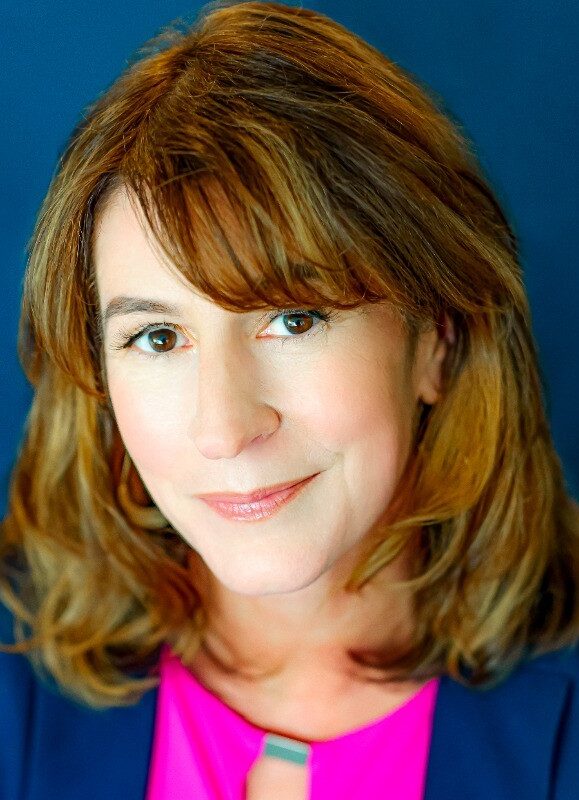
Victoria Vrana, CEO of GlobalGiving
Denver: Welcome to The Business of Giving, Victoria.
Victoria: Thanks so much for having me, Denver.
Denver: For those who are not familiar, could you provide an overview of GlobalGiving, its mission, its core priorities, and the role it plays in global philanthropy?
Victoria: Absolutely. So GlobalGiving is a 23-year-old nonprofit organization, and we connect donors to the causes and organizations they love in 175 countries.
Denver: Wow.
Victoria: Our mission though is to transform aid and philanthropy to accelerate community-led change.
So we’re a lot more than a giving platform or just a giving intermediary. We actually were created to change philanthropy and to transform aid. The community-led change part is really that we believe that local leaders in their own communities have the best solutions to the challenges they’re facing.
So we have a point of view, and it’s about really connecting generosity to those local grassroots leaders with amazing solutions. We’ve got an online giving platform, as I mentioned, and so any donor can go on and make any size gift. And we also work behind the scenes with companies and individual donors to facilitate their grant making, help them find organizations.
We also respond a lot in times of crisis because that’s a time when it can be particularly challenging for donors to find local organizations. So at any time we’re running 20 to 40 crisis funds in response to both natural disasters and increasingly, unfortunately, humanitarian crises. So that’s a little bit about what we do, and eager to dive in and share more.
Denver: Yeah. Well, I love the aspect of your community-led solutions and we’re going to get to that. But speak a little bit about the ecosystem that you have been able to create. I mean, you have individuals, and you vet the causes and allow them to contribute.
What you do for nonprofits in terms of letting them expand their reach with tools that you have, and then obviously you have companies to improve their giving through high impact solutions. That’s just a nice little nugget or pitch, but that is a very complicated system and the way you’ve been able to do it so well. How do you get them to all align and create the synergies that you’ve been able to accomplish?
Victoria: Yeah, it’s a great question. So first start with the nonprofits themselves. And so we have a community of 6,000 or so, as you said, vetted nonprofits.
So these are organizations that we’ve sourced, that we’ve vetted. They are trusted vehicles that people can give to that go through all the kind of compliance checks, especially the organizations that are outside the US. It’s really important that we kind of stick to all of the compliance and vetting that needs to be done to really move money safely across and outside of our borders.
The second piece of that is really building trusted relationships with these organizations, so it’s not just like a transactional piece. But we listen hard to our partners about what they need, and help them develop those same kinds of relationships with donors through our tools, through the reporting that they share with donors, through the storytelling and the transparent and trusted platform that we have.
On the donor side, it’s really about giving access to all kinds of donors. As you described, we work with corporate partners, we work with individuals. And again, small dollar donors, big dollar donors, really trying to help them reach whatever organization and whatever cause they’re looking for. And we try to educate a little along the way.
We believe in not just moving the money, but like a trusted, flexible approach to getting those dollars to organizations because what leaders need is really the flexibility to use resources however they see fit. And so part of our model is making sure that the resources are getting to organizations in the way that’s best for them.
Denver: That’s right. Community-led impact is right at the heart of everything you do.
Victoria: Yep.
Denver: The abrupt freeze on USAID funding earlier this year, that must have sent shockwaves through your network of nonprofit partners. What has been the most immediate and tangible impact of that decision and the subsequent dismantling of that organization? And what is GlobalGiving trying to do to help address that disruption?
Victoria: Yeah. I mean, shockwave is the right term. I mean, I think it’s like tectonic plates in our sector have shifted really forever.
Denver: Forever.
Victoria: This will have long-term implications. So there’s the short term immediate and the long term. So in the shortest term, we immediately, as I mentioned, we have these deep relationships with our partners. We began reaching out to our partners. They began reaching out to us. We actually had a survey that was going to go out in the field right at the time the aid froze. So that was good timing.
We have heard from over half of our partners that so far are affected, and that means they’re shutting down; they’re laying off staff; they are pausing or ceasing programs. Overall, that means organizations don’t have food to give out; the hospitals don’t have medicine; refugee shelters don’t have shelter to provide.
And there’s incredible immediate impact on lives of people all over the world. And so, in the short term, although it’ll keep going as long as necessary, we have launched a flexible kind of evergreen fund called the Community Aid Fund. And so that’s a fund that collects resources from all kinds of donors, and then we are able to immediately get out emergency support. And we’ve been doing that in micro grant bursts to the organizations that are affected.
Now, of course, that’s thousands and thousands of organizations. So our team internally is also looking at our own data and data from others to see which countries are most affected, which cause areas. GlobalGiving is blessed in that it works, as I said, at 175 countries and in almost every cause. But that means almost everyone in our network has the potential to be affected.
Denver: Yeah. Absolutely.
Victoria: So we had to really think carefully about how to manage those resources over time for organizations. In the longer term, we and so many of the other organizations in this space of development and humanitarian aid are thinking hard and planning on, as we agreed, this is going to change everything forever.
So what does the new system look like? What are the ways that these community organizations are going to have support and have the fuel they need to serve their communities? What’s GlobalGiving’s role in that? How do we collaborate with other organizations in that?
So we’re really developing our point of view and listening hard to our partners about what they think it should look like. And so that’s a more hopeful dynamic part of all this in the face of this immediate, urgent need, and really lives that are being lost, Denver. I mean, it is heartbreaking. It is incredibly difficult to see the impact around the world.
“And so GlobalGiving’s role has always been about connecting private capital directly to those local leaders. And so we’re perfectly primed to continue doing that in this moment.”
Denver: Yeah. It’s got to take some kind of an emotional toll when you’re doing this every single day. I know it’s maybe a little premature to ask this question, but as you look at that new world, do you have a working thesis that you’re beginning to take a look at?
Victoria: Yeah, yeah, yeah. Absolutely. And I think there’s, again, the immediate picture of that. And then long term as we work more with others, what does the whole system work look like? I’m a big ecosystem person; my whole career has been: How do you change the system? So I think about GlobalGiving’s part and the bigger system.
So when I look at GlobalGiving’s role in this, it really is where we started. Our co-founders, Mari Kuraishi and Dennis Whittle, you know them both.
Denver: Yep.
Victoria: They created GlobalGiving to be an alternative to the aid system. They came out of the World Bank with the attitude: There’s got to be a better way to get resources to community leaders.
And so GlobalGiving’s role has always been about connecting private capital directly to those local leaders. And so we’re perfectly primed to continue doing that in this moment. And the question is, How fast can we grow? And so it’s really: How do we connect donors to local leaders? How do we continue to supply flexible funding because that’s what folks need?
One of the other things that organizations need badly right now, especially those who haven’t had private philanthropy and donations, are those skills to fundraise. So how can we partner with others to bring even more digital fundraising skills and savvy and storytelling to organizations around the world?
I think there’s another important role and a piece of the whole ecosystem that’s about data.
Denver: Yeah.
Victoria: Right? Because if we’re really going to be supporting these local leaders around the world without as many intermediaries in place, how are funders going to find… whether you’re talking about a foundation, institutional funder, corporate funder, individual funder… how are they going to find these organizations?
GlobalGiving, as you probably know, has some significant data products and resources. Our Atlas database is the largest database of NGOs in the world, so that’s 9.8 million organizations. Now these aren’t vetted organizations that have gone through all the hoops and checks and boxes on… they’re safe to give to, but they are legally registered in their own country. So it’s a good first pass…
Denver: Yeah, it is.
Victoria: …at what the NGOs look like in a country.
Then we have our API that can share all of our vetted organizations with other platforms. And there are other data resources out there too–global and local, increasingly local databases of orgs. And so to me, there’s something about our role and others’ role in creating that data layer so donors can better find organizations and vice versa.
Denver: Yeah. Yeah. Well, to be a successful organization, you have to be both findable and fundable. And so many of them are fundable, but they’re not findable then. And if you can help with that.
It is funny, Victoria, how in some respects, as horrific this moment is, GlobalGiving was made for this moment. You go back to the founding story of organizations and you fast forward 20, 25 years, and here you are. This was the original thinking. And it’s a moment for this organization to step up.
I want to make this tangible for the moment because you talked about disaster relief. So Myanmar-Thailand earthquake, that might be the first big disaster since post USAID leaving big-time gaps. What have been some of the key shortfalls you’ve seen, aid delays? And how is GlobalGiving… you’re trying to play a role, can’t replace the finances, I know… but what role are you trying to play to help address this situation?
Victoria: Yeah, that is a great question. And so last week, we actually launched two emergency funds. On Thursday, we launched a fund for the wildfires in Korea. So that is also a natural disaster that’s kind of plaguing that part of the world right now.
And then on Friday, we launched the Thailand-Myanmar Earthquake Relief Fund. And one of the extreme challenges …always for quite some time now about Myanmar is the difficulty of operating and getting aid to that country because the civil war and the continued unrest.
Denver: Yeah.
Victoria: And so this is where, and I’ve only been the CEO of GlobalGiving for two years, so I cannot take credit for any of this. I’m always so grateful of moments like this for the longstanding relationships we have, like we’ve been working in Myanmar for years, and we’ve responded to crises there in the past.
And so while it’s really difficult to get money to local organizations, we have those relationships. And local organizations, especially in this case, are able to sometimes work under the radar of government in a way that allows them to respond in some really complex situations.
So there is no doubt that the dissolution, the evaporation, the disappearance of aid is making that tragedy so much worse. And it’s so much more difficult for organizations in this moment to respond to something so hard, but it’s even more important then to have that private philanthropic generosity coming into that region.
So I’m always amazed by our team in times of crisis… man, the organization is just like this well-oiled machine, like every part of the organization works together. Everybody knows their role. And so we were able to launch that fund very quickly, and we’ll be getting money out the door by the end of this week, by the end of April 4th, because that’s how we move in these moments.
But it is kind of the first test of the international community about: What does it mean when we don’t have the traditional flows going in to help in a situation like this?
Denver: And we’re a pretty resilient and innovative sector. I think we’re going to figure something out. We’re not that fast-moving though. And you guys would be one exception to that rule, but I think everybody’s going to be moving a little bit faster.
Let me turn the page for a minute and talk about something you wrote about– the decline in small donors and how that’s a threat to democracy itself. What’s the most sobering scenario you foresee if this trend accelerates? I know in this country, less than half the families give to philanthropy, down from two-thirds just two decades ago. And what societal values are we risking by having so many people sitting on the sidelines?
Victoria: Yep. And this is something I’ve been concerned with for years now, so thanks for giving me the opportunity to soapbox a little bit about it. So I think one of the things that’s most concerning with this trend that fewer folks in the US are giving to 501(c)(3) nonprofit organizations, is what that means is fewer organizations ultimately will be supported.
When you have fewer donors, that plurality, which makes the US civil society and nonprofit sector so rich and strong, it weakens that plurality. So you have fewer orgs that are getting supported; therefore you have fewer causes that are getting supported. It’s the causes that are preferred by certain donors.
Denver: Yeah.
Victoria: Small dollar donors.
Smaller orgs… there’s research from Urban Institute… are hit disproportionately. So again, these community-based grassroots organizations in the US are getting fewer dollars. When an organization has fewer donors, it has fewer supporters, fewer champions, fewer advocates, fewer volunteers– all these things are connected. And organizations need that strong base. And with public funding in almost every space, again, being threatened or being cut back, that individual philanthropy is even more important now than ever.
And you mentioned the connection to democracy. I was so excited to see the Do Good Institute at University of Maryland come out with this research last year because I and others had long suspected. Like your gut instinct tells you, of course there’s a connection between giving and civic engagement, but I had scoured the internet for research on this, like I needed a data point to put it into perspective.
Denver: Yeah, yeah.
Victoria: There was no actual research or evidence for this until Do Good Institute did this research, and it shows that giving results in a 10% higher turnout in the polls, and volunteering results in a 12% higher turnout. So it’s like a huge… there’s a direct connection here. So it does worry me that fewer folks participating in giving is kind of weakening our civic engagement.
But the final thing I want to say is, I do believe that Americans are incredibly generous just by nature, like generosity. And generosity around the world is alive and well. So the question is: How do we encourage more giving to individual orgs? And how do we really support and champion that kind of small dollar donor and make sure they can see that they could make a difference? And I think that’s what the sector really has to tackle.
Denver: Let’s stick with generosity for a minute. I know you’re a student of generosity. I know you’ve done some things with Ideas42 around the science of generosity. Has there been one quirky or surprising insight that maybe has even changed the way GlobalGiving designs its donor experience?
Victoria: Mmm, quirky. It’s a good question. I mean, I guess I’ve seen a lot of myths be refuted through research. So the recent GivingTuesday GivingPulse report that looks at Q4 giving back in 2024. It shows that donors say that they would give more if they were asked more. And a lot of organizations are like, “Ah, we can’t overask our donors, we don’t want to text them eight times a day.”
And we shouldn’t, to be fair. We shouldn’t text our donors eight times a day, right?
Denver: How many? I’m only kidding.
Victoria: Yeah. But we could ask them maybe a little bit more. And so there’s something about just asking donors. There’s also something about pairing well-known organizations with small organizations, and that can actually give the… instead of dividing the funds, that could give smaller organizations a boost.
Some of the other research that really intrigues me is research about donors of color and women donors, and how, in many cases, they’re not finding the pathways to give that they want. And there’s money sitting on the table in both demographics and communities. So we need to think a lot more about that– Who’s being left out of the current system?
So those are some of the things. But I love and I know you know Ideas42, the application of behavioral science. So, when I first started funding research into giving back at the Gates Foundation, there was a little bit of behavioral science research that had been done, Dean Karlan stands out, the former chief economist at USAID, but not a ton.
And Ideas42 in the last 10 years has built up an enormous body of work, like applying a new tool, a new lens to our giving research that I can… yeah, I can nerd out on that all day long. It’s…
“Whether I was sitting at a small nonprofit organization, or whether I was sitting at a funding institution, I have always believed that it’s important for nonprofit and change leaders to have an idea themselves of what their impact is…”
Denver: Yeah, yeah. We’ll do a three hour because I’m thinking about 10 things I want to say, but I figured we better move on because it is a fascinating undertaking in the field.
I want to talk a little more about community-led organizations. And one of the things that GlobalGiving has been in the forefront of is taking a critical look at some of the impact metrics and how they’ve been drawn by the developed world, and really don’t apply as well as they should to many of these smaller community-led organizations. Talk a little bit about that and what GlobalGiving’s point of view is, and what it’s trying to accomplish there.
Victoria: Yeah. So personally, I’ve been in the sector almost over, I can’t say almost, I have to say over 30 years now. Whether I was sitting at a small nonprofit organization, or whether I was sitting at a funding institution, I have always believed that it’s important for nonprofit and change leaders to have an idea themselves of what their impact is, whatever we’re doing, right?
We all have goals, and we want to know if we’re meeting those goals, and we want to know how we’re doing. And so I believe actually in measurement and data and evaluation of all kinds, but really what’s most important is that measurement and data and evaluation be appropriate for the organization.
It has to serve the people who are doing the work. Like, what do they need to know if they’re doing a good job? What do they need to know to sleep at night? What do their boards need to know? What do their communities need to know? Like the best scenario is where you’re designing your program with your community, and you’re feeding back information and data to that community transparently.
To me, what funders should do is just take whatever people are measuring, like get the frameworks and the indicators and the metrics that the leader needs and not be imposing their own ideas of what should be counted and what should be measured and what should be evaluated and tracked. And so I really believe in nonprofits kind of owning their own metrics and owning their own approaches to their community.
So at GlobalGiving, our organizations report quarterly. They’re transparent. They’re sharing information about what they’re doing. And they share what is most important to them. And our donors are really happy with that.
Denver: Yeah.
Victoria: That’s what they want to hear. And so it’s not that we shouldn’t have this kind of visibility and accountability and reporting and transparency, but it should be driven by the organizations themselves and not driven by the funders.
Denver: Can’t agree with you more. I think the paradigm changes dramatically when you think about measurement of impact as something that’s helping you learn and improve what you do, as opposed to showing results to please a funder so that they will fund you again.
And I’ve always been a little susceptible about measuring impact because it’s really at a moment at a time when somebody’s getting out of the program. So my latest obsession now is durability of impact, 3, 5, 6 years. But you can put me through any program, and I’m going to be sky high the day I get out of it. So that sense of learning, as you said, and feeding that back to the community lasts so much longer and is so much more important.
Victoria: The other thing that I’m sure you are acutely aware of is the timeframe that donors often operate under is nowhere near the reality of what it takes to make change in a community or a life…
Denver: Yeah.
Victoria: …or a forest. This is not a one-year deal. Like I love the fact that funders, and again, I have been a funder for many years…
Denver: I know you have.
Victoria: The way we think that three to five years is a long-term deal because again, for most of the things that people are trying to tackle, three to five years is just getting started.
And so that longitudinal tracking over time, because to your point, things go up and down, right? And people may be on a high at one point, or the forest may look good at one point. And there, you may go backwards a little bit, like change is a long-term game. And I feel like the way we talk about measurement and metrics and indicators never… rarely, rarely takes that into account. And that’s shortsighted.
“And so I think it’s making sure we’re not chasing after the shiny things, and that we’re actually kind of doubling down on what people need and what makes the most sense.”
Denver: Yeah. And it’s individuals, and we’re all different. And often, the change that takes place, positive change, doesn’t happen inside the program a person’s in. It happens outside the library when somebody’s looking forlorn, sitting on the steps, and somebody stops by and says, “Is something wrong?” And they chat for an hour. So it’s artificial the way that we look at it.
Let’s talk a little bit about technology. GlobalGiving is a pioneer in crowdfunding all the way back to 2002, and there’s been seismic shifts in digital tools. Victoria, how do you balance leveraging cutting-edge technology with ensuring accessibility for partners in low-resource contexts?
Victoria: Yeah. I mean, I think a big part of that is making sure that your products are designed with your users in mind. So it is the basics of good product design that you’re actually… it’s user-centric. And so that’s the first piece.
And right now we’re actually in the midst of rebuilding a lot of our technology, so that gives us a great opportunity, again, because we have such deep relationships with our organizations and our donors to make sure that anything we build here or rebuild, or recreate or add has them front and center.
When we first created, as you mentioned, we were one of the first crowdfunding platforms, and there was no crowdfunding at the time. We’re all making it up. And so we did a great job, but we didn’t have a huge base of donors and nonprofits to draw from as we designed that. So, I’m really excited about our opportunity now to make sure that we have what’s needed.
And it’s not always the cutting-edge tech. It’s not always the bells and whistles. Like a good email list often goes a much longer way than the fanciest web-based community gathering hole. Like email will build community just like that. And so I think it’s making sure we’re not chasing after the shiny things, and that we’re actually kind of doubling down on what people need and what makes the most sense.
And with AI, the ethical considerations are huge. And that’s something we’re really careful to keep in mind as we start going down that path. And there are a lot of folks to learn from and a lot of great resources out there. So we’re excited about that.
Denver: It sure is. And I think it’s a place for the nonprofit sector to lead the way. So much of what we do, we follow the private sector. I think when it comes to ethical AI, they should be following us, and we should really take a stand and be in the forefront of all that.
You have an incredible perch, both in terms of all kinds of giving here in the United States and across the globe. What are some of the trends you’re seeing? Whether it’s institutional funders or individuals or corporations, what do you think is happening? What are you looking to see around the corner?
Victoria: Yeah. So I think one of the trends, I don’t know if we can even call it a trend now because it’s been going on for a long time, but I’m finding it’s growing quickly, is collective giving.
And so there’s all kinds of forms of collective giving. Crowdfunding is a kind of collective giving where people are giving together towards something. There are those much deeper forms of collective giving, like giving circles. And people coming together intentionally, wrestling with who they’re going to give to, pooling their funds.
And that’s happening in small ways, and it’s happening in large ways. I was just at a gathering that the Gates Foundation did in San Francisco, where they were bringing together… it was about 300 people from around the world who were working on big collective giving funds. Bridgespan has done a lot of research in this space and really shown how hefty and how quickly growing this space is.
And so I think generosity is amplified even more when you’re giving together with others. And so I think that is just going to continue to expand and grow in new ways. We have an exciting new partnership that’ll launch later this year with Grapevine and Philanthropy Together. And so you probably know both those orgs.
Denver: Yep.
Victoria: Grapevine is a platform for giving circles where you can get your giving circle together and give together online, and Philanthropy Together is the backbone really for the whole giving circle sector. We are joining together so giving circles will be able to give outside the US. And so UK giving circles will be able to get onto the Grapevine platform because GlobalGiving UK can facilitate giving in the UK.
So we’re really excited about this. Basically, we’re helping giving circles go global, because this is not just a US trend. This is something that’s happening around the world, and so together, we can really facilitate this from a digital point of view. And I’m so excited.
And aside from that, Emily Rasmussen and Sara Lomelin are two of my favorite leaders. So to get to do something with all three of our organizations is just such a pleasure.
Denver: Yeah. I’ve had Sara on the show, and I just had Hali Lee on the show. She just wrote The Big We. And when you were talking about leaving money on the table with not paying as much attention to women and people of color, I was thinking of the kitchen table when you said that. You know, I’ve heard so much of what her work has been around the Asian Women’s Giving Circle.
Victoria: Yep. I love Hali’s model. Her book, oh my gosh. It is such a book for our time. It’s like if you were…
Denver: It really is.
Victoria: …hopeless, overwhelmed, defeated, get The Big We because it will make you feel better. It is an awesome book.
Denver: Yeah. Yeah. Well, she’s so positive. You just knew it had to be.
You described forests and beaches as your sanctuaries. How has this connection to the natural world shaped your understanding of resilience in human systems you support, and particularly with what’s going on now?
Victoria: Whoo, you mean personally? Like my connection to the natural world?
Denver: Personally, personally, personally. This is a question for Victoria.
Victoria: That is a great question. I think being in nature, like one, it’s just proven. Like there’s not a time where I go out for a hike when I don’t feel better after. I am never like, Oh my God, I’m more depressed. It is like a magic pill, right? You just go out and hike, tramp around in the forest and you feel better. At least I feel so much better.
Same with being on the ocean, which I don’t get to do as much outside of Washington, DC here. But there’s something about it that gives me perspective on longevity. And just kind of thinking about: This too shall pass. And things can change. And it gives me that grounding and that hope, and yeah, that perspective.
And then there might be something to the forest bathing that the trees are actually giving off something, you know? I don’t know what it is, but it works.
Denver: But it’s good.
Victoria: It’s good. It’s good stuff.
Denver: Finally, Victoria, with three daughters of your own, what’s the one value or habit of generosity you hope they inherit?
Victoria: Ah, I know they’ve inherited some great habits, the generosity already, and it gratifies me so much to see the things that my girls, my young women, do for their communities, for their friends and their lives and the way they give.
Long ago, we established like Giving Tuesday really as a holiday in our house.
Denver: Yeah, cool.
Victoria: And it was actually with GlobalGiving often because I sit down with the girls; so they were little, 6, 8, 10, whatever. And when you start talking to your children about: What do you care about? What are you interested in? They don’t have organizations in mind. They’re not like wildlife defenders… They’re like: I care about kids, I care about water, I care about this or that.
So GlobalGiving was always this perfect place to go shop for what they were interested in. And so we just made it a habit of alway as a family, supporting their giving at first when they were six and eight, and then matching their giving as they got older. And really sharing as a fa– like using it as a moment to talk about what we all cared about, and the beautiful diversity within that, and the things we had in common.
And along the way, it was really fun because I funded some… Gates funded, I managed… the funding to women’s philanthropy, for Women’s Philanthropy Institute at Indiana University.
Denver: Sure.
Victoria: And they did some research that showed the biggest indicator in whether children will give when they grow up is whether or not parents talk to them about giving.
It’s just simply talking about it because a lot of us, we’re private about our giving, we’re personal. And so parents might not really talk about it even when they’re really generous. And so I like to think that those conversations helped build that habit of giving for my girls, which I now see, I see them totally engaged, not just on Giving Tuesday, but yeah, in response to all kinds of things.
Denver: And it’s only common sense because that’s the way everybody behaves. You don’t become a baseball fan at 22. You know what I mean? It has to start early. And if there was one course that I could encourage grammar schools to pick up, it would be purpose. And you can’t find purpose. You can’t start early enough to find out what your purpose might be and the difference you want to make.
For listeners interested in learning more about GlobalGiving or who might be inclined to support the work you and your partners are doing, tell us about your website and the kind of information they can find there.
Victoria: Yep. So globalgiving.org is where you want to go. And again, you can search for and find all kinds of causes and organizations and projects that you might be interested in, in addition to our funds.
So again, the funds that we’ve just launched are in response to the Thailand-Myanmar earthquake, the Korean wildfires. But we also have our community aid fund right now and many others. I mean, the thing about these crises is that there may be a moment when they get a lot of media attention, but the rebuilding and the impact on communities goes on for a long, long time.
And so we’re grateful to the kind of continued and generous gifts to things like our Ukraine fund and the California wildfire fund, and so many of the things that we have in place to serve communities over the long run. So yeah, folks are welcome to go take a look, and of course they can always contact us if they have questions about anything.
Denver: GlobalGiving does stick with it. That is fantastic.
I want to thank you so much for being here today, Victoria. It was a real delight to have you on the show.
Victoria: Thank you for having me, Denver.
To celebrate my 50th year in the nonprofit sector, I’ve put together a gift for you — a practical, field-tested guide to building world-class nonprofit workplace cultures. It’s called Cultivating Nonprofit Excellence, and it’s based on insights from nearly 1,000 interviews and 150 focus groups with nonprofit leaders around the globe. It’s completely free and instantly downloadable at blanchedalmond-mosquito-418475.hostingersite.com