
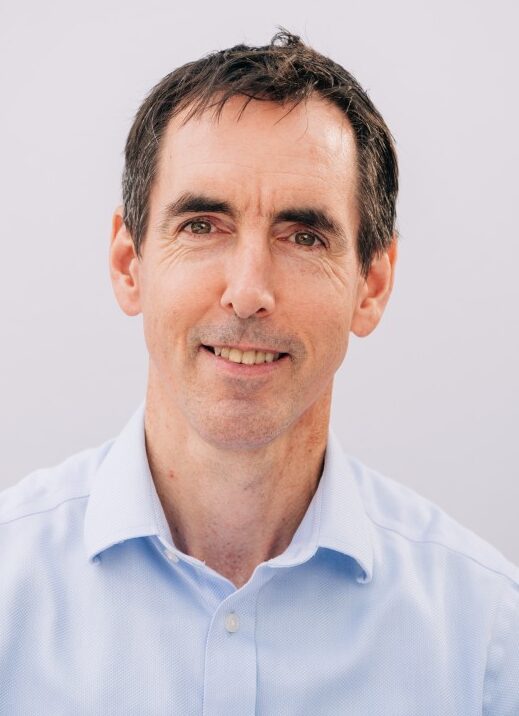
Alex Johnston, Author, Money with Meaning
Denver: Welcome to The Business of Giving, Alex.
Alex: Thank you for having me, Denver.
Denver: So what inspired you to write Money with Meaning, and how did your journey as a philanthropic wealth advisor shape the core message of that book?
Alex: I really appreciate the question, and the book was many years in the making, really. I began my philanthropy advising practice, which is now Building Impact Partners, and there’s a bunch of us doing this work. But way back in 2012, I started out as a solopreneur. And over the years, I started to realize that there was kind of a set of patterns that kept coming up in conversations with people who maybe didn’t actually end up as clients, but who began considering giving, and then never really took a lot of action on it.
And I’m pretty sure that some of these folks didn’t go on to work with other firms or other advisors. They just kind of looked in at giving and had some conversation, seemed to get interested, but then didn’t really gear up their giving. And so the book is really an attempt to provide kind of a DIY guide for folks to try to lower the barriers to getting started in giving.
Because I think what many donors and advisors come to see is that once people really get started in giving, and start really experiencing fulfillment and impact, it builds and has a momentum of its own. But kind of getting started is a key barrier. And this book was there to try to help people do that, whether donors or those who are working with them as advisors.
Denver: And a lot of people stick their toes in the water, but they don’t get the traction and you’re helping them get some traction. And you do that by introducing four pillars, Alex. You talk about Getting Visionary, Getting Real, Getting Together and Getting Better.
Walk us through how those took root, those four pillars, and why they’re essential to meaningful giving.
Alex: Yeah. Well, the Getting Visionary piece, I think it really stems from the idea that a lot of times, we really take action on the things that are personally compelling for us. And sometimes, the vision is what people need in order to feel momentum to get started.
And so dreaming big can be important, but that’s of course paired with the next one, Getting Real, because vision that’s not connected to reality and how the world actually works, is not going to actually result in something positive in the real world. And so pairing those two is pretty important, and that’s often the work that advisors can help their clients with the most to both build a vision, but then also map it to reality.
And Getting Together is, again… philanthropy really is a team sport at its best. And there are so many different ways that we can and should collaborate in that process, including: Whose ideas are we really acting on? Is it always the donor who’s driving their own ideas? There’s a place for that in philanthropy, but there’s also incredible possibilities that come when you consider more broadly how you can act on ideas that are already working out in the field.
And then the last piece is around personal development, which we don’t necessarily think about in the context of philanthropy all the time, but it’s a significant theme in the book. And again, just what I’ve seen is that donors who are really working hard to elevate their own perspective and way of being and way of giving end up having much more impact and a much deeper sense of personal fulfillment.
“And so a big premise of the book is that what we want is more meaningful giving, where social impact and personal fulfillment and even joy come together. And that doesn’t happen by accident. There’s a level of intentionality.”
Denver: Yeah, that’s great. There are so many things that anybody can do, and therefore they don’t think they need to really train to get better at. I think walking would be an example. We walk; we don’t have to think about it.
I work with a number of nonprofit CEOs on communications, but communications we don’t really work on very often because we can all talk. But as you say, the difference between just being able to do it and doing it well is so significant. And that’s where you help your clients.
You also have a subtitle to your book, Alex, How to Create Joy and Impact through Philanthropy. What’s the most unexpected source of joy that you’ve uncovered from folks that you’ve worked with, and how do you help others find their own sense of joy?
Alex: Yeah. It’s such a great challenge, the challenge of joy in philanthropy. And I think the challenge begins in part because the whole idea of philanthropy, again, if we look at the root of the word, is love of people, love of other people.
And many people come to their philanthropy through the lens that this is not about me… it should not be about me, and I really want to focus on how I can do good for other people. And of course… that we want that to be at the center of giving, but that orientation naturally leads people to kind of put themselves aside. And that’s a corrective to a lot of giving gone wrong, where we see just sort of self-aggrandizement disguised as philanthropy.
So it’s understandable that many well-intentioned donors are not actually thinking about their own joy when they come into their giving. But the challenge is that giving well and giving strategically can be very challenging. It can be time-intensive. It can start to feel like a chore if donors focus only on maximizing social impact.
And so a big premise of the book is that what we want is more meaningful giving, where social impact and personal fulfillment and even joy come together. And that doesn’t happen by accident. There’s a level of intentionality. And a part of the theme in the book is that whether you’re doing it yourself or working with an advisor, figuring out the personally relevant pathways for you that are likely to bring joy is an important part of actually gearing up your giving.
And so that’s lots of different examples because people are very different. So what brings them joy, what’s personally relevant for them may be different. But if you start there and bridge to impact, you can end up with some amazingly meaningful things. You can also start with impact and bridge to joy. But if you just go for impact and don’t consider your own fulfillment, you may be less likely to stick with it and really lean in.
Denver: Yeah. Yeah. The things that bring me joy, I do keep on doing. I was just running through that list in my mind when you were talking. Yeah, that’s what happens.
So Alex, when you’re collaborating with individuals, families, and foundations, how do you tell your strategies to align with their unique goals while assuring that there’s real significant impact?
Alex: Yeah, I think this is a core theme. We run a training program called Advisors Accelerator, where we’re helping philanthropy advisors do what we call advising above the line of influence. And one of the real, sort of significant things to think about is that for many people when they’re coming into their giving, they may have an idea of what they want to do, but they may not actually know for sure.
And sometimes, they need to either go through a process of discernment for themselves, and that the book really walks through. If you want to be a sort of guide yourself on a DIY basis, there’s all kinds of chapters that walk through frameworks and questions you can engage as a donor. But we also teach all of that through the lens of being a philanthropy advisor.
And some of it starts, what we have is the 10 W’s for donors, which are really…starts with: world view., your what, your why, your where, your when… who is involved. And so I think actually having some foundational conversations, maybe it’s you and your spouse if you’re doing it yourselves, or your family; maybe it’s you and your advisor.
But taking a step back, even if you think you know what you want to do, and kind of establishing some of those fundamentals can really be important. Because if we jump right in… say there’s an issue area we already really want to work in… we’ve met some great leaders and we want to give there, I certainly don’t want to discourage anyone from jumping in because we need to get more money moving.
But what sometimes happens when people jump right in like that, is that things don’t work out quite the way they expected. And when that happens, when people’s expectations are not met, if we react to that and say, Huh! This isn’t working out, I need to press pause… many ultra wealthy individuals, when they press pause, their life moves on in lots of other ways, and getting back to giving may be something that only happens years later.
And so laying some groundwork and being sort of… having that conversation with yourself about how you’re giving is really important as you’re getting started.
“One of the fundamentals of coaching, the way I’ve learned to do it, is that our goal as a coach is to help others get their own insights, because when people see something for themselves, they don’t ever unsee it. Whereas if we are in an advising mode, telling people the answer, it just may not really resonate, may not sink in.”
Denver: Yeah, I think very successful people, when something doesn’t work out, pause can be: delete and move on because they’re not used to running into barriers like that. Sounds, Alex, with this training program, you’re also teaching them in ways to be a coach, and not obviously telling the high impact donor what to do, but really asking the questions and having them come to their own conclusion that maybe there are some other ideas out there that I should explore?
Alex: Yeah. Well, I know, Denver, you’re a coach. I’m a coach. I know we’ve both probably been through numerous trainings. One of the fundamentals of coaching, the way I’ve learned to do it, is that our goal as a coach is to help others get their own insights, because when people see something for themselves, they don’t ever unsee it. Whereas if we are in an advising mode, telling people the answer, it just may not really resonate, may not sink in.
And this is especially important in the arena, I found, of philanthropy, where people are often coming into this really looking for a lot of things… what we’re hoping to get from our giving, especially if people have been very successful. And now, a lot of times the trigger for them to find an advisor is: I’ve been doing checkbook philanthropy, but I’m starting to write checks that are so large relative to my sense of what a significant amount of money is, that it just doesn’t feel responsible anymore. I somehow need to get more organized and get more focused.
And people are then putting pressure on themselves to kind of really figure that out. And that’s where I think we can help people–when we get above that line of influence– ask really great questions of themselves. And then as they answer those questions, their own perspective really starts to take shape more deeply.
Denver: You talked a little bit about getting better, and you do stress in the work that you do, personal growth as a game changer for donors. How does a donor working on themselves reshape their giving? And is there one practice, Alex, that you have found to be particularly effective?
Alex: Oh gosh. I mean, there’s so much to explore in the arena of personal growth. I’ve been on my own eight, nine-year journey now, but I think if there’s one gateway practice that I think really matters a lot… and this may seem trite… but it has to do with gratitude and cultivating a sense of abundance in oneself.
And the reason for that is that it’s actually… sometimes the thing that ultra wealthy folks are struggling with the most is actually figuring out how much they can give. And many ultra wealthy people are basically giving out of an annual surplus, meaning that their… things have become more abundant in their lives. Their capacity to kind of give year to year is going up, but they have not actually figured out in the grand scheme of things: Is there a significant amount of money I want to set aside?
How much can I really give over the course of my lifetime? And actually getting into the practice of giving is a great way to cultivate a sense of abundance. And I find that’s connected to very simple practices around gratitude. Because gratitude, there’s lots of research on this, displaces so many other negative feelings and emotions– from anxiety to anger, all kinds of things.
And so for me, the gateway practice in personal development is a gratitude practice. It could be as simple as putting your hands over your heart every morning and just feeling that beating heart, and then reflecting on a couple specific memories from the previous day that you’re grateful for. Or it could take journaling, lots of other forms. But that, to me, is the way in because gratitude often leads to: Oh gosh, I’d love to pass that on, I’d love for other people to feel that as well.
Denver: Yeah, no, that’s so well said. And we don’t take the time to slow down and be grateful. Our chatter in our head doesn’t go to gratitude very often unless we’re intentional about it. It just goes to the to-do list or what I have to do, or who’s driving me nuts or whatever. But what a gift if you take the time to do that.
The Trump administration has introduced some significant policy shifts and societal disruptions that have really reverberated across the nonprofit and philanthropic landscape. As a leader, and you’re a guiding philanthropist towards high impact giving, has that changed behavior in any way, prompted them to take a look at what they’re doing? Or are they beginning to rethink some of those things to be able to address some of the budding needs of society?
Alex: Yeah, I think this is a question that is on a lot of people’s minds. And as we start to see pullback in federal spending in various ways, whether it’s spending on research, impacting universities, or cuts that may not have fully happened yet but are possibly under discussion.
And it really depends on what you’re tracking in all of this, right, because there’s a Republican House budget or budget process; there’s the Department of Government Efficiency. There are many other sorts of places that you could look to and say, Oh wow, a cut might be coming here!
But I think some fundamental math is really important at the outset. And I am shocked every time I go back and look at these numbers to remind myself. So, the nonprofit sector is $2.7 trillion. It’s about 10% of our whole economy. And I mean, I know, Denver, you know this well, but I forget this in my day-to-day work.
So of that $2.7 trillion… government spending is about a third, and another 40% or so is in the form of user fees, which is like nonprofit hospitals, insurance payments, college tuition. And actual philanthropy, as many of us who are philanthropy advisors, think of it, is only 10% roughly of that whole nonprofit economy. So when we think about significant cuts in federal spending, there is no way right now for individual giving to make up for that.
And one thing that I was looking at was Head Start. I do a lot of work, and some of the donors we work with work in the early care space. And there’s some great evidence behind the efficacy of Head Start. Could there be some issues with some program somewhere not using every dollar perfectly? I’m sure. But broadly speaking, most Americans are pretty excited about expanding pre-K.
And we see UPK programs, universal pre-K, in many cities with huge uptake across the board. It’s an exciting development in the early care space, but the federal funding for Head Start on an annual basis is $12 billion. The Ford Foundation’s entire endowment is something like $16 billion. So if Head Start was completely eliminated, the Ford Foundation could spend down in about a year and three months to keep it going. For one year.
And if we think about MacKenzie Scott’s open call for giving, I think that was $350 million last year to 300-some organizations, that wouldn’t even make up for the cuts that were threatened at Columbia. So I think there is, for sure, going to be challenging things that come up for nonprofits raising resources because as we see federal spending reduced, we’re going to see ripple effects.
Another big one will be states that try to step in. Perhaps they want to preserve things that are being cut at the state level; that will put pressure on state line items that were previously funding nonprofits in completely unrelated arenas. So even nonprofits that are a hundred percent reliant on donors for all of their income… have no federal or state funding… may see impacts from this.
And I think we’ll see donors increasingly having to make some tough choices, and I anticipate we may see an increase in advocacy spending in ways that are appropriate for foundations and others. But across the board, I think the biggest thing that I’m seeing is that major cuts cannot be filled with philanthropy. And so, we may see some tough times when it comes to nonprofit fundraising in the next couple of years.
Denver: Yeah, it’s a fool’s errand to think that you’re going to be able to make up for those cuts with philanthropy. But what you did there, I think so well, is you put these numbers and this whole problem or challenge into context that a lot of people don’t do. We just kind of want to just go right at it, sort of like that donor who’s got an idea, and you got to take a step back and say, What can we do, and what’s the most intelligent thing we could do at this moment so it comes out the best way?
Tell us a little bit about Building Impact Partners and what your firm does, how you work with individuals and foundations, the kind of guidance you give them, and some of those initiatives you talked about, like your acceleration program.
Alex: Yeah. Well, thank you for the question. We’ve been around, I guess, 13 years now, and we are constituted as a partnership.
My partner, Caitlin Hannon, is president of the firm, so actually I just made that handoff to her this January. So she is leading our firm, really excited about that. I am now the founding partner, but I’m not running the firm on a day-to-day basis the way that I used to be. We have another partner, Mike Wang, who is doing phenomenal work in a lot of areas, working directly with families and also with intermediaries that carry out a wide range of giving.
And I would say our core practice is, of course, philanthropy advising, so we’re working with donors to design giving programs, to carry them out. In some cases, we’ve worked with clients over a dozen years or more. We also come in to do strategic planning or other kinds of one-off projects. So we have a whole body of work that’s traditional philanthropy advising.
We have another body of work, which we call high-impact grant making, where increasingly we’re seeing some of the highest capacity donors–those who might have millions, tens of millions, hundreds of millions of dollars that they want put in the field– are partnering with us to design programs that we can then help them carry out, because we are seeing increasingly that high-capacity donors are not necessarily wanting to build up a huge internal staff.
And so more and more, they’re needing to have trusted partners who can help them with big ideas. And so as a firm, we seek to remain boutique in scale, but big in scope. And we have a network of 50-plus independent consultants that we bring in on different projects so we can really carry out large grant making in a really expeditious way.
And then a third part of our work, which is where our Advisors Accelerator fits in, a training program for philanthropy advisors. That third bucket is really around field building, where we’re trying to just help wherever we can around the infrastructure and developing the field, because philanthropy advising, there’s so much work to do in kind of building up this field, and also around helping donors who have an intent or maybe haven’t formed a philanthropic intent yet.
So we’re doing research and running accelerator programs in various ways to try to get more money moving to where it can make the biggest difference.
Denver: Yeah. That’s a nice balance of things. And I particularly like the second one where you help with implementation because this is a field that’s been long on ideas and very short on implementation, and coming in to actually get those ideas executed is really wonderful.
Alex: Yeah. We’re finding that the end-to-end piece is so important for donors who, in many cases they want one trusted partner where they can communicate in a pretty simple way. Here’s the idea, let’s test this out and see if this works, and then let’s build it. But we’re not sure yet if we want to do this forever, so can you help us in a way where we don’t have to make a long-term decision yet?
And having a flexible, adaptive outsource structure to do that, we’re finding, really makes the difference between money that would otherwise sit on the sidelines and money that can get out and really do some good.
“And so a lot of times in philanthropy, because donors, for good reasons, want to know that their money is making a difference, they want to see the theory of change, the causal chain with every step spelled out so they know we’re going from inputs to outputs to outcomes, and we can predict exactly what we’re going to get. But that, approaching all philanthropic investment, as if it’s a complicated problem that can be engineered like that, doesn’t actually meet the reality of how our world works.”
Denver: No, I think it’s a great niche to test drive ideas for high-net-worth individuals and see if they’ve got any legs is a wonderful thing to do.
You also are looking to turn philanthropy into a force for systems change, correct?
Alex: Yeah. Yeah, that is a significant theme of the book, and I know I’m not alone in that aspiration. There are lots of great books and ideas and leaders out there who are thinking in this way as well.
And I’ve sort of come to it from a background… Years ago I worked in affordable housing. I was director of operations of a housing authority. I sat on a school board for five years. I’ve seen and worked within large public systems, and that is some of the most challenging work out there. And I just, you know… blessings to those who are in public service and working in those roles because the operating complexity is really substantial.
And a lot of times when philanthropy comes into contact with public systems or societal systems, there’s a real challenge, because in my experience at least, donors sometimes are like one level down in their understanding of just how complex something is.
And I think about the distinction between problems that are simple, where A always causes B. If we get A, we always get B. Problems that are complicated where it’s a series of steps, but if we follow the recipe exactly like launching a satellite into orbit, we’ll get there. And in a complicated process, you have to quality-engineer every step because if you get anything wrong, you won’t get what you want.
And then complexity emergent, right? And the famous example here is like the difference between raising your first child and your second child. You can do things exactly the same, you’re going to get two different people.
Denver: Yeah, yeah.
Alex: And so a lot of times in philanthropy, because donors, for good reasons, want to know that their money is making a difference, they want to see the theory of change, the causal chain with every step spelled out so they know we’re going from inputs to outputs to outcomes, and we can predict exactly what we’re going to get.
But that, approaching all philanthropic investment, as if it’s a complicated problem that can be engineered like that, doesn’t actually meet the reality of how our world works. And some of the most challenging, highest impact opportunities for philanthropy are actually where we have to engage with complex emergent systems.
And so, yes, having more patient capital and more nuanced understanding of how to evaluate impact– because we can still have impact, and we don’t even have to measure impact in order to have impact. I’m not suggesting that donors should have no idea what the impact of their giving is, but I do want to point out that you can do incredible good by putting resources into flow and never actually worry about measuring it.
And most of us who give at a much lower level– that’s exactly what we do with checkbook philanthropy. We write a bunch of checks, and we literally never go back and check to see. We never try to quantify the impact because we simply believe that maybe others have already done that, or we just have a feeling that it’ll work out. But people who are giving at higher levels often feel that would be irresponsible.
And I’m not here to say like you shouldn’t measure impact when you’re dealing with complexity, but trying to apply a cookie-cutter approach when you’re dealing with something that’s complex and emergent isn’t a great fit.
Denver: Yeah. Yeah. And I think the measurement really isn’t so much to show your donors or people that you’ve been successful, it’s to learn. And that changes the way you think about measurement when you’re trying to learn.
I have seen– I guess, my limited experience with public sector organizations has been: you have to have an incredible sense of urgency because if you don’t have urgency, it will die. And that’s the way the public sector works.
But if you don’t also couple that with incredible patience, realizing these complex systems are going to take a long time… longer than you’re used to, nothing is going to get done. And how you can keep that urgency and that patience is really the trick of getting things done.
Alex: Yeah. Well, that’s where personal connection and relationships can go a long way because we are wired for connection. And if you, as a donor, spend time with a social entrepreneur who is proximate and passionate about what they’re working on, you can feel it.
And I think years ago, Steve Teles and Mark Schmitt wrote an article in the Stanford Social Innovation Review called ‘The Elusive Craft of Evaluating Advocacy.’ And I go back to that article frequently because it has such a great insight, which is that when we’re dealing with complexity, one of the best ways to understand what’s happening actually comes from the field of intelligence analysis.
Where, if we’re trying to understand events on the other side of the world, we’re assembling all sorts of data from people on the ground, satellite feeds, all kinds of things, and then we’re trying to make sense of it as an intelligence analyst. And when we’re dealing with complexity, that’s the best we can do sometimes, and we shouldn’t discount our reasoned judgment that’s informed by relationship, connection and just our best understanding.
“And the core idea, as I understand it, of strategic philanthropy, is you should have a theory of change, a theory of action. You should have metrics and milestones. And that the most rigorous thing we can do with our money is to set up our strategy, follow it, iterate with grantees, make performance improvements. And let me be clear, when you do that well, it can be amazing.”
Denver: Let me ask you this, Alex, is there one long-standing idea in philanthropy that you think maybe it’s time to retire, and one emerging concept you believe is ready to go mainstream?
Alex: Well, Hali Lee has just written a book called The Big We, and I think you recently had a conversation with her, Denver. And I think she and a number of others… and it’s a point I try to make in my book as well, are looking at the concept of strategic philanthropy and saying, You know what? This idea is important, but it should not be the dominant frame for how we approach philanthropy.
And the core idea, as I understand it, of strategic philanthropy, is you should have a theory of change, a theory of action. You should have metrics and milestones. And that the most rigorous thing we can do with our money is to set up our strategy, follow it, iterate with grantees, make performance improvements.
And let me be clear, when you do that well, it can be amazing. But it is very hard to do well. It requires a lot of donors, and it requires real relationship with people who are doing the work on the ground and ideally co-creating your investment thesis with people on the ground.
Strategic philanthropy is very often misapplied, or not even… people invoke it, but they don’t really do it very well at all. And so the result is, I feel, that we have left a ton of money on the sidelines because for many ultra-high net worth individuals, the full rigors of strategic philanthropy is not a fit. And developing your own thesis and hiring a whole team, it’s just not what a lot of people want to do in their giving.
But if they believe that’s the only rigorous and reasonable way to give, to have impact, then a lot of them are just saying, You know what? I’m not ready yet. I’ll get to that. And part of what I try to do in my book is lay out, Hey, there’s alternatives where we can… there’s alternatives to strategic philanthropy where we can both have real impact and have confidence in that, and do it in a way that’s personally relevant and fulfilling. And that’s really what I call the concept of meaningful giving, where social impact and personal relevance and fulfillment come together.
So it’s not that I think strategic philanthropy has no place in giving. I think it has an important place in giving, but it should not be the dominant paradigm in the way that it has been for so long.
Denver: We have a listener out there probably sitting on a million bucks, Alex, and he’s ready to give it away tomorrow. What’s the one piece of advice you’d like to give them to make sure it changes lives and not just makes headlines?
Alex: Well, first of all, part of me hopes that he is a she. And I say that because the way you introduce this, Denver, is absolutely accurate, that 90% of ultra-high net worth individuals in this country are men. They’re 90% over the age of 50, and they’re 90% white. And so that framing coming into the philanthropic arena has… strategic philanthropy is pretty appealing to guys like me. Like I’ll be honest, I represent that demographic, although I don’t have… I’m not sitting on a million dollars right now.
And so I think that there is real opportunity around just identity playing a constructive role and the inquiry around identity playing a constructive role in giving. But to kind of come to the core question you asked: What to do with a million dollars? If it was actually me, investing in philanthropy infrastructure is, I think, one of the highest impact things a donor can do.
And the reason is that there’s only one and a half trillion dollars sitting in all the foundations in the United States right now. But there’s over $21 trillion that’s held by about 165,000 ultra-wealthy people in this country right now. And while foundations are legally required to give away 5%, there’s no requirement for individuals to give away. And on average, they’re giving away less than half of 1% of their wealth every year.
So if we want to see increased giving, it’s going to have to come from that pool of capital, and I think there are tremendous opportunities to help engage people around forming philanthropic intent and acting on it effectively. And Cari Tuna and Dustin Moskovitz have done a lot with Open Philanthropy… the Gates Foundation.
There are others who are building structures like P150, the philanthropy advising network the Schmidt Futures helped to stand up. So we’re seeing some of the largest donors really get focused on helping encourage other donors, even if they’re not in the billionaire’s club, to give more. And if I had a million dollars to give, I would be focused in that area.
Denver: That is great advice. The book, again, is Money with Meaning: How to Create Joy and Impact through Philanthropy. It’s a great book. It’s really informed my thinking, and I do a lot of this, and when I read it, I looked at things from a completely different perspective.
Tell listeners, Alex, about the Building Impact website, Building Impact Partners website, and the kind of information they can expect to find there.
Alex: Yeah, you can find us at buildingimpactpartners.com and we’ve got resources there. We’ve got a set of insights, a blog, and certainly you can learn about some of the work we’ve done with our clients. And always happy to have conversations.
You don’t ever need to be a client of ours to have a conversation with us. We do a lot of just trying to help people get going in the direction that’s going to be meaningful for them and their giving… and happy to do that for anybody who reaches out.
Denver: Well, maybe you don’t have to do the day-to-day operations. We’ll have even more time for that… who knows.
Thanks so much for being here today, Alex. It was wonderful to have you on the program.
Alex: Thank you, Denver. I really appreciate what you’re doing with this show.
Denver: Thank you.
To celebrate my 50th year in the nonprofit sector, I’ve put together a gift for you — a practical, field-tested guide to building world-class nonprofit workplace cultures. It’s called Cultivating Nonprofit Excellence, and it’s based on insights from nearly 1,000 interviews and 150 focus groups with nonprofit leaders around the globe. It’s completely free and instantly downloadable at blanchedalmond-mosquito-418475.hostingersite.com