
Many companies that survive their first year have something working quietly in the background: an early check from a parent or a well-off friend. My guest today leads an organization for founders who never had that check.
Shawna Young is the CEO of Camelback Ventures, a New Orleans accelerator that puts fifty thousand dollars, and a community, behind early-stage founders whom traditional capital routinely overlooks. A chemist by training and a former science teacher, she thinks hard about who gets seen, who gets funded, and why the gap between the two is so wide.
And sometimes, the best way to understand who gets overlooked is to look at who had the idea first.
“That was in the 1990s. And I thought it was insane that this gypsy driver phenomenon was existing already in Black and brown communities. That’s Uber. That was already happening. But who actually gets the capital to turn that idea, turn that action or way or approach or solution, into a platform, into a multi-billion dollar business, is often not the folks who already came up with that idea.”
It’s Shawna Young, CEO of Camelback Ventures, on The Business of Giving.
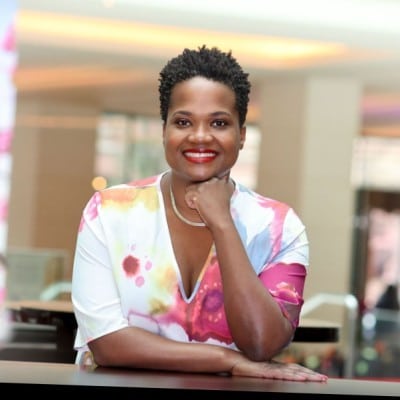
Shawna Young, CEO of Camelback Ventures
Denver: Welcome to the Business of Giving, Shawna!
Shawna: Thank you. I’m excited to be here.
Denver: It’s good to have you. You know, for a listener new to Camelback Ventures, who do you back? What is the core thesis? And what does a Fellowship actually walk away with?
Shawna: So, we are focused on providing capital, early-stage capital, about $50,000 to early-stage entrepreneurs who are coming from communities that typically do not get early funding. So that means many times that might be people of color, women, those who are coming from low-income backgrounds, where they have an incredible idea, but again, when you say friends and family around, their friends or family don’t have $50,000 to give them that may or may not come back. And then we marry that with a Fellowship that’s about four months… and a community of people who are building similar things or in the same type of vein and making the world better.
And in that Fellowship, they really learn how to move from an incubation state to an acceleration, something that’s going to be able to go from your pilot to your MVP, to really scale and have more impact overall. So that includes the terms of our investment thesis. We invest in folks building new school models, future of work, future of learning, EdTech solutions, and also in some cases, health tech and fintech.
“… even if you think about philanthropy, if you’re starting a for-profit or nonprofit and looking for philanthropic dollars, for Black leaders, about 2% of philanthropy goes to Black-led organizations. And so, there is a significant amount of lack of transfer of funding to communities of color.”
Denver: You know, I love that point you make about friends and family stage. You’re kind of that for many founders who often lack access to that informal capital. And I don’t think we often think about that, but that could be the invisible trapdoor in deciding who even gets to build. How much of the promising work out there just never even gets to the starting line because the founder was never really given that initial chance?
Shawna: That’s such a big question. How do you know what didn’t ever happen? But what I can share is some data around how money flows, and who gets capital.
So, we know when it comes to venture capital that the number at its highest was about 1.2%, 1.4% of Black founders got venture capital. And that was 2024, coming out of 2021. And this year, we know it’s gone down even lower to about 0.4% of 1% goes to founders who identify as being Black, and then if you think about women, it’s about 2%. So, when you add all the different folk who might be coming from unique operating backgrounds or diverse backgrounds, it’s about 5% of venture capital will go to their idea. That’s billions of dollars that are not being seeded for communities that actually are typically underfunded.
And even if you think about philanthropy, if you’re starting a for-profit or nonprofit and looking for philanthropic dollars, for Black leaders, about 2% of philanthropy goes to Black-led organizations. And so, there is a significant amount of lack of transfer of funding to communities of color. And what I see our founders do, they’re very innovative and they look for customers. How do I use limited capital to get started? But then how can I have customers who will help me actually build the venture that I want to build the solution that I have? But it’s an issue because even after that, the follow-on funding typically is less for founders of color and for women.
So, it is a challenge, but also at this time we know in the advent of AI, there’s a lot of building that you can do using technology. What I say is someone who’s building right now a new venture, they’re going to have the most flexibility to be a durable venture over time because the money is actually not flowing. So, they have to be very innovative in how they approach it.
“The founder is actually the key to success. So, what I’m looking for is someone who has deep passion, who’s willing to work hard, take calculated risk, and make this thing they’re building their priority. And so that is really the difference we see with who we invest in. Who is the founder? What are they solving for? And why are they passionate about it?”
Denver: Those stats are just utterly insane. You don’t even know what to say. They’re just utterly insane. And I love the point about customer, because I talk to a number of people in the field, and they say, “You know, sometimes we don’t need a grant. We need a customer. We’re going to have to be self-sustaining here. Who’s going to buy this?” and start to think along those ways.
Now, you hold a chemistry degree from Howard. You’ve taught high school science. You’ve run STEM programs at MIT, Harvard – lots and lots of lots. When you evaluate a founder today, where do you think like a scientist, and where do you think like a teacher, maybe writing a classroom grant?
Shawna: Such a good question. I would probably say it’s somewhat of a blend of both. And let me say why. Because the founder is actually the key to success. So, what I’m looking for is someone who has deep passion, who’s willing to work hard, take calculated risk, and make this thing they’re building their priority. And so that is really the difference we see with who we invest in. Who is the founder? What are they solving for? And why are they passionate about it?
At Camelback, we’re also looking for people who are in the communities and proximate to whatever they’re solving for. I don’t always like to say problems because it may be innovation. They’re building something new, which is fantastic. Who are they building for? Do they have a clear understanding of what the need is or what the interest is for what they’re building?
Denver: It’s interesting in these communities, too. You’re not really, as you say, looking for problems. Sometimes you’re looking for the strength of that community that sets it apart, and their innovation is going to set it apart that much more. It’s not always fixing stuff.
Shawna: Can I tell you something, too? I don’t often tell this story, but you talked about the fact that I went to Howard. So, I remember when I was at Howard, and I’m from Fayetteville, North Carolina, a smaller military town. I went to DC and I was going to maybe get to the grocery store or whatever store. I went outside and there were people coming up to us saying, “Can I take you here?” They were gypsy drivers. They weren’t taxi drivers. They were just individuals who for a fee–$10, $20, whatever–they’ll take you to their next location.
And that was in the 1990s. And I thought it was insane that this gypsy driver phenomenon was existing already in Black and brown communities. That’s Uber. That was already happening. But who actually gets the capital to turn that idea, turn that action or way or approach or solution, into a platform, into a multi-billion dollar business, is often not the folks who already came up with that idea.
Denver: That’s exactly right. And I’d love to know who today’s gypsy driver is so I could get on the cutting edge of the next one, because you know it’s happening; we just don’t know what it is, or at least I don’t know what it is.
Shawna, taking over after an iconic founder is really hard. Tell me one sacred practice you were intent on protecting, and maybe the first thing you intentionally changed to mark your own era.
Shawna: So, this is not my first founder transition. It’s my second, actually. I want to name that because it actually helped me have a better sense of how to come into Camelback and honor what was core to Camelback at the same time, to your point of really thinking about what is my mark when it comes to this work.
So, I was also the executive director of Scratch Foundation as part of a founder transition. with an iconic founder also. And for me, what was important in both situations was building a relationship with the founder and honoring the work of the founder. And I say that because my parents also owned their own business in Fayetteville, North Carolina – a gymnastics business. And I remember for 15 years trying to partner, “Let me help with this,” and it was so dear to them. It was really hard for them to move, let go a bit to allow me space to come into it. And so, I understood somewhat the mind and the philosophy, the thinking of a founder.
So first, I think the first thing is: How do you actually build a relationship with that founder? How do you understand why they built what they built? And then, it’s not just the founder. It’s also the team and the board, and how they really themselves think about the importance of the work.
At Camelback, that was really important. Aaron Walker, our founder, had poured into Camelback for at least nine years, at least nine years. And he had helped it grow from an idea, a fellowship with no money for people who were doing it, to now distributing over $9 million by the time that I came into the organization– $8 million to $9 million, and serving 180 founders at the time. And now we’re at almost 235, and we’ve moved the dollars from $40,000 per founder to $50,000.
For me, because Aaron had done such a strong job of building the foundation, what I felt like I could add more immediately was telling the story. Because we were so strong as an organization financially and had a strong team, I was able to be external more quickly than I probably would have with another organization and be able to write about what our story was, be able to elevate our founders… being able to speak about it on stages.
And that is where I think I added more immediately to Camelback. It was less about “I’m going to redo the fellowship. I need to figure out the core pro.” No, it was already really strong. And we literally just finished our strategic planning with Bridgespan, and now we’re actually entering into a new era of venture philanthropy because of how strong we were with an accelerator.
Denver: Fantastic.
I’ve also found that sometimes the best founders leave after 10 years. I think Charles Best at Donors Choose and Jake Porway at DataKind, people like that. Because they realize they’ve taken the organization about as far as they can, and it needs some new thinking, and it needs some new blood. And it’s not easy. I don’t think either of them wanted to leave, but they just know it’s the right thing to do. And Aaron would really fit that mold completely.
When traditional funders pass on exceptional founders, where is their selection machinery getting it wrong? Is it the criteria, maybe some of the signals they call risk, or maybe their inability to recognize talent that doesn’t arrive in a familiar package?
Shawna: I think folk who distribute dollars who are philanthropic or lead philanthropy, they have their own investment thesis. So, I have a different mindset around… some cases you can change. You can give people experiences to help open their mindset around who they invest in and what they invest in. And there’s an opportunity to actually create more investors, create more philanthropists, shift them, help communities understand how they already may be philanthropic, but also how they can mobilize their dollars to invest early in entrepreneurs like Camelbacks entrepreneurs because again, we’re solving for the lack of friends and family around. So, if we can get more people who will invest early, it will also open up more doors for those who might typically invest later.
And so, what’s happening with that is our founders aren’t showing up in the later part of the trajectory because they haven’t gotten the early capital to become someone who’s grown to that stage. Not negating what you’re saying, which is sometimes we need people to think differently about who a strong founder is and what they’re building, and I think often that comes from lived experience, like helping people who may not be in communities come into communities, understand what their lived experience is and why they are solving for what they’re solving for.
So, one way in which we do this at Camelback is something else that Aaron started – Guardian Summit. So, the Guardian Summit is an annual convening that we have in New Orleans in June. And we actually bring in philanthropy, investors, partners who are engaging with our founders in office hours, pitch competition, conversation, and that also has shifted the mindset of philanthropy.
“I can see a difference in the passion that someone has and why they are solving what they solved. Their personal story, literally their face will light up, and they will talk about that story that happened either because of something they themselves have lived or literally, it might be their sister, their family member. You will not be able to change their determination to solve for that. And to me, that’s hard to come from reading it only in a book.”
Denver: You know, I’ve always said that I think the most overrated thing in philanthropy is “how much” and the most underrated thing is “when” because sometimes $50, 000 early is more important than $500,000 a couple years down the road, and you can really shape things and get something going.
Let’s talk a little bit about lived experience. Marie Van Brittan Brown – she was a nurse in Queens, and she was concerned about her own safety coming home at unusual hours, and she helped invent the first home security system. And she understood the problem because she lived it.
So, when you look at founders at Camelback today, what do people who have actually lived a problem see that someone studying that problem at a university or in a boardroom just might completely miss?
Shawna: I think you may have watched my TED Talk, a TEDx talk, which I love, because I discuss Marie Van Brittan Brown. And it goes around this theme of: Who builds what’s next? How do you put into words lived experience? How does that show up in how people build and what they build? I think it shows up every day because our ideas are either coming from what we’ve literally personally lived or what we’ve read about, what we talked about or someone has exposed us to.
And so, for me, I can see a difference in the passion that someone has and why they are solving what they solved. Their personal story, literally their face will light up, and they will talk about that story that happened either because of something they themselves have lived or literally, it might be their sister, their family member. You will not be able to change their determination to solve for that. And to me, that’s hard to come from reading it only in a book.
Denver: I agree wholeheartedly. I think if we take a look at making a living and getting a better paying job, if I come to something and I academically understand it and I do the job, but somebody offers me $50,000 more—sayonara! But if I’ve got that lived experience and it’s deep here, I don’t care what you offer me, I’m going to solve this problem because it’s got me hooked. It’s in my DNA. And you get that stability and that passion to see it through.
I think I saw this in your latest application data…but founders rank community and network something like 97%. And then you had strategic coaching that was important, values alignment. And capital access? That was down at 53%. So, what does that reveal about what early-stage innovators actually need that traditional capital ignores?
Shawna: This was so huge, Denver. I was surprised by it because we have a data and strategy team internally at the Camelback, and I’ve been talking about how rich our data was, and we had released our first kind of applicant report, insights report. And that is exactly what came out of it. It was that capital was number four of what was most important.
And I see that because I also read the applications each cycle, and then in reading the applications, I can see why people come to Camelback or apply to Camelback, as well as once they come into our Fellowship, we also see literally sometimes people are tearful to be in a room where they’re like, “I can just breathe deeper. I’m not the only person who had my lived experience, who might look like me, who might ask a question similar to me. I feel much more at home, and then I feel more confident. And I also will share more about what I am not doing well.”
And so, I think that it is so important that we understand how that plays in the selection, as well as the output for our founders. They want community. So often what they’re saying is: “We’re looking for community, we’re looking for content, and we’re looking for a space”… where they can show up as themselves.
Denver: You know, this is a bit off-point, but it reminds me when you were talking of a past experience. I used to work with a stuttering organization. And we’d bring them together, and they would advertise and they would really work on their blocks, but to see these young people come together with a bunch of other people who stutter! Up until then, thinking they were the only person in the world that stuttered in their school… I’ve never seen an uplift like it to say, “Oh my gosh…” They’d trade notes, and “What do you do?” and “How do you handle it?” So, I know what you’re talking about in a way that you just can’t put a value on.
Shawna: I totally agree. You say the word “community,” but when you feel community…
Denver: It’s so different, yes.
Shawna: It’s so different.
Denver: Let’s take a look at AI, and that’s becoming part of how institutions screen, and they sort and they evaluate opportunities. Shawna, what worries you most about whether these systems are going to recognize founders who sit outside the traditional model?
Shawna: I am concerned about who built it, candidly. It’s less about technology was going to come. When you look back over time, technology has changed from literally when I went to college with a word processor. It was a step above a typewriter. No home computer—it was a word processor. I remember lugging it up the stairs, to having so much more on our phone now than we did back then.
And we adjusted to it. Those things were built. Who built them was not as important as it is now because we’re talking now about feeding content, and perspective, and deciding what gets elevated in these platforms and not by the algorithms. And that is what worries me the most. What’s most important is to seed people from community to be able to build, because right now, it’s monolithic in terms of who gets that opportunity, and they only have certain lived experiences. So, it’s less about making it smaller or taking away power from people who have already been building. It’s: How do we give more power to those who haven’t had the chance to build?
Denver: Is that happening in AI? I’m just thinking we’re taking all the analog biases that we’ve had for decades, and we’re bringing them to digital and algorithms. And they even look more official when it comes out of that, as if there’s some other mystery that this would not get it wrong because it’s done on AI. But those biases are still there unless somebody nips it in the bud.
Shawna: Very true. And candidly, they may have been there even before, but this is actually making it more prevalent to us.
Denver: Oh, yes.
Shawna: We’re actually talking about it more than we did before when it was analog, but it wa there in analog. I remember growing up in North Carolina and we had like Black history in our book. For history, it was like a paragraph this big on Martin Luther King. It was one sentence on Rosa Parks. There was nothing there. So, it’s not like this is a new thing of bias. We’ve had it the whole way through. And in some ways, the technology is bringing it to light, more prevalent; we can’t actually deny it as much as we could before.
Denver: That’s right, but it’s accelerated bias.
Shawna: Accelerated bias.
Denver: Because in analog, it would be in a book and you have to go and find the book. Now, you just have to stick it in a computer, have an inquiry, and next thing you know, you got the bias all over the place, and it will just become an echo chamber.
Shawna: And also, if people aren’t asking the questions, if you’re not asking it to probe it more or just taking what’s given to you straight out, especially in the AI bias, that’s a problem. And it also can shift our young people’s ability to ask questions. The card catalogue was core to how I found anything. I was excited when there was an encyclopedia where it was all together a little bit more. Now, it’s like you don’t have to search for much. And so, how is that going to help our young people and even people who are not young people really learn research, and how they ask questions, and how they find information? And also to know that it actually is not incorrect. So, misinformation is so much more prevalent now, too.
Denver: Yes, for sure. Most accelerators focus on changing or strengthening the founder. “You’re not getting your message across. You got to do this and got to do that.” But through your Capital Collaborative, you also work with the check writers. So, tell me what they need to do. Tell me what you can do to train funders to see value differently than they’re currently seeing it now.
Shawna: We learned so much through Capital Collaborative. It’s a program that really helps foundation leaders shift their mindset by being able to interact with our founders and have their own professional development experience. And we ran that program through 2025. We learned a lot about literally the importance of: How do you give more proximity to people who might be more distant? And they are actually the check writers or connected to the check writers. And so, we still literally have people to this day who support Camelback, which was not the intention, after they’ve had this experience of being part of Capital Collaborative.
So, for me, what we learned from that was the importance of being able to create spaces for folk who want to support different types of founders, for them to be able to engage and connect with them, and learn from them, and support them. And so going back to not just what we do now at Guardian Summit, but we will have engagements around the country at different times. We’re bringing together investors, funders and founders, as well as philanthropists, to talk about the work we do and share the stories of our founders. And that is where we get the most excitement because I understand completely why you do this work.
Denver: So, if I was a check writer, and I am certainly not a check writer, but I wanted to open my mind and get out of my myopic way of making grants and funding founders. What would you tell me to do? What would be your top tips of advice to say, “This is what you need to do, Denver?”
Shawna: What I’d first say is, “What are you passionate about seeing different in the world? How do you imagine the world for your great grandchildren? And what’s missing in that?” And then I’d say, “Fund that, fund that with fidelity, and fund it early.” So, if I care about making the world different when it comes to more access to healthcare, don’t just go out and find the largest nonprofits who are doing that work—doesn’t mean don’t fund that, maybe so—but also: Who’s earlier stage? Who can become that.
So early capital is the key to me, particularly right now, and this is a moment for builders. So as much as we can, give some of that early capital to builders coming from different communities, I say do that. And also look at it in terms of your investment portfolios. Is the nonprofit side philanthropy as well as the investment portfolio for venture? Because again, it’s another space where a lot of innovative founders who are coming from underfunded communities don’t get the early capital to build their ventures.
Denver: Well, what a segue this is into my next question. Because you use part of the flexibility created by Mackenzie Scott’s unrestricted support to help spin off Ruthless for Good. So, tell us about that. And what can investment capital do for funders that traditional nonprofit grants sometimes can’t?
Shawna: That’s so important. So, our founder, Aaron Walker, now has his own fund called Ruthless for Good. It’s a $20-million fund that he was able to build and invest in for-profit solutions that are similar to the investment thesis for Camelback. What does the investment look like to invest in the future of work? Future of learning? For founders who typically don’t get that capital?
And so, some of our founders, not all of them, but some of them have been able to be invested by Aaron and Ruthless for Good. And we’re excited about being LPs in his fund also. And looking for how that investment is going to improve based on the investment thesis that we know our founders need early-stage capital. They need venture capital also, and support.
Denver: Everything’s going to be a hybrid very, very soon. Camelback was born in New Orleans. Aaron explained to me where it came from– the houses down there and the hump in the back, and I got all that. I still remember it. but it has deep roots in the Gulf South. How can regional ecosystems build and retain multi-generational wealth, instead of watching some of that best talent head for one coast or the other?
Shawna: I’m from Fayetteville, North Carolina, and so it’s important to have resources where people are. And I’m very proud of the fact that we are anchored in New Orleans because about 50% to 60% of Black and brown people live in the South, but that’s not where a lot of financial resources are. And so, I think it’s important to have regional investment.
One thing I’d say about New Orleans is that we actually need more investors in New Orleans, for sure, for ventures that are being supported by our founders. And I think it actually encourages us to have innovation in those spaces versus saying, “Well, now you have to go to New York” or “You have to go to San Francisco.” Everyone doesn’t want to live on those two coasts or those two cities. So, you got to have that investment across the board. And it makes a difference in—I’m going to say I don’t think that we don’t have the investment right, but are the people in those communities mobilized to give the dollars? So, you have money in those cities and those areas, but is that money being distributed as early-capital to entrepreneurs of color and women? That’s the difference.
Denver: Social impact can have a culture in which exhaustion becomes evidence of commitment, and I think that’s even more true with people of color and women. How do you build an organization where people can do ambitious work without burnout becoming part of the operating model?
Shawna: This is another one that links back to funding often, like the staffing having the ability to take those moments of rest, but still the work can still go. And especially if you’re talking about a new venture, often that founder is doing all the things themselves or many of the things. And so, they’re going from fundraising to running the programs, doing the operations. And one thing that we have found is that it’s important for founders in particular to get the operational support early. As simple as having a virtual executive assistant will make a huge difference for a new founder.
And so, I would say at Camelback, we’ve actually modeled our wellness after some of our other funders, like Margulf Foundation who does wellness grants for our team. And we also instituted some things like we try our very best on Fridays not to have internal meetings—doesn’t mean we won’t have external but no internal meetings—and really have space and time, and honor the fact that our team has to have moments to be with their family.
And the last thing I’ll say is I learned when I was at MIT running the Office of Engineering Outreach Programs, which is now called the MITES office, that I was doing that full time. I was raising my daughter. I was divorced. And I was going to MIT to get my MBA full-time also as an executive MBA. And I was relentlessly working all the time. And I met with my dean who I reported to for the School of Engineering, and he told me, “Shawna, you’re actually not doing your team service. You’re actually not being as effective as you think you are by not taking vacation, by not taking a break, by not pausing, and understanding at a certain level: being strategic is your work.” Actually, taking long walks and thinking about how you want to approach and lead your team and understand bodies of work is strategy. It’s not just the tactical aspects of it. So, that’s what I’ve learned in terms of wellness, too.
Denver: I had a guy on the program a couple of years ago, and he was really a hard worker. And he would go out to lunch and then he could never come back from lunch and sort of slip out. But he realized that since he worked all the time or people thought, he started to announce when he was leaving the office at 3 p.m. to watch his son’s baseball game. And he made sure that everybody knew it because as a leader, it gives them permission then to live their life. But if you never see the leader do it, you don’t really think you have the permission to do it, even if they say, “Sure!” They have to actually demonstrate it.
So, Shawna, if we sit down 10 years from now and Camelback has achieved this blueprint, what will be different about who gets trusted, who gets funded, and who decides what gets built?
Shawna: I love this question so much. It won’t be a question anymore. There will be endless opportunities for whoever wants to try to build, and it will be less about where you came from, what resources you have, your gender. That won’t matter. What will matter is actually—is it a good idea? Is it a good idea, and do you have the skill set to build that idea? That’s really what it should be about because sometimes the things that are being built, they’re actually not the best ideas. They’re just the people who have the resources to do it.
Denver: That’s right.
Shawna: And so, as we think about where our world is now and what we have; that’s with all these limitations of large-scale groups of people not having access to build. Imagine the world we would have!
Denver: For real. Yes.
Shawna: Incredible. I told you about gypsy cabs in the 1990s. That was 20 years after Uber came about. That’s the kind of dormant innovation that is existing in the world right now.
Denver: I almost hope it’s going to be a time when young people come into the field and you can say to them, “You won’t believe this, but there was a time…” And they’re like, “What? That’s crazy!” Because it absolutely is crazy.
For listeners who would like to learn more about Camelback Ventures, tell us about your website and the kind of info they’re going to find on it.
Shawna: Please go to camelbackventures.org. You’ll find out about our Fellowship. You’ll find out about our team, about our research, and the data that we’ve been able to attribute, our reports, ways to give—donate always, love that—but also, about Guardian Summit. Where we’re located, where we will be.
And our social media also is really great, too. So that’s where you get more just-in-time information about when our application is opening—it’s open right now—when it closes. It’s twice a year, too. So, you’ll be able to look at our information. Join our listserv also because it also gives you information about when our applications are open, what we’re actually talking about, more research, more content. And so, we’re excited about you joining our community.
Denver: Cool. Well, I love Camelback Ventures, and I love what you’re doing with it, and I want to thank you so much for being here today, Shawna. It was a real pleasure to have you on the show.
Shawna: Thank you so much, Denver.
Every weekday morning at 7:00 a.m. Eastern, I publish a short Leadership Note from the Field. These reflections draw on fifty years in the nonprofit sector and nearly 1,000 conversations with nonprofit leaders.They are designed to help leaders step back from the noise, see the deeper pattern, and lead with greater clarity.A recent note explores a distinction I believe matters enormously right now.In philanthropy, don’t confuse headlines with forces.Headlines dominate the moment. But deeper forces such as the $124 trillion wealth transfer, the rise of women as philanthropic decision makers, and the growth of giving across the Global South will shape the next twenty-five years.You can read the full note, along with a new one posted every weekday morning, on my blog at denver-frederick.com or on LinkedIn.