
Every night the news shows us floods, fires, and wars that force people from their homes. Then the story moves on. But for the people who have been displaced, that is when another story begins: Where do they go, and how do they rebuild their lives?
For nearly 50 years, Alight has been working on that question. And its CEO, Jocelyn Wyatt, believes the humanitarian system too often succeeds at keeping people alive without creating a path for them to move forward.
“When you visit many of these places, they’re effectively imprisoning people that have committed no crimes and have done nothing themselves. It’s only a matter of their identity that they were persecuted and needed to flee their homeland.”
Jocelyn came to humanitarian work through design rather than the traditional aid world, and that perspective has shaped how she leads. The people Alight serves aren’t beneficiaries waiting for help. They’re customers with skills, ambitions, families, and futures of their own.
We talk about what happens after the emergency, why humanitarian aid can measure the wrong things, and what it really means to give power to the people closest to the problem.
It’s Jocelyn Wyatt, CEO of Alight, on The Business of Giving.
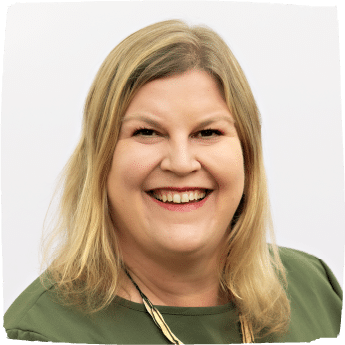
Jocelyn Wyatt, Chief Executive Officer of Alight
Denver: Welcome to the Business of Giving, Jocelyn.
Jocelyn: Great to be here. Thanks so much for having me today.
Denver: And it’s great to have you back. Jocelyn, tell us about Alight. Who do you serve? Where do you work? And what do you do?
Jocelyn: So, Alight is a global humanitarian organization. We’ve been around for nearly 50 years. From the beginning and through today, our focus is on serving refugees and forcibly displaced people. So, these are people that are forced to flee their homes due to conflict, war, natural disaster, climate change, or due to severe social or economic exclusion. Sometimes that means crossing a border, sometimes that means being displaced within one’s own country.
We serve about four million displaced people a year. We’re working now in about 10 countries around the world, and we do a whole range of things — from emergency relief, where we’re providing those life-saving services, things like running health clinics and nutrition or feeding centers. We’re running water points. All in the context of refugee camps or settlements for internally displaced people.
But then we also really work to help people move through that state of displacement and to be able to establish lives and futures that they set for themselves. And so, we do things like link people with job opportunities and be able to find employment or be able to provide financially for themselves. We do education work. We do community integration work. We provide trauma recovery support and mental health support.
So, a whole range of services for displaced people from the very first, even before, to prevent displacement through the very first [days] of displacement through to when they’re fully established and feel like they’re out of that state of displacement and into their future lives.
Denver: Fantastic. I could have asked you to tell me what you don’t do. That’s quite a range of activities. It’s so impressive.
You were originally the American Refugee Committee. Where did the name Alight come from? And why did you feel the old name perhaps no longer captured who the organization had become?
Jocelyn: That’s a great question.
So, at the time actually, I was working at IDEO.org, and Alight – or ARC at the time – had been a long-time partner-client of ours. And the organization, for the previous 10 years or so, had really started listening to its customers, the people that it serves. Instead of calling them beneficiaries, we intentionally call them our customers.
And one of the things that we had heard from them time and again was that they didn’t like to be called refugees, that that was a really disparaging term in many contexts, and that it felt like it only defined a certain part of their life and it didn’t define fully who they were. And, so that was sort of the initial pushback.
We also recognized that refugee is really a term that means that you have to cross a border from one country into another in that journey of displacement. And in fact, so many of the people that we serve today are internally displaced. And so, refugee doesn’t necessarily apply to them.
We also found that at the time that being called an American organization did a couple different things. At worst, in some of the countries where we worked, American didn’t necessarily have the best connotations. And it’s really aligned us with this country, and that that wasn’t necessarily making us the most welcome in some of the places where we worked.
And then the other piece was that there was just a lot of confusion. Being called American Refugee Committee, people would automatically think “Oh, you serve refugees in America.” And though today we actually do serve refugees in America, at that time in 2018, we were not actually doing programmatic work in the United States. And so that just felt like a misnomer.
And then the word “committee” was just very confusing, and sort of like “What does a committee actually do?” So, it was kind of a mouthful. It felt like an organization defined in a different paradigm and didn’t feel like it fully represented who we were.
And so, ARC worked with IDEO.org to really do a very robust human-centered design process,
around really coming up with what that new brand and identity and name would be. And that’s where we landed on Alight, which was really meant to be something much more positive and optimistic and hopeful and future facing, and really about bringing people together under a real belief that a different kind of abundant future was possible.
Denver: That’s very interesting. And I love your take on language and dignity.
I always think of beneficiary as somebody passive, not really doing anything, just waiting for something to happen them, and refugee in the same way. And we undervalue the sense that changing a few words here and there can really change things dramatically.
You came to this work through anthropology and social enterprise and design, rather than, let’s say, the traditional aid world. When you came into this system, what did you see that people who had spent their careers in it perhaps were no longer seeing?
“I think that when you visit many of these places, they’re effectively imprisoning people that have committed no crimes and have done nothing themselves…It’s only a matter of their identity that they were persecuted and needed to flee their homeland.”
Jocelyn: A few different things. I think one is that there was so much, and continues to be so much focus on emergency relief side of displacement. And even after the foreign aid cuts of the last year and a half since January of 2025, what we’ve really seen is a pullback. What has been cut has been the work around really solving the problems of displacement, really helping people find those futures and rebuild their lives, and everything has really gone to that life-saving support side of things. And that is absolutely critical. But at the same time, if all of our focus and dollars and efforts only go to that emergency life-saving support, it means that people are inherently trapped in these systems where they’re not able to transition out of those refugee camps.
And so, I think another piece is that when the whole context of refugee camps were established after World War II, they were really meant to be a place of refuge, a place where people having been displaced by conflict, could go and recover and take a breath and take a moment in order to prepare for their next steps in their transition — whether that was a transition back home, that was a transition into the host country that they had arrived at, or whether that was into a third country.
And so, initially when this system was set up, it was really meant to be that there would be these temporary places for people to go before they went to more durable solutions, and there would be durable paths that were really laid out. And I think today there’s almost no emphasis on those or support for those durable solutions, and so much of the support is just for this like temporary holding ground space of the camps or the settlements. And that’s just no way to live a life.
And so, I think that when you visit many of these places, they’re effectively imprisoning people that have committed no crimes and have done nothing themselves, right? It’s only a matter of their identity that they were persecuted and needed to flee their homeland.
And so, I think that that is place that we’re really focused on, which is: How do we continue to do that life-saving work that is absolutely critical in those first hours and days and weeks of displacement? But really, how do we start to balance that with more intentionality and creativity and innovation and business-based solutions and philanthropic support in order to really solve the problem of displacement and help people find their future homes and realities as well?
“…human desires don’t go away in displacement. I think that’s the thing that sometimes people misunderstand. They think that all we need to do is deliver the most basic, the most minimal services, that people will just be happy if they’re alive…And that’s just, again, that’s not a way to live a life. I think we just hear over and over again that people want and are striving for so much more than that. And that that sense of love and belonging and community and joy — those are the things that people are really desiring.”
Denver: I can’t agree with you more. On a somewhat related note, and one of my big pet peeves is watching the news every night with this horrific weather we’ve been having with floods and fires. And my wife and I sit here and we say, “I wonder what happens to those people.” We see they’ve all lost their homes, they’ve all had this flood, and tomorrow night, I’m going to have a different flood. But where do they go? How do they get their lives back? They never spend a second in terms of what are the consequences of what’s happened to these people. And it’s just sort of the way we think or so, but it’s misdirected. It really is not healthy at all.
Alight has created ways for people to tell you, in real time, what they think about your services that they receive. I guess that makes them customers and not beneficiaries. Jocelyn, what have you learned from listening that you might never have learned, let’s say, from traditional evaluation?
Jocelyn: This is probably obvious, but that life continues for people even in these states of displacement. And so, when you visit a refugee camp or a settlement, you’ll see kids playing soccer on a soccer pitch, right? You’ll see people telling stories and laughing and singing or playing music.
One of my favorite stories is that we provided an opportunity for people in a refugee camp in Uganda to be able to apply for a small amount of funding to start a new business. And we wanted to see the ideas that we would get. And one guy applied to create a wedding photo studio in this refugee camp in Nakivale, Uganda. And basically, what he said was “People here are getting married, right? They’re not stopping that, right? They’re getting married. And when they get married, they want to be able to have a nice picture to memorialize really special moment.” And so, he basically needed the funding to get a beautiful backdrop that people could stand in front of, and a nice camera, and a printer to be able to print wedding photos for people in the camp.
And just recently, in Minneapolis, we got some outreach from university program there for students of photography. And they said that they wanted to do some documentation of our customers. We worked with a lot of Afghan families, and Somali families, and Congolese, and other recent refugee families in the Twin Cities. And so, we actually set up a photo shoot session with these students and invited our customers to come to the Walker Art Museum, to the wonderful sculpture garden that they have there, and to do a photo shoot with their spouses or with their families.
And so, that type of thing, I think those really human desires don’t go away in displacement. I think that’s the thing that sometimes people misunderstand. They think that all we need to do is deliver the most basic, the most minimal services, that people will just be happy if they’re alive, right? And that’s just, again, that’s not a way to live a life. I think we just hear over and over again that people want and are striving for so much more than that. And that that sense of love and belonging and community and joy — those are the things that people are really desiring.
And so, we really aim to create the conditions that allow for that and to wherever we can find those opportunities to take the photos or to host the soccer tournament or whatever it is.
“…We sometimes forget that it is of no fault of their own that people are forced to flee a given country, that there is so much persecution that exists around the world where people just based on their last name or what their features look like or who their family is, that they really face real danger or death if they were to stay in their home community.”
Denver: That’s a beautiful story. There’s a lot of white space, and business opportunities a little bit higher above basic needs. Because they’re people, you know what I mean? And they don’t go away. We just think, just give them a meal and a place to sleep and that’s all they want.
There’s a phrase associated with Alight that I really love, Jocelyn. It is that people may be starting over, but they’re not starting from scratch. What do displaced people bring with them that humanitarian systems consistently fail to see, in addition to what you just mentioned?
Jocelyn: I’m sure all of us have had the experience of riding with a taxi driver or an Uber driver, and engaging in a conversation and asking, where they’re from or talking about their background a bit, and realizing “Wow, this person used to be a doctor,” or this person used to be a paralegal, or this person, used to run a successful consulting firm in whatever country it is that they’re from, and they come to the US and their accreditation or qualifications don’t really mean anything. They don’t have the networks here. They’re not able to sort of pursue work in those spaces. And you just think what a loss for all of us, right?
And so, I think we see that again and again, which is that people’s professional careers or experiences are really undervalued or ignored or not appreciated or not translated into that new context. And as a result, they’re not able to bring all of their incredible skills and talents into that context. I think that’s one piece.
I think we sometimes forget that it is of no fault of their own that people are forced to flee a given country, that there is so much persecution that exists around the world where people just based on their last name or what their features look like or who their family is, that they really face real danger or death if they were to stay in their home community.
And then I think there is like you mentioned. We’re seeing so many floods and fires in all the rest around the world, and that is causing really significant displacement for people. And that means that they’re having to flee. Whole communities are having to leave where they were because their homes and schools and everything, shops were all destroyed.
And so, I think that there’s just so much as a world that we miss or that we don’t humanize when we think about people whose context initially feel so different from our own, but then were recognize. Even my neighbors here in West Virginia have experienced severe floods just in the last couple of weeks, and I’m seeing it close to home here and really feeling for them in that same way that I can feel for the folks that we are working with around the world in places like Sudan or Somalia or Ukraine.
Denver: A flood’s a flood. I’ll tell you. It was funny, I was speaking to Vu Lee a couple of years ago, and when he was looking for a job when he came to America, he talked about some of the challenges that he had because his cover letters were not perfect grammar. And he said, “Well, they weren’t, but did anybody take into account that I speak five languages?”
And there is that sense that we look at things from a certain prism, and if you don’t meet it, we just completely ignore other things, which leads me to this question. You spent your career on several sides of the social impact world. When funders evaluate organizations doing very difficult work like you do, what have they become very good at recognizing and maybe even overvaluing? And what valuable things are they surprisedly bad at seeing?
Jocelyn: I think that there can be an overemphasis on scale being the only metric that we’re striving for. And so, for instance, we’ve been piloting different approaches for refugees getting jobs. For decades, there’s been these livelihoods programs for refugees. And often what they are really focused on is: Just how many people receive the training? How many people have we taught these knitting skills to, or these soap-making skills to, or these beekeeping skills to? And no one is actually tracking: Has the income actually improved? If we look a year later, what are the actual incomes that people are making? And is that successful, right?
And so, I think what we’re often counting is the wrong things, which is like the number of people that we’re reaching or touching or that are participating in programs. And what we can be successful by saying, “Well, we’re now reaching a million people with our livelihood programs.” And that’s like a totally meaningless number, right?
Whereas I think what we’ve really been trying to do is to say: Let’s actually track what is the cost of delivering this program, and what is it that people are making in terms of money on the other side? And is that a good return on investment? And if not, let’s continue to adjust or redesign this program until we get to a place where we feel like it’s worth it, right? And that people are actually landing in well-paying, dignified jobs that they are happy to work in and that provide them with great opportunities for themselves and for their families.
And so, I think what’s really important for donors is to look at the outcomes, but to also understand that sometimes, to crack a really hard challenge, it may take a while and it may take a number of rounds of iteration. And that instead of just scaling the first thing that you start with, I think funders should actually really reward or encourage organizations to continue to show: What do we try and where do we fail? And then what do we try after that? And where do we fail on that? And then where are we going this? And to actually fund and reward that iterative approach and that type of prototyping and piloting until you get to a solution that really shows that you’re having that outcome.
And then maybe it is right for that organization to be the one to scale that solution. In many cases, it is. But there’s often times that that organization may not be the one best equipped to scale it, right? But that they are able to spread that solution and bring it to others, whether that’s the government or the private sector or other INGOs or other community-based organizations to replicate that model. And so, I think we just need to be thinking about when is scale the appropriate pathway and when is spreading solutions the appropriate pathway to increasing that impact.
Denver: What you said there is so rich on so many different levels. I think in terms of counting, we tend to count up in terms of what we did from the organizational point of view, and we never count down. I know that the Community Solutions did a change on that. They were talking about how many people they had housed, but it turned out homelessness had gone up. So, they said, “Well, maybe we don’t have to count how many people we’re putting into a home. We have to count how many people or who need the service anymore. We just have to invert so many different things.
One of the things that’s always stood out to me about Alight is really shifting power to the communities. A lot of people talk about you guys have really do it. What does that actually require an organization like Alight to stop controlling or at least be willing to give away?
Jocelyn: It’s been really critical for us, certainly since I’ve been CEO now for about five years, and that has been a real push that started before my time, but we have certainly continued it.
And we started off by saying: How do we hear more from our customers? And we started to reach out to them, both in terms of digital tools as well as through in-person conversations, to hear their voices and bring those back and say: How do those insights about displacement and about our customers, how do those inform our programmatic design?
The next step was to really train and equip our frontline staff, the people that were running our health clinics or water points, to be able to have those conversations on a regular basis. And then as a team, really make small tweaks. So, if we would hear like: The water point is only open at the time–we had a situation in Rwanda, Uganda where we continued to hear like the morning hours of the water points in the camp were 7:00 a.m. to 8:00 a.m. And 7:00 a.m to 8 a.m. was also the time where every mother was trying to feed her children breakfast and get them ready to go to school because they needed to leave for school at 8:00 a.m. And so, to both have to get your kids ready for school and also pick up water in the same one hour was just not feasible.
And so, that was a small shift for us to just change the hours of operation for those water points because that was something that we could control and something that we could do. So that was sort of the next phase of it.
I think what has happened more recently is that we realized that we needed to operationally orient ourselves differently as well. And so, what that meant was that instead of calling them country directors, we started to call them executive directors, gave them titles that represented the level of accountability and decision-making authority that they really had. We shifted a lot of decisions and spending authority to our executive directors so that they could really be the ones that were truly making the decisions because we believed that as the leaders from those cultural contexts and closest to the ground, they were really best equipped to set the strategy, to build those donor relationships, to form their teams, to oversee the work. And so, we made that move. We started to call them enterprises as opposed to country offices, shifted the titles of the executive directors.
And then the most recent step has been to say actually for the global team, those of us we have
team of about 55 or 60 of us that sit across the organization and are meant to sort of serve all of our enterprises, we really inverted the power on that to say our role is to serve the enterprises, their role is to serve the global team.
And so, what that actually looks like is, for instance, if we’re deploying or considering upgrading our finance system or our payroll system, our global team members, whether that’s the office of the people or the platform team or the finance team, they have to first start their conversations with those enterprises and with their colleagues that do that work in the enterprises to say: What challenges are you facing? Where are you seeing barriers? What’s inefficient for you? What’s not working for you about the current system?
Take that, put together a brief, find the different potential providers for that payroll system or accounting system or whatever it is. Bring those proposals back to the enterprises to say: Which of these providers or partners do you feel like is actually going to address these needs? This is what the cost to the organization is going to be. How can we think about cost sharing between your contributions and our contributions? How can we think about what that rollout process will be, what the training process will be? And really designing those types of operational upgrades with or for those enterprises as opposed to the finance department in Minneapolis says, “This is the new software system. You all have to deploy it under this timeframe. You all have to attend this training. And by the way, your grants now have to pay for the cost of this, right?” That’s the old way of doing things. And we’re just like, “No, that’s not how we’re going to operate.”
“..in a crisis, understanding what is needed, where do you need to act quickly, and where do you have the option to slow things down a bit…that will forever stay with me as something for navigating crises in the future.”
Denver: It’s sort of like what Khan Academy did when they flipped the classroom. You know what I mean? I always find the moment of truth is when the executive directors make a decision that HQ would not make, and it goes through and it sticks and you realize, “Okay, we’re really doing it.”
You’ve had to lead Alight through severe funding pressure and significant contraction within the– well, human need is hardly contracting. Jocelyn, what has leading through this contraction taught you that growth would have never been able to teach you?
Jocelyn: So when the foreign aid crisis happened in January of 2025, I was in Nairobi with many of our colleagues. We had been doing a strategy retreat there. And this happened at the very, last day of our time there before I was headed to Uganda. And one of the best pieces of advice that I got from one of our board members in those early weeks of the foreign aid crisis was that in moments of crisis, our tendency is to move so quickly, that we stop to recognize what decisions actually need to be made really quickly and what can wait to be made in another week or two weeks or a month.
And I think that was really helpful, and it’s just been something that I’ve taken with me even as I’m, helping friends navigate personal crises or to see other things play out. I think in a crisis, understanding what is needed, where do you need to act quickly, and where do you have the option to slow things down a bit…I think that will forever stay with me as something for navigating crises in the future.
I think one of the things that Alight was great at is that we respond to emergencies. That is what we do, right? And so, for instance, I was about three months into my time as CEO when Russia attacked Ukraine and we had to make a decision about whether to respond to that massive humanitarian crisis, which we decided to do. But immediately, the team at Alight was able to form teams and put structure around emergency response, and start these daily briefings and come up with the right leaders of different pieces of this response, and immediately send people on the ground. People were immediately able to rearrange their lives and coordinate childcare and all the rest in order to be there to serve those refugees.
And when the foreign aid crisis happened, we did the same thing. As I mentioned, many of us were in Nairobi. We immediately changed our travel plans. We stayed there through the weekend. We put together a war room in the office in Nairobi, and the folks who were in Minneapolis did the same. And we started having these briefings. That news came out late at night in Nairobi time on Friday night, and by Saturday morning, we were all in the office responding to that emergency and structuring the team and scheduling a briefing to be held as soon as folks in Minneapolis woke up on Saturday morning.
And I think that type of muscle memory that we had about how to respond to wars and or natural disasters, these big crises of displacement, could really apply here. And I would take that forward into anything that I did, which is: How do we use what emergency response organizations have learned to do so well? How do we use that toolkit when we’re responding to these other emergencies?
And there are different ways to lead in that type of crisis, which is a lot more direction and communication and decision making and real clarity around who has authority to make what decisions is critical.
And so, I do think it’s like a different leadership playbook, but I think coming back to my first point on this, it’s also important to recognize when that leadership playbook is no longer the right one. And to be able to go back to saying: Actually, now, we should slow down conversations. We should be doing more collaborative decision-making. Let’s now ease more back to a process of co-creation and thoughtful consideration, and to recognize when you’re in one moment and when you’re in the next moment, and how to transition how you lead in those times, I’ve found to be a really good lesson that I’ll take forward.
Denver: Well, it’s got to be a real gift to have that capability in your DNA to be able to see this and react the way you need to. But as you say, you got to know when to keep that foot on the gas pedal and pump the brake, because one speed for all times and all decisions is not right.
So, looking at this humanitarian funding crisis, which we’ve been living through for years now, do you think that’s primarily a shortage of money or was it really exposing flaws in a model that needed to be redesigned anyway?
Jocelyn: I certainly don’t think that there was an excess of funding [inaudible 26:01]
[Denver: I didn’t think it would.]
Jocelyn: At the same time, I’ve been doing international development humanitarian aid work since started in 1999 working for a USAID contractor. And since that time, we’ve been talking about wanting to push localization, wanting to reduce the role of US-based contractors, and to provide more support directly on the ground through local organizations, and that shift has been really slow. And I think any of our efforts of transforming aid have been dismally slow because they don’t serve what the financial needs are of the US-based or the big INGOs or the big contractors.
So, I do think that there are shifts that we’re seeing that ultimately are positive. I think if this is what’s happening, which I’m not certain it is, but I’m hopeful it could be, which is that if we say actually local organizations can do this work more effectively and more efficiently, and that we start to direct more of the funding directly to them, I think that’s a really positive win. I think that that’s a really great thing to do.
Similarly, when governments are able to really direct and utilize the funding directly and are able to select their own partners…the government of Rwanda, for instance, is one example. The Government of Rwanda is totally well equipped to select partners to run health clinics and whatever it is. And so, when we can make those shifts, I think that is ultimately positive.
I think the way in which those cuts were made was really traumatic and really has cost millions of people’s lives, and was done in a very ineffective way but also just like a very inhumane way. And I hope that we will see over the next years and decades that we’re moving in a positive direction in terms of really seeing some of those reforms that many of us have been arguing for for decades.
Denver: Finally, Jocelyn, you’re one of the more optimistic people that I know. And I’m curious as what keeps you hopeful when you’re surrounded by stories of displacement and suffering the way you have been?
Jocelyn: Honestly, I think it is just connecting with displaced people and seeing that they continue to hold this joy and a sense of I mentioned the other day just seeing these photos of these families, these new arrivals in Minnesota, these smiling photos of their families at the Walker Art Center, just being so proud of where they’ve landed and what they’re able to do with their families. And I think for me, those interactions are what keeps me feeling really positive.
I just came off of a town hall that we organized for our team today. And we were talking about the future and where we’ve seen our customers really plan for, live into their futures, and where we’ve seen them really continue their lives, even in the face of this displacement. And just hearing from so many of my colleagues in these small group breakout sessions that we did about their stories of customers really living their whole and full lives, and just recognizing this isn’t just my experience, but this is the experience of all of us that choose to just take a moment and actually see and listen and have conversations with our customers, and really take the time to see and understand the fullness of their lives. I think that is what really keeps me optimistic.
Denver: It’s those moments that really shine a light on your work, and no pun intended there.
Jocelyn, for anyone listening today who would like to learn more about Alight or financially support the work, tell us a little bit about your website and the kind of information they’ll find on it.
Jocelyn: Great. Yes, please visit wearealight.org. That is also our handle for our social media accounts. Sign up for our website. We are always so appreciative of any financial support or connections for potential partners or supporters of this work. But please follow along. We share stories about our work as an organization and the impact and all the rest. Please visit wearealite.org, sign up for our newsletter, and follow us on social media.
Denver: Cool. Jocelyn Wyatt, CEO of Alight, thank you so much for being here today. It is always a delight to have you on the program.
Jocelyn: Thanks so much, Denver. Great to be here.
Every weekday morning at 7:00 a.m. Eastern, I publish a short Leadership Note from the Field. These reflections draw on fifty years in the nonprofit sector and nearly 1,000 conversations with nonprofit leaders.They are designed to help leaders step back from the noise, see the deeper pattern, and lead with greater clarity.A recent note explores a distinction I believe matters enormously right now.In philanthropy, don’t confuse headlines with forces.Headlines dominate the moment. But deeper forces such as the $124 trillion wealth transfer, the rise of women as philanthropic decision makers, and the growth of giving across the Global South will shape the next twenty-five years.You can read the full note, along with a new one posted every weekday morning, on my blog at denver-frederick.com or on LinkedIn.