
He never wanted to be an administrator. He wanted to be a therapist, and to work in a food pantry. Instead, J. Antonio Fernández has a job that no layman had held in more than a century.
He leads Catholic Charities of the Archdiocese of New York. Not one organization, but 82 of them, 9,000 employees, more than 400,000 people served a year. And he still turns up at the food distributions most weeks.
Ask him what people get wrong about the work, and he doesn’t hesitate: “We don’t discriminate. We don’t ask: Are you Catholic or not? We ask: Are you hungry? You need a place to live.”
We talk about the federal money that has disappeared, about being a landlord in a city debating rent freezes, and about the one thing he is certain no technology will ever replace.
It’s J. Antonio Fernandez on The Business of Giving.
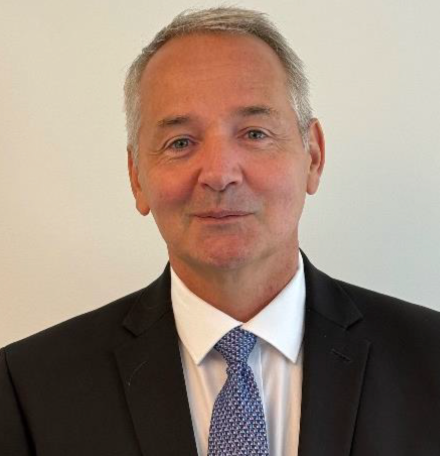
J. Antonio Fernandez, Catholic Charities of the Archdiocese of New York, Chief Executive Officer
Denver: Welcome to the Business of Giving, Antonio.
Antonio: Thank you for having me.
Denver: Tell listeners about Catholic Charities of the Archdiocese of New York. Who do you serve? What do you do? And what would surprise most people about the scale of your work?
Antonio: So Catholic Charities in the Archdiocese of New York is a big institution. So we actually are comprised of 82 different non-for-profits together working under the umbrella of Catholic Charities. So for us, it’s not just what we will say around the country…and this is my third Catholic Charities… one institution, one 501(c)3, it’s eighty-two that work together to have as much synergy as possible to help the people in New York who need it the most.
So to be honest with you, as I came from Chicago and then Texas, when I got to New York, and you know everything is bigger in Texas, they say. But I can tell you, New York is quite big as well. And for us, you know, total we are like 9,000 employees, and we help over 400,000 people, which is a nice chunk of people, as you can imagine.
Denver: What has been the most difficult adjustment? I have spoken to so many people in a comparable position that you’ve been in from different organizations, and they just say New York is so different. They’ve been successful. Not to jinx you, you know, they come to New York and it’s not like Chicago, it’s not like LA, it’s like nothing they’ve ever seen. What have you observed and what’s been one of the more challenging adjustments you’ve had to make?
Antonio: So many different things. I mean, the reality that Catholic Charities, is through the country. We provide the same services. You feed the hungry, you clothe the naked, you provide housing to people who need it the most, legal counseling, anything that we try to do. New York is quite different, and I think the biggest difference that I will see here is the housing situation. Rent in New York City, as you know, is tremendous. So when we see people who are hungry…
Denver: Yeah.
Antonio: It’s not just that they’re hungry now. It’s that they have to choose between paying rent and getting something to eat, or paying rent and having insurance or whatever it is. So New York in that sense, the need is different. It’s going to be the housing issue and then the city has one. You know, Texas is…you go at a nice pace. Chicago’s a little faster, but then if you want to work in New York, you have to go fast. My board, my employees, everybody here is like you know, seven o’clock in the morning to seven o’clock PM every day.
Denver: Oh my
Antonio: And I’m happy to do that, but it takes time to get used to it.
Denver: Yeah, yeah. Well, these have been challenging times. I don’t know if my numbers are exactly right, but you’ve lost maybe ten million dollars, eleven million dollars in federal funding…maybe seventeen percent of your public support. So this isn’t hypothetical anymore. I think you said you’re going to have to put this on your own back. What does that actually mean? What does that actually look like with these cuts?
Antonio: So at the end of the day, the federal administration has different goals than they had maybe three years ago. So for us, we have lost funding to provide services to the immigrants, to people who need it the most, which is everybody who has lost benefits with the SNAP. So we have to find a different way of being creative, think outside the box to get more funding from other institutions or from private donors. So for us, we have to… and we’ve been very successful in the last nine months… to actually try to get donors to support Catholic Charities a lot.
So with outcomes, good, good outcomes, we’ve been blessed to actually have a lot of new donors, just to ensure that they understand that we’re here to teach people how to become self-sufficient. We feed everybody, but we are trying to do a lot more things, not just to say we’re going to give food for free, but we need to help these people to be independent, to be self-sufficient. And I think that’s one thing that is now new in Catholic Charities that we are trying really, really trying to emphasize these days.
Denver: Mm-hmm. What do donors most often misunderstand about what it really takes and what it really costs to run a human service network like Catholic Charities?
Antonio: You know, I think for Catholic Charities, I have two issues. One is that people always tell me it’s like “Antonio, but you only help Catholics.” We help everybody. We don’t discriminate. We don’t ask: Are you Catholic or not? We ask: Are you hungry? You need a place to live. So that’s one. But the second one is: some of the companies will tell you: If you know, give us one dollar, we can feed four people. I have never seen anything like that. The reality is that it costs money to feed people.
“…We don’t discriminate. We don’t ask: Are you Catholic or not? We ask: Are you hungry? You need a place to live.”
Especially when you are providing healthy food, vegetables, protein, things like that. But also for us, it’s not even just the food, because we try to provide the case management, the wraparound services. So when someone comes to us asking us for food, it’s not just the food that we give. We give the hope, but we give the case management to get people out of poverty. And that case management takes a lot of money, as you can imagine. But we do believe this is a long term race, not a short term race that we just wanna give people food and get out.
Denver: Yeah. That must be a challenge though, because I mean food is probably easier to raise money for. It’s immediate. Case management is not very quick, costs a lot of money. But as you say, it’s the long-term solution. How do you keep that in balance?
Antonio: And that well, telling the story of people like you and like many other people who understand that. Because at the end of the day, we know we can feed people with ten, fifteen dollars. But those ten, fifteen dollars in one year is going to be maybe twice a week, maybe once a week. So now you’re talking about fifty times or a hundred and ten… a hundred times. Now that fifteen dollars, now you’re talking about fifteen hundred dollars. Yeah. When you can actually try to do a lot less than that and then have someone to support them. So we have volunteers, employees who actually can provide the case management to people who need it the most.
And you know, I don’t know you, but I don’t wanna be asking for money or be asking for food. These people don’t wanna do it, but they have no choice. You know, whatever happened in life, they feel like the Catholic Church or other institutions need to help them. So for us, it’s our mandate to help these people as much as we can.
Denver: Cool. You know, when a company or foundation says: we want to help, as you mentioned before, what separates the ones who become true partners and the ones who just simply write a check to you?
Antonio: You know, I’ve been blessed because we do have a lot of food distributions through the diocese in the city of New York. So we invite donors, we invite foundations to come. My wife, my daughter, and I, we go to give food on Saturdays. So I think there are times that people just want to write a check, and there are the people who really want to feel the work we do. So I will encourage everybody to come with Catholic Charities,
So, you know, Thanksgiving, Holy Thursday, you know, every Saturday, every Wednesday, we have tons of food distribution. So when people can see really what is going on over there, they feel different about what they’re doing. I mean I can tell you I think it was last month I went to a food distribution that started at 10 o’clock in the morning. The first person on line has been there since one o’clock in the morning… with rain because she was afraid that if she would go later, then we would run out of food. Yeah. So it’s not just about the food, it’s the hope that we give these people. It’s everything that we do…with healthy food and everything.
And these people, I can tell you, they are so thankful for everything we do. So when I have someone who is giving us the money or who is giving us the support and they see this, they truly feel in love. They love what we do. They fall in love with us.
Denver: You know, if Catholic Charities of New York disappeared tomorrow, what would this city, New York City, lose that no one else would step in to replace?
Antonio: So the services that we provide. So let’s talk about: there are people who are food banks and they give you food. There are people who are in charge of housing, and they provide you with housing. There is no other institution like the Catholic Charities in the sense that you are coming asking for food, and we can provide that wraparound services with case management, with counseling, with housing, with legal support, all of those other things that we do to supplement the food that you are getting.
And I don’t think there is another institution like that because the reality is that people don’t do those things. People specialize in one thing, which I like. I really would like to say, Well, let’s be just special in one issue. But what makes us unique is the fact that we can try to help two people with everything that we can. And if we don’t know what to do, then we’ll call someone who does. But at the end of the day, our goal is to ensure that people get what they need from Catholic Charities or one of our agencies.
Denver: Yeah, great. I mean you’re actually addressing the way people actually live their lives. They don’t eat here… and they don’t sleep here… and they don’t, you know, silo their education here. It’s all together. This is the way we practically live our lives. You know, take a step back, Antonio, from Catholic Charities for a moment. And if government keeps stepping back the way that they have, how do we actually pay for the social safety net over the next twenty years? I mean, I know you’ve thought about it. What happens to our society if this trend continues?
Antonio: Well, I think New York. You know New York more than I do. You know that there’s people with lots of money here. You got Wall Street here. The reality, if the government does not step up, the business corporations, the corporate business is going to have to step up. Because people are going to need this. I mean I always tell my daughters like Dad, what do you wanna do? It’s like I don’t wanna work. But if I don’t work, then we don’t need Catholic Charities, So if there’s no Catholic Charities, people don’t have everything they need. Mm-hmm.
We’re going to have the Catholic Charities. We need Catholic Charities. So if the government’s not going to step up to the plate, we’re going to have public funding go away. So we’re going to need private funding to actually support that. Corporations, businesses, normal people like you and I are going to have to step up too with volunteer services or small donations. But it’s all of us who take care of the city of New York and the people who don’t have enough to eat and enough to survive.
Denver: You know, eighty-two organizations that you mentioned before, that’s not really one organization, it’s more like a federation, which somebody said it’s like herding cats. I mean, it’s tough. Tell us a little bit about that and how you try to keep that constellation together and lead the way you need to lead when you have an organization that’s structured like this.
Antonio: Well you know, I think it is a simple message, and my daughter will disagree with me. I can do so much. You can do so much. But both of us together, we can help so many thousands of people. So in my mind, when you got all of us together that we can have synergy; we can support each other; we can try to actually communicate and be more efficient with the services that we do. All of us don’t have to do the same thing.
We can do something different, all of us, and then complement each other with services. So the more we communicate, the more we work together with each other, the better the people of New York will be. And I think that’s what I’m trying to do right now. I’m trying to have regular meetings with the CEOs of these entities to ensure: How do we help each other? How do we communicate and have that synergy to provide better, more efficient, more quality services to the people who need it the most?
Denver: How do you keep people from losing the dignity that they need when you operate at such a large scale? That doesn’t happen accidentally. It has to be intentional. And what do you do to see that it occurs?
Antonio: You know, I’m blessed to have a daughter who’s fifteen years old. She was baptized at Catholic Charities. She has grown up in the system, meaning we volunteer all the time together as a family. We serve the poor. And I think it’s we serve the poor, but most important, we serve us because it is treating people with respect, how you want to be treated. And I tell my daughter at times: You treat people like you wanna be treated.
And I think for us, that love and confidence, passion that we have has to do with the basic thing of Catholic Charities. You know, I can tell you, you know about the fires that happened in the branch last month and two months ago. The three buildings caught on fire. We were there the same night. We offered food and clothes and basic human needs. The most important thing that we did was to listen. These people who had lost everything. In their mind was that you lost your house today. What are you going to be doing tomorrow? Where are you sleeping tonight?
Denver: Yep.
Antonio: How are you going to get everything? So sometimes I don’t have to be talking to you. Just listening to you with compassion and empathy will mean a lot more than just giving you a can of food or giving you a place. And I think that is what makes Catholic Charities unique. From top to bottom, from bottom to top, we learn how to treat people with respect and dignity, with love, and provide hope. And I think we have that at all levels. And that’s one thing that I want Catholic Charities to do forever and ever.
…in an efficient way, in a realistic way, but there is something to do with dignity. You know, we don’t give you a bag with food. We allow you to go shopping in our site so you can actually get your own food like you would do in a store. And that’s been called respect and dignity. So important, very, very important to me.
“Just listening to you with compassion and empathy will mean a lot more than just giving you a can of food or giving you a place. And I think that is what makes Catholic Charities unique. From top to bottom, from bottom to top, we learn how to treat people with respect and dignity, with love, and provide hope. And I think we have that at all levels. And that’s one thing that I want Catholic Charities to do forever and ever.”
Denver: Yeah, you empower people, you know? Yeah, yeah. For I think a hundred and nine years this job belonged to clergy, and now it’s yours. And you said that with the pre-shortage, lay people have to step up across the church. What does it mean for the future of Catholic institutions when people like you, not clergy, are increasingly the ones running them?
Antonio: You know, so I don’t know. I do not speak on behalf of the church. You can call Cardinal Dolan or the Bishop Victor and you can ask him that. Yeah, congrats. But I remember guys years ago. I was called to go to the Vatican and the cardinal that was talking to us was telling us: it’s like more and more you’re going to go to the Vatican and you’re going to see less bishops and less priests. Because this will be in the churches, this will be preaching to the people, not in the office space, not running the business.
So I think that there has been in my perception, and again I’m not talking on behalf of the church, a lot more lay people in the country who are now engaged in administration. So I love Catholic Charities. I never wanted to be an administrator. I wanted to be a therapist, and I wanted to work in a food pantry. But this is what I do and I like that. You know, so to me it’s a big responsibility to be in New York as the first lay person after we had bishops and Monseniors running this place.
So, you know it is tough to think like that. But again I was chosen by the cardinal, Cardinal Dolan, and I think I take this seriously, and I’m happy and proud to do it. But actually I’m thinking if I screw up, I screw up badly. I can’t do it because everybody will be affected by this decision. But no, I think it’s an honor and it’s a responsibility to be the first one. But I actually think this is the trend right now that you’re going to see in the Catholic Church and maybe other churches as well.
Denver: Yeah. I think you’re right. I know it puts more pressure on you because when, you know, people are watching. And if it goes well, they’re going to continue and if it doesn’t, they’re going to have second thoughts. So I do know it’s just it comes with the job. And also comes with the job is the guy who hired you, Cardinal Dolan is no longer there, and now you have Cardinal Hicks. Tell us about that.
Antonio: So Cardinal Dolan, great guy, and you know, I had known him for many, many years. So when he asked me to come, I said, “Well, your eminence, let’s have my daughter finish eighth grade and when she goes to high school, we’ll go to New York.” So we moved here right when my daughter was going to start high school. And then he told me: I gave my resignation, and I said, “Well, it’s going to take one or two years.” He said that. And then it was only four months.
We can now speak with Higgs who I knew from Chicago. So I was in Chicago. He was in Chicago at the same time. So we knew each other, and I can tell you both are very, very different people. Yeah. Great people in different ways. So I’m blessed to know both of them, and I’m blessed to work with both of them as well right now.
Denver: Right. And Carnal Hicks speaks Spanish, right?
Antonio: Yeah, so he actually spent five years in San Salvador and one year in Mexico. So he’s fluent in Spanish. He likes to speak Spanish and he understands. I mean there is fifty percent, maybe more, of the Catholic people in New York in their districts actually are Hispanic. So he really is, you know, communicating with them as well.
Denver: Yeah, cool. You know, let’s talk about the Catholic people in New York. There’s been a surge of young people coming into the Catholic Church right now. And the New York Diocese is reporting some of the biggest jumps in the country. What do you think is drawing them back, and what could it mean for your work going forward?
Antonio: Well I think Catholic Charities has a very important part of the church in the sense that we give people that opportunity to serve the people who don’t have a lot. So, you know, if you ask me for ten thousand dollars, I’m going to tell you, “I’m sorry, you need to talk to my wife because she’s the boss of the money.” But if you ask me to volunteer tomorrow, I’m going to tell you: When and where? So I think a lot of younger people may not have the finances to help a lot, but they wanna be feeling useful. They want to support other people. They understand how blessed they are, and now they want to help, which I think is great.
Because sometimes, you know, when I was younger, I was not as smart as they are right now. So I didn’t see all of these things until it took me a little longer. So I’m blessed, and I’m so happy that people are coming back to the church and the younger people. So we actually are now trying to do campaigns with the churches about food cans, like bring the cans to the church and then Catholics will give it to the poor people or volunteer with us. So I can see a lot more younger people coming to volunteer than there used to be before. So, we’re really happy with this.
Denver: Mm-hmm.
Let us return to what you talked about before– housing. You arrived alongside a new mayor who ran on rent freezes and tenant protection, and Catholic Charities is itself, as we know, a landlord and housing developer. What does your housing mission, or how does your housing mission, line up with his? And where does it… where’s the rub, if there is one?
Antonio: So if you don’t raise rent, who’s going to pay for all the expenses that people have? So I think we always want to look into the whole thing. Like don’t give people rent increases. I love that. But then if you’re a landlord, then the city is going to pay for that increase in cost of living and increase of salaries and everything. So I think it could be a great conversation to have with everybody. I do like the mayor’s approach: Hey, give free housing to people who need it the most. Absolutely.
Who’s going to pay for that? Is it the city going to pay for it? I mean, I’m not for that if that’s the case. I mean, again, I would love to give people free things as we are helping them to become self-sufficient. Yeah. Help me help them. Because if we’re going to give everything for free in Catholic Charities, if we have the money from the government, I’ll take it.
But I do believe that our responsibility is more than that. Our responsibility is to ensure that if they are having issues with housing, how do we help them with budgets to ensure they can pay rent? If they don’t have the money for rent, let’s help them, but let’s help them get a job as well. So I think there are a lot of things that we can do within the housing. So, and not disagreeing with the mayor at all because I think he’s really like Catholic Social Teaching. It’s like: Hey, you know, feed the hungry and clothe the naked and provide a house for the homeless. But let’s be honest, like you know, rent in New York is extremely expensive.
And I never knew about this until I moved to New York. So we really need to ensure that people are supported. And there’s, well, the private sector. Not- for profits like us, we don’t have the money to give to people just because. So if the city wants to give it, hopefully the city will support institutions like Catholic Charities to support us to help more people in need.
“Help me help them. Because if we’re going to give everything for free in Catholic Charities, if we have the money from the government, I’ll take it. But I do believe that our responsibility is more than that. Our responsibility is to ensure that if they are having issues with housing, how do we help them with budgets? Ensure they can pay rent? If they don’t have the money for rent, let’s help them, but let’s help them get a job as well.”
Denver: At the end of the day, the numbers have to add up. It’s just the way it is. What’s the one thing you want a New Yorker in need to feel when they walk through your doors?
Antonio: You know, compassion. I can tell you, I go to the food distributions as often as I can. So I go every week. And when I talk to people, I just, you know, it’s like, how do I make them feel more comfortable? Because you and I…I don’t think anyone wants to go and ask for food. No one wants to go and ask for things because you know, begging is not… it doesn’t feel good. So at least when they come here, I don’t want people to feel judged. I don’t want people to feel like hey, we are just you know taking advantage of them. I want people to feel that the Catholic Charities is providing for them with compassion and dignity, with love and hope. And I truly make that my vision in life.
Denver: Mm-hmm. Finally, Antonio, you know you’ve watched this field change across decades and over multiple cities, three cities at least. What’s the biggest way human service work is different now than when you started? And how will it be done, in your opinion, ten years from now?
Antonio: Well, no one has asked me that last question. So 30 years ago I started doing this, 29 years actually. And I think right now, there’s more competition for services. There’s a lot more documentation, more quality progress. So you know, 30 years ago we were doing it like moms and pops. You want food? Come here. We’re going to do this, we’ll help you. Now everything has to be quality-oriented.
So we actually take quality here very seriously. We have a performance quality improvement. We have outcomes, we have basis, just to be sure that we are doing the things the right way or the most efficient way. 30 years ago, there was nothing like that. Now it is numbers and outcomes and basis. So in the back of the office in administration, we have all of that. In the front, people don’t see that, and they don’t need to see that. They need to see their smiles, the love, and you know. So that has changed a lot in these past years.
Denver: Yeah, yeah.
Antonio: And in 10 years from now, I truly don’t know. I mean, there is one thing called AI that, you know, I don’t really understand well. But I can tell you like: How do we use AI to help us with all of this with helping people in need? So we are trying to find out ways to do it here now in Catholic Charities, New York these days. But I think it is going to be a lot more involved in the way we do things, but we can never replace human beings. We can never replace that human touch.
And that has to be key for us to provide the services because you know, we’re human beings, and we deal with human beings. We’re not dealing with machines. We are not machines ourselves. So that’s one thing that we need to take into consideration when we are helping people in need
“We can never replace human beings. We can never replace that human touch. And that has to be key for us to provide the services because you know, we’re human beings and we deal with human beings. We’re not dealing with machines. We are not machines ourselves. So that’s one thing that we need to take into consideration when we are helping people in need.”
Denver: Yeah, I think that that’s really well-stated. And I think it’s less important what we’re going to be doing ten years from now, and more important how we are doing it. And if we’re doing it with the right how, with that human touch and with compassion and that dignity, the what will take care of itself.
Antonio: A hundred percent. I mean my job is to be as efficient as possible. I speak to my people about overhead and quality and efficiencies and things like that. But at the end of the day, in the front of the house, that is relevant. In the front of the house is: How do you treat the people with respect and dignity to ensure that we can help as many New Yorkers as possible?
Denver: Amen. For listeners who want to learn more about Catholic Charities of New York or support the work you have been describing, where should they go, and what kind of information will they find there?
Antonio: So they can go to the website, the Catholic Charities New York website. So you can Google that and/or use AI to get that. And you’re going to find everything that we try to do here, as well as all the independent agencies that are part of the Federation of Catholic Charities.
Denver: Well, Antonio, I wanna thank you so much for being here today. It was a real treat, and it was a genuine pleasure to have you on the program. Thanks a lot.
Antonio: Any time, whatever you need, we’re here for you.
Denver: Fantastic. Thanks.
Every weekday morning at 7:00 a.m. Eastern, I publish a short Leadership Note from the Field. These reflections draw on fifty years in the nonprofit sector and nearly 1,000 conversations with nonprofit leaders.They are designed to help leaders step back from the noise, see the deeper pattern, and lead with greater clarity.A recent note explores a distinction I believe matters enormously right now.In philanthropy, don’t confuse headlines with forces.Headlines dominate the moment. But deeper forces such as the $124 trillion wealth transfer, the rise of women as philanthropic decision makers, and the growth of giving across the Global South will shape the next twenty-five years.You can read the full note, along with a new one posted every weekday morning, on my blog at denver-frederick.com or on LinkedIn.