
“When he mentioned and revealed it was amfAR, I said, I will need them tomorrow, because for me, it was full circle. I was like, okay, I have an opportunity here to join an organization that has helped keep me alive.”
It’s Kyle Clifford on The Business of Giving
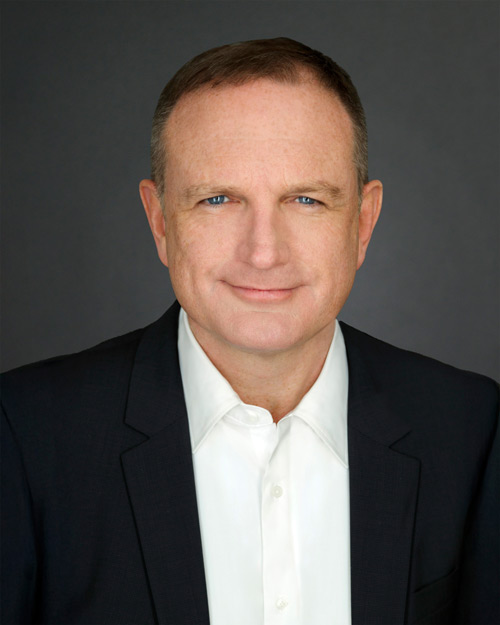
Kyle Clifford, CEO of amfAR
Denver: Welcome to The Business of Giving, Kyle.
Kyle: Thank you. Delighted to be here, Denver. Really appreciate the opportunity to tell you a little bit about amfAR.
Denver: I’m looking forward to it. You took over as CEO on January 1 and that followed Kevin Robert Frost’s 30-year tenure. What has surprised you most about the difference between being chief development officer and being the person in the ultimate leadership seat?
Kyle: Well, that’s a great question, and I think if I was to tell you I had the perfect answer for that, I’d be lying because obviously, what’s exciting about this new role for me is the opportunity to learn a lot more. I though have been set up for success, thanks to Kevin and Kevin’s leadership.
So when the board made the decision to appoint me as the new CEO, to Kevin’s credit, his first priority was to put in place a really smooth transition plan. And key to that was Kevin briefing me and equipping me with a whole range of insights on what he learned.
And Kevin was tremendously honest on the things he got right and the things he got wrong and how he would do certain things differently. And the nature of this role, a lot of what you do is it’ll be learned over time. I’m very fortunate stepping into this role that in amfAR, what I’ve inherited is, first of all, an incredibly talented team.
So if you look at the tools and resources at my disposal to be successful, I’m talking to you today in a very advantageous position. I’ve inherited an organization that’s in a really strong, robust condition. We have an incredibly talented team, talented leadership team. There isn’t a colleague here on this floor, in our office in D.C. and our team out in TREAT Asia in Bangkok, that isn’t 100% committed to our success.
In addition to that, we have just this incredible global network of supporters. And above all, my job is really exciting and stimulating because what we have is direct access to all of these researchers and labs across the world that are really trying to advance scientific discovery and find cure solutions.
And so, for me, my challenge is to do exactly what I’m doing with you right now, Denver. It’s to get out and tell the story to as many people as I can over the coming years because what we do is very unique at amfAR. And I think what I’ve experienced for five and a half years doing the chief development officer role is that when I get an opportunity to tell you this story, people are curious, they’re fascinated because what we actually do impacts every household in America.
So, yes, our primary goal and singular goal for many years has been to find a cure for HIV. And we are now, I would say, and we’ve been doing this periodically for a year, but we’re going to be really focused now on, in fact, doing research in other, what we would call adjacent areas.
But HIV, while it’s been our primary goal to find a cure, I speak to you today and I can say with confidence that our work for years has impacted every household in America. Whether that is some household with an experience with HIV, or someone who’s HIV positive, or someone who tragically died because of HIV, or not.
And that’s what’s really interesting because to just take a moment to explain what I mean by that is HIV is a very complicated virus. So, for years, people have been investing their funds in us to find a cure, but along that way, there’s been a series of incredible life-changing discoveries that, as I said, have impacted every household in America.
So, as of today, because of HIV research, there has been develops in cancer immunotherapy where essentially, the innovations in HIV have worked on how do we train the immune system to attack infected cells. We all know, of course, with vaccine science, and of course we saw with the rapid development of the COVID-19 vaccine, the roots of that originate with HIV.
Long-acting medicines, of course, HIV has been trying to develop long-acting medicines. And now, we’re in a situation where someone who’s HIV positive with the latest course of HIV drugs can take their drugs potentially every six months. Now, they’re looking at how do we use those long-acting medicines into other like hormonal therapies, or other chronic infections, other mental health-related diseases.
Above all, HIV research has given a greater understanding of the immune system.
Denver: Yeah.
Kyle: And then finally, what’s really exciting is unfortunately, there aren’t many households that haven’t been impacted by. And cancer. And of course, it’s actually HIV research that gave birth to a series of experiments around CRISPR and CAR T- cell therapies. So, there’s a real ripple effect to our work. And so as CEO, it’s very rewarding.
And for us, it’s about really telling that story, is that if you kind of want to get involved in science, if you believe in advance in scientific discovery, if you’re someone who or someone in your household takes a pill every day for either an illness or a chronic condition, by supporting amfAR, not only are you going to help us find a cure for HIV, but you’re actually supporting a whole series of researchers across the world that are working on really complicated issues related to what you could be yourself dealing with.
So, yeah, it’s exciting. It’s exciting, exciting portfolio.
“…you’ll hear entrepreneurs speak all the time, and I’m sure you’ve had a few speaking to yourself over the years, Denver, that will always remember the person who gave them their first loan to launch their business. They had a really unique, bold idea. They needed someone to believe in them. They needed that seed funding. And they needed someone to have faith in what they were trying to do. And that’s exactly what amfAR does.”
Denver: Yeah. Your [unintelligible] conditions and a whole bunch of other different things.
Was there a worry about this early on about mission drift? And since you are really looking across the whole spectrum, how has that impacted your fundraising? Have been there other people perhaps have looked at what you’re doing, who are maybe not as focused on HIV/AIDS, but says, “My goodness, what’s being turned out by amfAR is just spectacular for this whole suite of things that we’re trying to deal with in the medical field.”?
Kyle: That’s a really great question, and it is a question that was brought to the board and ourselves. So, there was a lot of consultation. We had consultations with the research community. We had consultations with our stakeholders, including the board.
And we wanted to ensure that there was a lot of clarity around what you might call this expanded research mission for amfAR. But to give it some context, we’ve been doing this before, we’ve been doing this for years, and core to our DNA as an organization and how we were founded is that we’ve always been led by the research. We’ve been led by the researchers.
And as AIDS and HIV as a virus and how we understand it has been evolving, so has our focus in where we dedicate our research funds. And we’re at a really interesting junction right now in HIV. We are not there with a cure. There are 10 people who have been defined as a cure, so we’re going to stay focused on that.
However, what’s particularly interesting is that you have a large group of people, of HIV positive people, who thankfully are living, to all intents and purposes, normal healthy lives, but they are aging. And with aging comes a whole series of potential comorbidities, which are either heart disease, cancers, neurological challenges, such as Alzheimer’s.
And so, the HIV positive community is a really interesting group to research and study, not only to understand how we can help and improve their lives as an aging HIV population, but is it possible working with other experts in the areas I just mentioned that we can actually have a ripple effect in advancing discoveries in cardiovascular disease in Alzheimer’s?
And so, more importantly, is that our funding model for researchers is very unique. It doesn’t really exist in the research space. And how best I would describe it to people is that you’ll hear entrepreneurs speak all the time, and I’m sure you’ve had a few speaking to yourself over the years, Denver, that will always remember the person who gave them their first loan to launch their business.
Denver: Oh, yeah.
Kyle: They had a really unique, bold idea. They needed someone to believe in them. They needed that seed funding. And they needed someone to have faith in what they were trying to do. And that’s exactly what amfAR does. The other institutions and big funders are a little bit more bureaucratic, a little bit slower at making decisions.
For amfAR, if you are a researcher in the lab and we have direct access to a huge global network of researchers, you’ve got an idea, you want to test it, it’s bold and innovative. You need that 250K or half a million to launch that idea. You probably could, you just don’t want to get burdened at the bureaucracy of the institutions that you have to deal with. You don’t have to deal with some probably local politics and such when it comes to that getting granting, you come to amfAR, right?
So, we’re that kind of catalytic funder. So, our thinking was, we’ve been doing that very effectively and in our impact on HIV cure focus, can we also do it in these other areas where there’s that intersection? And at the end of the day, to answer your question, who made the final decision for us were the researchers because the research community told us we’re doing this already, we need more funding, we have a lot of great ideas.
And again, I was very lucky. I was just at a conference in Denver, where all of the leading retrovirus experts in HIV, of course, were infectious diseases and other areas, were gathered together for an annual conference. I think it was around 3,200, and I was wearing a sweatshirt with the amfAR logo on it.
And I was incredibly touched because the amount of researchers, very senior researchers, highly accomplished researchers that came up to me and actually wanted to express gratitude to amfAR and our donors because their very first gift that they got in a lab that launched their career, or the very first fellowship that they got, came from amfAR.
So, it’s a unique model and we were very cognizant of that. And I think the next step is ensuring that we communicate this in a very clear, effective way because it’s very important for the HIV positive community to know, because we were founded by a group of activists. For them to know that we’re not forgetting who we are, we’re committed here, but also, we can also help you with other challenges that you’re facing.
But then, maybe there’s new audiences for us. There’s people who are funding Alzheimer’s, there are people who are funding CAR T, or there’s people who just believe in biomedical research and advancing scientific discovery. So, we think we have an interesting story to tell there. And the story for all of them is to say, look, we’re providing that really vital initial funding for a researcher and we’re an independent entity. We’re driven by the research, and we think there’s a compelling story there to tell.
So, we’ve been doing it successfully in HIV and now looking forward to maybe kind of moving the dial in other spaces as well.
“Well, what we do is we receive applications and we have an amfAR research council, which is not only experts in HIV, but experts in other chronic illnesses and diseases. And we really, it’s all about us trying to identify of the broad range of research projects that are submitted, which are the ones that after a fairly rigorous review, are going to potentially have the most impact, move the dial, and have a discovery moment.”
Denver: Yeah, that’s so interesting. And I always find it interesting too, to think back about the founding of an organization, and HIV came upon us like a ton of bricks. And right from the very beginning with the activists that you mentioned, there was a sense of urgency in the sense of moving fast.
And often, you’ll look back 30, 40 years later and you still hold that, and you wonder why you don’t have that bureaucracy and why you do things so quickly. And it really gets back to that founding because at that moment, everybody was moving fast. There was no time. And it just stays with an organization.
As someone who has spent years in development, how do you balance the urgency to fund every promising lab with the hard reality of saying no to brilliant scientists? And how does that tension shape your relationship with donors?
Kyle: So, it’s a really great question because it’s a big challenge for us because in the last year, we’ve seen in grant applications a 20x increase in grant applications from researchers across the world.
Denver: Wow.
Kyle: And so, there’s a tremendous demand for us, for our funding. What we do and our team do very effectively here is we are in continuous communication with the research community in a variety of different ways. And to answer your core question, is how do we prioritize? Well, what we do is we receive applications and we have an amfAR research council, which is not only experts in HIV, but experts in other chronic illnesses and diseases.
And we really, it’s all about us trying to identify of the broad range of research projects that are submitted, which are the ones that after a fairly rigorous review, are going to potentially have the most impact, move the dial, and have a discovery moment. I think one of our tricks is, and I would say the secret to our success rather than our trick, is being not bound by any pre- conditions. Like we’re open-minded on what we will fund and research.
And so, what I mean by that is some institutional funders might only focus in a certain area. So, they might say for the next years, we’re only funding gene editing and cell therapy. We’re only funding this type of immunotherapy. That’s not really what drives us. We obviously put together, working with amfAR Research Council, a research strategy which outlines areas of interest for us, areas that we’re looking to investigate.
But to be honest with you, when we put out a call to researchers globally, we don’t know what’s going to come in and we have to have an open door and an open mind about in the next cycle, there could be this incredible idea that comes our way. So, that’s the mechanism that we have and it’s unique, and that’s what makes us attractive to researchers.
The big thing I would say though that’s important to mention here is that, and you led and asked about me being the new CEO, one thing that’s really important to emphasize and it’s a core foundation of my leadership, is that I’m amfAR’s first HIV-positive CEO. And I am on this podcast and I’m alive today because of organizations like amfAR.
I take a pill that keeps me alive, and there’s innovations in that medication that are a direct result of research conducted by researchers funded by amfAR. And so for me, I share that message because I want to send that message to the HIV-positive community, to the activists, and say that I stand on the shoulders of giants. I’m very aware of the fact that, as I said, I’m sitting here today because of those people and because of the grassroots activists.
So, yes, I can say that I’m taking them over the organization at a really interesting, exciting opportunity and the direction that we’re going. But the foundation of my thinking is always going to be on how do we advance towards finding a cure for HIV, and so finally dealing with that big issue, and hopefully at some point in my lifetime, making AIDS history.
So, that’s important for the research community because you are right, we were founded by two visionary female leaders, but really, we were founded by a range of activists, including Dr. Joseph Sonnabend, Michael Callen, and others. So, it’s important that we get to say that to people, that we’re not going to lose touch with who we are.
And that’s why I actually, I only came out to family about my HIV status in early ’25, and I’ve only gone public about this. I’ve never spoken about it, and a few colleagues were aware, but I’ve never gone public about that. And it’s intentional because I want to let people know that the team leader here is an HIV-positive man, who lives in a constant state of gratitude, but I’m a living testament to why we need to fund research.
So, yeah. An exciting time and I’m very lucky I get to see all of these really interesting research projects that come into us on a regular basis.
Denver: Yes. Your second coming out, as I think you called it.
Kyle: Second, yeah.
Denver: Yeah.
Kyle: I hope there’s no third.
Denver: [unintelligible] in amfAR’s history who is openly living with HIV, how has that changed the way you approach this work, Kyle? I mean, the way you lead meetings, the way you make decisions, maybe even the way you show up every morning at work.
Kyle: And that’s great. Well, I’ll be very honest with you in that I, before I took on this role, I also wanted to do a real assessment independent to my HIV status and my gratitude for being alive. I wanted to really know, did I have the skillset and capacity here to make a difference?
And for where the organization is going and for the needs that it has, as the CEO or the team leader here, did I really think that it was possible for me to have impact in the next phase of leadership for amfAR? And could I make a difference? And that difference being, can I attract more and more funding for this global network of researchers?
So, that was something that was really important for me. And then, I have spent… I’ve been very with the team here, showing up every day. And prior to taking on the role, I spoke with all my colleagues. I shared with them my personal story. And that was important because I wanted people to know that I was entering into this opportunity and this challenge as someone who is authentic in turning up.
This was more than another new exciting career challenge and opportunity. For me, it was a vocation and a passion. And so, my colleagues know that when I’m in a meeting with them and I’m talking, that’s at its foundation and core to why, what I’m seeking to do and who I am, and the values that I bring as it relates to that.
Having said that, I would like to think that for me, the reason I’ve enjoyed working with amfAR, I enjoyed working with Kevin, I enjoyed working. I enjoy working with the board and I’ve enjoyed being the chief development officer, is that this is an organization that at its core and its DNA is all about innovation.
We’re looking for the innovative research that we fund. We’re hosting these innovative fundraising models to support that. And that kind of suits the kind of my background and that entrepreneurial, innovative way of thinking that I myself have developed over the years.
And so, yeah, so I think it’s a perfect combination of my experience, kind of my skillset I bring to the role, combined with the fact that I’m a HIV-positive man. So, yeah.
Denver: Yeah, yeah. Kyle, a lot of people I don’t think realize that even with treatment, HIV can hide in the body and come roaring back. So, explain to me what does coaxing HIV out of hiding actually mean, and why may it be the central puzzle into finding a cure?
Kyle: So, what you’re referencing, Denver, is really fascinating area of research and a significant majority of HIV researchers are working in this space. This space though, I will say has, again, a ripple effect if donors are funding it into a whole host of other disease areas that I referenced earlier on.
Specifically, to explain this to your listeners, when someone like myself takes HIV medication, what you’re doing is you’re suppressing the virus, okay? And so it goes in, it is not replicating. It is not, to all intents and purposes, attacking your immune system. So, it goes into these essentially undetectable, what are called viral reservoirs, but in layman’s terms, it’s dormant. Okay. But the cells are still there, right?
Denver: Yeah.
Kyle: So, the HIV positive cells are still in my body. It’s very complicated because they are truly within my system. They’re in the CD4 T cells in my bloodstream, lymph nodes, potentially my gut. The real challenge is the brain. And also in my bone marrow and tissue reserves, but they’re like, I guess I’d put it as an example, they’re nearly like this nasty sleeper agent that’s in your system and it’s hiding, but it’s still there and it’s waiting for a chance to come out.
And the medication I take is keeping that suppressed. So, what researchers have been looking at, is it possible, and right now there’s I would say research in three categories around latent reservoirs, is it possible, number one, to kick and kill it, which is to flush it out and treat it with medication, and kill it?
The other strategy that’s happening in research is to look on what you’d call block and lock. So, in other words, how do we, while it’s hidden, do we make it hide even further to a point where we push the virus down further towards a situation of possibly full elimination.
And then of course, as some people may have read, what’s really exciting is innovations around gene editing and CRISPR, which is looking at, say, can we actually cut out the HIV genetic code out of those infected cells? So, a lot of HIV researchers and resources, including ours, have been focused on this latent reservoir concept, or not concept, reality for many years.
It’s exciting. There’s been tremendous progress made there. But just to share with people, HIV is still a big global issue. We have 1.6 million new infections a year. HIV/AIDS-related deaths still occur. I’m lucky and fortunate that I have access to medication that’s not necessarily the case globally. There’s a lot of challenges for people. There’s a lot of issues around stigma.
There’s a lot still a tremendous amount of issues with people getting access to the right medications and treatment. And also, I would say that tomorrow if I don’t continue to take my medication, as I said, it’s going to come out of those dormant cells. It’s going to erode my immune system, and eventually I could succumb to an opportunist infection and die.
So, I would say that it’s hidden, it’s in remission, but it’s still a chronic illness. And if you’re someone who’s HIV positive like me, you’re very aware of the fact that what it is causing is what they call low-level chronic inflammation, which basically means it can impact certain challenges as you’re getting older.
And so for us, why we are so razor-focused on a cure is that we’ve made tremendous progress, but now is not the time for any of us to sit back. We’ve done this marathon since 1985.
Denver: Yeah.
Kyle: We literally are… I’ve done the New York Marathon. I know what it’s like. You’re going down Fifth Avenue, it’s the killer. You’re going into Central Park, you’re going to do that last two, three miles. That’s when you really need to dig deep. You need to stay focused. You need to pull in all of those resources that you’ve had to get over the finish line.
And that’s actually, Denver, what’s very exciting for us right now. We know that finish line. We’ve seen it. We know, with the right resources and focus, how to get there. So, what we’re saying to our donor network, what we’re hoping to say to new people, like who’d be listening to this podcast, is when it comes to HIV research, we can see that finish line. We need your help and support to finally get over it.
But it is possible. This isn’t a pipe dream. Now it is possible that in our lifetime, we could truly make history on this issue.
Denver: Speaking of challenges though, is there the challenge of complacency? That there are a lot of prospective donors out there who think this is pretty much in the rear-view mirror, and it’s been taken care of because it’s not making the news the way it did back in the day? And how do you combat that to say no, we can both slip back and we also can accelerate forward to the finish line?
Kyle: A hundred percent. I think it is a huge challenge that we face. It’s a huge challenge that our researchers even face when they themselves are seeking funding from other sources because in certain donor networks, understandably, there is a perception that this is just not a problem anymore.
That in fact, some would even use the word cure. “Isn’t it cured?” I hear it all the time. And so, it’s a reality of a challenge that we face for sure. It’s a challenge we embrace because we’re delighted with the challenge, because it speaks to the fact that we have been incredibly successful here and what we’re seeking to do.
To a certain extent, the challenge we face is a little bit of a victim of our own success, and I’ll tell you, we’re happy with that. We’re in a really great position where in fact, there’s a whole new course of medications that have come onto market and we’re advocating for them to just be distributed globally because it means more and more people will have that undetectable status that I have here today, and will live a long and healthy life.
To how do we keep people engaged? We talk to different donor audiences in different ways. And so, for the different donor audiences that we have, for some people getting into the detail and the science is really important for them. Some only care about speaking about HIV. For others, there might be other issues that are important for them.
I think the overarching message that is definitely resonating now in a post-COVID-19 world, and especially in the last 12 months, is that private philanthropy can really play an impactful role in advancing scientific discovery.
So, our lead in conversation with donors is talking about the incredible innovative research that’s taking place in immunology, in HIV, in, as I mentioned, the other chronic illnesses earlier on, and viral diseases, and speaking about the impact that they can have themselves directly with that researcher in advancing, as I said, further discovery.
So, it’s more of, I think, talking a bit about the broader impact that funding amfAR can have, understand there’d be a lot of donors, aren’t aware of how much impact that they can have with researchers across the world.
And whether you’re giving us like $50 a month, which is incredible, or you’re someone who’s decided that you want to be philanthropic and make a major gift, or get a a family foundation to support us, you can have direct access to understanding where your money is going.
So, I think it’s definitely a challenge that we’ve had. It’s a challenge that we’ve been embracing. And I think what we’re trying to do, it’s really a communications challenge that I say we have here at amfAR.
Denver: That’s right. Yeah. Well, let’s stick with philanthropy for a minute. You’ve expanded amfAR’s Galas to London, Las Vegas, Palm Beach. For the person who sees this as a red carpet photo and thinks it’s just a glamorous party, how do you make the case that this is actually a serious engine for lifesaving research?
Kyle: Well, first of all, the events have been since we were founded, as I said, by those two visionary female leaders, Dr. Mathilde Krim and Elizabeth Taylor. They have been enormously successful for us in providing a global stage to ensure that we get to communicate the message that I just mentioned in my reply to your last question.
So, we get a chance to stay engaged with this global audience in all the locations you mentioned, from the stage and in advance of the event, at the event, and after the event get to tell our story. So, it’s a phenomenal opportunity to do storytelling.
In the world that we’re in, it also provides a tremendous opportunity through social media to getting media post-event and peak coverage of the events for us to begin increase awareness around amfAR. And it’s because of the brand equity that we have, it opens doors. And so people know the brand. There might be a lot of people who don’t fully know what we do, but they’re curious and they want to know more.
And so, if you think about it really, I think what I’m incredibly proud of and we’re very protective of our events, is it’s been the engine of our research, but it’s also been very unique and special in that there aren’t too many org, in fact, I would argue we’re probably singular in saying that an organization that’s done an incredible job at combining culture and science together, and bringing those two communities together.
And so, in each of the geographies that we host an event, the event experience is different. It’s very focused on the local market. And also, what we have done is, and to my predecessor’s credit and to the board’s credit, is that we’re working with the team here, is that we have participated in cultural events. So, we have hosted our events, whether it’s part of a film festival or it’s part of an arts festival. And that has attracted new people to amfAR.
And so the red carpet, it’s this fantastic tool. It’s another tool in our toolbox to get people into the room, engage with new donors, and kind of tell our story.
Denver: Kyle, what is a question you wish donors, the media, or the community would ask you more often?
Kyle: Well, I love the question, “Where’s my money going?” and then it’s a fantastic opportunity to explain to a donor everything I just said to you there. I think in this world where everyone is so busy, they’re inundated with so much news and information that is changing as we all know on a daily basis, on an hourly basis.
I think having an opportunity, especially in front of our donors, one-on-one, to engage with them and explain about the impact that they’re having. And I think that’s really for us, once we can explain to them the type of ideas that are coming our direction, the uniqueness of our model, as I said, and that in itself is the opportunity that provides for us the greatest opportunity to attract new support.
The research space, the challenges, a lot of people might be uncomfortable stepping into it. They might think they need to have a background in science. They might need to understand the science. That’s not the case. As I said, every household is impacted by advances in scientific discovery, so you, at your core, already believe in it, you’re benefiting from it.
And so, if you’re someone who’s entrepreneurial, if you believe in innovation, organizations like amfAR is really the home for you. So, yeah. Yeah.
“…when you walk out of that doctor’s clinic as I did, there is one thing that you cling on to, which we provide here at amfAR and researchers provide across the world, which I would argue for me, I can speak from personal experience, had the same value and equal currency as the medication I was receiving, and that was hope.”
Denver: Right. You got a great model and I think many nonprofits would do well to emulate it, particularly those involved in scientific enterprise.
Finally, Kyle, if you could go back and talk to that young man coming out of Limerick, Ireland, late ’80s, early ’90s at the height of the crisis, and tell him who he would become and what he would be leading, what would be the hardest part for him to believe?
Kyle: Oh, wow. I think the hardest part would be to explain to him not to worry, not to be fearful, and that he was about to, at some point, have an opportunity to have a life-changing and a career-changing opportunity that would be full circle. I came out at a time when you were living in a constant state of fear of becoming HIV positive. And there was tremendous stigma, and fear and stigma even in the community around HIV.
And when I got my diagnosis, which predates my time here at amfAR, in fact, when the headhunter reached out for me for the role at amfAR over five and a half years ago, there were two things they did not know about me. They did not know I was gay, and so in other words, they didn’t know my personal story and growing up in Ireland, and as I said, living in that state of fear as it relates to HIV and that experience.
But the other thing they did not know, that only my primary care doctor and my husband knew, is that I was HIV positive. And when I got my HIV-positive diagnosis, of course I didn’t know, as you said, back to that young man, I didn’t know that that’s the journey that I would have, that that worst fear would come true. When that worst fear came true, needless to say, I went into a state of immediate concern about would I live, despite what the doctors were saying.
And for someone who has a chronic illness and gets that diagnosis and that experience, it’s very traumatic. But you leave that doctor’s clinic and the news has been shared with you, and they talk to you about treatment and they walk you through, and they give you all the information and that information is incredibly important.
And the doctors would’ve shared with me there’s medication available right now. You can live a long, healthy life. And while that was incredibly comforting, still getting that news, when you walk out of that doctor’s clinic as I did, there is one thing that you cling on to, which we provide here at amfAR and researchers provide across the world, which I would argue for me, I can speak from personal experience, had the same value and equal currency as the medication I was receiving, and that was hope.
I was getting hope that there was a bunch of people out there in the world fighting to find a solution to keep me alive. And how did that come about? It came about because when I got my diagnosis, I did a lot of research. I became a little bit cure-obsessed. And this organization, amfAR, would periodically pop up and some of the research that was funding.
So, when that headhunter sat down with me, as I said, he did not know I was HIV positive. I did not know it was amfAR. And when he mentioned and revealed it was amfAR, I said, “I will meet them tomorrow,” because for me, it was full circle. I was like, okay, I have an opportunity here to join an organization that has helped keep me alive.
So, I would say to that young person that honestly, I wouldn’t say change anything because everything that I went through has positioned me for where I am right now to be in a strong position with the life experience that I’ve had to actually lead this team, and to understand the challenges that we face. And so, I think it’s actually a little bit of a superpower for me, I’ll be honest with you.
Now, I wouldn’t have thought that when I got my diagnosis, and it has been a journey coming out. And I’m very lucky and blessed to have the support, unconditional love and support of my family and my husband. And so, my foundation is strong, so I’m very lucky.
Denver: Yeah, yeah. That’s a great story to close on. And I remember Steve Jobs’ speech at Stanford about how you can’t connect the dots unless you’re looking backward, because you looked at what you just said, all that had happened. And didn’t make any sense at the time, but as you say, how it’s positioned you now, it all does make sense. It all did take you to this point where you can effectively lead this organization.
For listeners interested in learning more about amfAR, or so inclined to support this work financially, tell us about your website and what they can expect to find on it.
Kyle: Sure. Thank you so much again, Denver, to get an opportunity to introduce amfAR and introduce myself. If people are interested in funding innovative research anywhere in the world, they can contact us through our website, amfar.org.
However, I would also encourage people to message, DM me directly on LinkedIn and they’ll find me quite easily as Kyle Clifford on LinkedIn. And I’d love to speak to someone who’s interested in learning a little bit more about our work.
Denver: Fantastic. Well, thank you so much for being here today, Kyle. It was such a great pleasure to have you on the program.
Kyle: Thank you. An honor to be here. Thank you so much, Denver
To celebrate my 50th year in the nonprofit sector, I’ve put together a gift for you — a practical, field-tested guide to building world-class nonprofit workplace cultures. It’s called Cultivating Nonprofit Excellence, and it’s based on insights from nearly 1,000 interviews and 150 focus groups with nonprofit leaders around the globe. It’s completely free and instantly downloadable at blanchedalmond-mosquito-418475.hostingersite.com