
What if the entire strategy for fixing how we produce meat has been wrong from the start?
For fifty years, advocates have tried to convince people to eat less. Yet, consumption has broken a new global record every single year since 1961. Every. Single. Year. So Bruce Friedrich decided to stop fighting human nature and start working with it.
Bruce is the founder of The Good Food Institute, a global science think tank, and the author of a new book called Meat: How the Next Agricultural Revolution Will Transform Humanity’s Favorite Food and Our Future. His argument is simple and a little mind-bending: the goal isn’t a world where people sacrifice. It’s a world where they can’t tell the difference.
“From the experience of a meat-eater, you literally can’t tell the difference between plant-based meat and the animal-based meat that you would otherwise be consuming. And because the process is so much more efficient, we will get to a place where it costs less than what it’s replacing.”
That’s the vision. And in the conversation that follows, Bruce explains exactly how close we actually are to making it real, why companies like Tyson are essential to getting there, and why he puts the odds at 95 percent, but only if one critical thing happens.
It’s Bruce Friedrich on The Business of Giving.
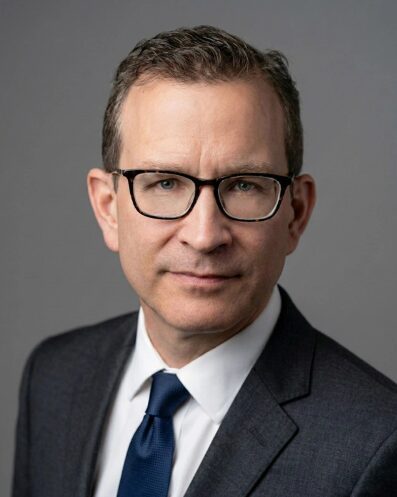
Bruce Friedrich, Founder, The Good Food Institute
Denver: Welcome to The Business of Giving, Bruce.
Bruce: Thank you so much, Denver. I'm delighted to be here.
Denver: I'm delighted to have you. You founded The Good Food Institute in 2016 after spending years in animal advocacy. For listeners who may not be familiar with GFI, can you explain what the organization does and what problem you are looking to solve?
Bruce: Yeah. Thank you very much, Denver. I'm delighted to be here, and I appreciate you starting with GFI.
So the way that meat is produced has a whole bunch of external costs in terms of environmental impact, global health impact, animal protection impact, but our observation is that the world is going to eat more meat no matter what. People, just where food choices are concerned, generally don't incorporate ethics into food choices for the most part.
And so the observation of GFI is that meat consumption goes up every year. It's up 65% from 25 years ago. It's going to do something like that through 2015. And trying to convince people to eat less has some value, but the world's been doing that for 50 years. It's very unlikely that it's going to suddenly start working in terms of actually changing the trajectory.
So how do we think about that…and taking a page from what renewable energy or electric vehicles is doing, saying, yes, the world's going to consume more energy. Yes, the world's going to drive more miles. What would it look like to make energy less adversely impactful for the climate and air pollution? What would it look like to make the same thing with cars?
Basically, can we make cars without combustion engines? Can we do energy production that doesn't have air pollution and climate impacts? That's how we think about meat. And so, we're a global science think tank. We have about a * and 40 full-time people around the world. We have six GFIs around the world. The plurality of our team members… we're a nonprofit organization… the plurality of our team members are scientists.
Denver: Yeah.
Bruce: And our goal is basically the scientific project of: What does it look like to give consumers what they love about meat, but without the adverse consequences? So to us that means: Let's make something that has the exact same experience for the meat-eater, but doing that from plants… or growing meat basically in meat breweries in the same way that you would grow plants in a greenhouse.
Denver: Yeah, that's such an interesting perspective because it seems in terms of trying to curb our desire for meat, we've had a, if I can refer to it as, a just-say-no strategy, and after a while you'll realize, just say no ain't going to work. You got to come up with something different, and you came up with something different in Meat: How the Next Agricultural Revolution Will Transform Humanity's Favorite Food―and Our Future.
So now I know the central argument, Bruce. Why did you feel this book needed to be written now?
Bruce: I think a lot of people, when we tell them what GFI is doing and we tell them that our goal is to make meat from plants that competes on price, taste, and nutrition, or to grow actual animal meat, but to do it in something that looks like a brewery, no farms and slaughterhouse is required, people have a lot of preconceptions about what that looks like, especially on the plant-based side.
And there has also been a lot of discussion recently about the private sector struggles of plant-based meat, and the investment… still private sector struggles, the sort of chilling of investor enthusiasm on the cultivated meat side, so growing meat in factories instead of slaughterhouses.
And it seemed to me, on the basis of the conversations that I was having with people, that a fact sheet or a policy brief, or one conversation just wasn't enough to contextualize the work in the theory of change. It seemed like it needed more explication. The book does not exist to do that or didn't exist to do that, so I figured I should write it.
“Our goal is not to convince people to sacrifice on either of those variables. Our goal is to innovate in plants so that they are identical. From the experience of a meat-eater, you literally can't tell the difference between plant-based meat and the animal-based meat that you would otherwise be consuming. And because the process is so much more efficient, we will get to a place where it costs less than what it's replacing. And that's really our focus, something that is absolutely indistinguishable and less expensive, and equally or more nutritious.”
Denver: There you go. Well, I'm going to ask you for a little bit more explanation now because you've just mentioned plant-based meat and cultivated meat. Can you explain the difference between these two approaches and why both matter?
Bruce: Yeah. Absolutely, Denver. Thank you. So plant-based meat is actually the one where we find that it's a little harder to explain because people come to the conversation with thinking they know what it is that we're talking about. And so you sort of start at negative 80 instead of starting at zero.
People think when we're talking about plant-based meat that our goal is to convince people to pay more because all of the current plant-based meats cost more...
Denver: Yep.
Bruce: ...for a product that they like less because all or almost all of the current products don't satisfy meat-eaters.
And on both of those, we have the word yet. And so just like if you're having a conversation about a home computer in 1980, is your goal going to be to convince lots and lots of people to put a home computer in their house when they don't yet even have dial-up connection?
And many of the things that made home computers valuable don't exist, Steve Jobs has not come along and innovated the Mac, which really opened up the idea of computers to people who were not computer scientists. Is your goal in 1980 to get lots and lots of people to buy computers that they don't know how to use?
Or is your goal to innovate in computer technology so that they become something that is actually valuable to people who don't want to learn to program?
Denver: Yeah.
Bruce: Similarly here, plant-based meat, it's not good enough. It costs too much. Our goal is not to convince people to sacrifice on either of those variables. Our goal is to innovate in plants so that they are identical.
From the experience of a meat-eater, you literally can't tell the difference between plant-based meat and the animal-based meat that you would otherwise be consuming. And because the process is so much more efficient, we will get to a place where it costs less than what it's replacing. And that's really our focus, something that is absolutely indistinguishable and less expensive, and equally or more nutritious.
On the cultivated meat side, just like you can take a seed or a cutting from a plant, bathe the seed or cutting in nutrients and grow a whole plant, you can do that with a small sesame seed-sized sampling of animal fat or animal muscle, and grow really unlimited animal fat and animal muscle. And you can do that in something that looks essentially like a beer brewery.
And again, in both cases, the environmental impacts are a fraction; the land use needs are a fraction. There are not antimicrobial drugs required. There isn't a contribution to pandemic risk. And obviously, it removes animal cruelty from the equation. So that's the focus of the organization. It's pretty easy to say and explain, but it turns out it's really challenging.
Denver: Yeah. I can imagine. Things I always find to be a bit preposterous because you talk about raising animals for food wastes 800% to 3900% of the calories we feed them. It's just the way animals' bodies work, but why do policy experts spend so much time worrying about leftovers on our plates or food spoiling in trucks, but treat this massive waste as kind of just the way things are done, acceptable, normal?
Bruce: I mean, I think there's a degree to which people have become resigned. It's just really tough for human beings to think about a future state that's different from the current state. That's the famed line from Henry Ford, "If I'd asked people what they wanted, they would've asked for a faster horse."
Denver: Right.
Bruce: So I think policymakers, like everybody else, they have a preconception around plant-based meat, which is: it's a niche product for people who want to eat less meat. It doesn't taste very good. It costs too much. And that's really been fine. You can have a $700 million a year industry catering to flexitarians and vegetarians.
And until 10 years ago, that's what plant-based meat was, it was: veggie burgers were veggie first, and burger, kind of not at all, shaped a little bit like a burger, but that was kind of it.
Denver: That was it.
Bruce: And I think for policymakers, they correctly assume that we are unlikely to convince lots and lots of people to change their diets, and it hasn't occurred to them that we can change the way that meat is made. So food loss and waste is worth focusing on. I mean, if we're wasting 25% to 30% of the food that is produced, figuring out how to reduce that, it's going to be really important.
But we do point out that if you want to produce 100 calories of food, and you are reasonably upset that 25 to 30 of those calories are going to be wasted, think about the fact that the most efficient animal at turning crops into meat, at turning feed into meat is the chicken.
It takes 900 calories to get 100 calories, so you've essentially got a physiological food waste ratio of 800%, not 25% to 30%. And figuring out how to solve that is going to be 30 times as powerful as eliminating food waste, and that's the conversation that more and more we're having with people.
Denver: Yeah. Yeah. Well, I love these conversations. I love your math that you have in this book. I sometimes can see policy experts may be missing this opportunity, but not climate advocates. And I think you make the claim that 12% adoption of alternative proteins equals the climate benefit of 100% global adoption of electric vehicles.
Now, why aren’t the climate advocates jumping on this to the degree that they should be?
Bruce: I think it's the same reason the policy advocates, that sort of policy makers, are not jumping on board: It's very new.
Denver: Yeah.
Bruce: It takes time. And the climate people in particular, I think, have spent an awful long time looking at efforts to convince people to eat less meat, and seeing that not work out.
So Chapter 2 of the book is focused on environmentalism, including climate. And I start with a story about Bill Gates eating an Impossible Burger with Mark Rober, the YouTube star, former NASA guy. And Bill says, “I thought until the advent of plant-based and cultivated meat, I thought this would be the steepest challenge in climate.”
And that's because he saw a lot of people trying to convince people to eat less meat, and meat consumption just continuing to skyrocket. The UN Food and Agriculture Organization has been measuring since 1961, and meat and seafood combined since 1961, every single year has been a new global record. And that's despite lots and lots of people...
Denver: Oh, yeah.
Bruce: ...saying there are health benefits to switching, animal protection benefits, climate benefits to switching, and people just eat more and more meat.
So I think there's a degree to which climate advocates, again, just haven't thought through what it would look like to solve the meat problem from the other side, not demand and solve supply.
Denver: I better read your book. You have said that price and taste parity, it's the entire ballgame. So, Bruce, based on current trajectories, when do you expect plant-based meat to consistently undercut, let's say, conventional chicken prices at retail? And what is the critical technical breakthrough that's going to get us there?
Bruce: So we have some nugget products that most people like at least as much, the Impossible Nugget and I think the other one is the MorningStar Nugget, I think the Gardein Nugget. But it costs I think four and a half times as much at someplace like Walmart.
Denver: Yep.
Bruce: So the challenge is really for the ground products… the challenge is going to be scaling up. And that's the... I mean, in the book, I talk about the sort of proverbial chicken-and-egg problem in a variety of contexts. And one of them is you need to bring down the prices so that more and more people will buy the product, but you can't bring down the prices until you're able to scale, which means you need to sell more of the product.
This is one of the areas where just like with so many other technologies, governments have stepped in. Tesla would've failed if not for a $500 million loan to Elon Musk and Tesla by the Obama administration, and that loan got them through a time Elon Musk said… he said they were like days away from…
Denver: The valley of death.
Bruce: Exactly. And so we are very encouraged by the support of every government that funds significant agricultural R&D, and every government that funds significant biotechnology is now recognizing the economic benefits of these technologies, as well as the food security, so everything from food systems resilience to the fragility of the food chain, to food self-sufficiency. Seeing these technologies as something that are in government interests because I mean, eventually, we would get there without this.
But if we can get the same sorts of long-term, low-interest loans and up manufacturing incentives and the sorts of things that governments do for their biopharma sectors, their Ag sectors, advanced chips for AI sectors in places like the United States and India and Thailand, the same sorts of incentives that governments have when they're trying to attract sectors, if we can get that for plant-based meat, it'll happen a heck of a lot more quickly.
And then the other thing that I think would help a lot is a real focus on blends that would allow blending actual animal meat with plant-based protein or mycoprotein, which would allow us to scale up the production of plant-based protein and mycoprotein, and bring down prices for the 100% plant products as well.
But I think for beef, we'll probably see it in the next three to five years.
Denver: Wow.
Bruce: And that's the most important one for climate. For chicken, it's probably another five years after that just because ground chicken is just so insanely inexpensive.
“If you can get to a place where you grow the crops, and to then ship them to a plant to turn them into plant-based meat, or one extra step if you're talking about cultivated meat, in addition to the benefits to the environment, in addition to the benefits for hunger or malnutrition, that also is an easier, more secure, more resilient food production system with higher profit margins.”
Denver: It really is. And maybe it's going to be about six months the way the price of beef is these days. It just keeps on going through the roof.
Unlike many advocates, Bruce, and maybe I'm talking more about traditional advocates, they look at companies like Tyson as the opposition, but you position them as essential partners. Explain.
Bruce: Oh, I mean, they're essential partners in at least two crucial ways. The sort of affirmative way that they're an essential partner is if you look at what Tyson's or JDS's or Cargill's or ADM's, if you look at what their business model is, they want to produce high quality, safe food as inexpensively as possible. Like that's the goal.
In the case of Tyson, they want to produce safe, as inexpensive as possible animal meat. So if you offer them an opportunity to produce something that consumers are enthusiastic about with more food systems resilience, like the current supply chain, it's incredibly fragile.
Denver: Yeah.
Bruce: The inefficiency that we described a second ago, nine calories into a chicken to get one calorie back out is only part of it. You're shipping those crops to a feed mill, operating the feed mill, shipping the feed to the farm, operating the farm, shipping the animals to the slaughterhouse, operating the slaughterhouse, there's fragility in each step of that process.
If you can get to a place where you grow the crops, and to then ship them to a plant to turn them into plant-based meat, or one extra step if you're talking about cultivated meat, in addition to the benefits to the environment, in addition to the benefits for hunger or malnutrition, that also is an easier, more secure, more resilient food production system with higher profit margins.
So I heard somebody, I think from ADM, giving a talk and they were on a panel about alternative proteins. And they said, "We don't want to be disrupted. We want to be part of the disruption."
Denver: Yeah.
Bruce: And they invoked Kodak and Canon when digital photography came along. And Kodak resisted and Canon leaned in, and Kodak went bankrupt, and Canon is the largest camera producer in the world.
Denver: Yep.
Bruce: So that's the affirmative case. And then it just makes sense that the people who have the distribution channels, who have the brands that are really trusted by consumers, having them be a part of this… and they want to be a part of this, is going to make it happen a lot more quickly.
Denver: Yep.
Bruce: You also don't want them opposed because they're incredibly powerful, so there's both sides of it.
Denver: Absolutely. Start with the neutralizing. And the irony of Kodak, of course, is it was their innovation that discovered digital photography. But I guess if you're making money and doing something, it's just hard to stop making money and doing something. It's the hand that's fed you for half a century or a century.
Bruce, you described China's push for food self-sufficiency through alternative proteins as similar to their dominance in solar panels and EV batteries. What happens to the U.S. if we fall behind in this protein transition? And what are the actual geopolitical consequences?
Bruce: Yeah. I mean, they're significant. The answer to the question is almost a part of the question, right?
Denver: Yeah.
Bruce: And a lot of people point out that it was the U.S. Department of Energy that innovated both first-generation EV batteries and second-generation EV batteries, and yet globally, more than 70% of EV batteries are produced in China. And BYD, I think, has surpassed Tesla as the largest...
Denver: Yeah, they have.
Bruce: ...EV company in the world now. And that gap is probably going to get bigger and bigger.
Similarly with solar, the U.S. has been critical to innovation and certainly was innovating and leaning in on making solar cheaper way before China got involved. And yet, China is now making something like 80%, I think, of solar components, the manufacturing base to create solar facilities. So economically, that's just not where you're going to want to be on things like energy self-sufficiency and these technologies as they get bigger and bigger and bigger.
Revenues in China on EVs and solar in the year 2000 were basically zero in both cases. Now, you add them up, and they're north of a trillion dollars in 25 years. That's really quite something. But now you've got agriculture; now you've got the global meat supply.
The Center for Strategic and International Studies put together about a 5,000-word report on alternative proteins, and they frame it as a strategic imperative for the United States, on par with advanced chips for AI and biopharma. And that's why it is a bipartisan issue. So, oftentimes, people will sort of point out that something like: take your meat away is going to be a culture war issue, and that's absolutely true.
Denver: Yeah.
Bruce: But innovation, consumer choice, American dominance in agriculture, these sorts of things are bipartisan. Manufacturing, biotechnology, these are bipartisan. And there is bipartisan supporting Congress. And in fact, 10 Republican members of Congress wrote to the Department of Homeland Security and the Director of National Intelligence saying, "Hey, look at what China's doing on alternative proteins. What are we doing to make sure that the U.S. stays globally dominant in agriculture, which is our current place?"
And also on alternative proteins, we have the two most innovative plant-based companies.
Denver: Yeah.
Bruce: We have probably three to five of the seven to 10 most innovative cultivated meat companies, but this is a super nascent industry, and China is pulling ahead in terms of scientific funding, government support, and that's what's going to be necessary for the long term.
Denver: I'll sum up this part of our conversation, Bruce, as the United States of Kodak.
Bruce: I love it.
Denver: You know, one legitimate critique is that this revolution threatens rural farming communities. Does your book address how cattle ranchers or traditional farmers fit into this future or in some level of rural economic dislocation? Or is that just going to be an unavoidable cost of progress?
Bruce: Our hypothesis is that it can be win-win, so I talk in the book about the fact that it's simply a fact that being a farmer and being a rancher is an incredibly hard job.
Denver: It sure is.
Bruce: The average age of farmers and ranchers keeps going up. The number of farmers and ranchers going out of business in the U.S. and Europe, everywhere in the world, goes up every single year.
In the early 1970s, the Secretary of Agriculture at the time really ushered in a “get big or get out” ethos of agriculture, which has continued to this day. And I think every single year, we lose ranchers, we lose farmers. In the book, I suggest that a reset in the U.S. and globally is probably only possible if we are not in a world where we need more and more land for feed crops, more and more land for grazing.
So we've done some economic modeling, GFI didn't do it, but a company, a think tank in the UK called Green Alliance, did some modeling, and they said: If you take a third of the land that's freed up from shifting toward alternative proteins because plant-based and cultivated meat, if you're talking about plant-based and cultivated chicken, they require a third to a sixth as much land as conventional chicken.
And then beef, even relative to feedlot cattle, plant-based and cultivated beef require a 20th of the land. And for non-feedlot cattle, the numbers are even bigger.
Denver: Yeah.
Bruce: Our hypothesis is that if we free up all this land, it gives us a lot of opportunities for farmers to shift away from massive farms for feed crops for chickens and pigs, and farmed fish, and cattle, and toward growing food for human beings.
And for meat, dairy, and eggs, away from confinement agriculture and in the direction of regenerative agriculture. So it would be less meat, dairy, and eggs from live animals. But the meat, dairy, and eggs from live animals would actually be going in the direction of ecosystem reconstruction and other regeneratively focused ways of raising animal products.
We think demand for that will go up, not down, so the industrial animal agriculture, meat that comes from factory farms, industrial farms, that would be replaced by plant-based and cultivated meat. And we think you'd see actually an uptick in meat demand from everything.
Denver: Yeah.
Bruce: On the one hand, you've got people like Alice Waters and Michael Pollan. On the other hand, you have people like Joe Rogan and RFK Jr., and none of them are enthusiastic about the way that meat is produced today than industrial meat. They would demand for meat to be from live animals that don't involve antibiotics, don't involve confinement agriculture, and those sorts of things.
So that's not self-executing, but we do think that a shift in this direction opens up those kinds of alliances and possibilities.
Denver: Cool. We're in 2026. On a scale of one to 10, you like math, on a scale of one to 10, how confident are you that we will see peak conventional meat before 2035?
Bruce: How confident?
Denver: Ten years.
Bruce: Yeah. I mean, in the book, what I say is the science looks super solid. If we bring the will, then we have a 95% chance based on all of the scientists I talked to and I chatted with…emailed with 30 plant-based scientists, 30 cultivated-meat scientists, and sort of deep emails and interviews, with probably like five on each side of that equation.
And I am very, very confident that the science works.
Denver: Yep.
Bruce: And that it's probably a lot easier than many other things that we have done, bringing the will to doing them, a lot less expensive, a lot less work essentially, but it does require that the government enthusiasm that we've seen grow every single year for this. The government enthusiasm for this, other than Singapore and Israel, seven years ago was zero.
In the last six years, every year, we've seen more science, more scientific papers, more government-funded research centers, et cetera. If that continues, and it goes up and up and up every year, I think by 2035, we'll see cost-competitive plant-based and cultivated beef, pork, chicken by 2035, like 95% chance.
But that's huge if that continues. If it doesn't continue, then I think we're down at 10% to 15% chance. If we just rely on the private sector, maybe even lower than that. Like the scaling conundrum is real.
Denver: Yeah.
Bruce: The science can work, but if you can't sell the product because the prices are too high because you haven't scaled yet, that's just a really tough nut to crack.
“...the number one thing we're trying to do is build a maximally robust scientific ecosystem. The way you do that is you get governments to fund the top tissue engineers and chemical biologists and mechanical engineers, et cetera. And that comes from government funding, so our global battle cry is: Government should be funding R&D. And that's the number one thing we're focused on.”
Denver: Not going to happen. You're for all policy levers, but which one do you focus on: R&D funding, procurement mandates, regulatory reform? Any that you think would be more important than the other? I know we need them all, but which one would really, perhaps, leverage this enterprise the most?
Bruce: Yeah. More probably pre-procurement.
Denver: Okay.
Bruce: Because the products aren't good enough, and they cost too much. I mean, there are some products that would work from a procurement standpoint, but they're like four times as expensive, and you're just not going to find any government that's going to pay more any more. So probably pre-procurement.
I could imagine advanced market commitments from governments, where if you get the price down to X, then we'll buy Y amount. And I think we're going to see that happen in some European governments in the fairly near future. But right now, it's regulatory and it's R&D.
And the thing about regulatory is the companies have a very strong incentive to work on the regulatory piece. So we have lawyers who are working on the regulatory work, but really our global... like the number one thing we're trying to do is build a maximally robust scientific ecosystem.
The way you do that is you get governments to fund the top tissue engineers and chemical biologists and mechanical engineers, et cetera. And that comes from government funding, so our global battle cry is: Government should be funding R&D. And that's the number one thing we're focused on.
Denver: Oh yeah. I mean, scientists are only going to go into a field where they don't have to scrounge every single day for a grant and dance for their supper. So they have to see the money there.
Finally, Bruce, beyond the obvious answer of buying alternative protein products when available, what is the single most impactful thing you want readers to do after finishing the book to accelerate this agricultural revolution?
Bruce: Yeah. Thank you very much for that question, Denver. As you know, the conclusion to the book, the concluding chapter, is basically a reflection on: So you are in college. Here's how to think about how you plug in. So you work at an NGO…So you're a journalist… So you're at a philanthropy. And it's really going to depend on where somebody is and what they're doing.
What is going to be the most impactful way to plug in? And it's the question I try to answer in the conclusion for everyone, and really in particular for conservatives and Republicans, making sure that your member of Congress knows that you are supportive of this industry.
And contact us if you have a Republican member of Congress, Republican senator, and you're enthusiastic because constituents coming in and meeting with members and meeting with their staffs, and talking with them about how important this is to you, is just so critically important and valuable.
Denver: That is good advice. The book again is Meat, not just meeting with the Congressman, but meat with the A, How the Next Agricultural Revolution Will Transform Humanity's Favorite Food―and Our Future. Bruce, you make a compelling case that this shift is not aspirational, it really is inevitable. And for anyone serious about where the world is headed, this is the book that is required reading.
I want to thank you so much for being here today. It was a real delight to have you on the show.
Bruce: Thank you so much, Denver. I really appreciate everything that you're doing with the show and your life of service to nonprofit. It's really inspiring and beautiful.
People who want to read, find out more about the book, we do have a website. It's just meatbook.org.
Denver: Very good. Thank you, Bruce.
Bruce: Thank you, Denver.
To celebrate my 50th year in the nonprofit sector, I’ve put together a gift for you — a practical, field-tested guide to building world-class nonprofit workplace cultures. It’s called Cultivating Nonprofit Excellence, and it’s based on insights from nearly 1,000 interviews and 150 focus groups with nonprofit leaders around the globe. It’s completely free and instantly downloadable at blanchedalmond-mosquito-418475.hostingersite.com