
Hala Hanna is the Executive Director of MIT Solve, a platform connecting social impact innovators with the resources they need to scale solutions that close gaps in equity, learning, health, and climate response.
Over the past decade, MIT Solve has selected 600 innovators from around the world, collectively impacting 370 million lives. But what sets this work apart is how they do it. With a 94% five-year survival rate for their entrepreneurs compared to 70% at Y Combinator, they have cracked a code that traditional venture and philanthropy often miss. Hala brings a unique perspective shaped by her childhood in war-torn Lebanon, where she learned to hold joy and injustice in the same breath.
In this conversation, she reveals why courage matters more than capital, how AI could either amplify inequality or bend toward justice, and what it takes to unlock the potential of entrepreneurs serving the last mile.
“Philanthropy is the best risk capital for social innovation. It can tolerate uncertainty. It can be patient with long time horizons. And it can be motivated by impact over returns. But the mechanisms that we use today to deploy this capital, it often undermines its own potential, right? We have these traditional funding, processes that are mostly closed networks. It’s mostly opaque selection.”
It’s Hala Hanna on The Business of Giving.
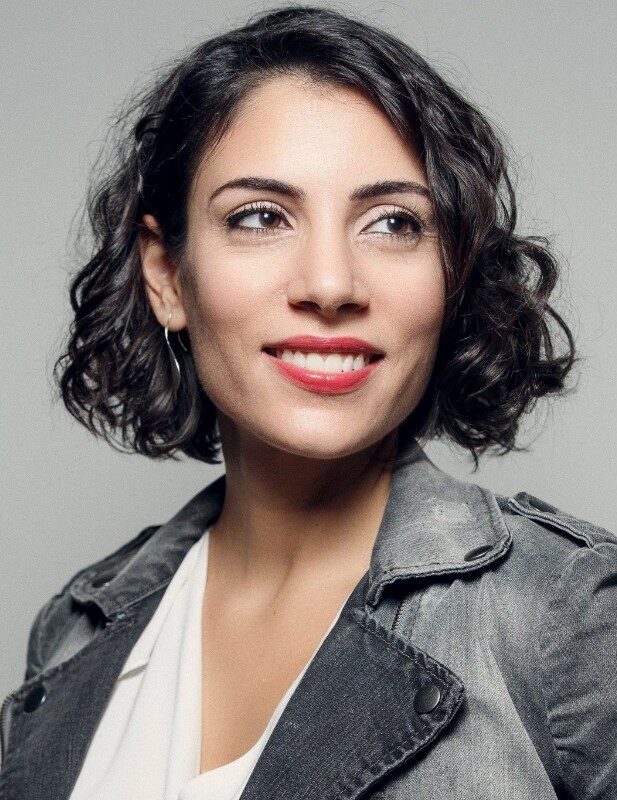
Hala Hanna, Executive Director of MIT Solve
Denver: Welcome to The Business of Giving, Hala.
Hala: Thank you so much, Denver. I’m so happy to be here.
“MIT Solve is a platform for social impact innovation. We find the most incredible entrepreneurs who are using tech for good to close gaps in equity, in learning, in health, in wealth, in responding to climate change. And then we give them all we can so that they can scale their impact and impact millions.”
Denver: And I’m glad to have you. Tell us, what is MIT Solve and why did it need to exist?
Hala: MIT Solve is a platform for social impact innovation. We find the most incredible entrepreneurs who are using tech for good to close gaps in equity, in learning, in health, in wealth, in responding to climate change.
And then we give them all we can so that they can scale their impact and impact millions. And to do that, we work with hundreds of partners all over the world who have the funding to make this all possible.
Denver: Yeah. Let’s dig a little bit more into that. Give us a sense of scale. You’ve been around for 10 years. How many innovators have you worked with? What kinds of challenges are they tackling? And what, Hala, does success look like in your model?
Hala: Yes. So next year is actually our 10th anniversary. Very excited, I’m looking forward to that. We’ve now run a hundred challenges, which allowed us to select 600 innovators from all over the world, and half of those have gone through our program.
And I’ll tell you, the difference between a great idea succeeding and failing is so often an early believer taking a chance on these innovators. And particularly, we call it the Valley of Death; that part between having a proof of concept and being sustainable is where so many good ideas go to die.
And it’s really even deeper for impact innovators because serving the last mile, serving those who have so far been excluded, is even harder. And it doesn’t align with traditional ventures and some of the traditional investment mechanisms that we use.
So when we think of what success is, it’s a few things. So those 360 innovators are impacting 370 million lives all over the world, and that means those are kids having access to learning material. Those are communities that now can have better quality of air, et cetera, et cetera.
And it’s really, of course, it goes beyond the capital that we provide the Solvers. It’s about the program. It’s about the signaling mechanism. For every dollar in prizes that we give to Solvers, they raise over their lifetime $426.
Denver: Ooh.
Hala: Yes. So that’s a…
Denver: Catalytic capital, if I ever heard it.
Hala: Yeah, exactly. And our for-profit Solvers have collectively raised over a billion, $1.1 billion. And so when we think of that, I mean the other step that I love is that we have a 94% five-year survival rate. And that compares to the 70% of Y Combinator, so we are beating some ultimate at something and…
Denver: Yeah. What do you attribute that difference to? That’s a big difference, 25% or so.
Hala: Yeah, I think it’s a few things. So it’s who we select. 85% of the funders from last year have lived experience with a problem. I tell you that gives you a certain amount of grit in the face of the downs that you will inevitably face that you might not have otherwise. 62% of the Solvers are women-led, and all of them are looking at marginalized or underserved communities.
And I think that’s an indictment of what others, what we’ve done to date. If we can select for this kind of problem and this kind of solution, and have this kind of survival rate, what does it say about what we’ve done to date? But it’s also about… so it’s who we select, it’s how we support, it’s the network effect.
LifeBank is one of the Solvers that we selected early on. Temie is incredible, the founder. She’s created… I’ll tell you her story actually. So, Temie had a traumatic birth here in the U.S., where she needed an emergency C-section and she lost a lot of blood.
And her and her baby are now fine, but what that made her realize is had she given birth in her home of Nigeria, she would’ve probably passed. And so that led her to create LifeBank, which is a delivery system for oxygen and blood and all of these very time-sensitive medical supplies.
The tech is relatively simple. It’s satellites, it’s WhatsApp, and it’s motors that are able to drive through the traffic of dense urban environments. But she’s saving millions of lives every year. And when she got selected to be a Solver, she met at the event Merck for Mothers, which is the philanthropy related to Merck, and that led to a $5 million partnership.
So that’s the network effect that we talk about. And then it’s the peer environment. Entrepreneurship is lonely.
Denver: Yeah. Oh, yeah.
Hala: When it’s a problem that you’re so passionate about, it’s even more draining. So yeah, so I’ll stop here. There’s some more, but it’s just that we’re very proud of that. I think it says something about the people that we work with, first and foremost.
Denver: Yeah. Well, I mean, just so much there. One, I love the lived experience at 85%. I had somebody tell me who had done that and from lived experience said, “We don’t leave for a job that’s going to pay us $50,000 more. If you don’t have it, you move on with a better opportunity. This is somehow in the DNA, so we’re sticking around no matter what.”
And I love how you get people through that trough because that is what happens. The enthusiasm of the initial idea begins to fade, and you hit that Valley of Death. And people are saying, How long are you going to stick with this? And, Are you sure? And family is beginning to wonder and to have somebody there believing in them, and telling them stories of what others have done and giving them that courage and that hope… that is truly invaluable.
Hala: That is. And Denver, back to your question about: Why did Solve need to exist? It was set up by the previous president of MIT, Rafael Reif, the same year as the Sustainable Development Goals were first launched. And the idea was there are problem solvers all over the world.
Even if they don’t have an MIT ID, we want to find them. We want to support them. And so that’s the first spark of this. And then we started finding out that there are all of these funders who actually would like to give their money away. They just don’t know where. It’s so complicated. It takes time.
And what a tragedy that we cannot connect those two sides of the marketplace. And so this is where we see our biggest value adds.
Denver: Yeah. Yeah. Well, just my perspective on that– I think strategic philanthropy sometimes has done us a disservice because they’ve made it feel like we’re always going to be making a mistake if you’re a philanthropist. And there’s a bar that you have to hit.
And I think a lot of the instinct of what you could have done…and I think their advisors are doing the same thing: Do the safe thing. And what you’re doing in some of these cases is not the safe thing. It’s going to be the thing that’s going to make the difference, but they’re afraid to not get the impact, and therefore they play it too close to the chest.
Let me get back to: I wanted to have you describe your childhood in Lebanon during the civil war, and it was a bit paradoxical to me how you were happy despite displacement and violence. How, Hala, did you hold joy and injustice in the same breath? And how has that shaped your thinking in creating sustainable change?
Hala: Oh, you are taking me back. Maybe I’ll take you back with me to when I was four years old.
Denver: I want to go.
Hala: Yeah. I was four years old. I remember this moment so clearly. For me it was a game that involved running to the basement at all times of the night. And of course, I didn’t understand that the basement was the only safe spot from bombings.
And my favorite snack back then was canned hotdog on pita bread. And I didn’t understand that it was all we had at the moment. And to your point about joy– children’s superpower truly is resilience. It’s the ability to reinterpret reality on your own terms and turn bunker basement into a fun community party and missed school days into vacations.
And I want to be super careful not to romanticize conflict and resilience because these are certainly not choices, but I do feel I got lucky. When I think of what is it that got me from that bunker to a boardroom, it is luck. It’s that I was born to the right parents who loved me, who invested everything they could in my education.
And when I think of every parent of the hundreds of millions of children who are growing up today in conflict zones, I know that those parents are not all able to do the choices that my parents were able to make. And those kids deserve more than luck. We owe them more than that.
And so my childhood trick of telling myself stories that embellish reality, of course they only can go so far. And so what I see in our Solvers, people who are not faking better tomorrows, who see a problem and want to change the stakes today.
Denver: Yeah.
Hala: And they’re in the business of building better futures for their community. And so it’s refusing the false optimism, but chasing the right optimism with the right people and the right partners just relentlessly. So yeah, that’s how I think of the work that we do at Solve.
Denver: Yeah, yeah. That’s really interesting. And I guess as a kid in Lebanon too, there was this, I guess, forcing mechanism where you had to hold multiple ideas in your head at the same time. And that ability to do that is often the way we solve problems, I would guess. That it’s not a straight linear, but there are these multiple things that are going on, and it is complex, and that complexity you had as a 4-year-old, I would think probably puts you in pretty good stead in terms of trying to lead the organization.
Hala: Well, thank you. I think I discovered the power of this thinking in the past two years, particularly. Of course there was the war in Gaza… has been particularly difficult to process what was going on, especially with the very politicized ways in which it’s talked about in the U.S., which is my home now.
And so that and the political changes in the White House and their repercussions on what we do day in, day out, all of this can be quite paralyzing and overwhelming. And we have seen the sector paralyze itself, particularly philanthropy. I think people are moving again now, but there was a time where it was just a little bit of shock and awe, and…
Denver: And also keeping your head down so you wouldn’t stand out…
Hala: Yes. And keeping the heads down.
Denver: …and getting it chopped off.
Hala: Yes, exactly. I can talk more about this. I think this one is nuanced. I don’t fault people for keeping their head down. I think sometimes it’s a smart thing to do as long as you keep pulling the punches under the table.
So I think our main advantage at Solve is that, to me, it just gave such a clarity for the moment and what we needed to continue doing, and the fact that we had a responsibility that was even stronger when the aid sector and the development industry as a whole was shaking in its boots and falling on itself.
Well, here we are. We know the amazing entrepreneurs who are doing work on the ground. We know the Khushi Babies of this world, which has become the backbone of the health sector in India for three provinces, reaching 27 million.
And so it’s just that kind of volume that is happening at such a lower price tag per person. It’s happening so much faster. They’re not waiting for permission and for perfect conditions and for like zero risk; they’re just going for it, and they’re having an impact today.
Yeah, the other one I have to tell you about, Rocket Learning, it’s an education tech platform in India. It’s now reaching 3 million children across 10 states. It basically has a partnership with hundreds of childcare centers. And for $1.50 per child per year, which is such a fraction of other programs, they’re able to improve education outcomes by 30%.
Denver: Wow.
Hala: It goes on and on. I have so many of those stories.
Denver: You know, I know you’ve got so many of those stories. We’re all going to go to your website; I have, and see some of them.
Let’s turn a little bit to technology for a minute because I don’t know, maybe it’s about 1% of AI investment goes to social impact. What keeps you up at night about whether AI will amplify inequality or actually bend toward justice?
Hala: I worry about this one a lot and at the same time is such, within our own portfolio, we see that… I mean, first of all, two things. What we saw is an explosion of applications that use AI in the core of their work. So we receive 3,000 applications every year. And so to see the amount of for-purpose solutions that are using AI, that was very encouraging.
The other is when we look within our own portfolio, solutions that are using AI reach twice as many people as those that don’t. So that is the promise, right? But then of course there is a huge concern for increasing the gap. And the three critical inequalities that I think can be accelerated here, the first one is about resource allocation. I mean, AI is so hungry for resources, and the commercial focus definitely diverts talent and capital from social impact.
The second one is geographic disparity. Even of that 1%, only 10% of it goes to low- and middle-income countries. And then the third is the data bias. So AI models are primarily trained on data from the OECD countries– U.S., China, big, big places. What we are seeing though is that the main differentiator for our solutions that are using AI is data localization.
So for example, we have a solution in Libya called Speetar, which basically means hospital in Libyan. And again, they turned every doctor and every primary healthcare provider into data, a person that’s like inputting data all the time by capturing everything that they did, which then meant you now have completely… localized in the language, in the Libyan dialect… everything that’s happening in those places.
And you can extrapolate and make something out of it that is good for those populations.
“Philanthropy is the best risk capital for social innovation. It can tolerate uncertainty. It can be patient with long time horizons. And it can be motivated by impact over returns. But the mechanisms that we use today to deploy this capital, it often undermines its own potential, right? We have these traditional funding, processes that are mostly closed networks. It’s mostly opaque selection.”
Denver: Yeah. That’s a specific pillar of all your work, working with those local communities and having them at the center of it, and then having western technology, where needed, amplify, but not lead. And that is so important.
You talked about the UN sustainable goals a while ago. We got about $250 billion sitting around in donor-advised funds. And I don’t know what the gap is in terms of achieving the sustainable development goals, maybe $4 trillion or somewhere in that neck of the woods.
How do you think about unlocking that capital for the kind of innovation that you’ve just described and that MIT Solve supports?
Hala: Yeah. And it goes back to what you were saying, Denver, about philanthropy taking risks. Philanthropy is the best risk capital for social innovation. It can tolerate uncertainty. It can be patient with long time horizons.
Denver: Yeah.
Hala: And it can be motivated by impact over returns. But the mechanisms that we use today to deploy this capital, it often undermines its own potential, right? We have these traditional funding, processes that are mostly closed networks. It’s mostly opaque selection.
It’s mostly lack of ability to provide targeted support. So it’s really replicating some of the very issues that we aim to solve. And I think that’s why we really believe that the Open Innovation Challenge model offers an alternative that is proven, that allows for sourcing, vetting, and selecting in a way that is more open, more fair, less biased.
And eventually, the results speak for themselves, right? And really, it’s about inviting a larger participation, and it’s about combining prize funding, which is always very necessary to the capital, with comprehensive bespoke support, and addressing critical market failures that leave social innovation so underinvested in.
Denver: Yeah. Well, the money is really critical, but courage to back transformative ideas, that’s what you really need most. I mean, what does that courage that you’re just discussing, or lack thereof, when it does appear, when it does show up, what does it look like in practice? And why do you think it’s so rare?
Hala: Wow, that’s a good question. We’ve been supported by over 300 supporters over the years, but 70 of them we’ve worked very closely with, running prizes for them or running customized challenges. And so that’s allowed us to unlock $80 million in direct funding to entrepreneurs through the work.
And so I’m hoping that when you show a process that works… I mean, that’s our hope, right? …that we’ve proven that the machine works, and every time the outcome is different, it’s a different solution depending on what you’re hoping to solve for.
And that if you trust the process, will you trust the outcome, and will you channel more money towards it?
Denver: Yeah. Yeah. The evidence across different platforms and domains, it works. And if it doesn’t work every time, that’s part of the game. It’s not supposed to work every time.
Hala: I know.
Denver: Or you’re not taking the right risks.
Hala: Well, Denver, can I return the question? Because you speak to so many people. Why do you think there isn’t more courage?
Denver: I think people are writing their annual reports. I think people want to be able to say what they did, and they want to impress people in terms of what they did. And they like to play it safe. They’re afraid. I look at failure. I don’t think we talk about risk enough. I’m a big… I like the word risk. It’s my favorite word just about.
And if I came to you, Hala, and you were my investment advisor and you told me where to put my money, you would tell me of the 10 stocks you’re recommending, probably seven or eight are going to fail.
I’m like, “You got a good track record. I don’t care.” Because if one of those stocks turns out to be Google or whatever, we’re going to make the biggest difference in the world. We just think everything is kind of the same. But I put a lot of it at the doorstep of a lot of philanthropic wealth advisors.
I think the people who are advising these people, number one, are first looking at tax benefits and trying to optimize because that’s where they come from, and others are not really digging deep, doing the landscape analysis, really integrating the person’s values and the legacy they want to leave.
I think they’re just doing things that are, you know,… it’s a good organization. They can, you know… 50 come to mind. They’ve done good work and you just do the same people over and over again. I think it’s going to take a generational change to break that, but I think it’s beginning to occur right now.
Hala: I hope you’re right. And I’m sure we have a very biased pool of people that we work with because they do take risks. For every challenge that we run, we receive anywhere between 200 to 1,000 applicants, and we end up selecting 530 for our class.
And so we’re doing the vetting upfront. And then once you do the vetting, and again, with the trust that you put in the process, then you got to trust the entrepreneur, you know?
Denver: Yeah.
Hala: Then you just got to, yeah, you got to give the capital and just cheer them on. And if they’re good people and if they’re good leaders, they’re going to know how to spend it best.
Denver: That’s right. And you’re a philanthropic advisor just by doing the vetting. You basically checked these organizations out, and they have real high potential. So let’s talk a little bit about your Social Innovation Future. Tell us what it is and what makes it more aligned with social entrepreneurs’ actual needs.
Hala: So I’ll tell you that we got so sick of waiting for others to invest in our Solvers that we thought, “We’re just going to do it ourselves.” And we wanted to also widen the understanding of who gets to be an entrepreneur, who gets to take risks, and who gets to fail. And so it’s the first of its kind philanthropic venture fund that invests debt and equity into for-profits and hybrid Solver teams. And then any return is reinvested in future Solver teams.
And we’ve now invested in 20 Solver teams, and for every dollar that we put from that particular investment, they raise another four. What’s good about the… So I’ll tell you the story of Garry from Chicago who created Rheaply, which is a platform for recycling and reusing big equipment. And actually MIT and a lot of big companies use him right now.
But when Garry came to us, he was really struggling to raise his first round, and we put in a very small check out of Solve Innovation Future, but that then unlocked for him a $2 million check from, I think it’s okay for me to say from Microsoft, from Microsoft Innovation Climate Fund.
And today, Garry has raised over $38 million, and he’s doing so well. And to think that like the Valley of Death could have done it for him, it just fills me with kind of a rage of wanting to do more and of seeing the value. And I think we cannot all be…the hockey stick is quite a standard, and I don’t think it’s the point.
Denver: Yeah. Hala, The Big Idea documentary at the Webby Awards, and I think it was screened at something like 17 festivals. Now most institutions… they make promotional content, not real storytelling. What was the theory of change in making that investment?
Hala: Oh, I love this documentary. We were very lucky to work with such talented filmmakers, and we were really just heartened by the reception., And I’ll tell you the truth, there’s no theory of change. The only theory of change is that this is not about us, it’s about the Solvers that we work with.
Denver: Yeah.
Hala: Kimberly Seals Allers, who was in the documentary, her solution is IRTH. It’s like the first Yelp-like review of healthcare facilities. And it’s because Black women are 200 times more likely to die from pregnancy and childbirth-related causes…
Denver: Staggering.
Hala: …in the U.S.
Denver: Yeah, staggering.
Hala: So she, yeah, so she created this resource and because of her journey through Solve, she was able to hire people. She got $100,000 in follow-on funding from our partners at the McGovern Foundation, and so it’s like following her story.
And really the aim was to highlight these women. It’s three of them over the three docuseries. Tell their story, and encourage others to do the same, both in terms of: if you have an idea, go for it. And if you have the money, go for them.
Denver: Yeah. Yeah. You are celebrating your 10th anniversary next year, as we previously discussed. If you could rebuild MIT Solve from scratch, what would you do differently?
Hala: Well, I’ll tell you how biased I am, because I was one of the very first people to join Solve, like I got a laptop that was empty of all folders. So I really feel that I’ve built it together with the team, and I’ve been the executive director for two years, and we’ve gone through huge restructurings when I first took on.
So this feels very much…it feels my…it’s like I feel like I believe in…
Denver: Baby.
Hala: …what we’ve built together. Yeah. And for the 10 years though, I mean, we still have a whole lot to do. I do want to move from the… I want to do more of this system level change that we see our Solvers being able to do.
Like, how do we crack the code on the Khushi Babies and the Rocket Learning? How do we multiply what they do to many, many others? How do we become too big to ignore as a mechanism for channeling philanthropic funding to those entrepreneurs? And how do we help retell the story of global aid and development assistance as something that needs to be owned from the ground?
There’s a piece I recently wrote in Fast Co that was about: How about if multilateral agencies become platforms for finding what works, and helping what works on the ground scale, and help broker the relationships between governments with whom they do have relationships and those entrepreneurs on the ground that can make big change happen?
I think that would be a great positive way to go from this kind of moment that we are in. And I think of it as like the Kintsugi vision. It’s like you build something more beautiful and resilient from what was broken.
“I think what has changed is the times that we’re in, and that has just demanded that I go deep into my instincts and find the way, like how do you create space for the angst and the grief and everything that people are feeling and at the same time take all of that and just march forward?”
Denver: Yeah. Yeah. Let me pick up on that for my final question and that is, what has it been like to move from helping build MIT Solve to being this executive director? And how has your leadership evolved through that transition?
Hala: It’s so much more fun to run something.
Denver: Okay. Well, thank you for being here. That’s good. That is the perfect answer, but you can expound just a little.
Hala: No, it’s truly… so I’ll tell you something. It is all about the team. I have an incredible team. I mean, the leadership team is amazing, and we are 27 people, and I want all 27 to stay with us for the rest of time, for at least for as long as I’m doing what we’re doing. Yeah, I wouldn’t be able to do anything without them.
How leadership has changed? I think what has changed is the times that we’re in, and that has just demanded that I go deep into my instincts and find the way. How do you create space for the angst and the grief and everything that people are feeling and at the same time take all of that and just march forward?
Because I really think what we’re doing on the day to day is the best that we can be doing for what’s happening right now in the world.
Denver: Yeah, yeah. But it’s a softer side of things, as you said, in terms of the team and making the space and listening to them and creating the conditions, I guess, in the environment where they can do the kind of work that you’ve described.
Hala: And you know what? There’s nothing soft about that. You know what I mean?
Denver: No, no, I think people realize the soft stuff is the hard stuff. The hard stuff is actually easy. It’s the soft stuff that is really impossible. And that’s why I think even when you hire, you have to hire for traits that can’t be taught because people come with a certain mindset and humility and empathy.
And you can probably teach them a lot of technical skills, but you can’t teach people like that. They’re either collaborators, or they’re not collaborators.
Hala: Exactly.
Denver: And it ain’t going to change much.
Boy, this is really so interesting what you do. If people want to learn more about MIT Solve, where should they go, and what are they going to find there?
Hala: Oh, please go to solve.mit.edu. You’ll find the incredible stories of some of the people that I just talked about. You’ll find how to support us, how to take part in mentoring, in joining our events. And you can also listen to our podcast, The Solve Effect, where we talk to some of our innovators and supporters all at once.
Denver: Well, Hala, thank you so much for being here today. You’re doing incredible work.
Hala: Thank you.
Denver: Incredibly interesting work. And it was such a pleasure to have you on The Business of Giving.
Hala: Likewise, Denver. This is such a fun conversation. Thank you for all that you do and for highlighting voices like mine.
Denver: Thank you.
Hala: I appreciate it. Yeah.
To celebrate my 50th year in the nonprofit sector, I’ve put together a gift for you — a practical, field-tested guide to building world-class nonprofit workplace cultures. It’s called Cultivating Nonprofit Excellence, and it’s based on insights from nearly 1,000 interviews and 150 focus groups with nonprofit leaders around the globe. It’s completely free and instantly downloadable at blanchedalmond-mosquito-418475.hostingersite.com