

Anne Filipic is the CEO of Share Our Strength and leads its No Kid Hungry campaign at a moment when childhood hunger in America has reached alarming new heights. With one in five children—nearly 14 million kids—now facing food insecurity, Anne brings both urgency and strategic clarity to a crisis that touches every community in the country.
In this conversation, she reveals how recent policy rollbacks have reversed hard-won progress, why the cancellation of federal hunger data threatens our ability to learn and respond, and what it will take to make federal nutrition programs actually work for the families they’re designed to serve.
“And so I think so much of our work, back to your question, is about: How do we raise awareness? And when people become aware, how are they motivated to take action and to reject the status quo and be part of the solution?”
Join us for a conversation about practical solutions, innovative partnerships, and the political will required to ensure no child in America goes hungry.
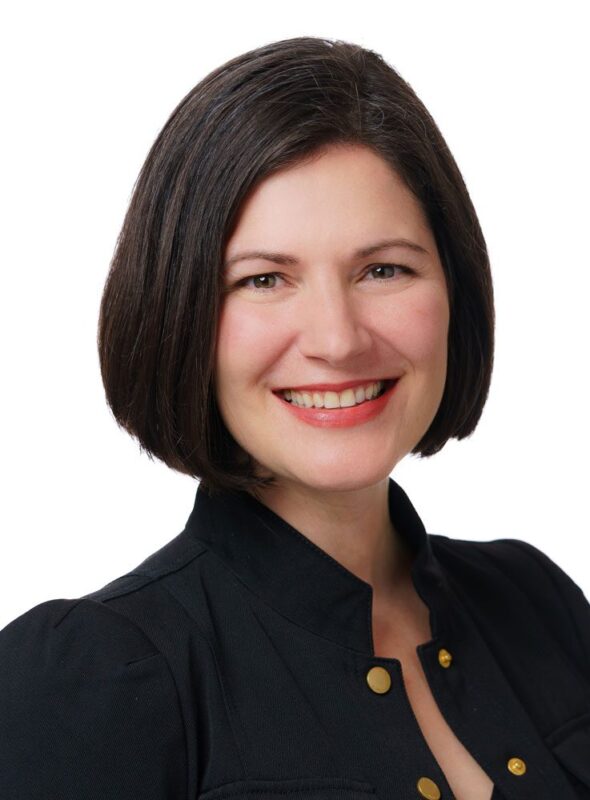
Anne Filipic, CEO of Share Our Strength
Denver: Welcome to The Business of Giving, Anne.
Anne: Thank you so much for having me. I’m thrilled to be here.
“…believe it or not, the numbers have actually gotten worse. It’s now one in five children in the United States are facing hunger, and that’s nearly 14 million kids…And I think what people are most struck by is that there are kids who are facing hunger in every community across America.”
Denver: Anne, when you tell people that one in six children in America faces hunger, what’s the reaction that surprises you most, and how has that shaped how you communicate about this crisis?
Anne: Absolutely. Well, first, believe it or not, the numbers have actually gotten worse. It’s now one in five children in the United States are facing hunger, and that’s nearly 14 million kids.
And I think the thing I’m most struck by is that people often think that hunger is an issue that another country is facing, or if they understand that it affects the United States, they think it’s in some other community. And I think what people are most struck by is that there are kids who are facing hunger in every community across America.
And it’s often, frankly, those in more affluent communities that I think are really shocked to understand that it may be in their community, even sometimes at the schools that their kids are at.
And it strikes me that one of the biggest challenges we have… I think… one of the opportunities we have in this work is that hunger is a solvable problem. And we have enough food in this country for every kid to have what they need. We have programs that work when implemented effectively.
And so that leads me to ask then: Why would one in five kids in this country be hungry? And to me, it comes back to sort of political will, collective will, and a willingness to say: the status quo does not work, and we do not accept the status quo.
And so I think so much of our work, back to your question, is about: How do we raise awareness? And when people become aware, how are they motivated to take action and to reject the status quo and be part of the solution?
Denver: Is there a lack of awareness? I mean, if more kids are going hungry, not fewer, how has that reversal occurred? I mean, are we less aware than we were? Or is there just less political will to do anything about it?
Anne: Well, I would point, when you look at the past decade, it’s actually been I think a really sort of fascinating decade in terms of understanding the power and the impact of these federal nutrition programs. And when I talk about that, I’m talking about programs like school meals, summer meals, grocery benefits like SNAP and WIC.
And what we saw during the pandemic, if you go back to remembering that, and as schools and businesses were shutting down in the early days of the pandemic, we were all, I think, really worried that we would see skyrocketing hunger and poverty among kids.
And what happened is government took action, and they’ve made smart investments, and not just in terms of increasing the funds that were going into these programs, but creating new flexibilities to how these programs could function… and just sort of being willing to make them work better for the communities and the families they were intended to serve.
And we saw that the Child Tax Credit expanded. And all of that added up meant that in 2022, child poverty dropped by half. And food insecurity rates were at the lowest they’d been in a very long time.
And so what has happened is that we have rolled back a lot of those policies, as we’ve gotten farther away from the pandemic. And sometimes not just invested less, but actually sort of gone back to what I would say is a less creative way of thinking of: How do we make these programs work for the families they’re intended to serve?
And then finally, like where we are now is that we know we are really headed in the wrong direction because of what was just passed over the 4th of July, which was cutting these programs even further, and specifically cutting SNAP by $200 billion or about 20% of the program, the biggest cut that SNAP had ever seen.
And so we’re really concerned about what that can mean for these numbers going forward. So that’s why I say, if you look at over the course of the past decade, I think it has really proven the power of these programs when we invest in them, when we think about how to really make them work for the families they’re meant to serve.
And unfortunately, we’re at a place now where we’re going backwards in many ways rather than forwards.
Denver: Yeah. And I think the concerning thing about these numbers going forward is that there may not be any numbers going forward because the USDA recently canceled its longstanding Household Food Security Report, saying that it’s become redundant, costly, and politicized.
What’s your view on ending that survey, not that I don’t have an idea? How might it impact the ability to see what’s really happening on the ground?
Anne: Yeah, I’d say it’s a really concerning development, no question. And as you were just referencing, this report stretches back 30 years.
And 30 years ago, leaders, not just in government, but in government, in the nonprofit sector, in private sectors, they realized that we collectively needed to have a better view into how many people couldn’t actually get enough food in this country. And to me, that’s a pretty fundamental measure of how we’re doing as a society.
And someone who has worked in the federal government and sees both the power of the government and the limitations of the government, this is the kind of thing that the government is really… so no one can do it like the government can. And it gives us unprecedented reach and insight into trends across the country.
And so now that we have 30 years of data, and this connects to what I was just talking about, of looking over the past decade and being able to see the trends that follow when we invest more in a certain policy or roll back another… We need, as the policymakers in this country I would think would want to have that kind of data to understand if the policies that we’re enacting are having their intended effect because that can be really hard to tell in Washington, D.C. if you don’t have that kind of information.
And so I would say, it is extremely concerning that this report is suddenly being eliminated and frankly, it seems like this administration wants to pretend that hunger is a problem that doesn’t exist.
And I don’t think it’s a coincidence that cancellation has come after H.R. 1, which is the legislation that is cutting so much of the social safety net in this country, and specifically SNAP, by the greatest cuts we’ve seen in the history of the program.
And I just finally say, I think to sum it up, that my view is that our elected leaders should focus on eliminating hunger, not on eliminating evidence of hunger. And I wish that our leaders were focused more on that.
Denver: It also eliminates all learning, and that’s the other thing that is upsetting. It’s not only to see how well or bad we’re doing. You can’t learn if you don’t…
Anne: Exactly.
Denver: …know the impact of… both the private sector and the government sector… of what these programs are. And that is unconscionable.
Sitting in your shoes when something like this happens, I don’t mean to put you on the spot, but what do we do? I mean, is there anything that the Feeding America, No Kid Hungry, and the groups in this country and local communities who care so much about this issue… is there any workaround, I guess, is what I’m asking?
Anne: Absolutely. Well, I am in touch, when this all came out, I reached out to my colleagues at the organizations you named and a few others to get on the same page about what we can do going forward. And I’d say a few things.
So first, I think we need… and we put out a statement, I put out a statement about this, and I think one of the things that’s really important is… no surprise that for most Americans, they’re like, Oh shoot, the government’s not putting out another study. What a loss, right? And it just doesn’t feel real to people, and frankly, it’s not their job for it to feel real to them.
I think it is our job as leaders of organizations, whose job is to serve those communities, to help make these programs work better for people, to really tell the story of why it matters in the first place. Because understandably, it can feel like an academic exercise. And so I think the first thing is to tell the story of why it matters and why it has real impact, and how it serves us.
And as you said, so that we can learn. It’s not about holding someone’s feet to the fire so much. It’s just we deserve to have a government whose investments and whose policies serve the people they’re intended to serve. And we need to understand and have the data that tells us if those programs are doing what they’re intended to do.
So first I think, is just telling the story of why it matters and pushing hard to the extent we can to try to reverse a decision like that. And for the decision-makers to feel that it matters, and that those decisions are getting a light shined on them.
Then I would say, if we can’t reverse the decision, then I do think it is a question of how we as a community can try to gather data that paints some level of a picture of the answers to these questions. But I do want to be clear, like there is no way, and this is true for, I’d say, not just a research project like this, but people sometimes say, “Okay, well this legislation was passed. How are nonprofits going to fill the gap?”
And I will tell you that if you talk to heads of food pantries across the country, the answer they will give is, “We can’t.”
Denver: They can’t.
Anne: And people have to understand that we can’t. And so, yes, of course we’re going to do the best we can to pool resources and figure out how can we help fill some of the gap. But we as a society, I think, have to be very careful not to suggest that these gaps can be filled by outside organizations because often they can’t.
“…I would say equity is really central to the work that we do because it is essential to the work we do. Just the name of our campaign, No Kid Hungry, is rooted in the belief that no child should be hungry in this country. And we mean: no child. No child, regardless of your race or your ethnicity, your income level, your status, any circumstance that might contribute to the experience that your family is having.”
Denver: Anne, how does No Kid Hungry Identify and overcome the unique barriers that children in marginalized communities face in accessing nutrition programs?
Anne: Well, first I would say equity is really central to the work that we do because it is essential to the work we do. Just the name of our campaign, No Kid Hungry, is rooted in the belief that no child should be hungry in this country. And we mean: no child. No child, regardless of your race or your ethnicity, your income level, your status, any circumstance that might contribute to the experience that your family is having.
And so for me, for us, if we are serious about ending childhood hunger, we know of course that as I was saying at the start, that there are kids in every community across the country that face food insecurity, and we are here to work with partners in every community across the country.
We also know that data shows that there are some communities that face higher rates of food insecurity. And so if we’re serious about reaching No Kid Hungry, then we are going to use data to guide our decisions about what communities we might invest more in, because we have more progress to make, to reach that ultimate vision.
So for me, it’s about using data to understand where we can have the greatest impact. And it is about a combination of our strategies in terms of both: How do we make these federal nutrition programs that I’ve been talking about, of school meals, and SNAP and WIC, how do we make those programs work better for the kids and families they’re meant to serve? That’s one part of the work.
And the other part is about addressing root causes, and how do we invest? And an example of this is we are investing heavily in work supporting single moms because single moms of every household type in this country have the highest rate of food insecurity of households with kids. It’s actually over 35%.
And so we know that if we can invest in supporting these single moms, not just in accessing federal nutrition programs, but really in terms of increasing their durable income and wealth so that they don’t necessarily depend on those programs to feed their kids, that we can make a huge difference.
So I’d say it’s both in terms of, to me, how you just think about this question and what it means to implement work that is with the vision of No Kid Hungry and how we support communities all across the country. And also thinking about the specific strategies that we can invest into to see that outcome.
Denver: Yeah. It’s an interesting question because you are expanding, Share Our Strength is expanding to address poverty’s root causes as you just said. But you’re trying to do that, I would imagine, and manage that evolution without diluting No Kid Hungry. Is that a tricky balance to keep?
Anne: It can be in the sense of, one of the lessons that I’ve learned working on a wide range of issues over the course of my career is that so many of the issues that we face as a society are so interwoven with other issues, right?
Denver: Yeah.
Anne: And so, of course, there’s an element of intersectionality that you need to embrace to truly address these challenges. And that’s part of why we have said if we’re serious about ending childhood hunger, we have to get to the root causes. You’re like… We believe strongly in the power of making school meals more effective. But does any of us think that is the only thing that’s needed? No.
So we have to expand our aperture. However, the big lesson I’ve learned is: You can’t boil the ocean. And so for me, how I think about this is: we are committed to ending childhood hunger. As part of that, we are committed to addressing poverty, but all of the work that we do is through the lens:Our root cause work is all connected to our vision of No Kid Hungry. And we are going to make sure that our focus remains on: How do we get fewer kids who are in a position that they have to depend on these programs, while also making these programs more effective and more accessible for so many?
And so to me, it’s just making sure that we keep that lens of sort of thinking big about what it will take, but recognizing that our root cause work is not a separate initiative outside of No Kid Hungry. It is part of No Kid Hungry because that is what it will take to truly achieve our mission.
Denver: Yeah. I do think that’s an evolution we’re seeing in the sector, that people are beginning to realize you have to have programs that align with how people live their lives. And you just can’t put it into a very… because it won’t work and…
Anne: Exactly.
Denver: You know, the kid can’t get to school, or he can’t do this, or he can’t do that. They’re all connected.
Let’s talk about school for a minute. What’s the most significant challenge school administrators face in feeding students that the public maybe doesn’t fully understand?
Anne: Oh, wow. Well, first can we just pause for a second and just…
Denver: Yeah.
Anne: …praise the school administrators of this country, both as a mom of three young kids and who’s awed by their teachers and administrators.
And I think one thing that makes me sad, as someone who does a lot of work on federal programs and currently focused on federal nutrition programs, is that so often when we reduce our investments in those programs, that the people who are feeling it, of course, are those the beneficiaries of those programs. But really, it’s the leaders on the local level who are working their tails off and doing the best to make these programs work for their communities.
And in the case of school administrators, for the students and the families that they serve. And so there are many things I would say. I think staffing challenges have been very real, and I think that affects so many aspects of the work, but including when we think about school meals, inflation, the cost.
I’ve visited and talked with many nutrition directors, and talking about just how to navigate just the budget, and how extreme… think about what we all experience of just going to the grocery store for our family. When you multiply that by thousands in terms of the kids that a school district is serving, just making the numbers work.
And then I would say, just the logistics of all of it. And this gets back to this question of: What can we, from the outside, as an outside organization do to work in partnership with the government and in partnership with local organizations to make these programs work better?
And I think school meals, and one area that a decade ago, long before I was at Share Our Strength, that they invested in was school meals, and particularly breakfast. Because only a small percentage of kids who were eligible were participating in breakfast. And so I think you go through this journey of asking why. Why is that?
And one of the things we saw was that just logistically, it didn’t work the way the program was designed and often implemented at schools wasn’t working, that you had to go sit in the cafeteria and get your breakfast, and maybe your bus was showing up after the time that that was available.
And so then we started to say: How do we get breakfast in the classroom? Because we know and so many teachers know the importance of what it means for a kid to have a full belly while they start the school day. Well, logistically, how do you pull that off?
And so we invested in really common-sense solutions like helping to get breakfast carts, food carts to bring the food into the classroom. And so often, what really strikes me about this work is so often, when we’re trying to implement these programs and policies, that it is about common sense solutions.
And the challenge is not about dreaming up the solution, it’s about being rooted in community to really hear and understand what’s working and what’s not working, whether it’s from teachers, school administrators or families themselves, and then figuring out how to take that action at scale. So that more and more schools and school administrators have the resources they need.
And as I said, sometimes it is as simple as a meal cart to bring food from a cafeteria and to a classroom. And that changes the experience of a child in their school day. And when you take that to scale, millions more kids participating in the breakfast program and thus, much more able to participate in the learning that their school experience is designed to do.
Denver: It blows you away sometimes the tremendous impact little changes can have.
Anne: Yes.
Denver: I remember speaking to a cosmetic surgeon once who told me they’re changing a fraction of an inch or they’re doing this, and it can change how a person looks. And in this regard, the conversation I had with Billy Shore a number of years ago, in some places he told me, all they did is do it for the first 10 minutes of class instead of in the cafeteria.
And a program, which was a failure, became a tremendous success … and we’re always thinking of big solutions, and sometimes these little solutions have the big impact.
Anne: Absolutely. I am such a big believer in that, and the challenge is not, again, in sort of dreaming of the solution, it is: How do you implement that at scale? How do we really, and what is the role that a national nonprofit organization can play in supporting that?
And that frankly is a big part of what brought me to Share Our Strength, is like I’ve worked on healthcare implementation, I’ve worked on civic engagement, I’ve worked on so many things, and I am just frankly a believer that that is sometimes the most effective role that a nonprofit can play– in thinking about how to do the work that is local in nature, because I think that’s where most change happens, and national in scale and scope.
And I think I am lucky to have joined an organization a few years ago that I think was thinking that way. And it’s a joy to be able to contribute to that.
“And then the third thing I’d point to is what we’ve talked about regarding root cause work. We know that childhood hunger does not exist in a vacuum. And if we are serious about No Kid Hungry, we have to think about how poverty, hunger, and all these other issues are linked. And again, committed not to trying to boil the ocean, but to make investments, investing in local organizations who’ve come up with innovative solutions to support single moms.”
Denver: Well, how are you trying to reimagine the role of Share Our Strength No Kid Hungry beyond the root causes? Is there anything else that you’re thinking about in terms that will be the trajectory over the next decade?
Anne: When I think about our areas of focus over the next several years, I’d say really three things that I’m focused on. The first is really about meeting the moment that we’re navigating now because I really do think we are entering… someone told me once, you’ve really got to stop saying “unprecedented” because we keep using that phrase over and over again, but…
Denver: Yeah, sort of like a once-in-a-century storm that happens about every 18 months.
Anne: Yes. Yes, yes. But I do think particularly when it comes to hunger in America, I am really concerned about the policy decisions that have been made and what that sets us up for. And this specifically, this $200 billion cut to SNAP, is going to be felt in every community. And so we’re really focused on: What can we do to help?
This includes supporting states, and part of what was included in this legislation is a lot of transferring costs to states and state leaders who I think are pretty flummoxed in terms of how they can manage it. So what’s the role that we can play in making smart investments to pilot new approaches, to share best practices, to really develop that community of practice of sharing information as we go forward?
And also in terms of communicating with families and to help make them aware that these benefits do still exist, and that we don’t have people falling off because they’re confused or because the red tape is too much or whatever the case is. We want to make sure that those who are eligible are still participating.
So first, that is a really important body of work. And I think we at Share Our Strength building on what we have learned, the relationships we’ve built, the lessons learned over the last few decades and in particular the last decade, can really position us well for that. So that’s sort of the first thing I’m thinking about.
Denver: Yeah.
Anne: The second thing that we’re really focused on is really trying to do everything that we can to make new summer nutrition programs as effective as possible. And it is a statement of the moment we’re living through that we have gotten this far in the conversation without discussing the summer nutrition programs because this has really been a game changer in terms of federal nutrition policy over the last few years.
And to put this in context, now traditionally, summer has been the hungriest time of year for kids. We think of it as a sort of easy-breezy time for kids. But for kids, that 30 million kids who participate in the school meals program, so many of them– frankly fewer than 3 million just a few years ago– were participating in the summer meals program.
And it really goes back to what we were saying about school meals, which is the way the program was designed was not meeting the needs of families. So it really required: You have to go to this cafeteria every day, sit down and have the sandwich if you want to eat.
And that may be fine if it’s in the school across the street from you. But imagine you’re in a rural community and the nearest location is 20 miles away, and your parents are working. I don’t think you’re going to go get that sandwich and that apple and that carton of milk.
And so a few years ago, based on a lot of pushing from us and others, Congress really passed legislation that changed the way that that program is implemented, making it possible both for families to get grocery benefits over the summer to help buy more food for their kids, and also to increase the flexibilities of how you get those prepackaged meals that are available.
To just give you a sense of the success we’ve seen: If a few years ago, fewer than 3 million kids were getting access to any kind of summer meals, last year nearly 19 million…
Denver: Wow.
Anne: …participated in the summer EBT program; that’s like grocery benefits. So in just a few years, we have seen tremendous change.
And this is… I think of this as we’re not just there for the rocket launch, we’re there for the rocket landing, and it really goes back to these common-sense solutions and how we, community by community, work with the state agencies, with the schools, with the local community organizations to bring this to life.
Denver: You remove friction.
Anne: Yes. And it is working, and it is having a huge impact. And then the third thing I’d point to is what we’ve talked about regarding root cause work. We know that childhood hunger does not exist in a vacuum. And if we are serious about No Kid Hungry, we have to think about how poverty, hunger, and all these other issues are linked.
And again, committed not to trying to boil the ocean, but to make investments, investing in local organizations who’ve come up with innovative solutions to support single moms. And we believe that by supporting this community, investing in single moms, who by the way I would argue, are the superheroes of our society, that we can have…
Denver: Absolutely.
Anne: …outsized impact on this issue.
So these are, I’d say three… if I could boil it down to three top areas of focus, I’d point to those three.
Denver: Well, you did it very well. And as far as your summer program is concerned, if I remember you had the coalition of business leaders who went out… like $50 million. What unique influence do CEOs bring to this fight that maybe other partners simply can’t?
Anne: Oh, yes. You’re referencing the CEO Pledge to End Summer Hunger, which is something we launched a couple years ago. And we’re coming up close to 20 CEOs who’ve pledged.
Denver: Okay.
Anne: Many from the restaurant industry, but also Macy’s and Kia and some really huge brands across the country.
And I would say a few things. I think CEOs… and by the way, it really brings me back to the name of our organization, Share Our Strength. The thinking behind that, founded 40 years ago, is that if we’re serious about ending hunger.. or I would argue, addressing any of the challenges, major societal challenges of our time, we all have a role to play, and we all have a strength to share.
And it can’t be only the government and nonprofit leaders who are thinking about how to share their strengths. And that is part of what I think is so special about our community of changemakers.
And the CEO Pledge is one example where we have CEOs who, yes, are thinking about how their organizations can make a financial contribution, which can take a whole variety of approaches. But I’d say sometimes even more significantly, it’s how do they use their platform to raise awareness back to where we started this conversation.
Denver: Yeah.
Anne: And it’s to raise awareness about the issue and to raise awareness that there are solutions that we can be investing in, that we don’t just have to accept this as the status quo, as what life in America needs to look like.
And there is something, and I think in particular in this hyper-partisan moment that we’re living through, that when people who are not on one side of the aisle or the other, who are thinking about how to lead their organizations and make the world a better place for so many, but not necessarily and not often through the lens of policy or politics, that when they say, This isn’t about politics, this is about the kind of country that we can all agree we want to have.
So I think there’s so much power in that as well and speaks to the approach that we at Share Our Strength take– is we’re clear-eyed about the kinds of investments that we need to make as a country. And we are committed to working with a wide range of partners to make that vision a reality.
And the CEO Pledge is a great example of that. And we’re lucky to have, as I said, Macy’s, Kia, Domino’s, Fogo de Chão; a lot of iconic brands have lined up behind it.
Denver: Yeah. Let’s talk a little bit more about those partnerships because Share Our Strength has always been an incredibly innovative organization. So when I was at the Statue of Liberty, we had the first corporate sponsorship campaign ever. It was with the American Express and restoring the Statue of Liberty.
And I remember the one Amex did right after that was Share Our Strength. And I’m like, who is Share Our Strength? This is now in the mid-1980s. How did an organization like that rate? But you can always tell a lot about an organization, about its founding. And right from the very outset, it was doing very interesting and innovative things. And it’s continued to do that, engaging chefs and companies and creative campaigns.
Talk a little bit about some of your more innovative partnerships and what it’s doing, not only to generate funds, but as you mentioned, to sort of build that awareness.
Anne: Yeah, absolutely. And I give a lot of credit… you mentioned the founding, and so we got to give a shout out to our co-founders, Billy and Debbie Shore, siblings, who now over 40 years ago launched Share Our Strength.
And it is, I often say like, I think so often nonprofits are created by sort of saying, “Okay, here’s a societal problem. Here is the programmatic intervention that we think is needed to solve that problem.” And then you say, “And how do we get the funds to support it?”
And what often happens in that journey is everyone is going back to the same funders and saying, “Will you please share a piece of the pie so we can do this important thing?” And what I think is fundamentally so innovative about Billy and Debbie’s approach in thinking 40 years ago was that they were rooted more in: How do we expand the pie? How do we get more people involved?
And it goes back to this vision of what it takes to solve hunger, to address any of the pressing challenges that we face is, it takes, yes, resources from a wide range of players, but it also takes that sort of personal investment. And so I think that is fundamental, that’s like in the DNA of the organization.
And that way of thinking, I think, is part of why we see so many of our partners and I think why so many corporate partners are eager to partner with us is: it’s not just about the funds to do the work. It’s like this is part of the work, right?
Denver: Yeah.
Anne: Like bringing together this community of changemakers and thinking about the strengths we all have, it’s just sort of fundamental to what it takes to address the issue. So I think that’s just fundamentally really innovative, and I feel lucky to have joined this organization.
And so we talked a little bit about corporate CEOs. Maybe a couple other examples I would give is: actually a lot of those partnerships 40 years ago started with chefs and in the culinary industry.
And so that is Taste of the Nation, which maybe some of your listeners have heard of, which was I think kind of really tapping into a cultural moment and thinking about: How do we create an event that the best chefs of a city are cooking or creating this incredible dining experience, but people are coming together as part of a community with a shared vision for our world?
And we even, now we have our chef champions… they come to Capitol Hill to meet with members of Congress and to talk as small business owners about why this issue matters to them.
I’d also point to… this is not in the corporate category, this is about mayors across the country. We have the Mayors Alliance to End Childhood Hunger and now having launched this a few years ago, we now have over 500 mayors from…
Denver: Wow.
Anne: …every state across the political spectrum. That’s really important to us.
And I always say, mayors are like the doers. So when it comes to…
Denver: They really are.
Anne: …elected officials, it’s really not about politics, it is about: Are you delivering for your constituents in your community? Because they’re showing up at your door if you aren’t.
And so we are really proud of this coalition, this bipartisan group that we’ve brought together, who are really thinking about: What are projects they can take on at the local level while also advocating federal policymakers in terms of policy changes we can make?
So those are just a few examples, but I think it’s all rooted in this belief of maybe the most powerful thing we can do is just bring more people into this, and not just for the sake of a name on a page or to have coalition after coalition, but to really get specific about what are the unique strengths, the unique skills, the unique assets that each individual can bring to the fight because that’s what it’s going to take.
And I do believe that is the path to ultimately achieving our vision and ending childhood hunger.
“…if you don’t focus enough to really be able to learn to make a difference and to have an impact, then you really have no chance of taking it to scale. And so being patient with the process and being able to embrace that this thing alone won’t solve it all, but there’s something about the lessons we can learn about it and the way that we approach it that can be replicable and is part of solving the bigger problem.”
Denver: And they get so much out of it when they do come together as well. Aside from just helping the problem, it is such an enriching experience.
Finally, Anne, Billy talked about picking battles big enough to matter, but small enough to win. How does that principle guide your leadership today, and where do you draw the line between what’s achievable now and what must remain aspirational?
Anne: Yes. We still use that phrase in the organization, and I connect it to a phrase I used earlier, which is one I embraced a decade ago, which is: Don’t try to boil the ocean. Right?
Denver: Yeah.
Anne: And I think that’s one of the things that makes Share Our Strength so special. And I’ll use the investments we’ve made in summer as an example of that. We understand that addressing summer hunger alone will not lead to ending childhood hunger in every community across the country.
However, it can have a meaningful impact, and frankly by getting some wins here on this issue, the progress we’ve already seen and ultimately getting to 30 million kids participating in these programs, not only does it mean that 27 million more kids are getting summer meals, but we can learn about best practices.
This is basically setting up a new benefits program. And it’s understanding if we can build it from the ground up in a way that works for families, we can glean lessons from that that apply to a lot of other programs… Certainly programs like SNAP at a time that I think we are going to have to really make some big innovations into that program for it to work going forward.
But I’d argue actually in a whole bunch of different programs that are not focused specifically on childhood hunger. And so for me it’s about: How do we think about testing, learning, being rooted in the brilliance and the expertise of local leaders?
And then as I said, bringing it back to scale of once you learn a lesson of something that can work, it’s not that it can be replicated exactly the same in every community because every community is different, but you learn lessons.
Denver: Yeah.
Anne: And when you bring people together, share that knowledge, and create that community of practice, then that’s how things take off. And so for me, if you don’t focus enough to really be able to learn to make a difference and to have an impact, then you really have no chance of taking it to scale.
And so being patient with the process and being able to embrace that this thing alone won’t solve it all, but there’s something about the lessons we can learn about it and the way that we approach it that can be replicable and is part of solving the bigger problem.
So it is definitely, I think, a big part of how we think about the work at Share of Strength and that phrase, “Choose battles big enough to matter and small enough to win,” is something we talk a lot about.
Denver: Yeah. Yeah. And you build your credibility when you focus because you can actually begin to solve a problem. When you’re spread so thin, yeah, you make a little bit of difference, but you don’t get a real win anywhere.
Anne: Exactly.
Denver: And you need that credibility because it will make the next one you take on that much easier.
Anne, for listeners inspired by this conversation, what’s the best way for them to learn more about Share Our Strength No Kid Hungry? And if they’d like to make a financial contribution, where do they go?
Anne: Yes. Well, go to nokidhungry.org. You can learn more. You can both take action if you want to join us and get your voice out there in terms of why this issue matters. You can also make a contribution.
And I’d also say in addition to that, like spread the word many times. Like when you say, one in five kids in this country is hungry, people are truly flabbergasted by that stat. So share the story, encourage your friends and neighbors to get involved because I think that is ultimately how we build that collective will, disrupt the status quo, and ultimately end childhood hunger.
Denver: Absolutely. Anne, I want to thank you so much for being here today. What a delightful guest. And we are all so grateful for the critical work that you and your team are doing to end childhood hunger in America.
Anne: Thank you, Denver. It’s been a real treat. Thanks so much for having me.
To celebrate my 50th year in the nonprofit sector, I’ve put together a gift for you — a practical, field-tested guide to building world-class nonprofit workplace cultures. It’s called Cultivating Nonprofit Excellence, and it’s based on insights from nearly 1,000 interviews and 150 focus groups with nonprofit leaders around the globe. It’s completely free and instantly downloadable at blanchedalmond-mosquito-418475.hostingersite.com