

Few organizations have redefined what activism looks like in the 21st century more than Global Citizen—a movement that began with three high school friends in Australia and has now mobilized millions of people worldwide, leveraging over $49 billion in commitments that have impacted 1.3 billion lives. At the center of this extraordinary transformation is Hugh Evans, Co-Founder and CEO of Global Citizen.
Hugh was inspired by Nelson Mandela’s revolutionary declaration that overcoming poverty “is not a gesture of charity, but it’s an act of justice.” From securing $250 million from Norway’s Prime Minister through a strategic Twitter invasion to pioneering the use of music festivals as diplomatic summits, Global Citizen has cracked the code on making world leaders accountable to the world’s most vulnerable.
As Hugh puts it: “The core idea of Global Citizen was all based on this fundamental belief that we can eradicate extreme poverty within our lifetime.”
In today’s conversation, Hugh reveals how technology, focus, and relentless innovation are reshaping the fight against extreme poverty.
It’s Hugh Evans on The Business of Giving.
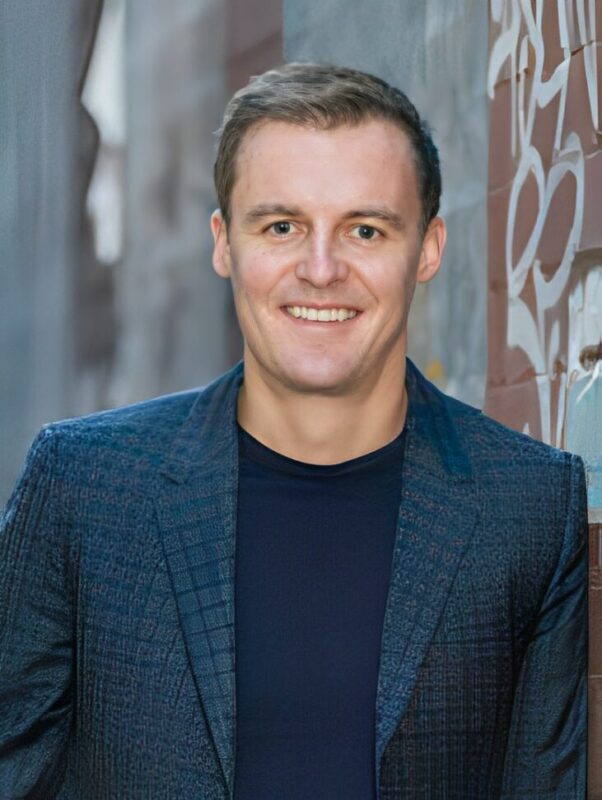
Hugh Evans, Co-Founder and CEO of Global Citizen
Denver: Welcome to The Business of Giving, Hugh.
Hugh: Thank you so much for having me, Denver. It’s great to be here.
“…the core idea of Global Citizen was all based on this fundamental belief that we can eradicate extreme poverty within our lifetime.”
Denver: Global Citizen has grown from three high school friends in Australia to a worldwide movement. Looking back, Hugh, what was the core idea you were most certain of at the beginning? And what has surprised you the most about how it has all evolved?
Hugh: Well, I mean, the core idea of Global Citizen was all based on this fundamental belief that we can eradicate extreme poverty within our lifetime. And when we were much, much younger, just finishing high school and into first few years of university, we were deeply inspired by what Nelson Mandela said in one of his final speeches in Trafalgar Square in 2005, when he said that overcoming poverty is not a gesture of charity, but it’s an act of justice.
He said like slavery and apartheid, poverty is not natural. It’s manmade and can be overcome and eradicated by the actions of human beings. And in that idea, like two really important truths that have really stayed with us throughout the entire duration of Global Citizen. One, that extreme poverty can be eradicated, and two, that it’s not going to happen through traditional charity alone. That we need to change the systems that keep people poor, and we need to mobilize billions of dollars to help eradicate extreme poverty.
And so when we started Global Citizen, we wanted to leverage, as Mandela said, the actions of human beings. And so we said from day one, we don’t want people’s money per se, even though money and resources are extremely valuable. We wanted to use their actions to leverage multi-billion-dollar commitments for the eradication of extreme poverty, i.e. If you could show world leaders that there are millions of citizens who care about these issues, then you can actually secure billions of dollars for the eradication of extreme poverty.
And over the last 13 years, our movement has deployed $49 billion in commitments that have impacted the lives of 1.3 billion people around the planet. And so that’s probably the thing that stayed with us the entire duration. I think the thing that has surprised me the most, to the second part of your question, is that because it’s a movement, you can’t really predict its trajectory. And the trajectory that I envisaged when we first started… we actually started with a presentation called 1.4 Billion Reasons because we were inspired by what Al Gore did, and we wanted to see if we could tell the story of the eradication of extreme poverty.
I didn’t know that we would grow into a movement of millions of citizens around the world, that our home Central Park and the Great Lawn would become the centerpiece of our growth into multiple markets, that we would expand into thought leadership with Global Citizen NOW, that we would partner with heads of state like President Ursula von der Leyen of the European Commission. I didn’t know where it would go from day one, but I’m really thrilled that we’ve been on this journey, and we’re leading up to this year’s festival more passionate than ever before.
Denver: From your perspective, Hugh, what makes an action truly transformative? Not just symbolically powerful, but system shifting in the fight against poverty?
Hugh: Well, alone, we can feel like our voice doesn’t matter. It can feel like, okay, if I write a letter to a member of Congress, I’m just one voice. But if you can see visually that you’re part of a movement of people… and we’ve demonstrated this through the Global Citizen app; you can see that like on any given action, you can see that people are taking action in real time, and you can see that millions of other people around the world are doing it at the same time.
Now, what we’ve discovered is that actions have evolved in their political pertinence over many years. So when we first started Global Citizen, we were one of the first to innovate around the use of, say, Twitter, and as a vehicle to reach out to political leaders or to business leaders or to philanthropic leaders. These days, that’s less pertinent. What’s far more pertinent these days are user-generated actions, where users create interesting content that has the potential to go viral, and then they tie that into a call-to-action to a specific leader.
So for example, right now you can leave a video message within our app calling on President Macron and also the Chancellor of Germany to protect the Amazon Rainforest because both of those leaders have historically supported the Amazon Fund, but they haven’t done so in recent times. And so you can post those videos to Instagram, tag world leaders, and then we’ll swarm the video with comments. And we’ve found that this is a much more effective vehicle to get people’s attention.
Earlier this year, for example, we were working to support Gavi, the Vaccine Alliance.
Denver: Yeah.
Hugh: And this was a really effective strategy we adopted in the UK, France, Germany, and across Europe. And we were able to work with Gavi on ultimately securing over $7.5 billion in financing for vaccines and immunizations, despite the fact that the Trump administration has recently cut foreign aid. So it was a historic breakthrough in the circumstances, and I think this is emblematic of recognizing that you have to evolve the ways in which actions are effective. But it’s the same basic principle, Denver, that you need millions of citizens taking action in unison.
Denver: Yeah. And you know what was really noteworthy there is it seems that today’s young people, they want to be creators. They don’t want to spread a message that somebody else has provided them, but they…
Hugh: Correct.
Denver: …want to create their own messages and get more intimately involved. And I would imagine that the multipliers and the creativity of all that really has to be breathtaking.
Hugh: Exactly right. I think you’re exactly right about your analysis around people want to be creators, and we have to provide a platform that enables that.
Denver: So $50 billion committed impacting over a billion lives. Wow. What systems, Hugh, do you use to ensure that a lot of these pledges translate into meaningful, durable changes and are not just headlines that are there for the day?
Hugh: We have an entire team that is focused on monitoring evaluation, and their job is to track every single commitment made by a policy leader or a philanthropic leader, and hold their feet to the fire until they’re followed through with it. And that’s coupled, by the way, with our board members. Like for example, Randall Lane, who’s the chief content officer at Forbes Magazine.
We then will publish in the press: Our world leaders have gone to follow through on their commitments. And we also apply this internal test on a commitment, which is: Are we just platforming a commitment that was going to happen anyway?
Denver: Yeah.
Hugh: Or, but for Global Citizen’s involvement, were we able to get an incremental commitment?
And the incremental nature of that commitment is what we claim. So when I talked about the $49 billion earlier, we’ve had far more than that. We’ve had hundreds of billions of dollars announced on our stage, but we don’t claim that. We’re happy to platform good announcements because we believe that it’s better to propagate good than to propagate the alternative.
And so it’s good to enable the right leaders who want to make a difference, but we only claim the commitments that we know incrementally resulted from the advocacy of our members. And as a result, we can track those, and we have an entire policy and advocacy team whose job it is to track, monitor, and hold world leaders’ feet to the fire.
Denver: Cool. What you have done differently than maybe a lot of these other music festivals that preceded you that got a lot of headlines and got a lot of commitments, but you’ve used a music festival and you’ve used it as a diplomatic lever powerful enough to secure major policy and funding commitments?
So is there a moment in these 13 years where you began to say, this is how we’re going to differentiate ourselves and get those follow-throughs on those commitments?
Hugh: Well, I mean, we were initially inspired by, when I was much younger and I was studying lore, I was inspired by what I saw Bob Geldof and Bono do around the time of Live Aid. And me and my mate, Dan, we had this idea to run a concert in Australia called Make Poverty History that we thought was going to be a relatively small concert.
And then one day, I was in the library and Bono called, and he said in his rich Irish accent, he said, “Hey boys, I’m coming to Melbourne. I want to perform at your concert. Is that all right?” And I thought it was a joke at the time and I thought it was a prank call, like one of my friends was having me on. But sure enough, he did come on first and he sang Rockin’ In the Free World with Pearl Jam.
Denver: Oh yeah.
Hugh: And we signed on a million Australians behind our campaign. And that was really the inspiration that ultimately led to the founding of Global Citizen.
But I think the differentiation point to your question came through our technological innovation. We know, and by the way, we still need to innovate. AI has fundamentally changed the way in which user-generated content works these days. So to your question earlier about people want to be creators, you’re exactly right.
We knew in those early days that we needed to leverage the power of specific platforms to target specific world leaders. For example, when we were very, very early in our evolution, Hugh Jackman and I went on Stephen Colbert’s show, and we worked with him on what we call the Twitter invasion of Norway, where we called on the Norwegian Prime Minister… at the time, Erna Solberg, to increase funding for girls’ education because no one had supported education at the time.
And this was one of the best multilateral education organizations out there. And we got so many tweets to the Norwegian Prime Minister that night. The next day she called me from Oslo, and she said, “Come to Oslo immediately. I’m getting so many tweets from Global Citizens. I can’t see any tweets. I need you to come and turn them off.”
And I flew to Oslo. We sat down and we said, we’re happy to turn them off, but we need you to make a commitment to education. And she announced on our stage a $250 million commitment to education.
Denver: Wow.
Hugh: And now, that went on to an entire huge funding round that I worked with the former Prime Minister of Australia, Julia Gillard at the time. But now that we are pivoting hard into AI, we need to absolutely be at the forefront, and we are redesigning our entire product roadmap right now to ensure it’s in line with where AI is going.
Because if you look at the most effective that use intrinsic human motivations, let’s say Duolingo is one of the best apps out there for intrinsic human motivation, they don’t have a sophisticated rewards mechanism, but all of their rewards are intrinsic, which makes it even more powerful. And I think the same needs to be true for Global Citizen.
“…I’ve always found that focus matters immensely. Like this year, we have four big focal points that we’re driving for this year’s campaign. One of them is to provide access to education for 30,000 children. So we’re calling on the leaders of Fortune 500 companies to invest $30 million into children’s education to help 30,000 kids learn to read and write in partnership with FIFA.”
Denver: Yeah, and I love the idea of focus. Sometimes when we think about organizations like yours and the big causes, it’s global in so many different ways.
But that story about Norway is, there’s so much to be said about focus and looking at an individual or an institution and looking at a cause, and really with a laser-like focus, get there and get them to do something. And that was really an impactful way of explaining it.
Hugh: Yeah, I’ve always found that focus matters immensely. Like this year, we have four big focal points that we’re driving for this year’s campaign. One of them is to provide access to education for 30,000 children. So we’re calling on the leaders of Fortune 500 companies to invest $30 million into children’s education to help 30,000 kids learn to read and write, in partnership with FIFA.
We have nearly established FIFA Global Citizen Education Fund, and it’s responding to the fact that there are 250 million kids around the world that lack basic literacy skills. And we hope that by the time of the festival in two weeks’ time, we’ll be able to see over $30 million raised for the fund, which would be phenomenal.
We also had set in ourselves the objective of protecting 30 million hectares of the Amazon rainforest. And as I mentioned earlier, we’re calling on Germany, France, and we’ve already got a commitment from the Norwegian government to give $200 million to protect, restore, and rewild the Amazon rainforest. And this is an area of size equivalent to the size of Italy. And it’s going to keep 20 billion trees standing.
And then the third big pillar that we’re focused on this year is to call on the leaders of the UK, Denmark, and Australia to support businesses who are willing to invest in renewable energy in Africa, but need subsidies to be able to do so. Because I think there’s been this big pivot globally from aid towards investment.
And this is a typical example of that, where we know that if you can provide first-loss capital and currency hedging, you can leverage public dollars to get enormous amounts of private sector investment, which can be very powerful. And then here in New York, we also want to mobilize 40,000 New Yorkers to volunteer. We did a big volunteer day over the weekend at Bowery Mission.
We’re doing one again on Friday, where we’re going to be cleaning up the Canarsie Pier in Jamaica Bay. And then we’re also encouraging people all around the world to register through our partnership with Goodera to become volunteers and support people with skills training wherever they are on the planet.
Denver: That’s a very delicious menu, Hugh, I must say. What do you think it is about music that has such unique power to mobilize citizens in ways that traditional activism or policy arguments… they just simply can’t measure up?
Hugh: I think music has always been the great uniter, and it’s always been the anthem of movements. Like if you think about the movement to end apartheid and songs like: We will march on Pretoria, which is obviously one of the capitals of South Africa, or if you consider even songs like Amazing Grace that go back to the anti-slave trade movement of the 1800s, most people don’t know that song was written by a reformed slaver.
And so this music has always been the anthem of movements. And I think today is no different. I actually think it’s exciting to see how new musicians come up with modern day anthems. We’re also increasingly seeing the power of sport to unite people. That’s our partnership with FIFA and the FIFA Global Citizen Education Fund. I think we’ve seen, again, and fresh, just how powerful sport is also to unite people.
And that’s why we produced the halftime show for the FIFA Club World Cup that took place this summer, headlined by J Balvin and Doja Cat and Tems and Coldplay. And then why we’re working diligently to produce the halftime show for what will be the most viewed event in history, which is the World Cup halftime next July.
Denver: Oh, wow. Well, you’re right about sport, I guess, because at least from my mind, it’s about the only thing that we collectively watch together. We never watch the news together anymore. We don’t watch any shows together. Sport is about the only time when you have a truly communal moment where people come together and watch a live event.
Hugh: It is true. That’s exactly right. Exactly right.
“And I’ve always believed that job creation is the closest you have to a silver bullet for the eradication of extreme poverty. And really, the only way you create jobs in the long run is through the private sector and backing entrepreneurs.”
Denver: We talked a little bit about governments. Let’s talk about corporations, who some of your major sponsors are, and what you do to hold them accountable to their commitments.
Hugh: Well, at the moment, we’re calling on many corporations to support the FIFA Global Citizen Education Fund because it’s a very practical way. At a time when the world is so fragmented, we really do believe that education is one of those great uniters, and so we’re calling on so many of our corporate partners to step up and support the FIFA Global Citizen Education Fund. And we have some big announcements that we’re going to make at the festival this year.
We also are working, as I mentioned earlier about the power of public-private partnerships, to encourage a range of energy companies to invest more in renewable energy across the African continent, backed by financing from governments that believe in the power of public-private partnerships.
So we announced a partnership between Global Citizen, the European Commission and the South African government called the Scaling Up Renewable Energy campaign. And we set ourselves this ambitious goal ultimately of trying to leverage over a billion dollars in financing to support renewable energy projects across the continent. But to do that, you need the private sector.
Denver: Yeah.
Hugh: You need companies to ultimately agree to invest, and they will argue, Well, it’s too risky to invest in Africa. They will be like, Well, are we really going to get the return? And this is where you can make the case. And I think institutions like Rockefeller and our friend, Ruchir, and the World Bank have made the case compellingly, and I credit Ajay Banga as well for this, of demonstrating that actually if you provide currency hedging and a degree of first-loss capital, then you can turn what is a risky environment into a highly valuable environment for investment.
And I’ve always believed that job creation is the closest you have to a silver bullet for the eradication of extreme poverty. And really, the only way you create jobs in the long run is through the private sector and backing entrepreneurs. You have to back those riskier projects, or otherwise you’re not going to create jobs and you’re not going to alleviate poverty in the long term.
Denver: And you need those impact-first investors. And there’s probably nobody any better at that than Rockefeller.
Let’s stick with Africa a little bit. Global Citizen is expanding significantly across Africa. What does a distinctly African version of this model look like? And Hugh, how might it reshape the DNA of the movement globally?
Hugh: Well, next year we’re expanding the Move Afrika tour to three countries. And this is the first of its kind large-scale touring circuit across the continent to invest in the local economy and create jobs because we knew that when we looked at how to really make a difference across the continent… I’ve had the good fortune of living on the continent for many years…
I lived in South Africa for two years when I was a kid, in the Valley of a Thousand Hills in KwaZulu-Natal, but I’ve also traveled extensively across the entire continent. And I think the thing that people say across the continent is, again: We want jobs because jobs are key to economic growth. But they also identified that the creative economy is a way to create jobs, and many people weren’t invested in the creative economy.
Like if you consider the fact that when a huge artist, all the biggest artists, when they announced their so-called world tours, most of them skip Africa entirely, or they’ll just do a show in Joburg or Cape Town. Not really across Sub-Saharan Africa at all. And so we said with Move Afrika, we wanted to demonstrate that you could work with 90% local crews, ultimately get to a hundred percent local crews.
And we piloted this with Kendrick Lamar in the first year in Kigali, and then last year with John Legend, also expanding from Kigali, Rwanda to Lagos, Nigeria. Next year we’re going to be taking it to three markets, and then we’re going to expand rapidly after that. But the whole premise is we have to employ locally, train locally, create jobs, and create sustainable jobs, and try to demonstrate that this can be done at scale.
It’s a really tall order, but we believe it can be achieved. And I am proud to see more and more partners investing in quality infrastructure across the continent. There’s a new arena that Live Nation is investing in Lagos, Nigeria, for example, which is a creative hub and is urgently needed. And so it’s great to see more and more people investing in infrastructure that will help the creative economy flourish across the entire continent.
Denver: Absolutely. I’m often asked about the future of philanthropy, and I advise anybody who’s concerned or wants to know about it, to look at Africa and to look at the Global South because all the changes over the next 10 years are going to be coming from there.
How have you cultivated a culture at Global Citizen where starting, iterating and making imperfect progress is embraced as a strength rather than a weakness?
Hugh: It’s interesting, we had a board meeting this past week, and we were talking a lot about our culture at Global Citizen. And I emphasized two points in relation to our culture that I think have to be as true today as they’ve ever been for us. The first point is that we never set out to create an institution. We set out to build a movement and to grow and nourish a movement. So once extreme poverty is ended, Global Citizen should end.
We don’t need to create the jobs of our employees. That’s not why we’re here. We’re not trying to perpetuate an institutional approach. We always have been about movement building. So we don’t want to be the next Save the Children. We don’t want to be the next UNICEF. We’re not trying to be the next institution. We want to be the movement for the eradication of extreme poverty.
That’s the critical point, and that impacts the language you use as an organization, the urgency with which you fight for everything you’re doing. It impacts every aspect of your culture. The second thing I said is that we should embrace that we’re the constant startup, and the reason why I think that’s important is I’ve seen other advocacy organizations die through a failure to innovate.
You can become a very large advocacy organization, but if you don’t innovate, you absolutely will die. I’ve seen it time and time again.
Denver: Yeah.
Hugh: Even throughout the last 10 years, I’ve seen some of the biggest advocacy organizations out there have faded away because they didn’t innovate. And so like I think the AI revolution is a challenge for Global Citizen right now.
I think we have to move fast. I think we have to move with great agility. We have to make mistakes and make them quickly. We have to learn in the same way that we have at other stages in our evolution as an organization. So embracing the ability to move fast, make mistakes, pivot, and keep going is at the heart of our movement.
Denver: How do you continue to move fast? And I only ask that, I mean, it seems like an obvious question, but that seems to be, in my mind, one of the big things that plagues the nonprofit sector and the NGO sector. They just don’t move at the urgency of the problem they’re trying to solve. And I was just wondering how you’ve been able to have your organization, this organization, move with such agility and such speed.
Hugh: Well, I think there’s a couple things. One, we’re lucky in that our leadership team has remained remarkably consistent. So whether it’s Liza, Katie, Blake, Mick, Simon, Caroline, through to all of our department heads, it’s very rare that in an organization our size, the leadership team has worked with each other for like 10 years plus.
So you understand each other’s quirks, each other’s nuances, and you create a shorthand so that you can move fast. So that you don’t have to spend five hours doing trust falls team building, but you can actually spend five hours actually getting the job done.
Denver: Yeah.
Hugh: And I think that’s been a really important part of our culture. And I think the other part of fast moving is realizing that it’s not about the size of your organization per se. We don’t try to hire a ton of staff for the sake of it. There are times when we could have inspired a lot more people, given the scope of what we were working on and how big it was, but we resist the urge to just become a big organization.
And we focus instead on how we can scale up at particular moments, particular times for specific campaigns. So if we need to expand our campaign right now, we will expand working with people who are specialists for that campaign rather than trying to create a huge headcount because I think a huge headcount then increases your burn rate.
Denver: Yeah.
Hugh: It increases the ability of you needing to perpetuate your own existence. That’s not in our culture.
Denver: We touched on intrinsic motivation before. Where does your intrinsic motivation come from that keeps you moving forward day after day?
Hugh: I’d say it comes from three places. One, through my personal faith; I’ve always been a man of faith since I was a kid. Secondly, it comes from when I was 14 years old, I met a kid named Sonny Boy, who was living in a slum built on top of a rubbish dump in the center of Manila. And his story and what he went through changed my life. And I spent a night with him in this slum surrounded by garbage and cockroaches crawling all over us that night.
And I’ve kept in touch with him. We message almost every other day…
Denver: Wow.
Hugh: …to this day. And that’s been… that was many years ago now. And then I think the third motivation for me is the belief that the world can get better if we are willing to embrace the role that we can play to build hope and create opportunity. There’s so much negativity in the world right now.
Denver: Yeah.
Hugh: There’s so much tribalism, so many leaders who are playing to people’s basic fears rather than people playing into people’s sense of what’s possible.
And I’ve always believed in the importance of a social contract. And for many of us, we thought it was a given, this pretty basic principle that we should help our neighbor, or rebuild nations, or lift up those who are less fortunate than ourselves. This isn’t a new idea, this is a long-term social contract.
And I think we, as a society, have to refind and reexpress that social contract because I think there’s so many leaders who are trying to tear at that very basic idea that you should help those less fortunate. Like I think it’s such an important fundamental principle to a healthy functioning society, is that we care for those who are less fortunate because here, by the grace of God, go all of us.
Denver: Yeah.
Hugh: Like we don’t deserve to be born where we’re born. As Warren Buffet rightly called it, and it’s good when it comes from one of the wealthiest men on the planet, he called it “the ovarian lottery,” and I like that because it reminds people who think that their intelligence or their hard work got them to where they are. I think it keeps all of us humble and reminds us that actually none of us truly deserve our lot in life.
And yes, you might have worked hard. I would like to think that I worked damn hard, but that doesn’t mean I deserve it.
Denver: Absolutely. “I earned it” is not an honest statement. And you’re right, the things that we’d always had taken as a given are no longer a given. And they have certainly shaken me, but like you, I think it’s so important to keep your optimism that we will get back there to where we want to go.
The Global Citizen Festival, it’s returning to New York Central Park on September 27. Tell us about who some of the featured artists will be, and tell us a little bit about the impact you’re hoping to have, but fill listeners in as to what they can expect.
Hugh: Well, this year, the lineup is absolutely extraordinary. It’s going to be headlined by The Weeknd, by Shakira…
Denver: Wow.
Hugh: …by Tyla, by Mariah the Scientist, by Ayra Starr. We have an extraordinary lineup, and then all of that is going to be hosted by the one and only, Hugh Jackman. And then we announced this past week that some extraordinary guests like Camilo, Bill Nye, Adam Lambert, Danai Gurira, Liza Koshy are all going to co-host,… Kristen Bell, Tony Goldwyn.
So many extraordinary people are going to be part of it, and so it is going to be an amazing gathering, but the most important thing is the impact that we have. And by the end of the night, I want to see that $30 million raised to provide education for 30,000 kids around the world. I want to see that we’ve made progress in calling on Germany, on France, on Norway to do their part, to protect the Amazon rainforest and protect 30 million hectares.
And I want to see that we have called on those governments that can, to provide incentives for the private sector to invest in renewable energy in Africa, in partnership with the European Commission. And I want to celebrate the fact that we’ve mobilized thousands of New Yorkers to volunteer for the first time. So I think that the focus of this year is super energizing, and I can’t wait to see the impact we can have.
And the good thing about this campaign is that so much of the impact happens as you get closer and closer to the festival. And so I wouldn’t be surprised if we have some big leaders step up in the coming weeks.
“…I’d encourage you to think about the way in which you take action across five dimensions. Think about it in what you learn, say, give, buy, or do. Learn about the issues. Speak about them with your friends and family. Give your time and money. Purchase products that make a difference. And ultimately, learn to become an advocate so you don’t see this as something that is amorphous or abstract, but something that you can weave into your daily lives.”
Denver: Fantastic. Finally, Hugh, for those who can’t attend the festival in person this year, what are the most impactful ways they can still be part of it? I mean, beyond streaming the performances, what steps can they take to make a genuine contribution to the causes that you just mentioned, and others?
Hugh: Well, I mean, it’s important to realize that more than 6 million of our members don’t live in the United States. So they can’t go to this festival, or rather if they are, they’re going to have to fly in. We are a global movement, and in the next 12 months, we’re going to be in five continents. So we have the first ever Global Citizen Festival in Latin America later this year, in Global Citizen Amazonia.
We’re going to be at the G20 meeting in Johannesburg in South Africa. Our Global Citizen Across Europe is expanding rapidly. And we’ve taken Global Citizen NOW just this week to Singapore, so we are all around the world. But the best thing you can do right now is download the Global Citizen app or go to globalcitizenfestival.com and start taking action by earning points.
Because we also have a rewards program in partnership with Live Nation and Ticketmaster, where you can earn the opportunity to see all of your favorite artists around the world. And so no matter where you are, whether you’re right now listening from Dubai, or whether you’re listening from London, you can go see your favorite artist through the Global Citizen app as a reward for the amazing work that you’re taking to support the global movement to eradicate extreme poverty.
And I’d encourage you to think about the way in which you take action across five dimensions. Think about it in what you learn, say, give, buy, or do. Learn about the issues. Speak about them with your friends and family. Give your time and money. Purchase products that make a difference. And ultimately, learn to become an advocate so you don’t see this as something that is amorphous or abstract, but something that you can weave into your daily lives.
And this is the power of the Global Citizen movement. It’s taking that action every single day. You would’ve seen, if you follow Hugh Jackman on Instagram, he posts actions all the time because he wants to illustrate that it’s super easy for citizens, wherever you are in the world, to take action through the Global Citizen app every single month.
Denver: Fantastic. And you know, when people start doing that, it becomes contagious with their friends and their network, and more and more of it happens. It is exponential.
I want to thank you so much for being here today, Hugh, and for inspiring us all. It was a great pleasure to have you on the program.
Hugh: Thank you so much, Denver. It’s a pleasure to speak with you today. Thank you.
To celebrate my 50th year in the nonprofit sector, I’ve put together a gift for you — a practical, field-tested guide to building world-class nonprofit workplace cultures. It’s called Cultivating Nonprofit Excellence, and it’s based on insights from nearly 1,000 interviews and 150 focus groups with nonprofit leaders around the globe. It’s completely free and instantly downloadable at blanchedalmond-mosquito-418475.hostingersite.com