

“We want our national network to serve as a proof of concept for replication for communities of practice, and a deep understanding of community-driven change.”
That ambitious vision is attracting mayors, nonprofit leaders, and funders nationwide who are hungry for solutions that actually work—and it’s reshaping how philanthropy approaches urban poverty one city at a time.
It’s Ali Knight of the GreenLight Fund on The Business of Giving.
Denver: Welcome to The Business of Giving, Ali.
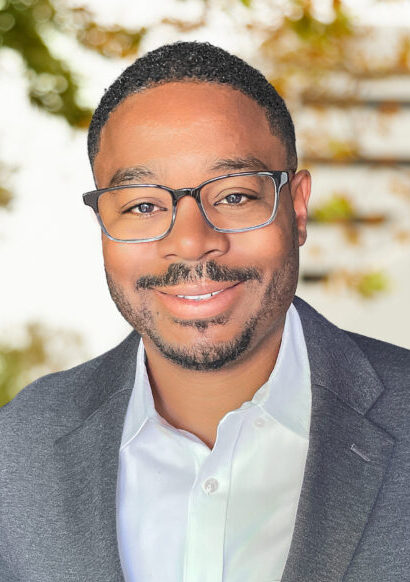
Ali Knight, CEO of GreenLight Fund
Ali: Thank you for having me, Denver.
“…GreenLight Fund is a national funder that takes a community-driven approach to reducing urban poverty in America. We partner with communities to prioritize the greatest unmet needs, and then we identify and help pull in solutions to address them. We find and invest in proven models, helping high-impact nonprofits replicate and scale in communities where they’re needed most.””
Denver: The GreenLight Fund takes a unique approach to matching local needs with proven solutions. What gap did the founders see in philanthropy that led to creating this model, and how has that original mission evolved over time?
Ali: Well, as you mentioned, GreenLight Fund is a national funder that takes a community-driven approach to reducing urban poverty in America. We partner with communities to prioritize the greatest unmet needs, and then we identify and help pull in solutions to address them. We find and invest in proven models, helping high-impact nonprofits replicate and scale in communities where they’re needed most.
And so we’ve got 20 years of measurable impact and now a network of 14 cities and growing, and we are, I’d like to say, a driving force for reducing urban poverty across the nation. We are an amplifier of innovative models that helps the most effective nonprofit organizations get to where they’re needed most.
But we started out, as you mentioned, as an organization based… founded in Boston in 2004 by venture capitalist, John Simon, and nonprofit leader, Margaret Hall. At the time, in contrast to the ease of expansion in a for-profit sector… I imagine driven by the tech boom John experienced… he found that social entrepreneurs doing high-impact work who were creating programs that were impressive, faced significant challenges scaling to new locations.
Similarly, I think Margaret was looking into strategies to engage local communities and to identifying challenges that could solve problems, and would pull innovative programs into cities where they were needed. And that became the genesis of the GreenLight model.
So we started in Boston, and after eight years of success there, GreenLight began to expand… first in Philadelphia and then in the San Francisco Bay area. And this expansion was powered by a grant by the Obama administration in 2012. After establishing those two sites, those three GreenLight sites operating, in 2015 we began to add one new city a year, which has continued to grow, and we’re now planning to reach 18 cities by 2028.
Denver: Yeah, yeah. I love the idea that you were in Boston and in Boston alone for eight years, because so often there’s a lack of discipline and so much pressure to try to scale faster, particularly when something is working. But too many organizations scale too fast, and their learning stops abruptly.
And you guys were able to go deep in Boston for eight years, knew what worked, what didn’t work, and then took the show on the road with tremendous success. This seems to be common sense. You find a proven solution; you bring it to a different place, but I also know that that is much easier said than done.
Ali, could you walk us through GreenLight’s five-step, community-centered process for matching unmet local needs with proven organizations?
Ali: Sure. So our five-part process starts with Discover. It is important for us to fully understand what are the pressing, prioritized, and unmet needs within a community. We need to understand not only the scale and scope of the problem, but what exists within the community to solve that problem, and where there might be gaps. That’s incredibly important for us to understand how we might be part of the solution.
And so this discovery process is both listening to the community, pulling local data to understand both the history and the current context, and leveraging our selection advisory council and their leadership and expertise to understand the nuances of what the problems are and why those problems are persistent.
And once we’ve identified problems that we think we can actually be part of the solution, we move from Discover to Scout. We go through our network to identify models that are working in other places across the country, other cities, other GreenLight sites. And we identify those models and then apply a process to determine whether or not their model would have the right fit, the local fit, to meet the needs of this specific committee.
And again, we leverage our Selection Advisory Council to make sure that as we are doing scouting, the ones that we identify are actually ones that have a chance of being successful. And that’s when we move into Select. The Selection Advisory Council helps us identify three or four organizations that we think can actually be part of the solution.
GreenLight’s team is responsible for vetting that team, doing a deep diligence and understanding the model, understanding the impact and how it might translate to this local context, and then we make a selection. We find usually, in most cases, one organization that’s addressing one unmet need. And we then move to investment.
We invest in that model and we provide financial capital in a form of unrestricted grants. We provide strategic capital in a form of thought partnership and support in local coaching to local teams in order to implement the model and social capital where we connect. We connect the programs to local follow-on funds, as well as others critical to the implementation of the model. And that is the Invest part.
But all along the way, we also move into Measure. It’s important to us that we can actually see measurable change, progress of implementation, and eventually progress of impact on individuals and communities, not just during the four years of our engagement, but beyond the four years in perpetuity when we are committed in bringing things, pulling things in communities that have long-term, lasting impact beyond our four-year engagement.
“And so that pull effect is incredibly important. We don’t push an agenda. We don’t have an agenda. We’re issue agnostic. We’re helping identify problems, understanding the nuances of ways you might solve that problem, and then identifying something that could do it.”
Denver: What a sound, thorough, and thoughtful process that is!
How do you approach communities that may be wary of yet another outside organization coming in to fix things?
Ali: Yeah. So that’s a good question. I think we start with essentially building trust. We think that starts by listening and engaging with the community deeply and authentically. We have hundreds of conversations before opening in a new city.
We established local champions that believe in the work we do, that have seen the impact in other cities. And that’s the second part. It’s about building a reputation. Our work in previous cities, our work in other cities, serve as a proof of concept; our reputation builds trust.
The impact that we’ve had in these other cities paved the way to build credibility into new cities. Mayors talk to other mayors.
Denver: Yeah.
Ali: Nonprofit leaders talk to other nonprofit leaders. United Way leaders’ local chapters talk to other peers in other cities. And when we demonstrate the value each year, the fact that the organizations we bring in are additive and complimentary, trust begin to grow and skepticism decreases.
But then it’s also about maintaining an active partnership. By establishing listening and co-creation with local communities, we signal that our commitment is real, that we can be a trusted partner. We’re not just outsiders making assumptions. And we’re here about figuring out what works best for this particular community.
And having a local selection advisory council that’s committed to our work is also important to building trust as they come from many different parts of the community, and they become ambassadors and champions of the work. But they also help us understand and apply the local context.
And this all leads to pulling in a program that the community ultimately wants, as needed. And so that pull effect is incredibly important. We don’t push an agenda. We don’t have an agenda. We’re issue agnostic. We’re helping identify problems, understanding the nuances of ways you might solve that problem, and then identifying something that could do it.
Denver: Yeah. Yeah. And it’s ongoing. I love the fact that it doesn’t end when the program starts because these communities, all communities change so rapidly that the knowledge you have about a community now could be completely obsolete three years from now. Because things change, and therefore it’s just a constant vigilance that you have to keep.
Share with listeners a couple of the organizations who are in your portfolio and the kind of work that they do.
Ali: So in our 20 plus years of operating, we’ve invested more than $40 million in over 60 community-identified solutions across our sites. And last year alone, those organizations reached over 750,000 individuals and families, and we expect that number to grow to beyond a million this year.
The organizations we invest in cover a range of focus areas from early childhood literacy, college access/completion, workforce development, food insecurity, public safety, health and wellness, and so much more, all intended to overcome economic and racial inequities individuals and families face in this country.
An example of our model is an organization called Food Connect. It’s a Philadelphia-based nonprofit that addresses food insecurity and eliminates food waste using their logistics technology, working closely with existing food banks and other food services to get access to food and individual families who need it most.
Well, we’ve helped Food Connect scale to San Francisco Bay Area where they’ve helped deliver over 400,000 meals to more than 250,000 families last year. And over the past two years, we helped Food Connect expand and reach to Kansas City and the Twin Cities, where they will deliver over a million meals to more than a half a million children, families, and citizens in food deserts in the city. So Food Connect is a model that we’re incredibly proud of, that we’ve partnered with to help them scale and get to where they’re needed most.
A second example that I like to offer is an organization called Compass Working Capital. So Compass Working Capital started in Boston with a really innovative model to leverage an underutilized federal program, the federal self-sufficiency program, and pair it with individualized financial coaching to enable families and subsidized housing to build savings to reach their goals.
So what we see is they begin to narrow the asset poverty gap and ultimately move families out of public housing. So we’ve brought the program to Philadelphia in 2018, helping to build the partnership with the housing authority, and it has since reached thousands of families, helping them build on average close to $9,000 in savings.
And this year, we’re helping a program scale to Chicago where we anticipate similar, if not stronger results. And the cool thing about the way the model works is what most people don’t know is when a family’s in public housing and they increase their income, their rent goes up.
Denver: Yep.
Ali: So FSS allows the housing authority to redirect that increase in rent to a savings account that they can hold for the tenant. And Compass works with families to set goals and manage that money long term. So we’re really excited about their partnership and their impact.
Denver: Yeah. Two wonderful examples of your very rich, eclectic mix. Let’s talk about another model, your model. What is the business model of GreenLight? I mean, how do you do what you do and go from 14 cities to 16 cities, and now to 18 cities?
Ali: Great. So I think a key part of our model is we listen first to the community to identify gaps in a local nonprofit ecosystem. What are the persistent barriers and inequities keeping individuals and families from reaching their goals? Then we serve as matchmaker. Search and then thoroughly vet innovative nonprofits from across the country that have a track record of success addressed in the priority unmet need.
So we select and support the nonprofit with the best local fit to scale where it’s needed, and then become fully embedded into the community. And as I mentioned, we provide multi-year unrestricted support and financial support, but ongoing strategic support to ensure the implementation is successful.
This includes making local connections to follow-on funders and critical implementation partners. So ultimately, our model is about listening to the community first, bringing in an evidence-based solution to address what we’re hearing, and where it’s needed alongside to ensure meaningful and measurable change for children and families.
And we repeat this process year over year, again and again. We leverage the power of the national network. We leverage the learning across our sites and the expertise of our national team to continue to improve our process, and to expand and deepen our impact. And we’re also growing year over year, adding new cities every year.
And our financial model is to essentially build a coalition of investors locally, who care about the city, who want to see change, who believe in the GreenLight model, and we essentially establish a fund.
And then what we do is we make a promise. We say we’re going to identify three or four things that are needed, three or four issues, unmet needs, and then we’re going to bring things that address those needs. And then we’re going to come back to you with measurable results in four or five years, and then we’ll do it again. We’ll do it again and again.
And in a place like Boston where we’ve done it several times, we’ve brought in 16 different things that have created an ecosystem of organizations, high-impact organizations achieving large scale success in Boston, in the Greater Boston area.
Denver: Yeah. So I’m guessing in these cities, these new cities in particular, you find yourself a champion who has the ability to make a gift and bring in their network, and get a second gift and a third gift. And before you know it, you get a nucleus of funding that allows you to continue this work.
Ali: That’s exactly right. And the national team serves as the backbone. We’re able to support local efforts to ensure alignment in the model and the method, but allowing for the local teams to apply nuance. And so all local dollars stay local.
We raise a fund to support the national infrastructure, to be able to do the codification of the model, provide infrastructure so that local teams can focus on community response, and provide support to the organizations they bring into the community.
So it’s a really, really fascinating model of efficiency and impact, while driving towards large-scale impact in service of alleviating poverty.
Denver: Yeah. Yeah. I love it. Ali, beyond funding individual organizations, do you work to strengthen the broader ecosystem of each city?
Ali: We do. We do. So I would say again, Boston, our oldest city and in the Bay and Philly are examples where we’ve been in those cities for 12 years. Our SAC serves as both an advising vehicle conduit for the local leader to identify and prioritize needs, and to support the pulling in of a new program.
But it also serves, quite frankly, as a convener of issues in a way that not only informs how GreenLight responds to the needs, but how GreenLight contributes to the larger ecosystem. So we are building ecosystems. I’d like to say that after a while, after running the process, the method several times, local sites become institutions of community responsiveness. So that’s one.
But the larger sort of example is the national network, to be a site of 14… soon to be 18 cities… to have invested in nonprofits that scale from one to five cities across the network. We create a community of practice. We create emerging best practices for how to solve problems in urban settings across the country. And that’s valuable to everyone. It’s valuable to GreenLight as an organization.
It’s committed to growth and scale and service of impact. It’s valuable to local cities to be connected to other cities who are adopting the model in similar ways. And quite frankly, it’s valuable to our local leaders to connect with an established community of practice with other local leaders in other cities who are dealing with some of the same complex, thorny issues.
Denver: Yeah. Yeah. I’ve always been so frustrated about the sharing of knowledge and experience in the nonprofit sector. And I’ve actually had some people on the show from the corporate sector who will say: We actually share knowledge more than the nonprofit sector in terms of best practices. So to see something like this, I really take tremendous heart and inspiration from it.
Ali, you stepped into the CEO role following the organization’s co-founder. Tell us what personal experiences and values most shape the way you lead GreenLight today.
Ali: Well, thank you for asking, Denver. So I guess I’ll start out by sharing a little bit about my story. I mean, I’m a city kid. I was born and raised in New York City in the ’80s and ’90s.I was a latchkey kid, a poor kid whose family was plagued by many of the worst parts of urban poverty.
And I survived on the kindness of a few in my community who saw my potential and were willing to invest in me. And I was also able to navigate the complexity of systems that sometimes worked and met my needs and sometimes didn’t. So whether it was the public education system or foster care, it was always a balance of individuals who cared, and a system that was responsive to my needs and others like me.
So I’m a big believer in the ingenuity of the nonprofit sector, the power of kindness of others, and community-driven approaches to solving community problems. And professionally, I started my career working for nonprofits in New York City that focused on young people, who have similar stories to my own, and others impacted by the criminal legal system.
And I work to design and develop and evaluate programs that help achieve outcomes for individuals and populations impacted by poverty. So eventually, I begin to lead organizations across the country, specifically focusing on building culture, refining models, all in service of advancing missions that have high scale and high impact.
So my time at GreenLight is a continuation of that journey, I’d like to say– my commitment to leading organizations to reduce poverty and increase opportunities for economic mobility.
“We want our national network to serve as a proof of concept for replication for communities of practice, and a deep understanding of community-driven change. We want to contribute meaningfully to how philanthropy approaches investment decisions, how the community plays a role in decision making, and how this all rolls up towards alleviating poverty in urban cities across the country. We want to lean into our belief that local impact starts with community-driven change, one city at a time.”
Denver: Well stated. Finally, Ali, you have 20 years of history with this organization, not you personally, but you’ve seen the evolution of what’s happened over the last two decades. Let’s take a look at the next decade, by 2035. What changes do you anticipate in how GreenLight identifies needs and chooses solutions, given shifting demographics and of course, technology?
Ali: Great. So I would say, just first, gleaning the lessons that we’ve learned to grow and scale in the last 20 years, and those are three things. I think the first is our scale, our geographic reach in depth, our investments uniquely position us to drive towards transformative change, to reduce poverty and foster inclusive prosperity.
I think that that is like we are well-positioned to get to where we need to be over the next 10 years. But looking at the first… the next three years, we’re really committed to a couple of things. First, we want to deepen our community impact in existing cities. We want to make sure that we’re being responsive to the evolving needs of cities, but we also want to scale our impact to 18 cities.
I mentioned we’re at 14, soon to be 16 cities, and hope to be to 18, or will be in 18 by 2028. That’ll help us broaden our network and expand our reach. It’ll also help us unlock the ability of the national network to serve as a multiplier effect and continue to generate momentum towards national impact.
But that’s all on a path towards the next 10 years. We want our national network to serve as a proof of concept for replication for communities of practice, and a deep understanding of community-driven change.
We want to contribute meaningfully to how philanthropy approaches investment decisions, how the community plays a role in decision making, and how this all rolled up leads towards alleviating poverty in urban cities across the country. We want to lean into our belief that local impact starts with community-driven change, one city at a time.
Denver: Yep. For listeners inspired to learn more about the GreenLight Fund and boy, you’re at a dynamic point right now, that’s for sure, tell us about your website and the kind of information they can find on it.
Ali: Great. So if you go to our website, greenlightfund.org, you can learn more about our sites. You can learn more about the organizations we’ve invested in and the type of impact we’ve been able to achieve over the last 20 years. And you can also learn more about our growth, our future, elevate 2028 to be able to get to more cities to deepen our impact and achieve national outcomes across the country.
Denver: Cool stuff. I want to thank you so much for being here today, Ali. It was a real, real pleasure to have you on the show.
Ali: Thank you for having me, Denver. It’s a real pleasure.
To celebrate my 50th year in the nonprofit sector, I’ve put together a gift for you — a practical, field-tested guide to building world-class nonprofit workplace cultures. It’s called Cultivating Nonprofit Excellence, and it’s based on insights from nearly 1,000 interviews and 150 focus groups with nonprofit leaders around the globe. It’s completely free and instantly downloadable at blanchedalmond-mosquito-418475.hostingersite.com