

This is The Business of Giving. I’m Denver Frederick.
What if philanthropy had a profession—real credentials, ethical standards, and trusted training—just like law or finance? Right now, it doesn’t. But my guest today is changing that.
“So we talk about the three C’s. You’ve got to have the confidence to do this work. You’ve got to have the competence to do this work, but you also need the cultural dexterity.”
We’ll also explore how collaboration and coaching are unlocking the billions sitting idle in donor-advised funds. If you care about the future of giving, this conversation will open your eyes—and maybe your wallet.
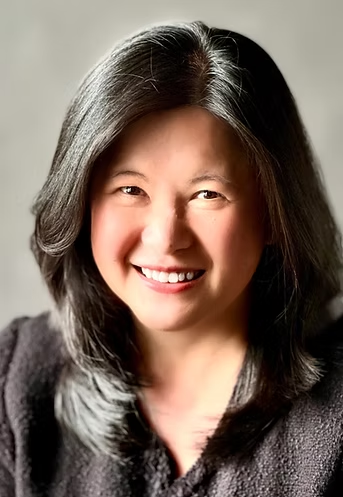
Dien Yuen, Founder of Daylight Advisors
Denver: Welcome to The Business of Giving, Dien.
Dien: Thank you, Denver. Thank you for inviting me.
“So Daylight was born basically to help professionalize and create the standard, a benchmark in the philanthropic advising space.”
Denver: You launched Daylight Advisors to address gaps in traditional philanthropic advising. What specific blind spots did you see among donors and advisors, and how does Daylight’s model tackle that head on?
Dien: Thank you for the question. We built Daylight because we saw this gap between… a lot of the wealth holders were looking for professionalized services to help them figure out how to give their money away in a very strategic and efficient manner, but also very thoughtful and intentional.
And then on the other flip side is: the philanthropic advising space is actually quite nascent. We’re not even a profession. Anyone can call themselves a philanthropy advisor, right? It’s not like there’s a licensing requirement. There’s no board of ethics. There’s not a standard education practice. So anyone can call themselves a philanthropy advisor.
And in this space then, what you have is a marketplace where the lack of transparency, trust, and then you also have a compensation issue. Basically, wealth holders don’t know how much to pay for this advice and the service. So Daylight was born basically to help professionalize and create the standard, a benchmark in the philanthropic advising space.
So we want to gain the trust and create transparency for the wealth holders to say: Now there’s a profession out there like philanthropic advisors. We know their standard of care. We know there’s an education process that they’ve gone through. There’s the ethics behind it.
So what Daylight is, we started training programs. We provide professional development training programs for these philanthropic advisors, and we wanted to build the marketplace. So that way, now you have a supply and demand side. And what it does is it uplifts organizations, builds trust and credibility and space, and basically moves money out the door much faster and much more efficiently.
So you think about the billions that are sitting inside donor-advised funds. A lot of it is not because they don’t want to give it away; a lot of these donor advisors do, but they’re just kind of stuck. They just need more help. And philanthropic advisors are the key in helping them unlock those dollars.
So that’s what Daylight does. We provide training and professional development programs for our wealth advisors, philanthropic advisors, CPAs, and attorneys, basically anybody who considers themselves a philanthropic advisor who’s helping the who, what, why of moving the funds into the communities.
Denver: And that’s all wrapped up in your certificate program, correct? Tell us a little bit about that.
Dien: Sure. We actually have two programs. We have something called the Impact, a Certified Impact Philanthropy Advisor program, or the IPA. That’s more of a deep dive. It’s 20 weeks.
There’s an online kind of program system where you can learn and do the readings, but then there’s also a component where we’d have 10 one-hour Zoom meetings. And the learners come, and they talk in cohorts and they do case studies. So there’s a learning component, and then there’s an application component.
And that’s really for philanthropic advisors who really want to deep dive into the space. But for a lot of the other advisors who just want to know enough of the space, we created these certificate programs out there. This year we’re launching six certificates. The first one is a Certificate in Behavioral Philanthropy.
We’re launching an Impact Investing one, Collaborative Philanthropy. And this fall, it’ll be on working with women as donors and philanthropists, and also working with business owners, who are thinking about selling their business and: How do we incorporate philanthropy giving and continuing to support the community as part of that transition? And then also one for the LGBTQ community as well.
So the idea is to train advisors, give them the tools, give them the data, and you also help them think through the behavior pieces of helping their clients, do what they need to do, like a business transition. But also, think about the community as well.
And we’re basically supported through this very interesting time of coming together because the demographics are changing… the way people are giving, the way they give is changing, right? And so it’s just an amazing time for our Daylight to thrive and help our advisors thrive. Our goal in the next three years is to train 10,000 advisors.
Denver: Wow.
Dien: And we think that’s going to be a tipping point, so.
Denver: Well, dig a little bit deeper into that. I mean, how are the demographics changing? We understand generally speaking, but specifically as it relates to this particular space… And how are people giving now differently from how they’ve traditionally done so?
Dien: Yeah, I think that right now, I think most folks have heard of this great wealth transfer that’s happening. We have the baby boom…
Denver: $84 trillion.
Dien: Yes, exactly. Baby boomers who are thinking about transitioning themselves, they’re retiring. And as they’re doing their estate in financial planning, they’re including the children, the grandchildren, and maybe even their great-grandchildren. But they’re also including organizations and thinking about philanthropy as part of that transition.
So as they’re thinking about this; they’re already including a lot of donor-advised funds and foundations in these tools. And they’re also giving themselves. But we also know that women usually live longer than men, right? And so when they pass on, the women will hold most of this wealth.
Their giving is a little bit different. They prefer to be involved in social enterprises and impact investing. And they want to be hands-on, much more hands-on in their giving. But what’s really interesting as well is there’s a study there that McKinsey and others have put out. Within 12 months when they end up controlling the wealth, they will fire the original wealth advising team. And it’s because they have not been seen or heard by their current advisors.
And so the wealth management sector now is trying to address this issue, but for some it might be too late. And so for wealth advisors to want to keep that woman, widowed spouse as the client, they have to think about philanthropy, and they have to talk differently about social enterprises, impact investing, and the whole portfolio management with this new woman, who is the client.
And then she can also control some of the changes as well– what gets passed down to the next generation. And the kids, the next gen that’s coming in, they’re looking at this completely differently as well. They want to be much more hands-on. Social media is a big thing for them, and so they don’t want to make money and then give it away. They want to be active in philanthropy right now as they’re also building their wealth.
Denver: Yeah. As you try to bridge this gap between the generations, let’s say the baby boomer who’s looking for a legacy, and then the younger generation who’s demanding systemic change and equity-driven change, how do you bring them together?
Dien: Ah, so the Ultra High Net Worth Institute and Jim Grubman and his team have done a lot of research in this space. I would encourage you to take a look at this concept called the 10 Domains of Family Wealth.
And the idea is: How do we help families flourish? And so it’s not an either/or. We’re seeing a space moving into more of this gray area and this ability to adjust. But the idea is: How do we help families flourish as a group, as a unit, but also individually?
So that’s when you need to bring the philanthropic advisors in and those family dynamics counselors and the coaches, like yourself, to come in and bridge these conversations. They’re difficult conversations to have, but if you finish these conversations, the outcome is quite amazing because this is when we’re talking about human flourishing. Feels good for yourself, feels good for the family, but also feels good for the community and future generations.
We’ve pushed a lot of things under the rug that we don’t want to talk about in all our families, but philanthropy and really trying to bring families together to think about: What do we do with all this wealth and this, basically, privilege that we have in the communities? How can we do more? How can we do better? But they can’t do it themselves. They need advisors.
Denver: Yeah.
Dien: And so advisors are key, I think, to help bridge these gaps, but to shift the money for the family to use in a way that is good for them and that’s meaningful for them. Unfortunately, we don’t have enough of these advisors trained in the space. So Daylight’s…
Denver: It could be a lot of these advisors though, because they just wake up one morning and decide they want to be one, and that’s part of the whole industry change you’re attempting to fix.
Dien: Yes. We want them to make sure they have the skills.
Denver: Yeah.
Dien: So we talk about the three C’s. You’ve got to have the confidence to do this work. You’ve got to have the competence to do this work, but you also need the cultural dexterity. And we talk about cultural dexterity in a very, very broad way where you’re talking about working with different generations, different demographics, different age groups, different communication styles, and also local, regional, national, and global.
Denver: Yeah.
Dien: So you need that cultural dexterity framework to really be successful in working with the families. But I think what’s really interesting during this time too, Denver, is the wealth management sector is also shifting and changing because like the baby boomers who are retiring, many wealth advisors are also from that baby boomer generation as well.
So really, associates said that about 37 to 38% of the wealth advisors have started or will retire in the next 10 years. That’s a third, almost a third of the whole wealth advising sector. And so as they’re retiring; a new generation is coming on… the younger generation is coming on into partnerships and leadership roles. And they are much more interested and open to having those philanthropic conversations with their clients.
But you also have the ones that are retiring thinking, I’m going to retire at 60, 65. But we know statistically, people live to 100, 110. What are you going to do in 30 or 40 years of your life? And so we’re seeing this really interesting trend where as they’re selling their wealth management business or their book of business, they are themselves getting interested in philanthropy.
Because they’re thinking about: As I’m transitioning, what am I going to do? How am I going to make a difference, my own legacy in this life? And so they’re interested in philanthropy. So we have both sides now, the incoming and the outgoing who’s really interested in this space.
But another beautiful thing is when you’re retiring, you have all this experience and this knowledge. Why can’t you continue to stay at the firm or serve as a coach to help the clients think about their own transition as well, from an advisor perspective?
Denver: Yeah.
Dien: So all this is coming together, and that’s why we’re so excited about the work at Daylight.
Denver: It is. It really is an interesting time, and I know a number of people who are retiring. And right to your point, Dien, they’re all looking for a halfway house. They just don’t think they can go from 60 to zero. They’re saying, Well, I don’t want to maybe show up five days a week anymore, but I don’t want to just sit at home and play golf, or whatever it’s going to be.
So they are looking for that interim where they can use some of that wealth and experience, just not have to maybe punch a clock quite as much as they did.
Dien: Yes. And talk about something that’s very meaningful that…
Denver: Oh, yeah.
Dien: Right? Because you don’t become successful building a business by just looking at the business.
Denver: Right.
Dien: You built it because you cared about community and giving back as well. So why would you let that go? Let’s really deep dive into that and lean into that.
Denver: What have you enjoyed the most about building your business at Daylight Advisors, and what do you find to still be your biggest everyday challenge?
Dien: I love the people in this space, Denver. The talent in this community is amazing. So one of the things that Daylight’s model has always been– we are industry practitioners, so our content is built by industry practitioners for industry practitioners. And that way, we could also incorporate the stories and lessons learned in all of our content.
But for example, we’re building out all these certificates and asking: Who knows anyone who’s got expertise in working with business owners on the philanthropy side? There’s a whole new group working at it from an estate planning perspective, working at it from financial planning. There’s so much talent out there that we can always find experts… and even in these little niche areas.
So that keeps me really excited. And of course, getting to know them and talk to them. And just today, Yolanda Johnson, the founder of Women of Color in Philanthropy and Fundraising… she’s sending me an email because we were talking about faith-inspired and faith-based philanthropy. And she was saying she actually has done a lot of research in this area. I did not know that. I’ve known Yolanda for years.
So it’s always being amazed by the people in the space and what they know and what they’re willing to share as well
Denver: Yeah.
Dien: And everybody wants to give back in their own way, especially in sharing their knowledge with others. So selling knowledge is not a bad business to be in. Like it’s such an amazing space, right?
Denver: Yeah, it is. I think that people talk about scaling up organizations and operations, and you can do that in a lot of ways. But one way that people don’t talk about or think about as much is scaling knowledge. You don’t have to build new edifices; you don’t have to hire more people. If you can scale knowledge, that is profound. It really is.
Dien: And there’s endless supply of talent out there, right? So I think it’s just we see ourselves as giving a space and a platform for all this talent to shine through. And for us, it’s amazing because we don’t have to worry about, Oh my gosh! If we hired 10 employees and 10 employees leave, we lose our knowledge. But the community is there to support it.
Denver: Yeah. Yeah.
Dien: And everybody wants to share. But what keeps me… what’s the challenge? I think the challenge… we are a startup. We’re about two years old now. And the challenge has always been: Are we thinking ahead of the curve? We want to educate and support the advisors of today, but we also have to think about in the next three years, the next five years, the next 10 years. What are they going to be challenged with, and how do we stay ahead of this to make sure we’re ready to prepare them to see what’s ahead?
Denver: Any insight into that? And as you look around the bend, what do you see 3, 5, 10 years out?
Dien: I see a lot more families who are interested in this space. And I also see a lot of need on the family dynamics issue. It’s easy to train advisors to talk about the charitable planning tools itself.
Denver: Yeah, sure.
Dien: That’s easy to train. It’s very hard to train advisors to talk about the cultural dexterity piece.
One, they have to feel comfortable themselves first. They have to have their own internal conversations about what matters to them before they can even work with the clients. And client perspectives are always shifting, and so you have to be very agile to shift along with it.
So yeah, it’s really hard, but I see that in the next three or five years, what we’re going to see is a lot of more people thinking about social impact, thinking about: How do I make a difference? I see this need out there. I see a change that’s happening. How can I respond to this?
And most people are not trained really in this space to do it. So they’re going to look to their advisors. And I think the first advisor they’re going to look to– thinking about especially shifting wealth– are their financial advisors. The study has basically been out there saying: Aside from your spouse or your partner, the next biggest influencer of your wealth is the financial advisor.
Denver: Sure.
Dien: So we got to train the advisors to do this. So when we say we want to affect 10,000 financial advisors and train them to have these philanthropic conversations, we think that’s a tipping point because after 10,000 advisors doing this, it becomes a professional responsibility. It becomes the standard in the space.
Denver: Yep.
Dien: So everybody has to talk about it, right?
Denver: Yeah, that’s right.
Dien: Yeah.
Denver: Dien, let’s take a look at 3, 5, 10 years out as it relates to this, and that’s amplifying impact through collaboration. What’s your thinking about pooled funds and partnerships that some people get… other people like to go solo? Where do you think that… what direction is that going to be headed?
Dien: Well, I think it depends on the issues. Some issues you could do alone. If you want to tackle bigger issues, you can’t do it alone. One, there’s just not enough time. But the other is there’s just not enough wealth and talent in the space. So you have to figure how you leverage. And so I think for our CPAs, they love the word “leverage” as well, right?
Denver: They do.
Dien: So we need to figure how to leverage relationships, leverage the wealth, leverage talent, leverage the content in the space. And so that’s why pooled funds make sense to me if you want to tackle something that’s systemic, that’s bigger than yourself. And if you can’t put a million or $2 million in to solve something, you should do it as a group.
But when we talk about collaborative funds, it doesn’t mean like you just go out and find strangers to do this work. You look in your own community; you look at your peers. Like they’re probably already thinking about it, or they’re doing some form of work around the space already. So it’s just a matter of connecting people.
So for a lot of women, if you get them together, they’re pretty incredible. They will figure it out.
Denver: They will. Yeah, yeah.
Dien: They would tackle the issue, and they want to do it together because community begets community, and then it also builds bonds. So it’s not just about: we want to come together to work on this issue, but it really builds bonds for life. And then…
Denver: It really addresses the loneliness issue.
Dien: Yes, it does. And like going back to what we were saying about the transition space, I mean if you think about it, you are the one that’s in transition, not your whole family, not all your friends, but you’re the one in transition. And sometimes, it might be better to step away and actually find new people to be in transition with.
And that could be thinking about: if I’m going to tackle, say, climate change. Even in our community– let’s go find my peers, let’s go find other people doing this work. So collaborative funds are very flexible. Some can be very formal; some can be very informal. But the basic thing that comes down to it is: let’s get a bunch of people together who care about something, and let’s work on it together, right?
Denver: Yeah. Let’s get to… oh, I’m sorry. Go ahead.
Dien: I was going to say, the beautiful thing about collaborative funds and collaborative philanthropy is it scales.
Denver: Yeah.
Dien: It scales quite quickly. So you could do it in your community, but other people might be doing it in other communities as well. And when you bring everybody together, there’s a huge effect out of this.
Denver: Well, sometimes philanthropy can be frustrating when you’re doing it alone because you don’t see the impact as quickly as you would like. Well, when you have a bunch of people together, that impact’s going to happen that much faster.
Dien: Yes, but it’s hard. There’s a psychological piece behind this. It’s hard to do because it means also for a lot of people, they see it as letting go of control. I’m letting go of control on decision making. I’m letting control over my wealth. I have to work harder because now I actually have to get along with people and bring people together and move people forward.
But the other perspective about losing control is to look at all that you gain from it.
Denver: Yeah. Yeah. Yeah.
Dien: So yes, I think the collaborative fund piece and philanthropy piece is very interesting. But it’s another way of stepping out of yourself and thinking about: How can I figure out how to flourish instead of being very shortsighted? Or just thinking like: This is good enough for me, and this is good enough for my family or community, but thinking about: What more can we do?
Denver: Yeah.
Dien: Thinking about the abundance mindset.
“But one of the reasons, especially in technology and also in Daylight’s work, friction creates opportunity in the space. And so while it may take some time for people to figure out what that next step is, I think all this friction is going to cause a lot of champions to step up, a lot of things that might need to be improved anyways to be improved.”
Denver: Dien, let me ask you something about the present today, and that is the Trump administration has introduced significant policy shifts and societal disruptions, and that’s reverberated across the nonprofit and philanthropic sectors.
As a leader, guiding philanthropists towards high impact giving, have these changes prompted donors to rethink their giving in any way?
Dien: Yes, it’s a very interesting time and a very unfortunate time in some ways as well. I think the shift has been thrust upon us in such a swift and quick manner, and I think it’s been very difficult to respond in a very coherent way.
But one of the reasons, especially in technology and also in Daylight’s work, friction creates opportunity in the space. And so while it may take some time for people to figure out what that next step is, I think all this friction is going to cause a lot of champions to step up, a lot of things that might need to be improved anyways to be improved.
And then also looking at: What do we really care about as a society? What do we want to defend? What do we want to do? And then also, How do we want to come together to do this? So I think it’s a beautiful time. Yes, it’s chaotic. It’s horrible. But I want to remain positive and think about: We have always risen to every single occasion. Our civil society organizations have been amazing.
So why not now? We should rise to the occasion, and we will rise to the occasion. But it might take some time to figure that out, especially if we want to be very thoughtful and intentional with the work that we do because we don’t want to create more wrongs.
Denver: That’s right. That’s right. What’s one outdated philanthropic norm you would like to retire immediately? And what underrated practice should take its place?
Dien: I would say a lot of the wealth, we’ve been trained to think about legacy and thinking about: Work really hard; save a lot of money. And then after you retire, give that money away and participate in philanthropy. To me, it’s very outdated, but it’s still very difficult for people to transition.
Life happens. People are busy. People go through their careers. They’re creating families, they’re building families, they’re building their wealth. So philanthropy has always been: when I have time, I will get there. But that is shifting.
In the past 10, 20 years, we’ve seen this huge shift, and I think it’s going to shift even more where people are intentionally incorporating and sometimes even unintentionally, it just becomes a habit. It becomes part of their life.
Denver: Yeah.
Dien: And so this will shift as well in the way people plan their wealth. So when I think about, as a former wealth advisor, when we create portfolios or build portfolios for clients, we never really ask about: what about the community? What organizations or maybe about faith-based organizations that you want to support? We never think about adding that in the portfolio.
But I think with the shift, especially with the next gen and the future gen that’s coming, they’re going to demand this. And as advisors, when we go through our checklist of questions to ask, we better be asking, What more? Like, are there any things that you haven’t shared that you want to take care of?
So I’m really excited about that. And then the wealth that’s sitting inside the donor-advised fund space, this is how we help unlock that capital, is really to talk about it.
Denver: Yeah. I grew up in a generation where we had two pockets. And we had one pocket, which was our wealth, then we would work our whole lives to earn it. And we had another pocket, which was our charitable pocket, and we pull out of that to help charities.
But you’re absolutely right, it seems that today’s generation, it’s all one pocket. They’re not two separate pockets. It’s all together. And they integrate that from the very start in terms of how they want to live their life and how they want to dispense of their wealth.
Dien: Yes. Especially even making decisions about where to buy, what to buy.
Denver: Yeah.
Dien: What organizations or business do I want to be associated with? All this matters to people now.
Denver: Yeah. Conscious capitalism. Absolutely. Yeah.
Dien: And with the ease of technology and social media, word’s getting out so much faster than before. And so people, when they’re thinking at the checkout counter the buying decisions, they’re actually thinking about it before, like, “Do I really want to buy this from this company? Do I want to support this company?” Or maybe it’s another company. It might be 10 or 20 cents more, but I’m willing to actually spend that money because I want to support that value.
Denver: That’s right. And you want the person who made this to be able to send their kids to school. And if I do that, buy their product, they can.
Dien: Yeah.
Denver: Finally, Dien…
Dien: Oh, Denver, I was going to say the one thing that you can also relate to is that the business generation, it used to be: we sold the business to another buyer, to another private equity firm, or to another business.
But we’re seeing it, they’re selling the business to their employees, which again is amazing because now we’re building generational wealth amongst the employees as well, giving the business back to that community, that we uplifted as we were growing our business.
Denver: Yeah.
Dien: So, yeah.
Denver: No, that’s a very sweet notion because I think as a leader of a company, you make different decisions knowing that ultimately, you’re going to give it to the employees of that company. So you tend to take a much longer-range perspective, whereas if you’re just going to sell it to another company, you’re just going to make every penny of profit you can before you unload it.
So there’s a whole different mindset to the decisions you make in running that company.
Dien: Yes. And the employees are going to keep the values you’ve built because they built it with you.
Denver: Right.
Dien: And so, again, I think this changing mindset or this permission to think differently, I think is being pushed and we’re just… I think… all good.
“Just like in how attorneys and how our other wealth advisors and other professions do it, I want philanthropy advisors to be at that same level, where we have the ethics, we have the educational standards, we have a body, and we have the respect of the community… that they know the services that we provide, and they’re all trained by proper individuals.”
Denver: Yeah. Finally, Dien, let’s say five years from now, by 2030, what single indicator would signal Daylight Advisors has truly transformed the philanthropic advisory ecosystem?
Dien: Denver, if we hit our 10,000 advisory number, I would be ecstatic because that would change the whole sector. But another project we were trying to put in place is a competency mapping process, where we can actually put some standards, some skill sets. It’s a skills and technical competency standard where all philanthropy advisors should go through.
And it’s also great because if I want to be a philanthropy advisor, I need these basic foundational kind of skills. If I want to move up to a VP level or I want to move to a managing director level, these are some of the skills. So we’re actually building the field itself and creating trust with the wealth holders and in the community.
But I think it’s also great when I would love someone to say, When I grow up, I want to be a philanthropy advisor. And it’ll go global, not just the US, but global, because wealth travels across countries, the country lines. Climate and other issues are going to affect beyond our country lines. And so having a global philanthropic advising network would be amazing.
Just like in how attorneys and how our other wealth advisors and other professions do it, I want philanthropy advisors to be at that same level, where we have the ethics, we have the educational standards, we have a body, and we have the respect of the community… that they know the services that we provide, and they’re all trained by proper individuals.
Denver: And also that phrase, “When I grow up, I want to be…”, that’s as aspirational as you can get. I love it.
Where can listeners learn and explore more about Daylight Advisors’ resources, and what’s one actionable insight they can gain from your website?
Dien: I would say: come to our website. One actual insight that you’ll find is you’ll see a lot of people you will recognize. We make it a point to put all of our faculty members on the website. And right now, we have close to 30 faculty members. And we also feature a lot of our learners, the graduates. They’re impact philanthropy advisors themselves.
So you will see someone you know on our website, and I encourage you to go call them and ask them about their experience with Daylight and our programs because we are trying to build a community of practitioners here. Again, we don’t want to own the space. We want to build it together with others.
Denver: Movement generosity, I love it. And so…
Dien: Yes.
Denver: Dien, I want to thank you so much for being here today. It was a real delight and pleasure to have you on the show.
Dien: Thank you, Denver.
To celebrate my 50th year in the nonprofit sector, I’ve put together a gift for you — a practical, field-tested guide to building world-class nonprofit workplace cultures. It’s called Cultivating Nonprofit Excellence, and it’s based on insights from nearly 1,000 interviews and 150 focus groups with nonprofit leaders around the globe. It’s completely free and instantly downloadable at blanchedalmond-mosquito-418475.hostingersite.com