

Welcome to The Business of Giving. I’m your host, Denver Frederick.
The India Philanthropy Alliance is redefining collective giving for India-focused causes through initiatives like India Giving Day set for March 14 this year. At its home is Alex Counts, a microfinance pioneer who founded the Grameen Foundation and now drives IPA’s mission to grow joyful, impactful philanthropy.
In this episode, Alex shares how a single film, Gandhi, ignited his lifelong commitment to social good with books like Changing the World Without Losing Your Mind. He’s also become a trusted voice for mission-driven leaders everywhere.
Denver: Welcome to The Business of Giving, Alex.
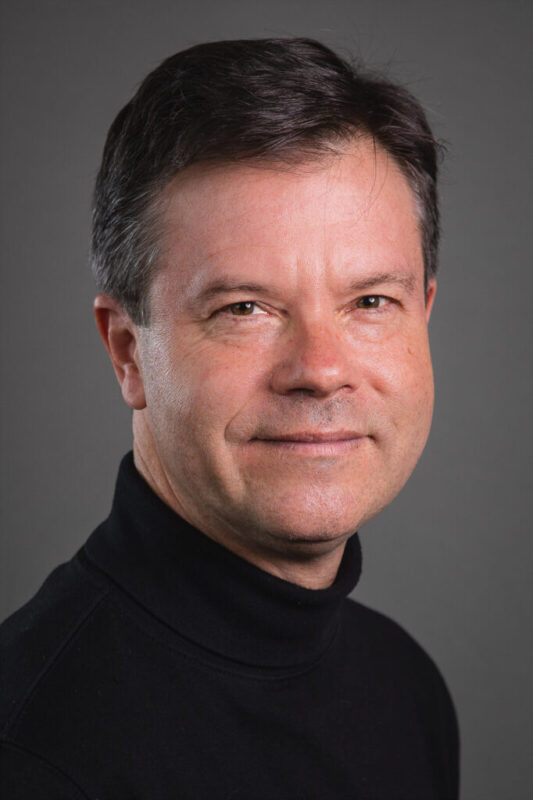
IPA’s Executive Director
Alex: Thank you. It’s a pleasure to be here.
Denver: Yeah. Let me kick off in Bangladesh, if I may. You were a Fulbright scholar, you were training with Muhammad Yunus. Was there a moment, Alex, that flipped a switch for you, that set you on this path of poverty reduction and philanthropy?
Alex: Sure. When I was in high school and college, I did see some students who seemed to care about things other than their grades and their sports and chasing around the opposite sex, people who wanted to contribute. And that stuck in my mind.
One of the most influential things, it sounds maybe funny, is I saw the movie Gandhi when I was a junior in high school. And I actually met Ben Kingsley years later, and I told him something that is absolutely true, which is I never cry during movies except for the 15 times I’ve seen the movie Gandhi.
And I think one of the things that that opened up with me is an interest in the east, in India, and the kind of the wisdom of some of those Eastern traditions and idealism and idea of service to others that come. We have our own version of it in the west and in the US obviously.
And so I remember thinking to myself, boy, if Gandhi were still alive, I would like to finish my education and I’d go throw myself at his feet and I’d say, tell me master how I should serve.But obviously he’d been dead for several decades, but it opened up something in my mind. I wanted to find a modern-day Gandhi to serve. And when I heard about the work of Muhammad Yunus in Bangladesh, he seemed to fit that bill.
And so as college wore on, I wrote him a letter and asked him if I could join him and work with him. And with the help of a Fulbright scholarship and a woman who taught Bengali as a four-credit course at Cornell that I could enroll in and a lot of other happenstance and good luck, I ended up spending really the rest of my career in some way connected to South Asia and connected to service.
Denver: Yeah, that’s a great story. And building Grameen, how did that continue to shape your belief, Alex, in what is possible?
Alex: Well, what was amazing, when I landed in Bangladesh in ’88, after a terrible flood that had hit that country a few months earlier, and yet what I noticed was that especially villages where Grameen was present, people were building back fairly quickly after 100-year flood.
And when I got there, Grameen, great social entrepreneurs. One of the things they do is they count everything. They want to be very quantitative and see how they’re moving the needle on whatever they’re trying to do.
And so, there’s this monthly report that Grameen has come out with since 1977, and Grameen just crossed half a million borrowers across the country, which is Is basically 5% of what it is today. But at that time, there were only one or two microcredit programs in the world that were that big.
And it was basically really approaching nationwide scale and half of the villages in the country had at least one Grameen. And so I just said, the problems are big and typically nonprofit solutions. Now, Grameen is not technically a nonprofit, but it kind of functions like one. You tend to be small, and they solve the problem in three villages, but the problem is untouched in all the other hundred thousand.
And Grameen was showing you could actually take a solution. And if you were bold enough and you could mobilize enough capital and enough people, you could take a solution to national scale and really meet the problem at the scale that the problem exists. That excited me, and that got me thinking, what if we could do this at the global level since Yunus had shown that it could be done at the national level? And that kind of shaped the next phase of my career.
Denver: Yeah. Interesting. I think that a lot of people think this quantitative obsession is to try to get data in order to be able to solicit, get more funding coming in, and I think that’s true, but primarily it’s really to learn.
Alex: That’s right.
Denver: And that people don’t really appreciate it. That’s the primary motivation.
Alex: Yes. And also, you just see that if you put in that hard work, different people have their versions of this, but I think Yunus feels, start small and finish big.
Governments, the big fault of governments is they want to have quick results. So they want to have something rolled out to thousands, millions of people immediately. That usually doesn’t work because you need to tinker with a model for a bit.
Alex: But then ultimately, when you get some momentum and growth and there are inevitably setbacks, but if you’re tracking that growth, especially when you start to kind of get to that hockey stick part of the growth trajectory, it just shows you that the cumulative effects of what you’re doing are significant and every month you’re adding to that.
And so, you get beyond the, either the feel-good stories of progress or the setbacks, you just actually see what’s quantitatively what’s happening. And when it’s small, that you’re building the strength to get big.
Denver: That’s right. When you get big too fast, you spend all your time operating and you stop learning and so you got to start small, just as you said.
Let’s talk a little bit about the India Philanthropy Alliance and how that got started. I guess it was birthed in 2017, went public a couple years later. . What said to you, hey, this network, we need to do this now, and how did you get it up and running?
Alex: Well, you go on your career long enough and if you’re trying to…if you take a step back every so often to, like, just observe yourself and your environment and your peers, you start to see some patterns. And I wrote about those patterns in my midlife memoir, “Changing the World Without Losing your Mind”, which maybe we’ll get to later. But in microfinance, Grameen was one of the global networks advancing microfinance, and we all operate pretty much in isolation from one another.
There was no real collaborative mechanism for us to kind of look to see as an industry, how we could do better, how we could collaborate. And yet, when a crisis struck our industry in 2011, we kind of late in the game, we decided to create a collaborative mechanism that was called originally the microfinance CEO working group.
And I was, at one point, the co-chair of it, and it was to see organizations that traditionally saw themselves as competitors to look for common ground. And this happens more in industry than I’d realized, but it’s an underutilized tool in the social sector.
So later in my career, when I took over the American India Foundation, which was one of several outstanding organizations raising money in the US to do good humanitarian and development work in India, I also noticed that, probably even more so, that it was operating in complete isolation from its peers.
And I said I didn’t see any collaboration. I didn’t even see any coordination, and I didn’t even see much communication among the leaders of these. But I said, okay, well maybe it starts with me. And I just went and introduced myself to all the organizations. Some a little bit bigger, some a little bit smaller, some doing very similar work, some doing a little different work.
And then I got a sense that there was kind of a hunger for these people to have a peer group and to look to see what they might be able to do better as collectively than in isolation. And so I wrote a concept note, a four-page concept note. This is kind of something I’ve returned to over and over my career.
It’s like I see a need, I think about it for a few months, and then I write a four page kind of thing about what can be done about it. It’s like four pages is, it’s not too long, but it’s not too short.
Denver: Yeah. Yeah.
Alex: And I got a guy who’s very respected in both the business and philanthropy communities, M.R. Rangaswamiof Indiaspora. And I said, can you co-author this with me? And he said, yes, I believe in what you’re doing, and I’ll put my name on it. And then I circulated it, and I said, let’s all get together at this conference that most of us are going to in a few weeks and think about whether this is possible.
And there was some interest, but only if I did most of the work to get it off the ground which I was up for, and it took 6 months of consultations. And we finally, from an initial meeting in fall of 2017, we decided to start it in the spring of 2018 and then announce it publicly, a little more than a year later.
And now it’s become a pretty substantial kind of industry association, with a signature giving day methodology that we’re using that is I think is, is getting some real momentum.
Denver: Yeah, it sure is. Well, tell us a little bit more about IPA, what it does, and who are some of your core organizations?
Alex: Yeah. So right now there are 21 organizations that are represented on our board, that are the most involved. There are another 15 or 20 that are a little bit less involved. Some of the best-known names in kind of Indian American philanthropy, AIF that I used to run,Pratham USA, Akshaya Patra USA, the Project ECHO, which is based out of the University of New Mexico that is doing incredible work in the health…
Denver: Sanjeev has been on the show a couple of times.
Alex: Oh, really? Okay. So yeah, he’s one of the early members, organizations that are less well known. Arogya World is at the forefront of diabetes prevention in India. The Foundation for Excellence has funded 111,000 scholarships for low-income Indian students to pursue degrees in medicine, engineering, or law. And so these are the organizations all of which really doing quality work. limit ourselves to groups that have a certain degree of professionalism and size. There are a lot of really tiny nonprofits that, for all I know, do great work, but it’s just a different- they’re dealing with different questions than we are. And we just try to provide a forum for those people to exchange information, learn together, collaborate together, do things to advance their, the field, in a way that, and then it led ultimately to, to kind of a youth engagement initiative and also ultimately to India Giving day.
Denver: India Giving Day, that is coming up. No, it’s really upon us, March 14th.
Alex: Yeah.
Denver: And it is a big deal. Turning a single day into a new movement is not for the fainthearted. Tell us a little bit about it, how it has grown over the last couple of years, and what we can be expecting to see here in the next few days.
Alex: Well, again, as an industry association, you might call us. You try to identify problems that many of your members have that maybe you can solve together, and I’ll give you a smaller example before I get to India Giving Day. All these groups were thinking, “My gosh, our donors are aging, and the younger generation aren’t really as excited about our organization”. So we created a whole youth engagement initiative, and we created a National Youth Essay competition that all of these organizations promote. And it’s helped get younger people. Again, any organization could have done that, but it was much more powerful to do it together.
Well, another problem we face is that all these organizations have more execution capability in India to run projects than they have money. And traditionally, and I’ve sat at some of the tables of these organizations. I ran one, and I’ve been a consultant to others where they think their first notion of how do we grow is, well, let’s steal the donors of our competitors because they think of it as a kind of a fixed pie. And how do we just cut a bigger slice for us at the expense of others?
And I said, “Listen, the pie can be much bigger if we can all think about growing American private philanthropy in India, especially among Indian Americans who are just starting to warm up to AmeriAmerican-styleanthropy. Indian Americans, according to one survey, contribute their time at double the national average of Americans, but they give money at less than half of that, of what average Americans do, but it’s growing and it’s gonna catch up.
And we were saying, let’s accelerate that process, and in the process, we might be able to get a billion or 2 billion of additional philanthropic capital there that then can get all these organizations better funded to do more of the good work they’re doing. And so I tried to, I thought, okay, maybe we can have an India Philantrophy Month or an India Giving Week or a Day. I was just trying to do something where we can all try to grow the pie together rather than try to all of us struggling to slice up the fixed pie to our advantage.
It took three years of talking to the group, to, you know, people, people wondered, oh, is this really gonna benefit my bottom line immediately? You know, There was that short term and scarcity mentality that was, but finally, um, it turned out that one of the new board members had been part of the Dallas Area Giving Day, and she immediately said, “Oh my God, we could do this, this could work. I’ve done it. Like this was part of my job for the last five years.” And so that kind of turned the group around and we embraced it. And so it’s become a kind of a fixture on all of our calendars.
It used to be in our field- if I’m running a IF in one of the groups that we consider peer announces a $2 million grant. We are like, oh gosh that’s like bad news for me in a not publicly, but just kind of where now I think we’ve created an environment where we say $2 million
That’s good. Meaning there’s just more money coming into our sector and people recognizing that they, and we and others are doing good work. So there is that kind of all for one, one for all kind of abundance mentality that we’re trying to drive through this. and to make giving fun, to make it communal and, and so that we can just, grow the pie. we raised 1.4 million our first year. Not a huge amount, but enough that we kind of, we were taken seriously.
Denver: You had a second year. Yeah.
Alex: And the second… yeah, I always said the first year I said, our goals are to learn and not embarrass ourselves.
Denver: Yeah.
Alex: And if we can accomplish that, then we can kind of get our ticket punched to year two. And we raised, $5.5 million that year, and grew most of our indicators forex because we started to get good at it. and There’s a foundation, the Rural India Supporting Trust that placed a bet on us really from that first year, which allowed us to run a professional campaign.
This year, I think we’re going to exceed, even last year’s results and, and the MacArthur Foundation, came on as a supporter last year in late stage, and now they’ve made a 3-year commitment to us. So, but ultimately we’ve tried to just trying to change that mentality from a scarcity and competitive mentality to more of an abundance and collaborative mentality around fundraising. And, and it’s really starting to take hold.
Denver: Yeah, that’s great. You know, my story along those lines was that I have helped Michael J. Fox start his Parkinson’s Foundation. And when that occurred, I got to tell you, every Parkinson’s foundation was like, oh no, there goes all the money. It’s all going to go to Michael J. Fox and we’re going to be just left by the side of the road.
Alex: That’s right.
Denver: Turns out every single Parkinson’s organization ended up raising more money that year than they had the year before. And it’s this mindset, sort of like the overhead mindset that is hard to dislodge people from, but it’s almost universally wrong in terms of how they think about those things.
You talk a little bit about this day andIPA, but talk a little bit about collective giving. That is such a cornerstone, and you’ve come back to that a couple times in terms of getting people together. What is it, Alex, for you about pooling resources that gets you so excited compared to the big single loan donor out there?
Alex: Well, no organization. even Grameen Bank, going back to my Bangladesh days, can solve all the problems in a society, much less the world. It’s like a football team or a baseball team.
Everyone, they need to excel in what they’re trying to dobut they’re dependent upon other players,including the governments who hopefully will not get in the way and maybe even do something constructive. So, first of all, there’s the collective action at the kind of the nonprofit level of realizing that we’re all teammates, we’re not competitors.
I mean, yes, we are competitors in certain ways, but we’re more like teammates,than, and that’s one mentality. The other is, a lot of people who came from India who kind of, let’s say they went through high school or college in India. They came here, before all the economic reforms of the 1990s.
They tend to have a certain mentality around, philanthropy, which is different here. It’s also different in Europe. But that’s a that’s a different conversation for different day. And they tend to think that if there’s a problem as a society, it should be handled by the government.
Or maybe by the super rich, maybe by the Tatas and the Ambanis, but there’s no real role for me as an individual donor. And so, one of the things we’re trying to, yes, we are celebrating a very large grant that’s gonna go for ecological conservation that will announce, this coming Tuesday.Yes, there is a role for, major donations but you know, this year we’ve been kind of talking about a thought experiment. With, and saying if every Indian American family, it’s a generally a quite a wealthy minority. “Model minority” is, I guess, an out of vogue term, but, they’ve done really well through their entrepreneurship and work ethic.
If every Indian American family donated a hundred dollars, you’d raise something in the order of 130 to $140 million, which would basically double the budgets of the organizations participating in India Giving Day, the 36 organizations. And, a hundred dollars donation on March 14th through the days leading up to it, during what we call the early giving period that we’re in right now.
A hundred dollars per family would take each of these organizations if distributed equally among them and it would basically allow them to do twice what they’re doing now. and, saying, gosh, who can’t afford a hundred dollars? Yeah, maybe there were a few people who were, lost their job or whatever.
But for the most people, that’s doable. and yet if people do it together as a community, it can be very powerful.
Denver: I’m going to give you some more questions, but I’m not going to lose this opportunity for you to tell listeners where do they need to go and what do they need to do to give that hundred dollars or more?
Alex: Yes. Well, the 36 organizations that are part of India Giving Day, they all have pages on our website, www.indiagivingday.org, and they just created a little mini version of their own website on our platform. And there’s more than a hundred thousand dollars in matching funds if you give between now and March 14ththat a very generous donor, well, two of them in fact, have put up and incentivized giving through that platform on those days.
So I really urge people to go there, choose one that they know and maybe one that they don’t know. If a hundred dollars seems doable, maybe do 200. Do what you can. I always say give a donation amount that is both exciting and comfortable for you.
Denver: There you go.
Alex: It’s a stretch, but it’s not too much of a stretch.
There are also events happening around the country, and many of them are listed on our website. And we’re encouraging people as well to, you know, if there’s not an event that is formally, endorsed by and supported with a small grant from our campaign, an event can just be you and three couples going out to dinner on March 14th or 15th, and all sharing about your philanthropic experiences, learnings, and aspirations.
And don’t forget, if you do that, to send us some photos so we can count your community as having done an event. And all we ask, you can use our logo, all we ask is don’t bring politics into it, don’t bring religion into it in any kind of divisive way, and don’t speak ill of any nonprofit anywhere, even if they deserve it. Let’s keep this positive. Let’s keep it nonpolitical. Let’s keep it secular.
Denver: Fantastic. And I know in these enterprises like this, in the early innings of which you are in, it’s only the third year, participation is just as important as money. Get everybody involved at whatever level, and it will make a big, big difference.
Alex: We actually have a leaderboard, which we’ll reveal at, I think it’s six o’clock on the PM Eastern time on the East Coast. And we rank the organizations not by how much they’ve raised by that point, but by how many donations they’ve gotten of $5 or more. Because it’s really that there’s a place for everyone here. I mean, who can’t afford $5? I mean, you can’t even buy a latte for that anymore.
And so we want to give credit to everyone. Last year, we had several college students using our peer-to-peer kind of fundraising of things on our platform. And several of them got nearly a hundred donations over a two-week period. And most of those were new donors to those organizations, that they just went around, their friends, their family, their teachers, their soccer coaches, whatever.
And so we want to really say that every donation is valued. And yes, some are larger than others, but every one is an expression that I want to create a better world, and I realize that there are organizations, and we’re profiling 36 of them, that have built up capabilities to make that better world. And they just need a little more fuel in their tank to do more good.
Denver: Fantastic. A few other things I have for you. I am an avid reader of the India Philanthropy report that Bain Consulting puts out every year. And I’m looking at it this year, Alex, and it says that women are really leading the charge in family philanthropy and are out giving men relative to their wealth.
How are you seeing that play out with IPA donors, and what do you think it means for the future?
Alex: Well, I think women have that collaborative mechanism built into their DNA, which is so important to philanthropy. Women tend to be- I don’t want to go into stereotypes here too much, but women tend to get that empathy gene.
It just comes a little more natural to them. Why are most of the best fundraisers women? Because they really think in that way of how do I create a win for the donor, but also a win for my organization and, and so forth. Soin the whole philanthropy ecosystem, women tend to just perform extremely well, and as donors, I think it’s a natural that they would see that just as they try to raise their families in the best way they can. They just kind of tend to think about
particularly once their children are off to college and they’re empty nesters, they’re thinking, “Well, how can that experience of contributions to another person’s thriving, how can I extend that outside of my immediate family?” And they tend to be very thoughtful.
We’ve come up with some philanthropy guidelines. Some people do philanthropy for a variety of reasons. Some, it’s about ego gratification or about trying to build their brand or social climbing. And, listen, if it gets someone to give, I don’t look down on it.
But there are other things you can really be. Think about Mackenzie Scott, for example, who has completely changed the way people think about big philanthropy through her kind of trust-based approach. It’s not surprising that someone that really shook up philanthropy was a woman donor.
Melinda Gates is coming into this. So whether it’s the small donors or the really large ones, I just think women have a natural advantage that men like us. I think we should just take note and try to learn and,and emulate, what they’re doing.
Denver: Yeah, which would be listening, which we’re not particularly good at either.
Alex: I have some instructional videos on fundraising and nonprofit leadership on my YouTube channel. This is my personal channel. I think some of them, the only people that have watched them are my wife and my mom, but the one that has really gotten some traction is around what do you do in a first meeting with a donor?
And most inexperienced fundraisers, especially male fundraisers, they want to overwhelm the donor with how great their organization is. And I say, listen, if you’re a first meeting with a donor, your job is to ask a couple of open-ended questions and then just listen for 35 minutes. And I think that kind of approach, which just works best, comes probably more naturally to women.
And that’s why they raise a ton of money in all fields, higher ed, the arts, and philanthropy to India.
Denver: And I think the key to that as well is you got to ask those questions early in the conversation. . You talk for 20 and ask questions they’ve checked out, and they’re going to get very passive and they won’t have any questions.
So you got to get the first minute or two where they’re doing it. Well, along those lines, I looked at your blog, and you’ve talked about some of the myths of fundraising. And you touched on one there, but why don’t you give us another one or two of the biggest myths that we need to know about.
Alex: I think one of the myths that is especially prevalent in the Indian fundraising community, which is organizations trying to raise money for India, is that when it comes to events, bigger is always better. And the truth of the matter is that yeah, a big event, a 600-person gala, I’ve been to them, you can raise a bunch of money.
They can be a part of a mature and effective fundraising program, but really much more. But also you go to those events and, I’ve gone to my fair share, it usually looks to me like 3/4 of the people are either checking their phones or talking with people at their table about their golf date, next week, and not really focusing on the good work of the host organization.
Whereas intimate events that might just be a dozen or two dozen people, like what we’re gonna have next week when we announce this big grant for ecological preservation in the Himalaya region of India. It’s almost the difference between going to like a rock concert and a stadium and going to a jazz club with people sitting there really paying attention to the music and, but even on top of that, having an opportunity to network so bigger isn’t always better.
And that’s, kinda one of the myths. Here’s another one, when you have a donor who kind of told you that they’re done giving to your organization,or let’s say a donor that you’ve done a serious misstep with. People just write them off.
I did that. I mean, all these myths, by the way, are things that I practiced early in my career, and then I realized that they were a myth. So I’m not saying I’ve done that. And so, if you make a serious misstep with a donor, there’s almost always a way to repair that relationship and in fact, have it come out better.
But you need to go through some steps. You need to humble yourself. You need to deal with it as a professional. And if a donor moves on from giving to you, which is another case that does happen, and you realize that those people, even if you could be absolutely certain, they’ll never write you a check for a single dollar in the future, those people tend to move among other wealthy people. And they have opportunities probably on a daily basis to either endorse your organization, say, yeah, I used to be involved with that organization. I did some really good work with them. I donated a few million dollars. At this point, I’ve moved on. But if you’re into that topic, you should check them out or they could say something less positive rather. And so I think, these are some of the things, again, the, beliefs that I held early in my career that I unlearned and that I used those two blog posts on the IPA website, to, to then say what I learned through trial and error.
That the reality was a little different than I believed. I wrote them also because I felt that a lot of people operated under those myths and as a result, were less effective in fundraising.
Denver: Maybe the two blog posts are four pages together.
Alex: Probably have 10 minute read-over together.
Denver: Yeah, absolutely. I would encourage listeners to do it. And just picking up on that last myth is, and I don’t know why nonprofits are like this compared to businesses, but we covet new donors. We’re always looking for new donors and knowing that businesses know that their best customers are their current customers. Talk just a little bit about that because I see, particularly with direct mail, we never look at our list. We’re always saying, oh, we got to get more donors in here. But all the up and down the line. Just say a word or two about that, if you would.
Alex: Sure. Whenever I come to an organization and let’s say they’re raising a million dollars and they just say like, we want go to 2 million and just by virtue and the only path we see is to just, for all the donors, what we want just for every one donor we have now we need a donor at that same amount who’s new. And so we just, you almost, you’re almost kind of just taking your existing donor base for granted, and you just out there prospecting.
And the reality is that number one: organizations under $5 million typically do not engage enough and do not ask enough of their top donors. I can’t tell you how many times that I go to a small charity is focused on India, and their top donor gives them $50,000, but that same donor gives Princeton University 5 million.
And I say, why don’t you aspire to the get the 5 million, not the $50,000? And while Princeton has some advantages over you, you have some advantages over Princeton. And, I just say first of all, when you’re going into that, when you’re thinking about your portfolio, I usually sit down and say, talk me through your top 20 donors, and it might be a half an hour on each, what’s the history there? Have you done a wealth screening? And what I often find is that more than half of them, they’re leaving a lot of value and money on the table in their work with those donors.
Not always, but oftentimes when I’m coaching someone to interact with a specific donor, I often say, well, what are you gonna ask? And they say, $25,000. And I say, well, why not 4X that, and people say, well, I might offend them or various excuses.
And a lot of those excuses don’t hold up. It’s just people feel that they- especially people who aren’t personally very wealthy themselves. They’re just uncomfortable asking people for an amount of money that they themselves couldn’t contribute. And then the last thing is, but okay, let’s just say, how are you gonna get new donors at that major level?
Well, the most likely place to get new donors is through your existing donors. So that’s another reason why to work as effectively as you can with your current donors because they’re by far the most, the best way to get you. If you do that, you might be able to get them to give more at the same time to lead you to people who can be new people in your portfolio. So, regardless if you’re trying to raise more money and attract new donors, the best way is just to work more intensively, more creatively with your current donors of all levels, but especially at the top end of your pyramid.
Denver: Sure. Well, all the years I’ve been doing this, I’ve never insulted a donor by asking them for too much. Never. As a matter of fact, they sometimes are flattered that I think they can give that much. Exactly. That’s what I always tell people is if you ask them for too much, the most likely response is that they’re flattered.
Alex: Like you think, oh, you think I’m that wealthy? Well, I’m glad you do, but I’m actually not. The other thing that normally happens is, and occasionally a donor will reveal this to me years later, is they say, well, the person asked me for $200,000. I was prepared to give a hundred. When they asked me for 200, I said, ah, you know what, I can really do 150. And I can’t do the 200, but I’m gonna push myself because they… Now, listen, if you ask someone for $100 million, you gotta be within a certain realm of reality. But if you overshoot by a certain amount, the people do not take offense. The more likely reaction is, as you’re absolutely right in saying, is flattery.
Denver: Finally, Alex, look in five years out, what’s one wild, ambitious dream you’ve got for IPA? Something that could really shake up how we give to India?
Alex: I would love to see, first of all that American philanthropy to India from Indian Americans can and should grow from about 1 billion to about 3 billion, which is the equivalent of a second Gates Foundation. Now, the Gates Foundation is an incredibly impactful organization. It works in multiple countries. Imagine if we just collectively created another Gates Foundation solely focused on India, that would be a great result. And on top of that, just not that amount, but Indians are really good at mastering disciplines. Think about spelling, think about hotel management, think about medicine.
Alex: So not only do we hope to find an additional 2 billion, but do it in the smartest possible way. Bearing in mind some of these best practices in philanthropy that we’ve tried to articulate at IPA, so the quantity’s up by 2 billion. The quality is at the kind of a high, very high level, and the level of joyfulness around it that people are giving, not out of a sense of guilt, but out of a sense of opportunity.
That would be terrific. And then the cherry on top of that vision is that the second and third-generation Indian Americans, yes, they should feel a sense of social responsibility to their cities and their states and their country. But just in the way that Israel, does such a great job of, having Jewish Americans feel a sense of affinity for Israel,and their own country that we would continue and grow that, the ability for people to just like my best friend from college who kind of later in life, he was very Americanized in his youth by design from his parents, but he just grew his affinity for his parents’ mother country as he grew older and it just became a big part of his life, philanthropically, socially, spiritually. And I’d love to see that as well.
Denver: And finally, give us one last pitch for, India Giving Day.
Alex: Whether you’re an Indian American or you’re just someone with a heart for India and the East and South Asia, do something on India Giving Day on March 14th.
Make a donation – $100 or more if you can. Any amount is welcome. Learn more about an organization you know and take a little time to learn about an organization you don’t know. And use March 14th in some collective way, whether it’s a conversation on the phone with a friend or your children or your parents, or it’s going out to dinner to just take some action to engage philanthropically and to include India.
And you know India’s reduced more poverty than probably any other country in history in the last 20 years, but it still has more poor people than any country in the world. Let’s finish the job there, and it’ll be one of the greatest things that humanity has ever done to end poverty as we know it in the most populous country in the world.
Few generations ago, it was thought of as almost a basket case, and now it’s really becoming one of the most leading countries of the world. Let it lead the world in the elimination of poverty, and that’s something that everyone can play a role in. And one of the youngest countries in the world as well.
Denver: You’re doing some incredible work. Alex, I want to thank you so much for being here today. It was a real pleasure to have you on the program.
Alex: Well, thank you for having me. Thank you for being there to spread the word about India Giving Day.
Denver Frederick, Host of The Business of Giving serves as a Trusted Advisor and Executive Coach to Nonprofit Leaders. His Book, The Business of Giving: New Best Practices for Nonprofit and Philanthropic Leaders in an Uncertain World, is available now on Amazon and Barnes & Noble.