

Welcome to The Business of Giving. I’m your host Denver Frederick.
Today, we’re joined by Chris Helfrich, CEO of Eat. Learn. Play., the foundation founded by Stephen and Ayesha Curry to support children in their adopted hometown of Oakland, California. Focused on three pillars—nutritious meals, education, and play—the foundation has had a transformative impact on thousands of children.
One standout moment in our conversation is when Chris shares the philosophy that drives their work:
“And that is when Stephen chimed in and said, “Yeah, this is about impact for us, not legacy.” And so, we’ve adopted this mantra, “Impact over legacy.” And that’s been close to the center of Eat. Learn. Play. since we started.”
This powerful mindset ensures their mission remains focused on making the greatest difference in the lives of Oakland’s kids.
So, lean in for a compelling conversation that highlights the power of intentionality, community, and unwavering impact.
Chris Helfrich, Eat. Learn. Play. Foundation
Denver: Chris Helfrich, Welcome to The Business of Giving.
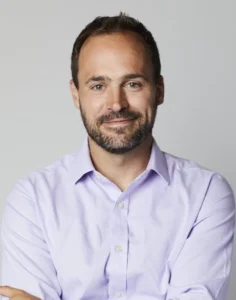
Chris Helfrich, CEO of Eat. Learn. Play. Foundation
Chris: Thanks, Denver. I am really excited for the conversation.
Denver: Likewise, here. Can you take us back to the early days of Eat. Learn. Play.? What were those initial conversations with Steph and Ayesha like? And how did you collectively shape the foundation’s mission?
Chris: Yeah. It’s been about six years, so it’s fun at this point to look back and figure out how all these things sort of piece together. What I’ve learned in getting to know the Currys and Ayesha specifically, better and better and better over the years, is that so many of the good conversations with them start around the dinner table.
And so, it was late 2018, we sort of conceived the Eat. Learn. Play. over a series of conversations around their dinner table. And in those conversations where the Currys were really inspired and wrestling with what could be made if they brought their philanthropic interests together to do something big.
In those conversations, Denver, they were really adamant about three things. The first thing that they felt strongly about is that this foundation be focused on supporting kids in Oakland, the Currys’ adopted hometown. It’s the place where the Currys became a family and where Stephen won his first three NBA championships.
Denver: Yeah.
Chris: Oakland’s also a community that has a tremendous amount of need. And so, the Currys from the very beginning have wanted Eat. Learn. Play. to sort of be the village, as Ayesha talks about, for Oakland’s kids. And so, that was the first thing.
I will also add that I know you’re a sports fan. It’s not a coincidence that we launched the foundation in July of 2019, only weeks after the Warriors had left Oakland and moved across the Bay to San Francisco. And so, Eat. Learn. Play. is in part the Currys commitment to making sure that Oakland and Oakland kids sort of remain supported.
Denver: Oh, that’s great. Not forgotten. Oakland is not forgotten. I like that a lot.
Chris: Oakland is not forgotten at all in these parts. The second thing they felt strongly about were these issue areas. Ayesha had been involved with the fight against childhood hunger for years through No Kid Hungry.
She felt very strongly that Eat. Learn. Play. should– and we weren’t named Eat. Learn. Play. at this time– but that the foundation should focus on that. In Oakland, almost 40% of kids live in food-insecure households. And what chance do these kids have to reach their full potential if they don’t have the nutritious food that they need?
Stephen felt very strongly that access to safe places to play and the opportunities to experience the joys and the benefits of youth sports be a part of the foundation, not to create the next great athlete, but because Stephen, I think, realizes how important play is to successful childhoods. And he attributes a lot of who he is right to some of the coaches that he was able to learn from and the experience of playing both team and individual sports.
And then, the education at the center of the foundation is something that was also a non-negotiable for them. But I give the Currys credit for being humble and recognizing that they didn’t know what they didn’t know.
And that’s what’s the most authentic space within this vast education landscape where they could have the highest and best impact with the unique assets that this foundation would bring to the table. It’s become childhood literacy for us. We didn’t know that at the time. But they knew that education had to be at the heart of what this foundation did.
And then the last one… it’s a story I like to tell, and it’s around the name of the foundation. That’s the other thing that really sticks with me from those early conversations. The Currys’ financial advisor at the time had been the one who filled out the 501(c)(3) paperwork with the IRS and had named the foundation The Stephen and Ayesha Curry Family Foundation.
Denver: Yeah.
Chris: And, it sort of falls along the lines of what these foundations typically are called. And it was Ayesha who said to me during one of those conversations, “I don’t want to do a darn thing publicly until we change this name because The Stephen and Ayesha Curry Family Foundation doesn’t say anything about the impact that we want to have. It’s all about us, and we want the foundation to be the opposite.”
And that is when Stephen chimed in and said, “Yeah, this is about impact for us, not legacy.” And so, we’ve adopted this mantra, “Impact over legacy.” And that’s been close to the center of Eat. Learn. Play. since we started. And so, those were a couple things that they felt most strongly about when we were putting this together.
But, over the next six to nine months, right in early 2019 and through our launch in 2019, it was really a partnership with the Currys and me, where they gave me a lot of leeway, a lot of trust to figure out, “Okay, within these parameters they’ve drawn, how can we create something that could make a pretty great difference, first and foremost in the lives of Oakland kids?”
Denver: I always think that the name of the foundation tells you a lot. And one of the things that I like is that there are no wasted words, Eat. Learn. Play., there’s not any “withs” or “thes” or anything along those lines. And sometimes that’s indicative of the way an organization operates. It gets right to the issue and not all the things that surround it.
Chris: That’s right. It’s really well said. Couldn’t say it any better myself.
Denver: How does working with high profile figures like the Currys form strategy? But more than that, I guess, Chris, what are some of the unique opportunities but also the unique challenges that come along with this?
Chris: Yeah, it’s a great question, and I will say that I’ve been fortunate to, over the course of my career, work with a number of celebrities, athletes, different people with high profiles.
The Currys are very unique just in terms of how generous and present and authentic they are. And so, I don’t want to paint with too broad of a brush because I am so lucky to work with two of the all-time great people.
Denver: Yeah.
Chris: And you’re right. It does come with a number of opportunities. When the opportunity for me came to build this foundation alongside of them, it was such a no-brainer for me, an absolute dream come true, to be able to build something from scratch with great people like the Currys, and then be able to leverage their voices, their platforms, and their networks to try to do good at scale.
It’s a dream come true. And so, you know, it’s those three things: the voice, the platform, the network that our Eat. Learn. Play. team every day has the ability to harness which allows us, I think, to grow faster than we otherwise would, to have people answer phone calls and accept meetings right around our work, that for a lot of other nonprofit organizations would just be harder.
And so, we’re definitely blessed with all of those things. And then, you ask too about some of the challenges. And I’d say that there’s no shortage of those either. We have the folks who oftentimes want to be in the Currys’ orbit and so can sometimes see, “Hey, if I make a donation to the foundation or try to strike up a partnership with the foundation…”, it’s sort of a backdoor way into getting some sort of endorsement deal. And so, that’s absolutely something over the last couple of years that I’ve had to get much better at sniffing out.
And then, there’s also people who are in their networks– very generous, well-meaning people, who have come to us and have probably been less excited around supporting and advancing the work that we’re doing in our three pillars in Oakland and are more “Hey, you know, you care about nutrition or you care about education. Take a look at what I’m doing. And would you get behind the work that we’re doing, bringing STEM education to students in San Francisco?” for example.”
And while that work is important, we’ve had to resist the opportunities or the invitations to get involved in other communities or working in other really important issue areas that just are not ours. And so, trying to figure out how to maintain our focus when we have an abundance of opportunities from the outside has definitely been a unique challenge that we’ve had to face over the last five, six years.
Denver: Yeah. With the word: no. Pretty much more often than any other! One of those types of things is if you ever break away from Oakland once, then people will begin to see. One of the challenges I’ve had, I don’t know if you’ve encountered this, but when I was at the Statue of Liberty, I worked with Lee Iacocca. And he was sort of the star of that. And then I helped Michael J. Fox start his foundation. What I found to be a little bit of a challenge is that I didn’t have any surrogates that when you wanted to really get broad-based support and you wanted people to come, that’s all they wanted. They didn’t want another board member or anybody else, or another player; they want the Currys, they wanted Michael J. I don’t know whether you’ve encountered that or not.
Chris: Yeah, it’s something that we’ve had to overcome, and I think as we’ve established our credibility over the last number of years, that’s become a good bit easier, but it still doesn’t satisfy everyone.
Denver: Yeah.
Chris: I will give Stephen credit, in particular. He’s really forced our team and me to be confident and say no to opportunities, or to be putting ourselves forward. He does not want to be essential to the foundation’s day-to-day operations. And, I say that in the best way. He’s very empowering. And so, I think we’ve had better luck.
For example, Stephen and Ayesha are not on this podcast today. You know, there are good people out in the world who do want to hear from some of the other people who are involved in driving this forward. It does involve disappointing people on occasion, but, you know, we’re doing the best we can.
“And so, I guess, going back to the origins of it, coming out of COVID, one of the things that we really learned was there was power in meeting kids where they are with the resources that they need and, again, doing so in fun, joyful ways.
So, the Eat. Learn. Play. bus really came out of those experiences of just trying to figure out how to support Oakland kids and using, I think, our big imagination at Eat. Learn. Play. to figure out not just how to bring resources to Oakland kids, but how to give them the very best, the most dignified, fun experience.”
Denver: Yeah. You’re doing pretty well. Let’s talk about some of the community impact you’ve had in Oakland, and I mean, you’ve done some extraordinary things, 25 million meals during the pandemic.
But let me ask you about this one, the Eat. Learn. Play. bus. What a fascinating concept that is. How did that idea come about, and what has been the community response to this mobile resource center I guess is what you would call it?
Chris: Yeah. Our Eat. Learn. Play. bus, I would put it up with any school bus, in terms of which one’s the coolest. This Eat. Learn. Play. bus is pretty extraordinary. It’s the result of a few things. And I’ll describe it really quickly: it’s a 36- foot long, retrofitted school bus.
For anybody who can see, I’ve got sort of the miniature version of it here. But it’s a free mobile market on one side of this bus. And on the other side, it is a free mobile bookstore. And the idea with this bus is: How can we be getting kids in Oakland the resources that they need and do so in fun, joyful ways?
And so, I guess, going back to the origins of it, coming out of COVID, one of the things that we really learned was there was power in meeting kids where they are with the resources that they need and, again, doing so in fun, joyful ways.
So, the Eat. Learn. Play. bus really came out of those experiences of just trying to figure out how to support Oakland kids and using, I think, our big imagination at Eat. Learn. Play. to figure out not just how to bring resources to Oakland kids, but how to give them the very best, the most dignified, fun experience.
And what we found with this bus is that when it rolls up to schools or community locations on a weekly basis in Oakland, kids flock to the bus. It’s like the feeling that I had, and probably you had, Denver, as children when the ice cream truck would roll up to the neighborhoods.
Denver: Before you said that, I was hearing the bells.
Chris: Yeah. That’s what we were after when we were putting together this bus. And, thankfully, that’s been the reception amongst Oakland kids. And so, the local food bank, who’s a dear partner of ours, helps us operate the bus.
And what they have said to us on dozens of occasions, it’s just the experience for kids of receiving charity, it’s like they’re smiling. And, what a change that is when oftentimes, kids receiving charity, it’s stigmatized. There’s some feelings of shame.
We’ve tried to turn that on its head with the Eat. Learn. Play. bus, and in a way where communities across the country are starting to ask questions of us and the food bank of, “Hey, how did you do that? We’ve never seen anything like this.” And so, it is fun to think that its impact is reverberating outside of the Bay Area.
Denver: Yeah. It is nice to know that you can help kids and bring joy to them at the same time. It just makes it even easier, and we sometimes don’t think that. We just think, “Give them the basics and hold them over… or just a bad attitude.”
Chris: That joy is at the center of really almost everything that Eat. Learn. Play. is about. Oakland, I talked about it very, very briefly, but it’s a community that’s going through some tough times right now. And, when you talk to leaders and families and community members, a lot of what’s oftentimes discussed is there’s an absence of joy in the city.
And absolutely, that’s something that is top of mind with everything we do, trying to inject happiness into the community and into these kids’ lives because they deserve to have the best childhoods possible.
“And like Stephen always says, “Be on the path to reach their full potential.” And so, everything we do, it is with partners and it is thoughtful, and it’s just trying to figure out not: What’s the easiest path?, not: What’s the sexiest path?, but we believe: What’s the best path to be able to make the biggest difference possible.”
Denver: You know, I was just going to ask you about that because I am curious about Oakland, and I love to talk to people who have a focus on an area. I know you have great partnerships there– at least 30 of them. You have a relationship with the Oakland Unified School District.
Talk about those collaborations, those partnerships. What makes them work? How do you know what you’re doing is what the community needs? And I know that you do, but that just doesn’t happen. Tell us how you do it.
Chris: No, it doesn’t happen. We’re nothing if not partner-oriented. I am not an expert on a lot of these issue areas. We don’t pretend to have been working in this community for generations.
What we have found works for us is being humble and doing a whole lot of listening to those experts, to those leaders, to those people who have been working in the community for a long time, and then trying to figure out with their expertise and with the unique assets that we bring to the table, how can we put together these like one plus one equals three partnerships?
And we’ve been deliberate. Over the first several years of the foundation, we made a series of small bets or small investments across our three pillars and a whole host of different areas and partners just to try to figure out where we could make the greatest difference.
And, we went through a process a couple years ago that I think changed the course of Eat. Learn. Play. for the better, where we went into basically a year of strategic planning. And the bulk of that was a whole lot of surveying the community and a whole lot of listening to those same community partners and leaders.
And what came from that is this idea, again, of meeting kids where they are with the services and the resources that they need, and in doing so in dignified ways… At the same time, came upon some really interesting research from the Draper Richards Kaplan Foundation that analyzed start-up nonprofits and which ones had the greatest impact.
And what they found was for young nonprofits, the greatest ROI tended to be those organizations that looked for the distribution channel or the systems that were serving their constituencies and work to improve those systems. And so, there was a light bulb moment a couple of years ago when it was like: Public Schools!
Public schools are where 35,000 kids in Oakland go every day to eat, learn, and play, but with outcomes that aren’t even close to good enough. But we have great relationships with the school district. And so, we made this pretty historic bet on doing everything we can to transform this school experience for a generation of kids.
And that does not look like Eat. Learn. Play., you know, writing big checks directly to the school system. Instead, it’s figuring out how we can sort of play this point guard role and find the right partners, the right leaders, who can join us and collectively wrap our arms around these kids where they are, to give them a chance to have the best childhood possible.
And like Stephen always says, “Be on the path to reach their full potential.” And so, everything we do, it is with partners and it is thoughtful, and it’s just trying to figure out not: What’s the easiest path?, not: What’s the sexiest path?, but we believe: What’s the best path to be able to make the biggest difference possible?
Denver: Yeah, and it sounds like you found that because often the best path is to plug into existing lines of communication, existing systems. Sometimes, too often, we try to create our own. You have one right here. Plug into it, and make it better.
The other thing that I love about what you said was this whole year of strategic planning and making small bets, and I have always believed that the organizations that grow big start small.
And It’s hard to do because everybody’s very anxious. But the ones that I’ve seen that start fast and grow big, they are learning stops, and all they’re doing is taking care of the operations, and you don’t need to do that. You just want to learn and see what works. And it sounds like you did that.
Let’s stick with partners for a little bit. Corporate partners: Salesforce, Kaiser Permanente. Talk about those and how those relations came to pass and what those partners are doing for you.
Chris: Again, you know, having Ayesha and Stephen Curry be so authentically at the center of Eat. Learn. Play. doesn’t hurt. But we’ve been very fortunate to have a number of great supporters, corporate partners that help make this work possible.
From the very beginning as we were putting together Eat. Learn. Play., the Currys’ promise was and is to forever fund all of our administrative and fundraising overhead costs so that every donation that comes through, all of it goes directly to our programs and the impact that we’re working to make in the community.
That kind of makes us a best bet. But we’ve been able to bring people, like corporate partners, in and rally them around this vision of joining our team to support the youth of Oakland. And we do that a couple of ways.
We do that I think, first and foremost, by making our work very approachable and tangible so that they can feel like they can grab a part of whatever part of Eat. Learn. Play. that most resonates with them and be a part of that story. So, that’s a big one that’s been a successful ingredient in those corporate partners.
We’ve also, over the last several years, really built up volunteer opportunities… and in Eat. Learn. Play., like really fun, meaningful volunteer opportunities for just about a couple thousand people now every year that allows employees, team members of these companies to feel really connected in a positive way to the work that we’re doing and the impact that we’re having.
And so, we just try to build true partnerships and with open arms, welcome these partners in as true drivers and owners of this work that we’re trying to do.
“Every kid should have access to the tutoring they need to be their best. And so, we made a commitment a couple of weeks ago, a $25-million commitment over the next five years, to bring professional tutoring to 10,000 Oakland students who are two or more grade levels behind.”
Denver: Well, that’s so important because as you know, giving in this country is below 50% for the first time in history, or at least in modern history. And unless nonprofits have a better idea of how to leverage partners, they’re going to be in big trouble. And a lot of them don’t.
Chris: Yeah.
Denver: Yeah, so you’ve got that. I’m going to have you back and talk about that one alone. That is a big, big, big-time issue. Future vision, speaking about that, and fundraising, you have some pretty audacious goals, I’d say, over the next year or two or three. Tell us about it.
Chris: Yes, we definitely do. And there are audacious goals that, again, are driven by what we’re hearing the community needs, and then being ambitious and being undeterred in terms of just trying to figure out how we can help plug some of those gaps or do some of this work.
I think two areas, in particular, where we are going big currently. One is around literacy tutoring. We did a major landscape analysis of literacy in Oakland at the beginning of last year, understanding just what a crisis it is. And you’ve got 85% of children of color in Oakland public elementary schools reading below grade level.
There’s a significant subset of that group who are two or three or more years behind in reading, when we know that a child’s ability to read at grade level at the right times– which is typically around the end of third grade– is a leading indicator of high school graduation rates, career success, and a whole lot more.
And so, what we’re facing, what we’re staring at is a community where the vast majority of kids aren’t reading at grade level. And what hope do they have for their futures if we can’t change this?
And so, one of the things that came out of our sort of landscape analysis was tutoring, like high-dosage professional tutoring as an intervention that is consistently impactful.
But because it’s expensive, the school district has not had a central strategy to make sure that kids have the tutoring they need when they’re behind in reading. It’s not a surprise that this would emerge as an intervention that people would want.
I’ve got three kids, the Currys have young children, and possibly in your instance, too, when my kids are struggling in a subject in school, we do whatever we can to get them the support that they need so that they can catch up and succeed.
And the Currys’ belief, our belief, is that this shouldn’t be a socioeconomic privilege. Every kid should have access to the tutoring they need to be their best. And so, we made a commitment a couple of weeks ago, a $25-million commitment over the next five years, to bring professional tutoring to 10,000 Oakland students who are two or more grade levels behind.
This is year-long tutoring. It’s like three to four times a week, it’s one-on-one, really special, and we piloted this at 18 schools in the last semester with unbelievable results. So, we’re just rolling this out.
We don’t have the $25 million entirely raised; we’re sort of speaking it into existence, but it has to be done, and we feel like if we get this right, then we can make a powerful case. The Currys can be powerful advocates to make sure that the government is funding a lot of this work moving forward, in Oakland and beyond.
And so, that’s the first big one, the tutoring. And then, the one other thing, I’ll say, is we are on a movement to make sure that every student in Oakland has access to incredible remodeled school yards that are sort of dream places for kids to be able to play and learn and grow. We just, over the last couple of weeks, finished our 15th school yard remodel.
And these are like million-dollar capital projects where we’re going into these school yards that are… basically a lot of them you can imagine are just old playgrounds and a whole lot of pavement that gets very, very, very hot when it’s hot outside. They’re more closely resembling prison yards in a lot of instances than school yards.
And so, we’ve come in with our big imaginations and some great partners and are just creating, again, these school yards where kids are spending hours every day, and just making them as good as possible: removing acres of pavement and putting in nature exploration areas in the middle of downtown Oakland, working with the kids themselves to dream up their dream playground and then building that… like hundreds of yards of murals and soccer pitches and basketball courts, outdoor classrooms, you name it.
We’re changing the faces of these schools in Oakland in the communities where the need is greatest, and it’s awesome. So, we’ve got 13 more over the next couple years, Denver, and then we’ll still have a couple dozen after that. But these schoolyard projects are awesome, and they’re expensive.
Denver: Oh, man. I got to get out there and see it. You know, the thing about that, too,… and not to take away even from the literacy, which is so important, but often when people can… they can’t see literacy… but they can see a school yard. And when you see that, it really changes the way people think.
I remember when my daughter was in middle school, they got a principal and she changed everything about the holiday concert they had. And I went up to her and I asked her why. And she said, “Well, if I told you that our history department is better, or our math department, you wouldn’t know it; you may not even believe me. But you just went to the holiday concert. How was it compared to last year?”
I said, “It was spectacular!” And then, it gets you to believe everything else she tells you, in terms of how all the education and the physical ed and everything else is getting better. So, I really love that combination.
Chris: Yeah, it’s really well said. I mean, if we had more time, I could tell you the 15 different ways that these school yards are having unintended, positive impact on these schools and the community surrounding the schools. But, safe to say, they’re making a huge difference and are injecting a whole lot of joy into the educational experience for tens of thousands of kids.
Denver: And, Chris, in the six years plus that you’ve been there… it sounds like you started before you really began… how has leading Eat. Learn. Play. changed you as a person and changed you as a leader?
Chris: Oh, that’s a great question. I mean, how has it changed me as a leader? You know, this job has humbled me in some pretty great ways, I’d say. This was like my first true entrepreneurial endeavor. You know, I was just staff for really the first year of Eat. Learn. Play..
And, to have to surround myself increasingly with people who knew what the heck they were doing, because I didn’t, it was definitely, definitely humbling, but also so gratifying. It has made this journey so much better. We’re now approaching 20 employees at Eat. Learn. Play., which I wouldn’t have believed if you had told me that four or five years ago.
And, yeah, it has been about recognizing the need to hire people who are way better than I am in their given fields, and doing what I can to support them to share and get them to buy into this vision, but then go do these things that you’re so great at. So, that’s a big way that I think I’ve changed as a leader.
Then, as a person… nobody’s ever asked me that question. I mean, I will say that this role has been the opportunity of a lifetime, like truly. And I wake up most days grateful to the Currys especially for this honor, this responsibility of leading this thing.
And so, I guess, I’m even more in touch with how grateful and privileged I am. I think that’s how I’ve changed. And then, the other thing is I’ve got three kids. My wife has sort of a dueling career where she’s very busy. And so, we’re super busy. But then I look at our founders, the Currys, and I see all that they shoulder and all that they do and how they thrive in chaos.
And I’ve developed a great appreciation for them, and I’ve learned so much from them and how they’re able to carry themselves and truly be present with everybody that they come across, even though they’ve got a thousand other priorities that are simmering in the background.
Like their ability to just lean into a moment and make people feel special and be present, that’s one of the things that I’ve learned the most by being with them in a way that I hope has changed me a little bit for the better.
Denver: Well, that is a gift to tell you the truth. You know, Bill Clinton was always good at that, they said, that with all that he had going on when he was talking to you, you would think you were the only person in the world. And that is really a gift.
Okay, I’m going to turn the spotlight away from you and put it onto Stephen. And knowing him the way you do, if he had chosen a different career path, other than being a basketball star, what do you think he might have done?
Chris: I don’t know if people know just how competitive he is.
Denver: I knew it in the Olympics, I’ll tell you that.
Chris: Yeah. But he’s the nicest guy in the world, and his smile sort of disguises it. But that guy works so hard and is so ruthlessly competitive. He’s obsessed with golf, and he probably is blessed with maybe the best hand-eye coordination in the world.
Denver: Yeah.
Chris: And so, I think he would’ve given professional golf a shot. But, you know, beyond that, like education, politics, these are all areas where I think that just his personality, you know, does, can, could really shine.
Denver: Yeah. Well, you know, he’s young enough. He’s not going to play that much longer. I don’t think he’s given up the professional golf ghost just yet. I’ve seen him play at Tahoe. He’s got a pretty nice game.
Chris: Yes. You should come out next year. We’re planning to do some fun things, but Stephen is sometimes frustratingly incredible at golf, and you’re like… yeah, he’s blessed for sure.
Denver: Last question, Chris. If an executive director of a newly formed foundation, led by a major celebrity came to you on their very first day and said, “Hey, Chris, what advice do you have for me?”, what would you tell them?
Chris: There was something you said, Denver, a couple minutes ago that I go back to, which is oftentimes these organizations that grow really, really fast end up stopping their learning journey too early. I think, to couple the hard work that it takes to build something, to couple that with humility and patience, I think, is key.
I’m so grateful that I’ve had years for Eat. Learn. Play. to naturally come into the organization that we are. We did not have it all figured out on Day one. And so, I think embracing that journey, that if you’re going to get it right, is going to take a long time is important.
And, sometimes, it’s very, very hard to sort of see the big picture when you’re starting something, and feel the weight of an opportunity or a challenge in front of you. But you’re right, it’s like: Commit to being on this journey for a long time, and I think that that is the better way to build something that’s going to have sustainable impact.
Denver: Yeah, you would’ve helped that new executive director a lot with that. If people want to learn more about Eat. Learn. Play. or financially support this incredible work that you’re doing, tell us about your website and the information visitors will find on it.
Chris: Our communications and marketing team’s done a great job of putting together a good website at eatlearnplay.org. We’re easily found on social media. The Currys are especially active on Instagram, so we are as well. But we’re easy to find. Eat. Learn. Play. is easy to find.
And, I mentioned earlier that the Currys underwrite the overhead and administrative costs. But that means that we require donations to do all of this ambitious work that we’re setting out to do. And so, donations are the lifeblood of this organization. We’d be grateful. We are grateful to anybody who chooses to get involved financially with the work we do.
Denver: Yeah, well, you got playgrounds to build and tutoring to do and a thousand other things. So, I hope people hear that message and get to your website. I want to thank you, Chris, so much for being here today. It was a real pleasure to have you on the show, and I so enjoyed the conversation.
Chris: Pleasure’s all mine. I appreciate the platform and you doing everything that you do.
Denver: Thanks.
Denver Frederick, Host of The Business of Giving serves as a Trusted Advisor and Executive Coach to Nonprofit Leaders. His Book, The Business of Giving: New Best Practices for Nonprofit and Philanthropic Leaders in an Uncertain World, is available now on Amazon and Barnes & Noble.