Welcome to The Business of Giving. I’m your host, Denver Frederick.
Despite impacting lives across every demographic, mental health remains one of the most underfunded areas in philanthropy—with just over 1% of philanthropic dollars addressing this critical issue.
Our guest today is working to change that. Joining us is Alyson Niemann, the CEO of Mindful Philanthropy. Since its founding in 2020, Mindful Philanthropy has been on a mission to catalyze impactful funding for mental health, addiction, and well-being initiatives, transforming how philanthropy tackles these urgent challenges.
As Alyson passionately states, “We think mental health is at the center of all things and all social issue areas.”
In this episode, we’ll dive into their innovative strategies, ambitious goals, and explore how each of us can play a role in advancing this movement. This is a conversation that promises to both enlighten and inspire. Stay with us as we explore how philanthropy is stepping up to make a real difference in mental health.
Denver: Alyson Niemann, welcome to The Business of Giving.
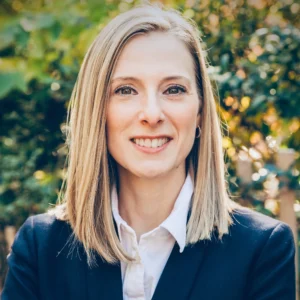
Alyson Niemann, the CEO of Mindful Philanthrop
Alyson: Thank you, Denver. It’s a pleasure to be here today.
Denver: You know, Mindful Philanthropy was founded in 2020. Could you share with our listeners how the organization came to be and how you found your way to it?
Alyson: Sure. Well, as you mentioned, Mindful Philanthropy was founded in 2020 with a mission to catalyze impactful funding to mental health, addiction, and wellbeing.
And really, it was an idea in 2019 by a couple of funders who… some of them were longstanding funders in behavioral health, but one in particular, who is our current Board Chair, Paul Heller, had just lost his son to the opioid crisis, and as he was thinking about turning to his own philanthropy after retiring from Vanguard and doing a number of C-suite rotations, he was challenged by a few of his friends and funders to think about what it would mean to leverage his philanthropy for a greater issue such as mental health, rather than just going really deep and narrow during the opioid crisis,
And so, that was really the idea, was that there’s not a lot of funding going to mental health, and how could we be a part of changing that? So, really filling the vast funding gap despite, really what they saw was an overwhelming need at the moment. And so they launched the organization with a report called Health in Mind through the Center of High Impact Philanthropy at Penn, and that launched Mindful.
I came to the organization a few months later as I was thinking about a career shift and looking at ways I could apply decades of really growing and scaling nonprofits… and I was thinking about what a shift could look like as I really was discovering how important mental health was to my own life, to my family’s life, and really to broader society.
“I remember when I first joined Mindful Philanthropy and I would describe the mission to people, and they would say, ‘Oh, that’s so niche, that’s so small in what you’re trying to do,” and I would say, “No, actually, we think mental health is at the center of all things and all social issue areas.’”
Denver: Yeah, it’s very interesting because I think if you take a look at the younger generation right now, they’re more interested in causes than they are in organizations, and this organization is the epitome of a cause-driven organization.
Well, Alyson, more than 90% of adults in the US believe that the country is experiencing a mental health crisis. Given that, what immediate steps do you believe philanthropy should take to make a significant impact?
Alyson: Yeah, as you mentioned, this is an issue area that all Americans agree on. It is one of the most defining issues of our time, and we believe that all of philanthropy has a responsibility to this work.
I remember when I first joined Mindful Philanthropy and I would describe the mission to people, and they would say, “Oh, that’s so niche, that’s so small in what you’re trying to do,” and I would say, “No, actually, we think mental health is at the center of all things and all social issue areas.”
So, you know, whether you’re thinking about the criminal justice system, or whether you’re thinking about education, or youth, mental health plays an incredibly important role. And really, in philanthropy, if you’re going to address those social issue areas, you have to think about how mental health can further the outcomes in those areas.
So, we’re really thinking about how all of philanthropy needs to take up mental health, addiction, and wellbeing, and how they can increase the dollars to those areas so that all of our societies, our communities, can have the resources they need to be well… and really increase access to those resources.
Denver: You know, I’ve always looked at mental health a little bit like climate. Climate used to be niche to a degree, but now every organization, every institution on the planet is impacted by climate. And the same is very, very true for mental health.
Well, let’s take a look at the current picture of mental health funding. Where is it right now? What are some of the biggest gaps that are not being met?
Alyson: Yeah, it’s a great question. And actually, we’ve been doing research over the last nine months to lay out the landscape of funding in the United States. And this was something that we took a look at in our foundational report, Health in Mind, that was put out at the Center for High Impact Philanthropy a few years ago.
And so this year, we updated that research, and we know that about 1.7% of philanthropic funding from non-governmental sources– fiscally sponsored and charitable gift funds– supported mental health in the United States in 2022. So, 1.7% is very little, right? When you think about the overall pie of giving in the United States… and we know what the top giving areas are in terms of religion, education, and health, but mental health is just a tiny fraction of that, under 2%.
So, there’s a lot of work to do, and we really believe that there’s a huge opportunity here to pay attention to something that all Americans for the most part, as we mentioned earlier 90% agree, is an issue facing our society right now.
Denver: We talk about big bets. We talk about audacious goals. How does $35 billion in annual mental health investment by 2035 sound to you? That is one big target. Tell us some of the thinking behind that target and how you plan to get there.
Alyson: Yeah. You know, our team really, as we were thinking a few years ago about what the field needed, we started to hear from funders that while there was increasing awareness around the need to fund mental health, there really is a lot of fragmentation in the sector as new funders are coming. And what we were finding is that there were a lot of learning journeys, people trying to figure out how to start giving in this area, but there was overall a lack of vision in the sector. What are we trying to do? What are we aiming for? What would success look like in this field compared to other fields, some of which I just mentioned?
And so, our team spent a lot of time thinking about what would a big, hairy, audacious goal look like for the sector? And if we had our wish and we accounted for inflation and all of the factors we’re thinking about, could we achieve something in 10 years? So, our goal was and is that by 2035, we would see investment increase to $35 billion, as you mentioned, to mental health, addiction, and wellbeing.
And we do think this is a pretty audacious goal, but if you think about what is currently going to health, to religion, to education, it’s actually not that audacious, and especially when you start to account for inflation. And it’s just taking what the current giving levels are and increasing them by five-, six-, sevenfold in order to get to that number.
And if we think about all of philanthropy taking up this issue area and starting to give and increase their giving by, let’s say, six- or sevenfold, then we would be able to get there. So, it really is about equitable access.
And I also want to say we recognize that the philanthropic dollars are honestly a drop in the bucket when it comes to our healthcare system, and so we not only want to increase the level of funding, we want to increase the quality of funding, and we want to make sure that that funding is actually unlocking public dollars to transform the systems that actually deliver the care.
So, part of the way that we’re going about doing that is through educating all of philanthropy on how do they get started. What is the case for investment? And these are part of the reports that we published last year and we’re continuing to publish this year called Mental Health at the Center, where as we mentioned, mental health is at the center of many issue areas. And so how do we make the case to our boards and principals and everyone in philanthropy that investment is needed? And then we lay out in the second report: What are the areas that if we invested in, they would start to see systems transformation?
So, we lay out those five topics and priority areas for the field, which we believe need investment and can produce systemic change.
Denver: Okay, so, let’s say, I am a philanthropist, and you have whetted my appetite, and I can really make a big impact here along with a lot of other people, how does this work? What do I do? How do I work with the organization? What guidance and direction do you give me? Give me a little bit of sense of the dynamics of working with Mindful Philanthropy.
Alyson: So, Mindful Philanthropy– we are what we call a field builder, so we come to this field; we have seen the gaps that are really within the field, and we’re building a brand new field of philanthropy.
There’s one funder I work with, Beth Brown, who’s at the Arthur M. Blank Family Foundation, and she talks about: if you were to come to behavioral health a few years ago, 5, 6 years ago, you would be at a health conference and maybe at a smaller conference room with a few funders talking about behavioral health. And what exists today, as a result of Mindful Philanthropy’s work, is a brand new field of mental health philanthropy.
So, we’re building this field through the way that we convene funders. So funders get in touch with us through other funders, or they go to our website; they’re able to then become a part of our network, which is at this point over 850 funders that we work with, and they’re able to attend convenings that we do all across the country. We work with staff, we work with principals, really everyone who is in philanthropy to increase investment.
We also guide philanthropy. So, we are a strategic guide and a thought leader in the field that’s bringing together experts, researchers, the nonprofits that are on the ground, and we’ve published about 36 or 37 pieces of guidance in the last three years on a range of topics from crisis, to youth mental health, to women and girls, to sports, and an upcoming one on faith and mental health around the holidays.
So, our goal is that no matter what your entry point, your vantage point to mental health, that we have guidance that would apply to your giving priorities, your values as a philanthropist, and that you can begin to understand where you fit in the ecosystem and how you might make a difference.
And then finally, we uplift high impact solutions. So these could be uplifting nonprofits for investment; it could be public-private partnerships; it could be collaboratives and funds. So, we help the funders themselves to find the vehicles that they can utilize or the solutions that they can utilize to make a difference in the field and that, again, around those priority areas that I mentioned earlier, that we believe will start to transform the system.
So, we have been on a mission for the last few years to really form a community of philanthropists that are doing this work together. And that’s really important, that community and doing the work together, because we find that we really can’t do this in silos.
“A lot of the work that is driving mental health right now comes from personal stories, those who perhaps have lost a loved one to mental health, or who are struggling and don’t know where to get resources, so it’s deeply personal. And so, all the more reason that a community of people around this issue area is so much more important and that we can really be in the work together and really bring relationships to the forefront.”
Denver: Yeah, and I think that’s very contemporary as well. You know, I’ve always said that one of the reasons that I felt that text giving did not get to be as successful as people first thought, it’s because you’re doing it in a silo by yourself, and it just seems that society today, when you’re doing something like this, you want to do it together with other people– whether it be just uplifting each other, whether it be a little peer pressure, whatever it may be, you just don’t feel that you’re just a tree in the forest falling with no one around. There are other people that you learn from, and you just enjoy being part of that community that you’ve built.
Alyson: Yeah. You know what’s interesting, and I think a parallel that’s happening with our work right now is, the Surgeon General, Dr. Murthy issued a warning about loneliness in our society, and as we’re working in mental health, this warning about loneliness and how it affects our mental health and our physical health has come out in recent years.
So, we really desired that not only are we doing this work in collaboratives and in community from a strategic perspective, but a lot of the work that is driving mental health right now comes from personal stories, those who perhaps have lost a loved one to mental health, or who are struggling and don’t know where to get resources. So, it’s deeply personal, and so all the more reason that a community of people around this issue area is so much more important and that we can really be in the work together and really bring relationships to the forefront.
Denver: Yeah, yeah. Very well said. Can you share a few success stories in these early innings in terms of what you’ve been able to do and achieve?
Alyson: Yeah, definitely. Well, I think I mentioned our founding story and when the founders thought about what it would look like to launch a philanthropic investment vehicle; the premise was for every dollar invested into Mindful Philanthropy, could it return $25 to the field?
And as of last year, at the end of 2023, we had returned $29 to the field for every dollar invested into Mindful.
Denver: Fantastic.
Alyson: We were activating. over $150 million to the field at the end of last year. Now, one of the things that has happened in the last few years is that our work has really become widespread, and we often hear that our work is being used to launch funds or collaboratives, that our work is being used by a lot of the different advisors that are out there, whether it’s single advisors or institutional advisors, which we feel very humbled by that our work would be that widespread. And so, we honestly are in the process of reevaluating how do we measure impact because it’s more than just the numbers, it’s about the collaboratives that we just talked about and how we do this work in community.
And a couple of just success stories I’ll share: one, early on in our work, we brought together a group of funders in Montana, where they were seeing, especially in rural areas, the need for increased investment in mental health. And so, over a course of about 18 months to 24 months in working with them, we were able to launch a policy working group that resulted in a very small investment. I mean, a lot of people think that policy is a huge investment of funds. It was probably total in the neighborhood of about $60,000, $70,000, and that advocacy and that policy effort actually returned a $300-million public trust in the state of Montana that’s now being kind of leveraged across the state. So, talk about return on investment, that was a win, and it really was not a lot of time or investment of dollars.
The other one is that we often find organizations that are early to the work and that are at the forefront of the work that they’re doing. So, one is The Confess Project, which was launched by Lorenzo Lewis. It’s now widespread, but back when it was just a tiny organization, Mindful made a recommendation to a philanthropist to invest in their work. That investment grew and enabled them to scale their work beyond the state of Georgia and to actually attract national funding from major funders.
So, we really pride ourselves on being, you know, having an ear to the ground, understanding who are the nonprofit leaders that are out there, that are innovating, that are filling gaps, and that we can pair with philanthropists who would be great partners for them and get in the trenches and help them scale their work.
And then I would just say, lastly, I talked a little bit about our field building efforts, and the way that we go about that is by really looking at the gaps that are out there and where do we have the unique capabilities and capacity to fill those gaps, and one of those has been around convening in the space.
So, two and a half years ago, almost three years ago now, we launched what’s called the Activate Summit, this convening for principal philanthropists that are on a mission to do this work together. And after the first year, I remember one philanthropist who had flown from Switzerland said, “I had been alone for so long doing this work, and I feel like I finally found my people.”
The second year after the summit, we had a philanthropist that came and immediately said, “I was so inspired by the people in the room and the work that we made a $10 million gift to Children’s Mental Health in Georgia.”
And that is the kind of action that we want from philanthropists– that, as they’re in community doing the work, they’re inspired by one another to act in a coordinated way, to act strategically, and to activate funds to the field.
Denver: Yeah, those are three great stories. It reminds me a little bit of the conversation I had with the CEO of Crisis Text Line, which is really trying to help people who are in a crisis. But, you know, I don’t even know if they thought about the secondary benefit when they first started. They’ve trained over 50,000 volunteers, and those 50,000 volunteers are in communities and they’re advocates, and they’re making things happen.
So, often, we just think about helping the person who needs to be helped, and we don’t even think about those secondary benefits that really can be profound as you’ve just described.
Alyson: Yeah, absolutely. Their work is fabulous.
Denver: Talk a little bit about data sharing. That’s a challenge in mental health. As a matter of fact, I say data sharing is a challenge in every endeavor on the planet. What have you been trying to do to try to improve that among funders and organizations?
Alyson: Yeah, I mean, you’re highlighting… it really is an issue, data, in particular, and it exists at several different levels within the mental health field.
So, I’ll talk a little bit about the nonprofits themselves on the ground, and then we’ll kind of work our way up, but I think what we see right now is that, as I mentioned, there is a lot of activity, a lot of innovation that’s happening in the space, and many of the organizations that are on the ground working are newer to the field. So, we do have organizations that are longstanding, that have been doing the work for a long time. I think I recently heard from someone on our team, it’s about 10,000 mental health nonprofits, but if we actually look at the breadth of nonprofits themselves… and there’s depending on which year you look at maybe 1.6, 1.8 million nonprofits… and if we think about the demand that they are getting from communities to integrate mental health into their services… so whether it’s a food pantry or a housing project or nonprofit, like these organizations are thinking about integrating mental health, and then you start to think about: how do they measure the work that they’re doing, right?
And especially as you think about integrating mental health into these different projects and nonprofits, that can be challenging to determine what specifically was a mental health outcome and what was related to something else.
The other thing we’re seeing with nonprofits is that most of them don’t have the resources. Everyone in the mental health field right now, because of the awareness, because of the heightened need, is overworked. They’re out of capacity; they’re on the cusp of burnout, and they don’t have resources to measure their work.
I was talking with a funder yesterday, and they talked about given 15% of their grants are allocated just to measure the work of the nonprofits and that they designate that for them, and I thought that is so incredible because a lot of times as funders, we ask for data, we ask for measurement: “Show me your impact,” “Show me what you’re doing,” and we don’t give them the resources to do that, and that they’re actually designated, and we’re a partner with them in that.
So, I think that those are a couple of the issues within the nonprofits themselves that are leading to data and measurement being a challenge for them, and as funders, we have to really think about: how do we partner with them? How do we help them and give resources to the issue?
And then the other thing is that as we think about integrating mental health into other issue areas such as the criminal justice or education, there actually is not a taxonomy for measuring the dollars that are going into the space. And so what we’ve been doing at Mindful is trying to create a new taxonomy for that. We would love for candid and future iterations to create specific mental health taxonomy that would allow us to accurately measure the dollars going into the field, and we actually highlight this in our new report on the US funding landscape– that this is something we have to focus on in philanthropy, in data collection and in measurements so that we know where the dollars are going, how they’re being utilized, and what they’re producing in terms of outcomes in the populations that we’re intending to serve.
Denver: Well, you said you were doing field-building and I guess you really meant it.
But, I love the idea that the funders are putting some money towards impact and evaluation because everybody wants it; everybody wants evidence, and nobody wants to pay for it.
Alyson: It’s so true.
Denver: That is just so fantastic.
Well, let’s take one of the things you mentioned before, and that is young people’s mental health. That is such a hot topic right now. Alyson, how are the unique mental health needs of youth being addressed, and what specific challenges are being encountered?
Alyson: Yeah, I mean, we could talk about this all day, right? I think part of it is some of the challenges that youth are… and I could put on a couple of different hats here, I definitely have on my Mindful Philanthropy hat, but I’m also a parent of teenagers, I’m a professor of 20-somethings at NYU, and so when I kind of look at the breadth of what youth are experiencing, they are growing up in a time in which there’s unprecedented information that’s coming at them all the time. There’s been shifts in their childhood in terms of, and I think Jonathan Haidt really does say it well in his book, The Anxious Generation, when he talks about the decline of the play-based childhood and you know, when a child scrapes a knee or has an argument with another child and they have to work through those things on their own. So, I think there has been a decline in the play-based childhood, and maybe how we parent has become a different engagement between our communities.
I also think what we talked about in terms of the rise of loneliness as we’re in these relationships with technology. Technology can be a tool. We talk about that in our own home, that technology is a tool, and we need to learn how to utilize it as such. But what it can do is it can interrupt the relationships that are in front of us that in order to bring us into community.
And so, I think all of those things are kind of leading to the information, the shift in parenting, the relationship with technology, and the lack of relationships in person are leading to some of these rises that we see in anxiety or depression, or how do I just become a resilient person.
And then I think the other thing is that we’re getting to the place where we’re able to screen earlier; we’re able to pick up on things, such as mental illness a little bit earlier and intervene earlier, which means that we need to have access to the treatment. And one of the things that we’ve seen is that the access to treatment is sometimes anywhere from 18 to 24 months, and that’s not what we want. If you come in with a mental health condition, or you’re suffering right then, you don’t want to be on a waiting list for 4 months, 8 months, and you want to come in to a physician that knows how to refer you within a medical system.
So, we have kind of like a huge storm of issues that are converging, from everything… with how parents are navigating the system, technology and information entering, and then: How does our healthcare system really respond to those that are experiencing mental illness and give them timely care and access?
So, we could talk for a long time about how do we actually overcome those challenges. I think part of it is, one of the things we’ve done in our community and in our household is really thinking about: how do we help our kids be in community? How do we as families be in community with one another? How do we encourage them to take risks and be in nature, to have deep relationships with peers and mentors, and then really how to have responsible use of technology and have access to… whether it’s therapists or the tools and the resources that they need to be well.
Denver: You know, of all the things you just said, one that really struck me was play-based activities, and I’ve always admired the French psychologist, Piaget, who really talked about the importance of play and the importance of play without adult supervision. And when I think about when I grew up and having to figure out these disputes I had with the guys on the other team, we always managed it among ourselves, and there was a real art of negotiation and fairness.
But, and this is pretty anecdotal and certainly not scientific, I’m a big walker; when I walk around this neighborhood, I never hear kids’ voices. I mean, never. And when I grew up, that’s all you ever heard. I mean, until dinner hour, everybody was screaming and yelling and laughing and fighting and stuff, and now it’s quiet as can be, so I think there’s a lot to be said about play-based activities.
Let me ask you about the stigma around mental health issues. Is that lessening overall, and is it more pronounced in certain communities than in others?
Alyson: Yeah, I mean you really just hit it on the nail with how you framed the question, which is it is lessening overall. I think for… I’m Gen X, and so when I think about my generation, we’re probably a little bit more comfortable talking about mental health than maybe, say, our parents’ generation. But it can still be not quite a taboo, but not as often talked about as, say, my kids’ generation, Gen Z. So, we see that there are definitely generational differences.
We also see that it’s different in different communities, right? In communities of color, sometimes there can be more stigma. There can be just a lack of resources and awareness. There can be a lack of culturally responsive care. And so therefore, that lack of resources can inhibit how people might approach care and getting care, and thus contributing to stigma.
So, we definitely see that it is declining, but we still see that there are pockets of it.
And then I think one of the things we have to be careful about with stigma and the conversations around mental health is that there’s a lot of information that’s out there on social media… and really learning to validate and verify the information that’s out there and not just taking it at face value. So especially if it’s coming through social media channels or through different influencers, so that we’re not getting an inaccurate picture of what’s happening with mental health that could be leading to more stigma or inaccurate pictures of what’s happening.
“One of the reasons that Mindful Philanthropy exists as a landscape expert and field-builder is to enable funders to know where there are gaps, where there is a lot of activity happening, and then enable them to find their place within the ecosystem where they can really make an impact and a difference.”
Denver: You know, in addition to your funding model, which is incredibly innovative, are there any other innovations that you’re particularly excited about at the moment?
Alyson: Yeah, I mentioned one of them earlier, and I think The Confess Project is an example of a type of innovation around workforce. So when we hear philanthropists that come to mental health, they immediately start to notice that workforce is an issue within mental health and it’s what contributes to access. And so when we think about workforce, we have to think about alternative forms. We’re never gonna have enough therapists or clinicians to address the need, and maybe there needs to be a reshuffling of where those clinicians and therapists are.
But we also have to think outside of the box and think about what are the types of peer support that could be helpful to those that are suffering or that need a very minimal amount of care. So this peer-to-peer support is a growing field, a growing innovation that we’re seeing, and it’s not just barbers, such as in The Confess Project; it’s also libraries that are becoming hubs of information for mental health, and we’re seeing some of those innovations pop up.
It could be that on the campus, that there’s an organization that puts bandanas on their backpacks, or a friendship bench, where they’re really thinking about where can we meet, how can we meet people where they are and deliver at least a minimal form of service and then connect them to resources for those that need it most. So, I would say that’s one big innovation that we’re seeing right now is how people access care.
A second one that I would say is around collaboratives and multi-stakeholder approaches to addressing mental health. I think we see funders that are realizing this is such a huge issue that requires incredible partnership. And so, in Indiana, we partnered with the Indiana Mental Health Roundtable, an initiative started by the Lieutenant Governor, and it’s all of these stakeholders that are coming together to advance mental health in Indiana. And because of the stakeholder approach and the public-private approach, they have been able to accelerate their outcomes in an incredible way. So, I think that multi-stakeholder approach is one.
I think also drawing down interesting forms of capital… so we know of a couple of different collaboratives that we’re working with who are drawing down Juul settlement money or opioid settlement money in order to further mental health access and services. So, there’s a lot of innovation that’s happening out there.
One of the things I would just say as a caution, though, is that there’s also a lot of duplication that’s happening in the field, and that is one of the reasons that Mindful Philanthropy exists as a landscape expert and field-builder, is to enable funders to know where there are gaps, where there is a lot of activity happening, and then enable them to find their place within the ecosystem where they can really make an impact and a difference. And we encourage people to obviously come with a posture of learning and humility to the field to say: Where can my dollars make the most difference, and how can I be a part of the overall systems change that’s needed in the field?
Denver: Yeah. With so much to be done, we don’t need replication.
Alyson: Yeah.
“We hope that it is a movement in a community where 10 years from now when we look back, we’ll see that people’s lives are noticeably different and better as a result of being able to have what they need to be mentally healthy and well.”
Denver: There’s too much.
You know, in some respects, Alyson, you are leading a movement almost more than you’re leading an organization, and that probably comes with its own learning curve. What have been some of your biggest learning experiences or challenges at Mindful Philanthropy, and how has it shaped your approach?
Alyson: Yeah. Well, thank you, and I think that is an interesting thing about Mindful is that, I lead an organization, but we are leading this broader movement of funding to mental health, addiction, and wellbeing, and honestly, we’re a pretty scrappy organization. So I think, you know, we’re a startup and all the challenges that come with a startup, and I have a phenomenal team, and everyone wears multiple hats. And I think the one thing that we have done really well and we placed an emphasis on is just learning and getting better all the time, and we think we do after-action reviews; we’re always talking about different ideas and other sectors that we could bring into the field, and so really, questioning the status quo and thinking about where we ourselves can be innovative.
Reading books like Unreasonable Hospitality by Will Guidara, which has nothing to do with mental health or philanthropy, but our goal in this is to create an environment and a community where people can show up with their whole selves, including their stories, and then think about ways that they can make an impact together. And we hope that it is a movement in a community where 10 years from now when we look back, we’ll see that people’s lives are noticeably different and better as a result of being able to have what they need to be mentally healthy and well. And I think we’re doing our best to learn and get better every day and to help each one of the philanthropists that we work with bring their best and to leverage what they have for impact and good.
Denver: Yeah. I’ve always been an advocate of less focus on quarterly goals and more focus on quarterly learnings.
Alyson: Yes.
Denver: Because if you learned every quarter, you’re going to be moving ahead.
Finally, Alyson, if you could give one piece of advice to philanthropists interested in supporting mental health initiatives, what would that be?
Alyson: This is a hard one. One piece of advice. I think my one piece of advice for any philanthropist that is new and coming to this space is to take risks.
This field needs a lot. There are gaps in many different places, and we often see funders coming with a two-year or three-year learning journey. And what we say is that it’s urgent, and we have to take risks and then learn, right? We were just talking about learning. But take risks. Invest in the people that are proximate to the issues. Give them the resources they need, even if it feels like a risky investment, and then help them get better. Be in it with them and help them get better.
So, I think it would be just: take risks, that the field needs risk takers, innovators, and people who are willing to just go above and beyond and to be okay with failing.
I think when we look at technology and we look at companies, we’re okay with an investment failing, and it might take 40 tries before we get to something that works, but when it comes to philanthropy, we often don’t bring that same mentality. We want it to work the first, the second, the third time instead of giving the resources and the support needed to those that are proximate and helping them continue to get better so that it will work.
Denver: Yeah, great piece of advice. Risk is our four-letter word in the sector, and sometimes, it just needs to be reframed as R&D. Just look at it as R&D… you know, they’d be willing to take more risks.
Alyson: That’s right, that’s right.
Denver: Alyson, for listeners who want to learn more about Mindful Philanthropy, tell us about your website and what kind of information they can expect to get there.
Alyson: Yeah, well, if anyone is wanting to learn more about how to get involved with Mindful, you can go to mindfulphilanthropy.org or you can email us at [email protected].
And on our website, you will find all of our work, from our convenings, to webinars, to the podcasts and articles that have been written about our work as well as our guidance, and our guidance is completely free for those that are interested. We really want our resources to be equitable and usable for anyone in philanthropy.
And we also are launching in the next few months, a community where people can get on a platform and learn from one another and interact with our guidance and all of our materials and our knowledge in really unique ways. So, you can visit us at mindfulphilanthropy.org.
Denver: Fantastic. Well, thanks so much for being here today, Alyson, and for a really interesting conversation. It was a pleasure to have you on the program.
Alyson: Thank you, Denver. It’s my pleasure to be here.
Denver Frederick, Host of The Business of Giving serves as a Trusted Advisor and Executive Coach to Nonprofit Leaders. His Book, The Business of Giving: New Best Practices for Nonprofit and Philanthropic Leaders in an Uncertain World, is available now on Amazon and Barnes & Noble.