Notes #106: Maybe the Exceptions Aren’t the Problem
The most dangerous blind spot in a recognition system may be the belief that what it knows how to recognize is the same thing as what is valuable.

The most dangerous blind spot in a recognition system may be the belief that what it knows how to recognize is the same thing as what is valuable.
A question worth carrying into the weekend. What is one change you would be willing to fight for even if you knew that, a generation from now, no one would remember it was you who made it happen? That answer tells you what you are actually building.
Don’t admire the bounce. Fund the repair. So a question for anyone leading people through a hard season. Who on your team have you been quietly praising for their resilience, when what they actually needed was for you to lighten the load? What would real recovery require, and can you give it?
The leaders who make their organizations matter are the ones who can say what they do in words that are unmistakably their own. So try it right now, in the comments. Describe what your organization actually does in one sentence, without using “impact,” “empower,” “transform,” or “community.” If the sentence is hard to write, that difficulty is the most useful thing you will learn this week.
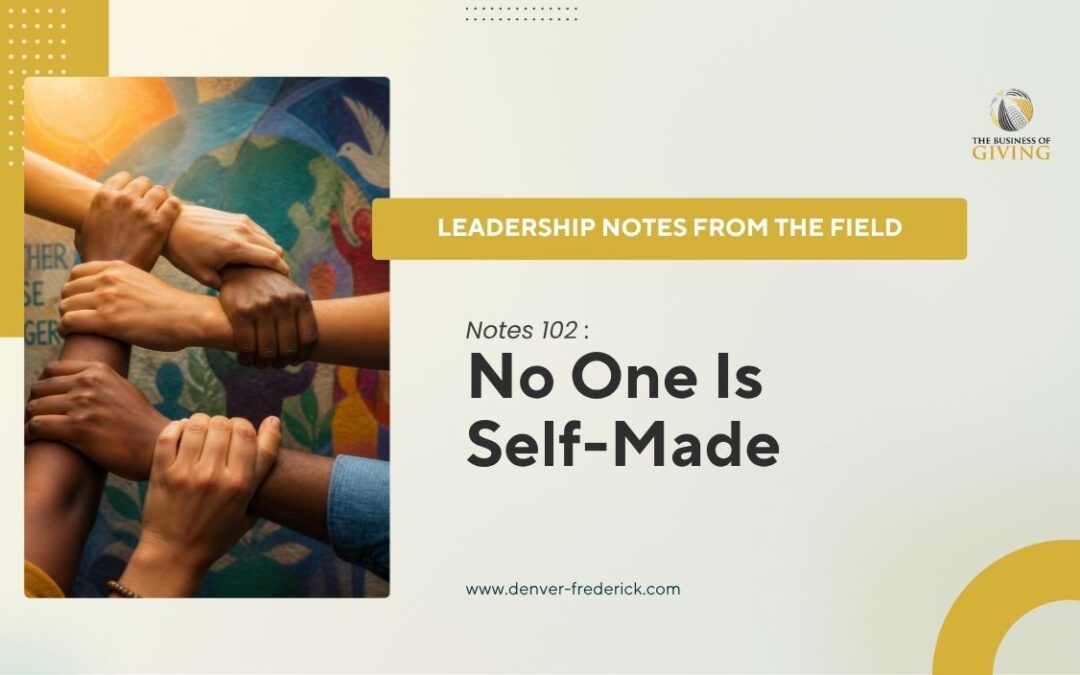
The leaders worth following are the ones who know how many hands built what they are tempted to claim by themselves, and who share the credit as honestly as the work was actually shared. So do it here, in public. Name one person whose unseen contribution made something you are proud of possible, and who has never gotten the credit. Say their name. The acknowledgment is the work.
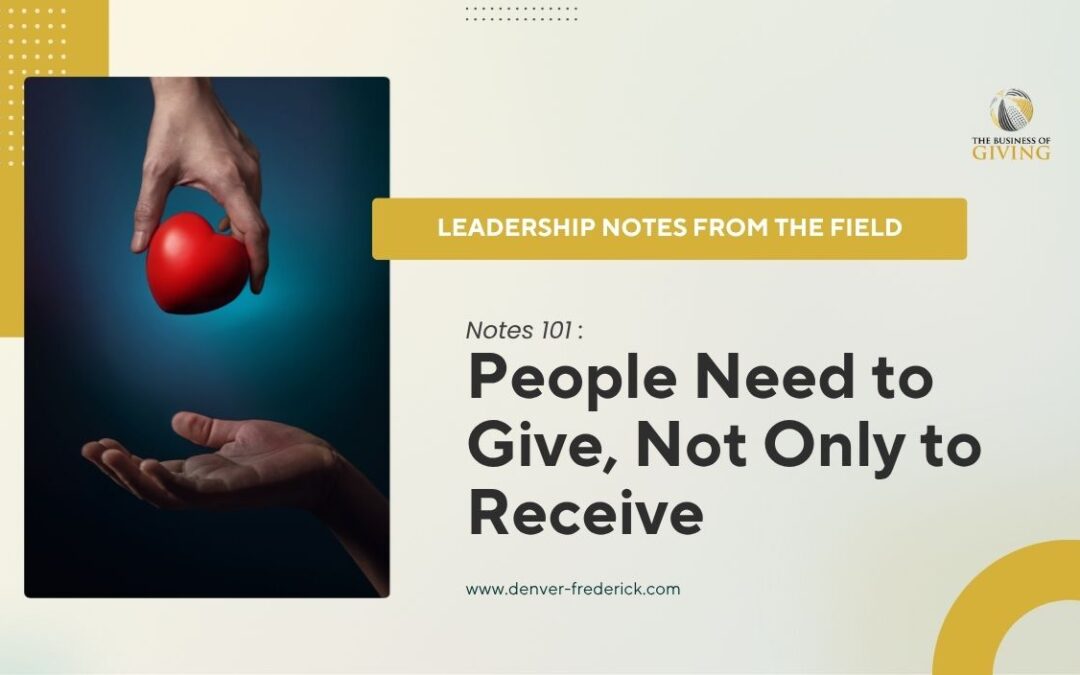
The deepest poverty is to be treated as someone with nothing to offer. The deepest respect is to ask someone to contribute, and to mean it. So where in your work do you treat the people you serve only as recipients? And what would it look like to ask them to give, not just receive, and to actually build on what they offered?