

BLOG
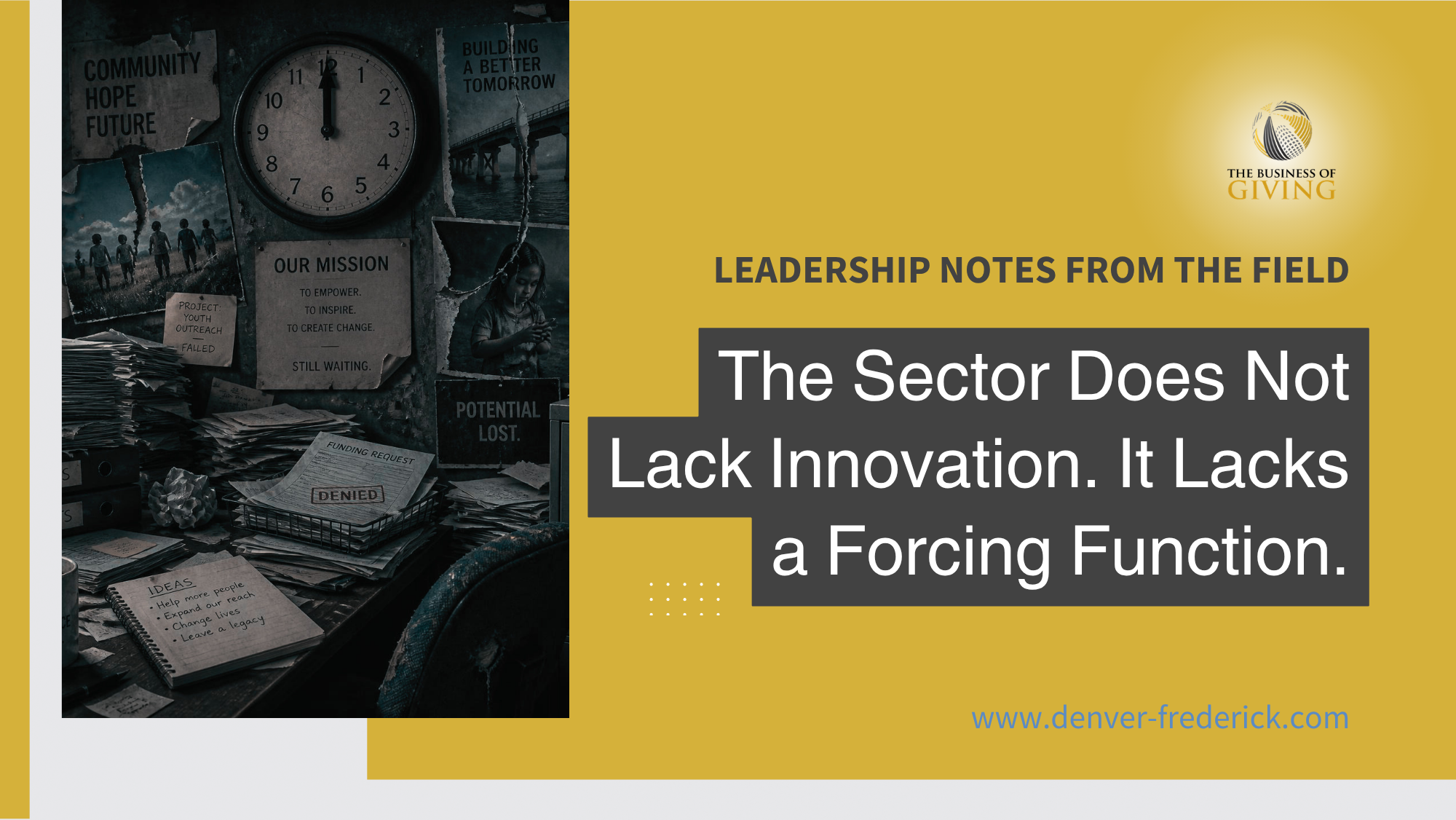
Notes #78: The Sector Does Not Lack Innovation. It Lacks a Forcing Function.
In business, a weak model eventually dies. In our sector, it often gets endowed. That single difference explains more about nonprofit stagnation than any conversation about mindset or creativity ever will. When a company loses its way, the environment supplies the reckoning. Competitors take its customers. Capital flees. Bankruptcy clears the ground. The organization can resist reality for a while, but reality eventually arrives and forces the question.
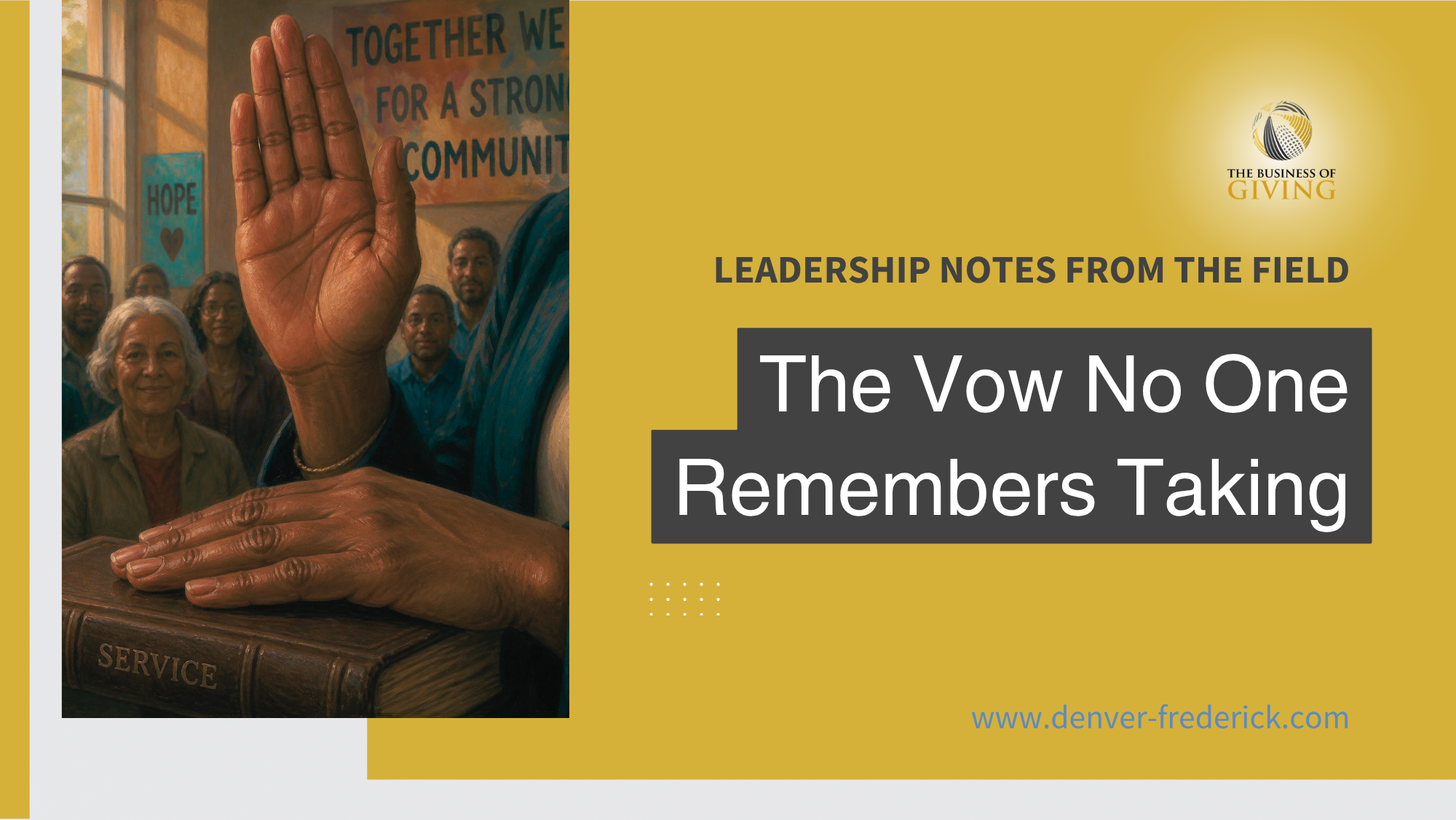
Notes #77: The Vow No One Remembers Taking
Somewhere in a long run of lean years, a leader makes a promise they never say out loud and may not notice making. They promise to stop wanting. Not to stop working. Never that. To stop asking. To stop naming the distance between what the mission needs and what it is handed. To shrink every request before anyone has the chance to refuse it.

Notes #76: Your Calendar Is Your Real Mission Statement
Every leader can tell you what they value. We have the mission statement, the strategic plan, the speech about what matters most, and we usually believe every word of it. But there is a more honest record of what we actually value, and it is not written in any of those places. It is written in where our attention actually goes. What we put on the agenda. What we measure. What we keep asking about. What creates urgency in us, and what we let quietly slide.

Notes #75: The Call for Everyone Is a Call for No One
There was an obvious problem in a coalition I worked with, the kind everyone could see and everyone agreed mattered. It went unaddressed for three years. Not because anyone opposed fixing it. Because every capable person in the room assumed someone better positioned would move first.

Notes #74: How Leaders Hold Failure
Most leadership writing treats failure as an interruption. A setback, a lesson, a temporary detour on the inevitable march toward success. But spend enough time around institutions and you learn something more unsettling. Failure is not the exception in leadership. It is one of its permanent conditions.

Notes #73: Every Standard of Proof Is a Distribution of Power
A funder once told a community group I was advising that he would consider their work proven when they produced the kind of evidence his board recognized. Randomized, controlled, expensive. The group did the most effective work in their neighborhood and could not produce a study like that in a hundred years. The people they served already knew it worked. That was not the kind of knowing that counted.