
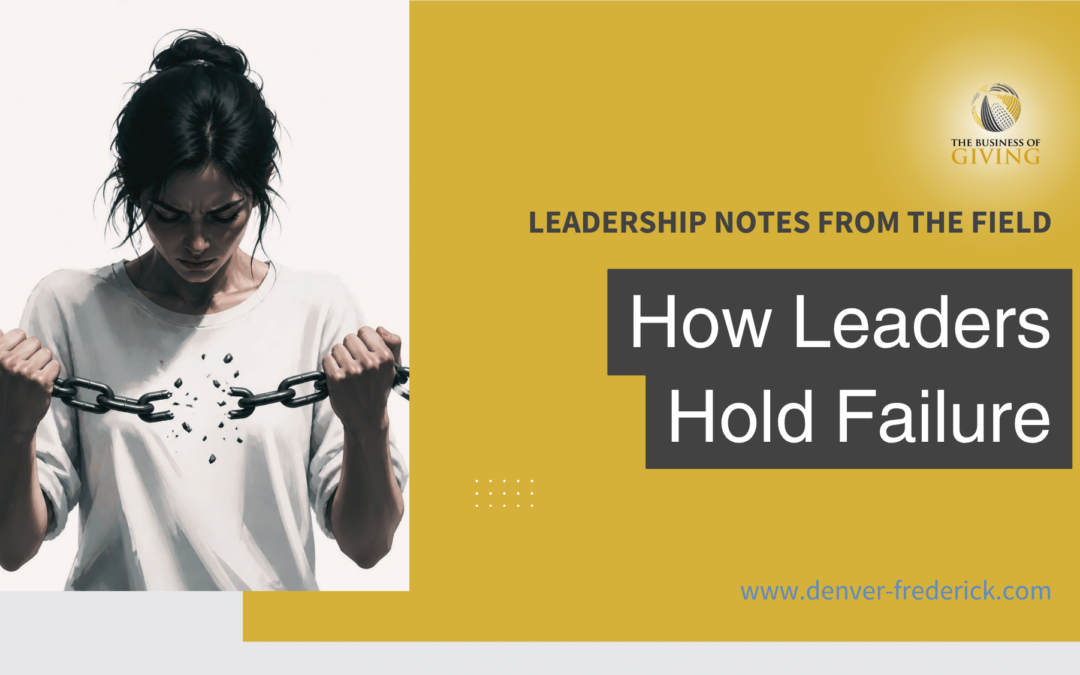
Most leadership writing treats failure as an interruption. A setback, a lesson, a temporary detour on the inevitable march toward success.
But spend enough time around institutions and you learn something more unsettling. Failure is not the exception in leadership. It is one of its permanent conditions.
The initiative that never became what it promised. The hire you believed in that unraveled anyway. The partnership that fractured. The strategy that looked brilliant in theory and hollow in practice. The season when morale slipped away quietly while everyone kept attending meetings and speaking in complete sentences.
And then there are the deeper failures, the ones harder to talk about because no amount of better execution would have fixed them. The moments you realize you stayed silent too long, moved too slowly, protected the wrong thing, misread a person, or became so consumed with preserving the institution that you neglected the people inside it.
Most leaders assume their defining test will be whether they can achieve something extraordinary. I am no longer sure that is true. I think the deeper test is whether they can fail without letting it deform them.
Because failure hardens people. It makes them more defensive, more controlling, more performative. It narrows the imagination. It slowly convinces a leader that caution is wisdom and emotional distance is professionalism. You can almost always feel when someone has been disappointed by the world and quietly decided never to risk that level of belief again.
They are still competent. They are just smaller than they used to be.
The rarest leaders do something else. They absorb the failure without surrendering the parts of themselves that made them worth following. They stay capable of trust after betrayal, hope after disappointment, openness after criticism. That is not softness. It is endurance of the highest order.
Because over the long arc of a career, people rarely follow those who have never failed.
They follow the ones who failed and did not become smaller for it.
Think of a real failure in your own leadership. Not the version you have polished for interviews. Did it make you larger or smaller? And if the honest answer is smaller, is that still who you want to be?