
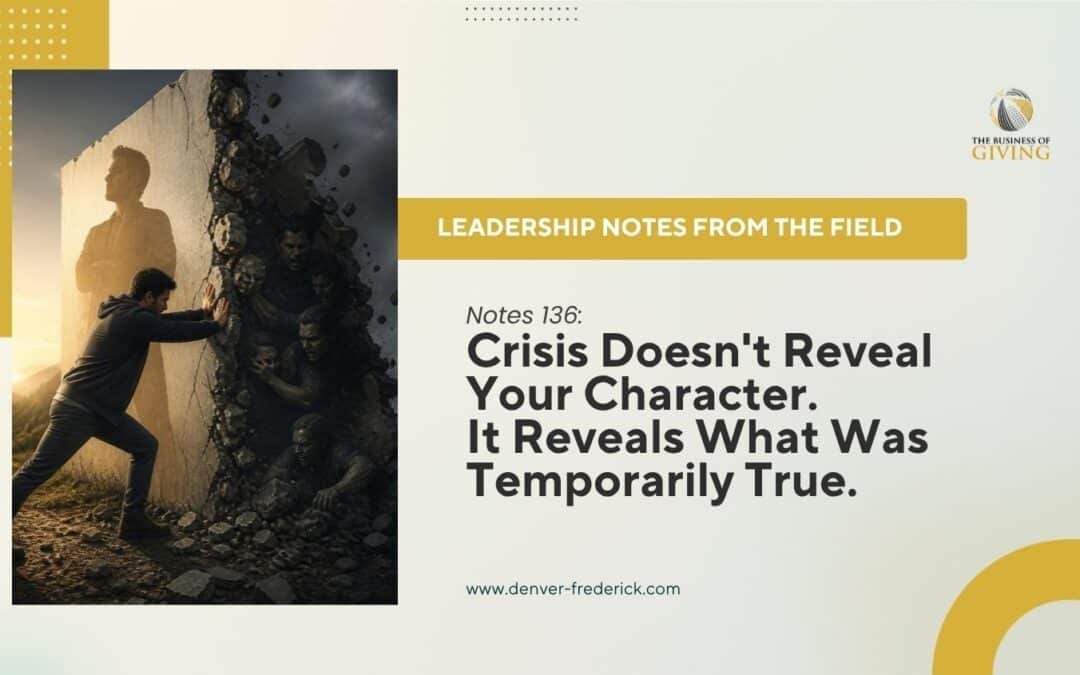
We learn about organizations by watching how they perform under pressure. Who moved fast. Who improvised. Who found a way through with incomplete information.
Crisis reveals real things. It also conceals them.
An organization built around a few powerful decision-makers can move brilliantly when speed is everything. Informal relationships can outperform formal systems for a while. People work extraordinary hours, controls disappear, resources suddenly become available, and everyone tolerates behavior that would be unsustainable in ordinary times. For a stretch, the organization looks exceptional.
It may be exceptional at crisis. That isn’t the same as being exceptional at everything that comes after.
The danger is treating performance under unusual conditions as proof of quality under normal ones. Some organizations are built to mobilize; others are built to endure. Some cultures can produce heroic effort for three months while quietly damaging themselves in the process.
After your organization performs brilliantly under pressure, don’t only ask what that revealed about you. Ask what became temporarily true that let you perform that way, and separate the capability you actually possess from the conditions the emergency loaned you.
What did your last crisis let you get away with that ordinary conditions never would?