
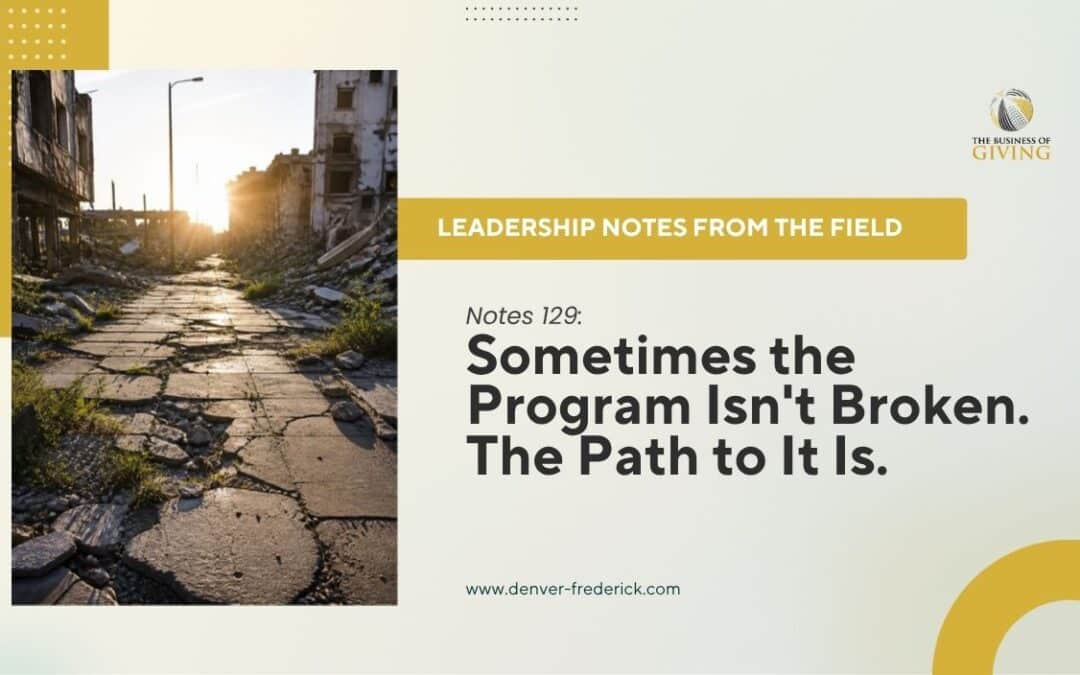
A process that once took months to design can now be rebuilt in an afternoon. That capability raises a question the social sector still doesn’t ask often enough: How much of the suffering people experience comes not from a lack of help, but from the machinery they have to get through to receive it?
Take something as ordinary as eligibility paperwork. A workforce training program requires a high school diploma. That requirement makes sense on its own. It becomes a barrier when the person standing in front of the intake coordinator left school in tenth grade, has worked steadily for six years, and can do the job better than most of the people who have the diploma.
Stack enough of these requirements together and a program can end up excluding exactly the people it was built to serve. Each rule is defensible in isolation. Together they form a wall.
The fix is not to lower the standard. It is to widen the path to meeting it. A GED, a documented work history, or an assessment of actual skill can verify the same thing a diploma verifies—readiness. A navigator who helps someone assemble whatever proof they do have, instead of asking them to produce the one document they don’t, does the same job a stricter gatekeeper does, just without turning away the person the program exists for.
We talk about dignity, access, and accountability as if they trade off against each other. Most of the time they don’t. Better design can protect the integrity of a program while removing the burden it places on the people trying to get through the front door.
The next frontier in social impact may not be a new program at all. It may be the architecture of how people get to the programs that already exist. A benefit someone cannot discover, or cannot successfully apply for, may exist on a spreadsheet. It does not yet exist in that person’s life.
Where has your organization mistaken a design problem for a resource problem? I’d like to hear about it.