
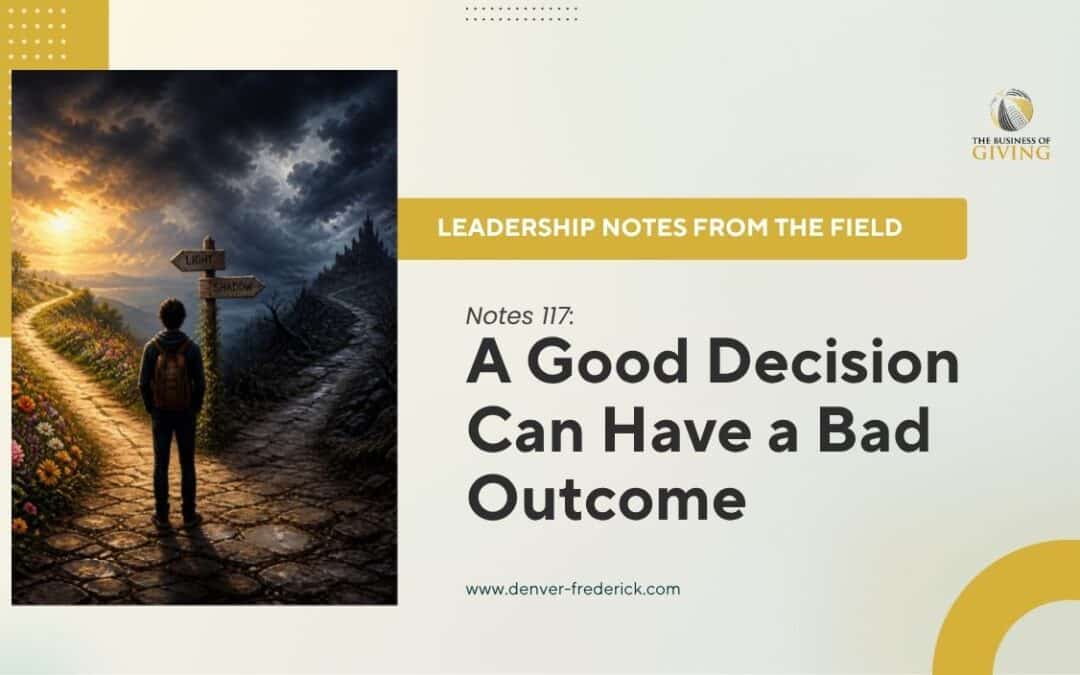
One of the most damaging habits in leadership is judging every decision by what happened afterward.
The initiative succeeded, so the decision must have been brilliant. The investment failed, so someone must have made a mistake. The hire didn’t work out, so the search process was flawed.
But outcomes contain luck.
A sound decision can produce a terrible result. A reckless decision can occasionally produce a wonderful one. If leaders confuse outcomes with decision quality, they end up learning the wrong lessons from both success and failure.
The better question is what was knowable at the time the decision was made.
Did we seek the relevant information? Did we challenge our assumptions? Did we seriously consider the downside? Did emotion overwhelm judgment? Did we ignore evidence because it was inconvenient?
If we did the work well and events still turned against us, that isn’t necessarily failure. If we skipped the work and got lucky, that isn’t necessarily success.
Organizations become much smarter when they stop conducting autopsies solely on outcomes and start examining the quality of the thinking that produced them.
Don’t just ask, “How did it turn out?” Ask, “Given what we knew then, was it a good decision?”