
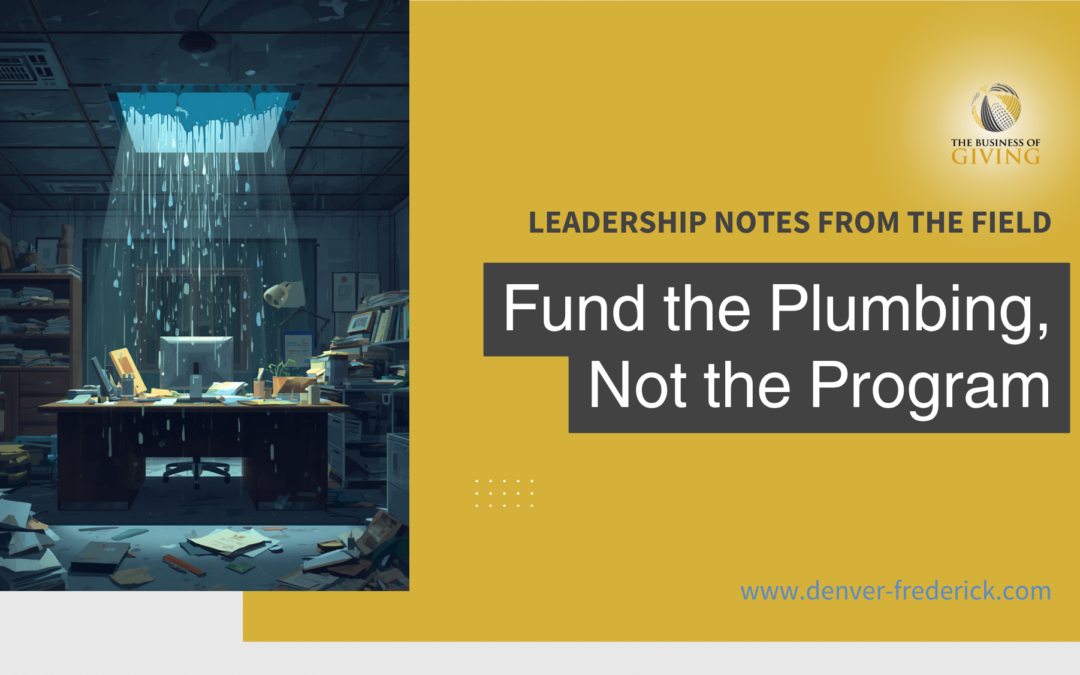
The roof was failing and no one would pay for it.
A nonprofit leader I know spent two years trying to raise money to replace a dying server system and a leaking roof. Two years. Donors who would happily fund a new program for the children her organization served would not give a dollar to keep the lights on above their heads. One told her, almost proudly, that he did not fund overhead.
So she kept running brilliant programs inside a building that was quietly falling apart, on technology held together by the digital equivalent of tape, because the things that made the work possible were the things no one wanted their name on.
This is the sector’s most expensive blind spot. We fund what photographs well at the gala.
The smiling child, the ribbon cutting, the program with a name. We starve the unglamorous layer underneath, the systems and infrastructure and operating capacity that every one of those programs silently depends on. We have built a sector that will pay for the performance but not the stage it stands on.
And here is what it costs us. The most leveraged dollar in philanthropy is almost never the program dollar. It is the dollar that makes ten programs run better at once. But that dollar is the hardest in the world to raise, because it cannot be reduced to a single face. We have trained ourselves to fund the visible and neglect the load-bearing.
The funders who matter most over the next decade will be the ones who learn to fall in love with the plumbing.
For the operating leaders here: what is the least fundable thing your organization most desperately needs right now, and why can you not raise for it? Be specific. Name the unsexy thing. The leaking roof, the database, the position you keep leaving unfilled.