
The day the check cleared, she called me in tears. The good kind, at first.
After eighteen years of writing grant proposals that read like confessions, a major funder had just wired her organization a transformational gift. Unrestricted. Multi-year. No application, no report, no strings. The model the whole sector now holds up as the gold standard.
Six months later she called again. Different tears.
“I have never had more money,” she told me, “and I have never felt more alone.”
The funder had done exactly what the new orthodoxy prescribes. They trusted her, and then they vanished. No partner. No sounding board. No one to help her recruit the CFO she suddenly needed, or pressure-test the bet she was about to make with money she had never managed before.
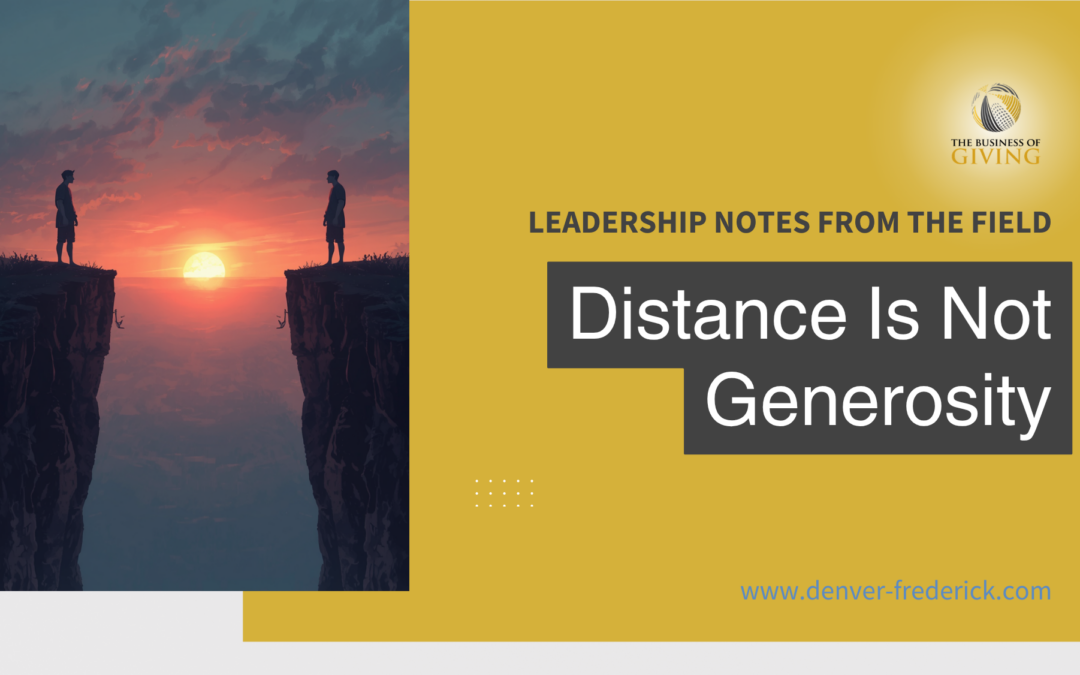
We were right to kill the old paternalism. Making good leaders grovel and then dictating how they spend was extractive and overdue for the grave. But we swung from control all the way to distance, and we skipped the most valuable position on the arc. Partnership.
The check is now the easy part. Money is getting commoditized. What stays scarce is great help. And here is the line the field does not want to hear. Distance is not generosity.
Sometimes it is just abdication, dressed up as respect.
The funders who win the next decade will not be the ones who step back the furthest. They will be the ones willing to step in.
If you run a nonprofit: what did you actually need from your biggest funder that the money did not cover? And if you give: when has stepping back genuinely helped, and when did it leave someone stranded? Tell me about a specific moment, not a theory.