
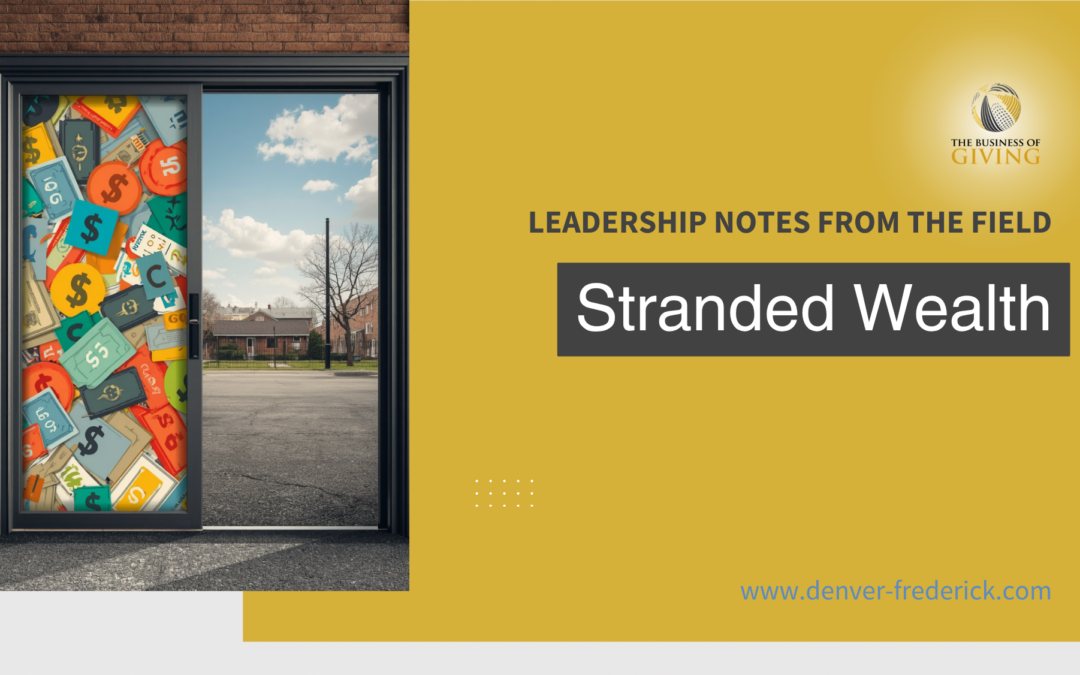
Most nonprofits are not under-resourced. They are unreachable from themselves.
The sentence that rewired my thinking came from the African Development Bank meetings.
Africa, the discussion noted, is not poor in capital. Pension funds, sovereign wealth, insurers, private institutions, all sitting on the balance sheet of a continent the world describes as scarce. The wealth exists. It is simply unreachable from itself.
That phrase finally gave me language for something I have watched my entire career and never named.
Walk into the average mid-sized nonprofit. A good one, with a strong board, committed staff, decades of delivery. You will find astonishing wealth inside. Relationships built over careers.
Program expertise no consultant can replicate. Board members whose networks span industries. Volunteers who would walk through walls. Data quietly piling up in unopened dashboards. Insights from the field that never reach the strategy deck.
And almost none of it is reachable from itself.
The development team cannot see what the program team learned in the home visit. The program team cannot see which donor just asked the question their fieldwork already answered. Communications writes about a strategy it was never in the room for. A partnership is announced and never operationalized. The annual report describes an organization the staff does not recognize.
Smart people, working hard, in parallel lanes that never cross.
From the outside it looks scrappy and under-resourced. From the inside, something else is true. The organization is rich in capital it cannot deploy.
I call this stranded wealth.
The major gifts officer cultivated a relationship for eight years and left with no handoff. An evaluation documented a breakthrough no one in development heard about. The volunteer with twenty years in venture capital was assigned to stuff envelopes. The board member would have opened the door if anyone had thought to ask.
The most useful line from that African Development Bank discussion was almost thrown away: “The first thing that you really need is to have them around the table.” That sounds like logistics. It is architecture.
At a certain size, the leader’s job stops being acquisition. It becomes reachability.
Reachability across departments, across the board-staff line, across the silence between a volunteer’s first day and their second.
This is why some organizations with modest budgets quietly outperform institutions ten times their size. Their wealth is not greater. It is reachable. Relationships compound.
Insights from one corner reach decisions in another. Friction is treated as the enemy, not the weather.
Here is the hardest truth. Most of the resources your mission needs are already inside your organization. They are stranded. And they are stranded because no one is paid, expected, or empowered to make them reachable.
The leaders who matter most over the next decade will not be the ones who raise the most.
They will be the ones who waste the least of what is already there.
Walk through your organization this week with one question. Where is your stranded wealth? The relationship going unused. The expertise that never reaches the decision. The volunteer no one called back. The data no one reads.
Name one in the comments. The naming is the work.