
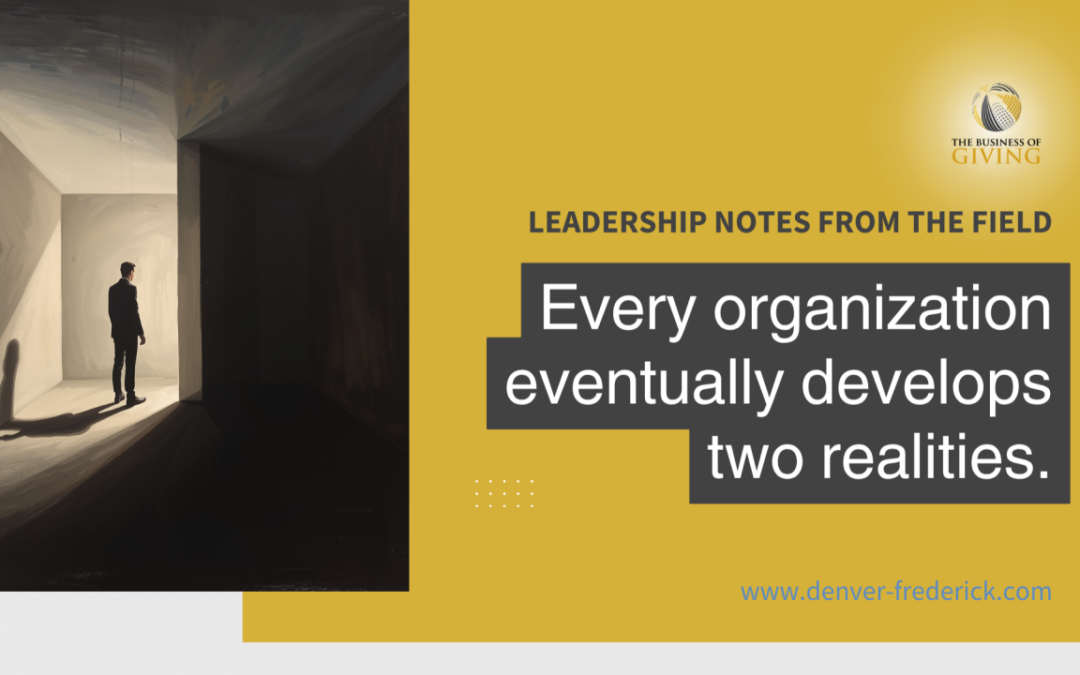
The first is the official one. The one in the board deck. The annual report. The carefully polished language that says momentum is strong, alignment is deep, and the work is proceeding as planned.
Then there is the second reality. The one whispered in parking lots. Mentioned after Zoom calls end. Passed quietly between people who trust each other. The reality where deadlines are slipping, trust is thinning, top performers are burning out, donors are confused, and nobody wants to be the first person to say out loud what everybody already knows.
Great leaders close the gap between those two realities. Weak leaders widen it.
Organizations rarely collapse because people disagree. They collapse because people pretend to agree.
That is the moment the institution begins losing its grip on shared facts. And once that happens, everything shifts. Meetings become theater. Metrics become weapons. Language becomes camouflage. Leadership slowly drifts from solving problems to managing perceptions.
The early symptoms are easy to miss. A board stops asking hard questions. A CEO becomes increasingly insulated from bad news. Staff begin editing themselves before they speak. Problems travel slowly upward. Good news travels instantly. People learn that emotional safety is rewarded more than intellectual honesty.
Then comes the turn. The greatest threat to most organizations is not conflict. It is artificial harmony. Because healthy conflict clarifies reality. Artificial harmony conceals it.
In strong organizations, truth creates temporary discomfort. In weak organizations, comfort quietly destroys the truth.
That tension may define the central leadership challenge of this era. Not motivation. Not strategy. Not innovation. But reality maintenance—the discipline to build a culture where people can still say what needs to be said:
“This is not working.”
“We are drifting.”
“We are fooling ourselves.”
“We need to rethink this.”
Before the numbers force everyone to admit it.
When institutions lose the shared facts that hold them together, leadership stops being about persuasion and starts becoming an exercise in reality maintenance.
Here is the question worth sitting with:
In your organization right now, what truth is widely known but rarely spoken out loud?
Drop a word or phrase in the comments. You do not need to name names. Just name the dynamic.