
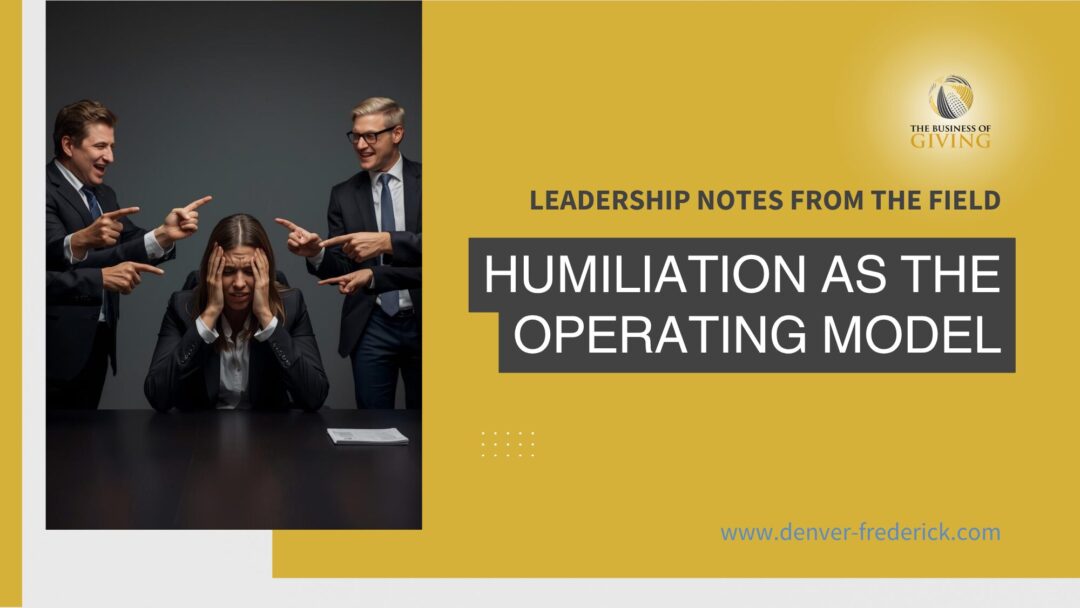
Some leaders do not just tolerate humiliation around them.
They depend on it.
They keep people close, but never secure.
They praise them, then undercut them.
They make examples out of people just often enough that everyone else gets the message.
And the message is never healthy.
It is not: Bring me your best thinking.
It is not: Tell me what I need to hear.
It is: Stay alert. Protect yourself. Do not be next.
You can see this kind of leadership almost anywhere. In politics. In business. In nonprofits.
In boardrooms where a chair keeps the CEO slightly off balance. In leadership teams where candor slowly disappears because nobody wants to be the one publicly diminished. Over time, the culture adjusts.
People become careful.
Then guarded. Then
silent.
Meetings still look productive. The leader still looks strong. But something vital has gone missing. Truth starts arriving late, softened, and filtered through self-protection.
That is the real cost of humiliation-based leadership. It does not just wound individuals. It degrades the quality of the institution.
A leader can be demanding.
A leader can make hard calls.
A leader can challenge weak thinking.
But a leader who repeatedly humiliates people is not building strength. He is building fear.
And fear is a terrible advisor.
It may produce compliance for a while. It will not produce courage, judgment, or trust.
Humiliation is not a sign of authority. It is often a confession of insecurity.
What is the moment you realized a leader you respected was running on humiliation, and what did you do about it?