Most nonprofit leaders believe people support their work because of the programs they run.
A tutoring program that helps students succeed. A clinic that expands access to care. An advocacy effort that advances policy change.
Those things matter enormously. But over time something subtle and powerful happens that most leaders never fully see coming.
The organization itself becomes the symbol.
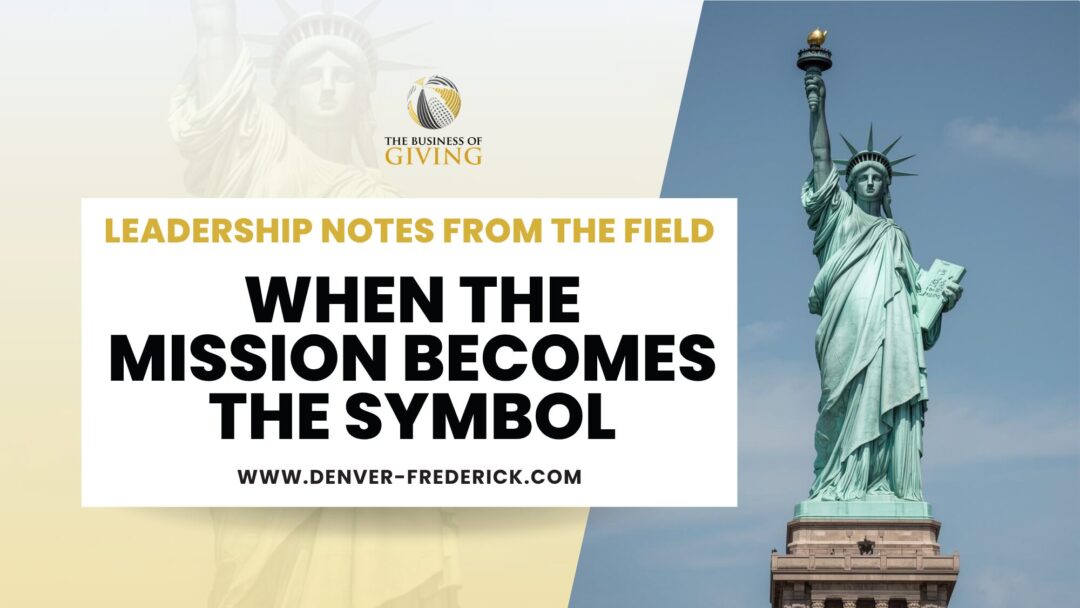
I watched this transformation happen with the Statue of Liberty restoration campaign decades ago. On the surface we were raising money to repair a monument. But what donors were actually responding to had almost nothing to do with copper and scaffolding. They were expressing something about who they were and what they believed America represented. The symbol had become larger than the project. Once we understood that, everything about how we communicated changed.
The same dynamic lives inside every nonprofit that has been around long enough to matter.
Donors, volunteers, partners, and community members stop evaluating the organization purely by what it does. They begin responding to what it represents. Supporting it becomes a way of expressing identity, values, and belonging. At that point you are no longer simply running programs. You are stewarding a symbol.
And symbols get held to a different standard.
Who leads the organization. How it behaves publicly. Who it partners with. Whether its actions in a difficult moment match the values it has spent years proclaiming. All of it gets scrutinized in a way that pure service providers never experience.
Nonprofit leaders who miss this shift keep optimizing the programs while the outside world is quietly making judgments about the institution’s integrity, alignment, and character. They are answering a question nobody is asking anymore while the question that actually matters goes unaddressed.
In a sector built entirely on trust, symbolic meaning is not a soft consideration. It is the foundation everything else rests on.
Because when someone supports a nonprofit with their money, their time, or their reputation, they are rarely buying a service.
They are joining a cause. And they are watching to see whether you are worthy of it.