
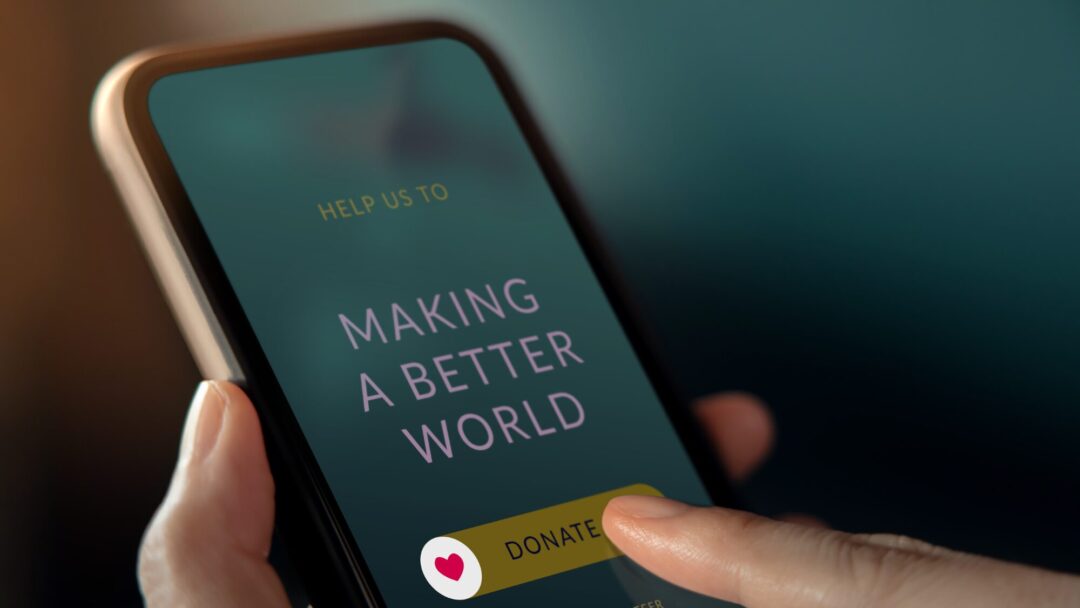
When you think about making a charitable donation online, you probably picture navigating to a nonprofit’s website, filling out forms, entering credit card details, and maybe getting a tax receipt emailed to you weeks later. For most of us, giving is still a separate action, disconnected from the rhythms of our digital lives. Nick Aldridge has spent the better part of 18 years proving there’s a better way. As the visionary behind PayPal Giving Fund’s global strategy, Aldridge has quietly built one of the most expansive and effective philanthropic infrastructures on the internet. With more than 1.7 million vetted charities, 400 million potential donors,
and over $4 billion channeled to nonprofits since inception, his work represents a fundamental shift in how generosity happens online. But the real breakthrough isn’t in the scale. It’s in the simplicity
“Our vision and mission is really about reimagining everyday giving, making it possible for people to support the causes they care about as part of their daily life online,” Aldridge explains. “We want to make it as easy and rewarding as possible by solving as many of the problems and removing as many of the barriers to giving as we possibly can.”
Walking Alongside People Where They Already Are
The original concept emerged nearly two decades ago when eBay and PayPal were still one company. The question was straightforward: What if people selling items on eBay could donate some or all of the proceeds directly to charity, without jumping through hoops?
Today, that idea has expanded into a sprawling ecosystem. Donors can give through PayPal’s app, top up purchases with donations at checkout, support causes on Meta and Instagram, contribute via GoFundMe campaigns, or back charitable bundles on platforms like Humble Bundle and Twitch. The common thread? Giving is embedded in actions people are already taking.
“It’s not enough just to have a great idea of how people might give,” Aldridge says. “You need the access to the platforms where they’re actually spending time.”
That philosophy has unlocked something powerful. By meeting people where they are—mid-scroll, mid-purchase, mid-game—PayPal Giving Fund has attracted millions of donors who might never have visited a nonprofit website on their own. And it’s working. In their most recent full year, the fund facilitated donations from more than 10 million people and moved over $1 billion to charities.
Friction Is the Silent Killer of Generosity
One of Aldridge’s most counterintuitive insights came early: What fundraising professionals think is “easy enough” is often still too complicated for everyday donors. “Our perception as perhaps professionals or fundraisers of what’s too difficult for people is very different from what actually turns out to be too difficult,” he notes. The solution? Ruthless simplification. PayPal Giving Fund reduced some donation flows to a single click. No registration, no decision fatigue, no second-guessing.
“You don’t have to think about exactly how much to give or exactly what you’re giving to. You can just take a simple action with minimal difficulty and minimal cognitive effort to support a charity. And that makes a huge difference.”
This isn’t just theory. The data backs it up. Even slight confusion or an extra form field can dramatically reduce conversion rates. So Aldridge’s team obsesses over payment success rates, onboarding experiences, and donor transparency. They’ve enrolled more than 340,000 charities to receive funds electronically, representing 96% of total dollars raised. They contact donors proactively in the rare cases where a charity can’t be funded. They publish their processes openly. It’s infrastructure work—unglamorous, painstaking—but it’s what makes trust scalable.
Unrestricted Funding: The Gift Charities Need Most
Here’s a truth most donors don’t fully understand: Unrestricted funding is gold for nonprofits. It allows organizations to invest in their people, their systems, and their long-term sustainability rather than constantly chasing the next project grant.
Yet convincing donors to give without strings attached is hard. People want to know their money is making a difference. Aldridge has found a middle path.
“We try to strike a balance,” he says. “We provide enough information about the charities and their work… But also being clear with the donors that wherever possible, we don’t impose any restrictions on how the charities use the funding, and we think they are best placed to decide how it can be used most effectively.”
It’s a vote of confidence in nonprofit leadership – and a reminder that trust shouldn’t stop at the transaction. As Aldridge points out, echoing a sentiment I’ve heard from other leaders: If you know better than the charity how to spend the money, maybe you shouldn’t be donating to them in the first place.
Making Sure Small Nonprofits Don’t Get Left Behind
One persistent challenge in digital fundraising is ensuring that smaller, grassroots organizations can compete with household-name charities. PayPal Giving Fund has addressed this head-on by designing systems that don’t penalize organizations with fewer resources.
“A small charity could do absolutely nothing at all,” Aldridge says. “In fact, they could never have heard of us, and they could still benefit from our programs.” If a donor selects them, the fund will still process the gift and if the nonprofit doesn’t respond to emails, a check eventually arrives in the mail. But Aldridge also wants charities to engage more deeply. His team recently surveyed 100,000 nonprofit customers to understand pain points and built tools that help smaller organizations identify supporters, track funds, and engage donors proactively.
The result? PayPal Giving Fund sends a disproportionately higher share of funding to smaller nonprofits compared to the sector as a whole. That’s not an accident. It’s by design.
What’s Next: AI, Efficiency, and the Donor Experience
Looking ahead, Aldridge is focused on three priorities: new ways to give, an even better donor and charity experience, and operational efficiency that scales with trust intact.
Emerging technologies like AI present both opportunity and risk. Large language models are “impressive rather than trustworthy,” as Aldridge puts it. But if done right, AI assistants could help donors discover causes, suggest giving patterns, and complete donations through simple conversational prompts…..all while maintaining the transparency and security that make trust possible.
“People will ask our assistants for help with all sorts of things, and we’re trying to bring giving to the center of that so that it’s a skill that our assistants have.”
Meanwhile, commerce itself is evolving. Gaming, streaming, new payment methods: PayPal Giving Fund is scanning the horizon to ensure that generosity keeps pace with how people live online.
Why This Work Still Matters
For all the systems and data and optimization, Aldridge is clear about what keeps him and his team motivated: the impact on the ground.
He recalls visiting World Central Kitchen in Washington, D.C., touring their warehouse, and seeing the massive paella dishes they bring into disaster zones. “Just talking to the people actually in their warehouse… was actually very powerful and very moving,” he says. “At the end of all these transactional processes, there are people helping other people with money that we’ve raised.”
It’s a reminder worth holding onto. Generosity, real, sustained, meaningful generosity, doesn’t require complexity. It requires clarity, trust, and the willingness to meet people where they already are.
Nick Aldridge and PayPal Giving Fund have proven that when you remove the friction, lower the barriers, and build systems worthy of trust, millions of people will step forward to help. And that’s a future worth building toward.
To celebrate my 50th year in the nonprofit sector, I’ve put together a gift for you — a practical, field-tested guide to building world-class nonprofit workplace cultures. It’s called Cultivating Nonprofit Excellence, and it’s based on insights from nearly 1,000 interviews and 150 focus groups with nonprofit leaders around the globe. It’s completely free and instantly downloadable at blanchedalmond-mosquito-418475.hostingersite.com