
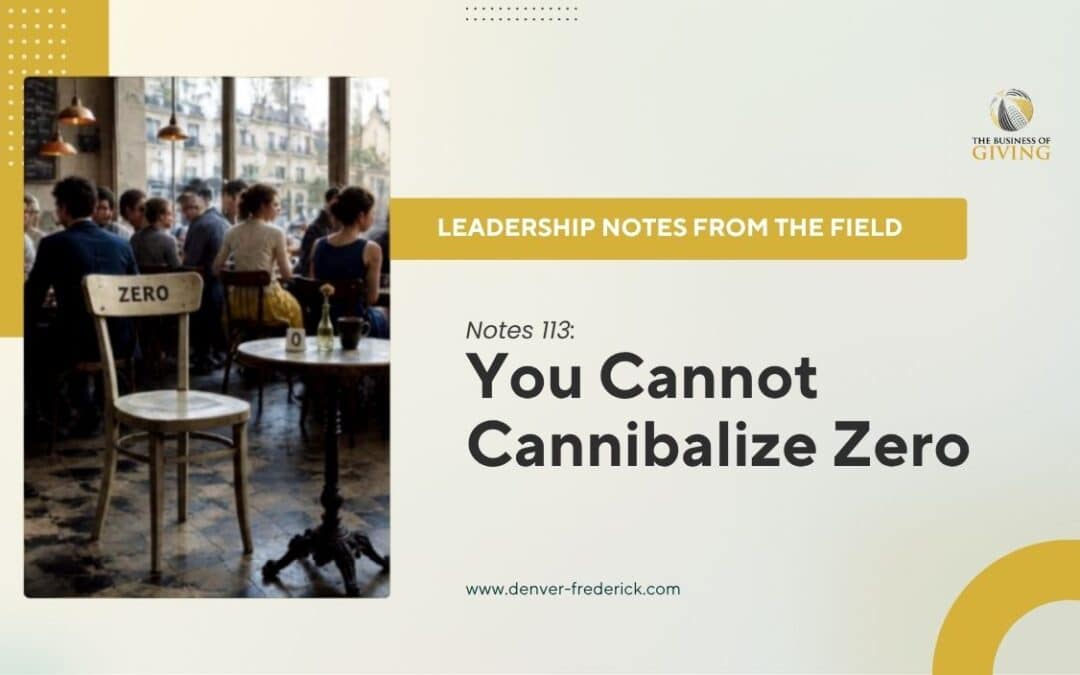
When the music industry first confronted streaming, one of its greatest fears was cannibalization.
Why risk a business in which people bought CDs and downloads by giving them access to virtually unlimited music through a new model?
The fear made sense. Existing customers were visible. Existing revenue could be counted. Giving either up felt dangerous.
But there was another group that was much easier to overlook: the enormous number of people already consuming music online who were paying nothing.
That led to a wonderfully simple observation: You cannot cannibalize zero.
Streaming wasn’t merely threatening existing revenue. It offered the possibility of creating revenue where none existed.
There is an important lesson here for nonprofit leaders and philanthropists.
Organizations naturally pay enormous attention to what they already have: existing donors, established programs, traditional fundraising events, familiar delivery models and long-standing institutional relationships.
When something new appears, the first question is often: What might we lose?
But that question privileges the visible over the invisible.
A better question may be: What aren’t we reaching at all?
There may be thousands of potential supporters who will never attend the gala. Donors who won’t respond to direct mail. Younger people who won’t join the traditional membership organization. Families who won’t enter an established social-service system. Small community organizations that will never survive a conventional foundation application process.
The existing model can look enormously valuable because everything it produces is visible and measurable.
Zero has no constituency.
Nobody attends the board meeting representing the donor who never gave, the family that never entered the program, the organization that never applied for the grant or the person who never discovered the cause.
That makes protecting what exists psychologically easier than pursuing what doesn’t.
But disruption often begins in that invisible territory.
Before rejecting a new approach because of what it might cannibalize, leaders should ask a different question: What value could it create where today there is none?
Sometimes the greatest opportunity isn’t hiding inside the business you already have.
It’s hiding inside the zero.