
A board once described its executive director to me as timid. Too cautious. Unwilling to take the bold swing the moment required.
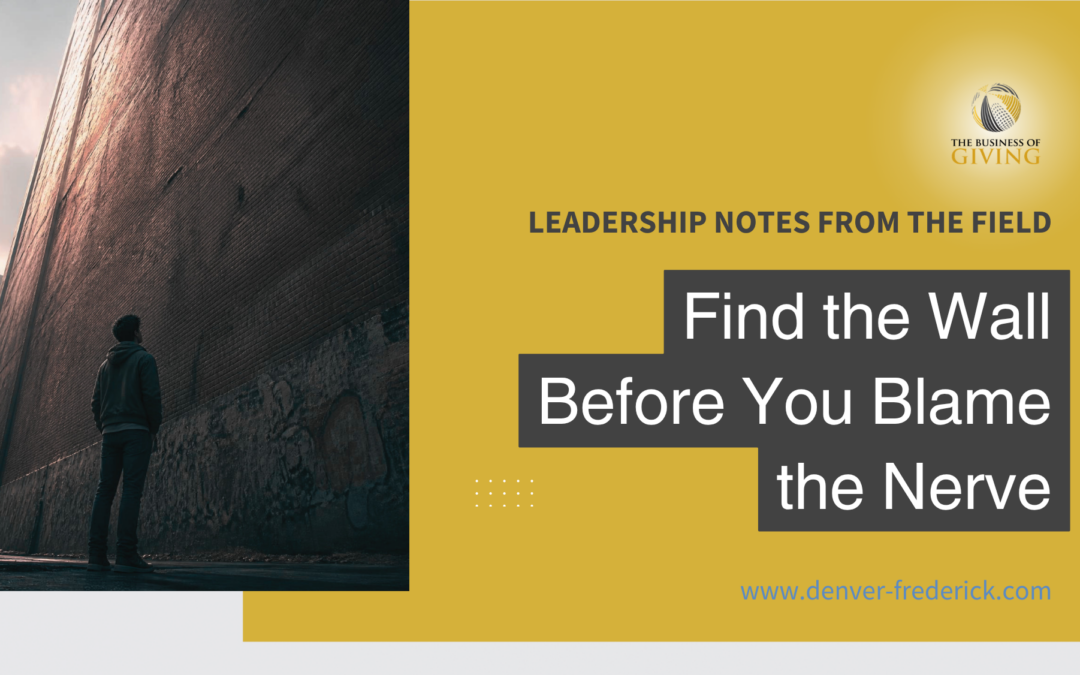
I spent an afternoon with her and found something else entirely. She was not timid. She was boxed in. Every bold path she might have taken ran straight into a constraint someone had built long before she arrived. A restricted grant. A bylaw. A funder agreement. A wall the board itself had poured the concrete for and then forgotten was there.
When an institution behaves cautiously, it is tempting to read it as a failure of character. A leadership too timid or unimaginative to do the brave thing. Sometimes that is the truth. But I have learned to ask a prior question before reaching for it. What do the rules actually permit, and what do they quietly punish?
Far more often than we admit, what looks like timidity is a rational response to a structure that has made the brave path expensive, slow, or legally suspect, and the safe path automatic. The people inside may want the bold thing badly and still find that every route toward it hits a wall someone built before they got there. Blaming them for not climbing a wall you never noticed is a comfortable mistake that changes nothing.
The discipline here is double. First, learn the rules of your own field well enough to know which constraints are real and which are merely assumed, because the most dangerous limits are the ones everyone treats as natural law when they are only policy, or habit, or fear dressed as compliance. You will usually find more room to act than the cautious around you believe.
Second, and harder, recognize when the binding constraint is genuinely structural. When the thing between you and the work is not your nerve but the architecture itself. Because then the task is not to try harder inside the cage. It is to organize, with others, to change it.
Knowing which fight you are actually in is most of the fight.
So look at a place where your organization keeps playing it safe. Is that caution a failure of nerve, or a wall someone built? And if it is a wall, who has the power to move it, and have you asked them?