
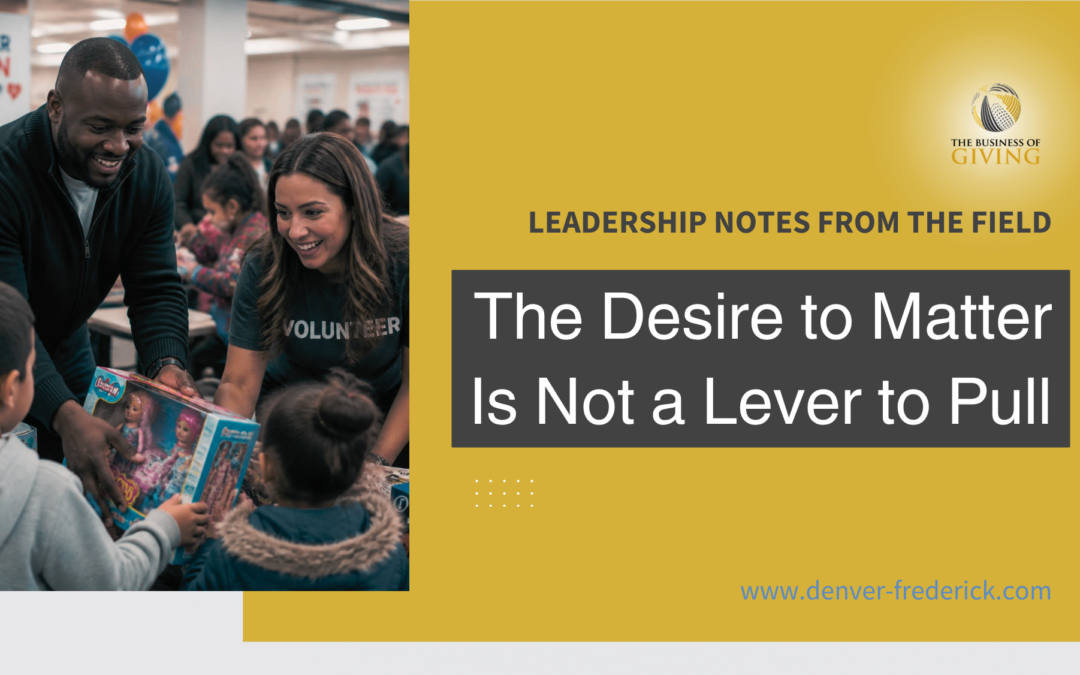
The most powerful force in almost any relationship an organization builds, with a donor, a volunteer, a staff member, a community, is the human desire to matter. To know that one’s life and effort count for something beyond themselves.
Every person who gives you their money, their time, or their loyalty is, underneath whatever they say, hoping to participate in something meaningful. Hoping to feel that they have mattered. And here is where leaders stand at a quiet moral fork that most never consciously notice. You can honor that desire, by genuinely caring who these people are and helping them connect to real significance. Or you can exploit it, by learning the techniques that make people feel significant so that they keep giving you what you want.
The hard truth is that the two look almost identical in the moment, and the second is easier, teachable, and frighteningly effective. An entire industry of engagement and stewardship can, without anyone quite deciding to, become the science of manufacturing the feeling of mattering in people whose resources you are organized around extracting.
The discipline is to notice which one you are actually doing, because the slide from honoring to harvesting happens gradually and feels like good practice the whole way down.
The test is what the relationship is willing to cost you. If you genuinely honor someone’s desire to matter, you will sometimes act against your own short-term interest on their behalf. You will tell a donor their money might do more good elsewhere. You will give a staff member the credit you could have taken. You will be honest when honesty risks the relationship. Because real regard occasionally requires sacrifice, and performed regard never does.
If every interaction, however warm, ultimately routes back to what you can extract, then you are not honoring anyone’s desire to matter. You are using it. And people can feel that, eventually, no matter how polished the technique.
The desire to matter is the most human thing the people around you bring to you. Treat it as a tool, and you will eventually be left managing transactions and wondering where the trust went.
So ask honestly. When did you last do something for a donor or a staff member that cost you something and served only them? If the answer comes slowly, that is worth sitting with.