
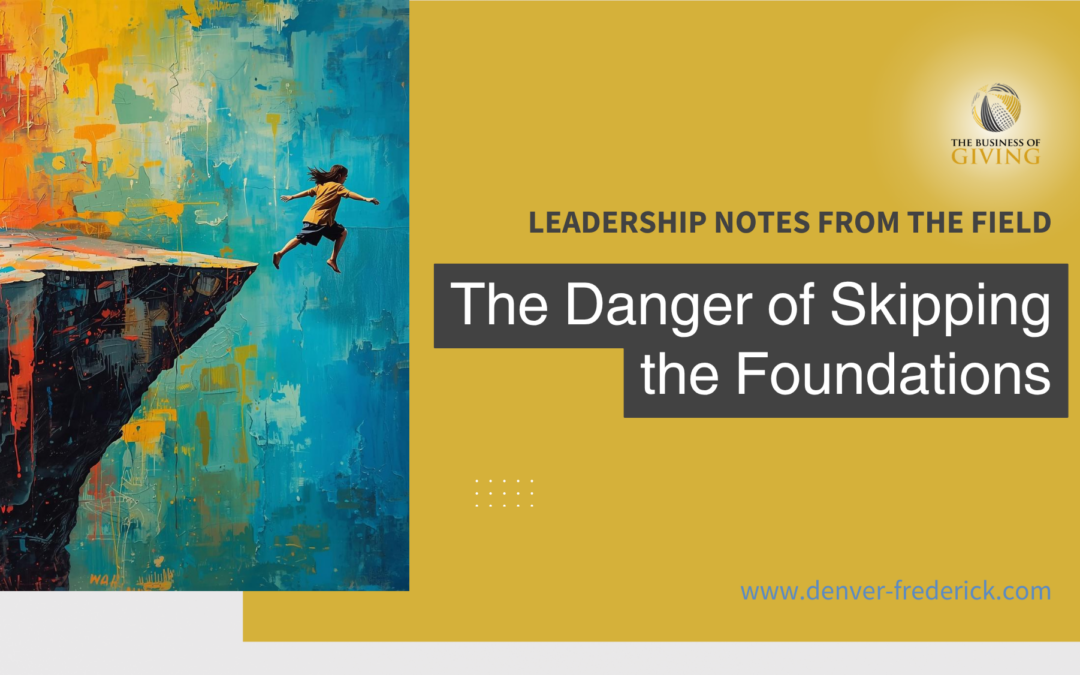
Last month I watched a nonprofit communications director deliver a technically perfect donor pitch. She hit every talking point. Her slides were polished. Her data was current.
The donor asked one question she had not rehearsed, and the entire presentation fell apart.
She had been trained on the what. Nobody had ever taught her the why.
I have watched this play out across the nonprofit sector for decades. Organizations that train their teams on the mechanics of fundraising but never ground them in why donors give.
Leaders who master the pitch but cannot read the room. Communicators who know the talking points but collapse the moment the conversation goes sideways.
It is tempting to go straight to what feels practical. Teach the tool. Teach the tactic. Teach the application.
But when you skip the underlying principles, you create people who can follow instructions without understanding consequences. That works until it does not.
The strongest leaders do not just train for execution. They build the mental models that shape judgment: trade-offs, incentives, scarcity, cause and effect.
Because when the situation changes, and it always does, principles travel. Tactics do not.
If you want better decisions from your people, do not start with the answer. Start with how to think.
Where has this gap shown up in your organization? Tell me about a time someone on your team had all the right tools but lacked the underlying understanding to use them when the situation shifted.
What happened, and what did you change afterward?